

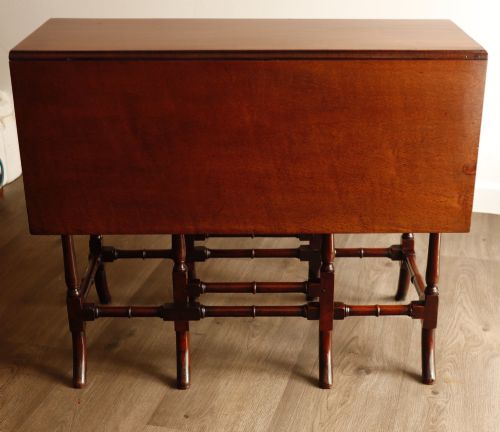
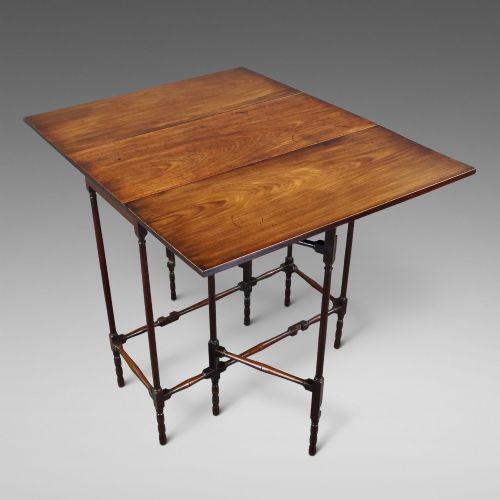


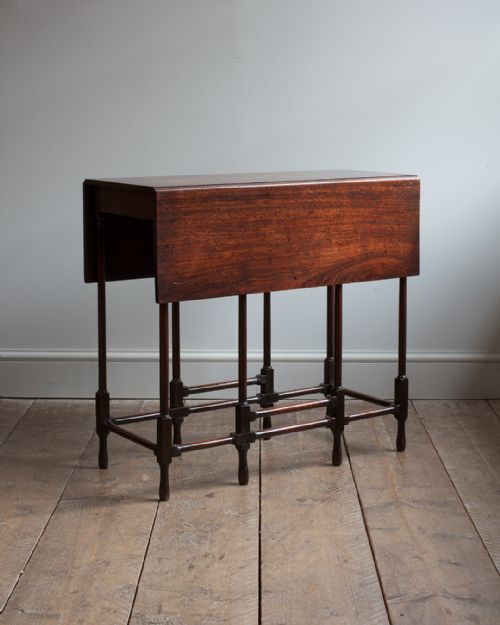


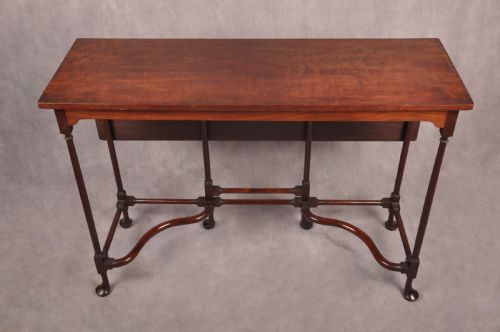


Mahogany Spider Leg Table
Mahogany spider leg table forms bring slender elegance to period rooms, offering a lightweight surface for tea or a lamp.
Mahogany Spider Leg Table
A mahogany spider leg table is a slender, lightweight form designed primarily for occasional use in Georgian and Edwardian interiors. These pieces take the form of small occasional tables, lamp tables, tea tables, and drop-leaf gateleg surfaces that can be easily moved about a room. Buyers searching this phrase meet examples ranging from eighteenth-century George III originals to Edwardian revivals and later twentieth-century interpretations.
The defining characteristic of these tables is the exceptionally thin turned or slender legs, which provide adequate support for a compact top while maintaining a delicate profile. Many examples employ a drop-leaf or gateleg mechanism, allowing the flaps to fold down when floor space is at a premium. The materials recorded in these listings rely predominantly on rich mahogany, complemented occasionally by brass or iron hardware.
Originating during the Georgian period, the form reappears in Edwardian drawing rooms and later decades as makers revisited lighter eighteenth-century aesthetics. Whether configured as a nest of tables, a Pembroke table, or a simple wine table, the focus remains on minimal visual weight and refined domestic utility.
How they were made
Makers constructed these pieces using dense, durable mahogany, valued for its ability to hold crisp detail under the turning lathe while providing structural integrity to very thin components. The legs are typically turned with multiple rings and spindles, requiring precise lathe work to achieve the characteristic spider-like thinness without sacrificing load-bearing capacity.
Drop-leaf versions utilise hinged flaps supported by pivoting gateleg frames, demanding careful joinery to ensure the leaves hang level when open. Brass hinges and small brass or iron fittings frequently secure the folding mechanisms, adding subtle metallic contrast to the timber.
Mahogany Spider Leg Table Retail Price Guide 2026
Typical asking prices for mahogany spider leg table among the pieces listed under this phrase on Sellingantiques today, from the lower quarter to the upper quarter. They describe what is for sale here now, not the wider market.
Listings span the eighteenth, nineteenth, and twentieth centuries, incorporating Georgian, Edwardian, and Victorian periods alongside specific styles like Chippendale.
What varies in quality
Quality in these slender forms rests on the crispness of the timber turning and the proportional balance between the delicate leg structure and the tabletop. Superior examples display finely figured mahogany grain and tight, seamless joints that withstand the lateral stresses inherent in gateleg actions.
Period authenticity and hand-turned detailing separate eighteenth-century and George III exemplars from later revivals, where mechanical production sometimes yields heavier, less graceful spindles. The integrity of the drop-leaf hinges and the smoothness of the pivoting gate action also indicate the level of care invested by the original maker.
The Mahogany Spider Leg Table Glossary
- Spider leg
- A term describing exceptionally slender, turned wooden table legs connected by delicate stretchers. This configuration minimises visual bulk.
- Gateleg table
- A table with hinged flaps supported by legs that swing outward like a gate. This mechanism allows the surface area to expand or contract.
- Pembroke table
- A small occasional table featuring two hinged drop leaves on opposing sides. It often includes one or more small drawers beneath the top.
- George III
- The stylistic and historical period spanning the reign of George the Third, noted for refined proportions and classical restraint. Pieces from this era often display superior mahogany selection.
- Drop-leaf
- A table top configuration comprising a fixed central section and one or two hinged flaps. These flaps hang vertically when lowered.
Mahogany Spider Leg Table: Frequently Asked Questions
What is a spider leg table used for?
These tables served historically as lightweight tea tables, lamp stands, or small occasional surfaces in drawing rooms. Their portability allowed them to be moved close to seating or folded down and placed against a wall when not in use.
Today, they function well beside armchairs or sofas where a compact surface is needed without crowding the room.
How do I tell an 18th century table from an Edwardian copy?
Eighteenth-century examples display hand-turned timber characteristics, older patination on the mahogany, and traditional joinery methods appropriate to the George III period. Edwardian revivals often feature slightly more uniform machine turning and cleaner internal pine or secondary woods.
Examining the wear patterns around the gateleg hinges and the depth of the timber colour helps clarify the period of manufacture.
Are these tables sturdy enough for daily use?
Despite their fragile appearance, well-made spider leg tables are surprisingly stable due to the interconnecting stretchers bracing the slender legs. They handle light items such as books, cups, or lamps comfortably.
Care should be taken not to place excessive weight on the outer edges of the drop leaves or lean heavily on the folded flaps.
How do I care for a mahogany spider leg table?
Maintain the timber by keeping the table away from direct heat sources and strong sunlight, which can dry out the mahogany and fade the polish. Dust regularly with a soft dry cloth and apply occasional traditional wax to nourish the finish.
Avoid using silicone-based sprays, as these can build up and soften the historic polish over time.