
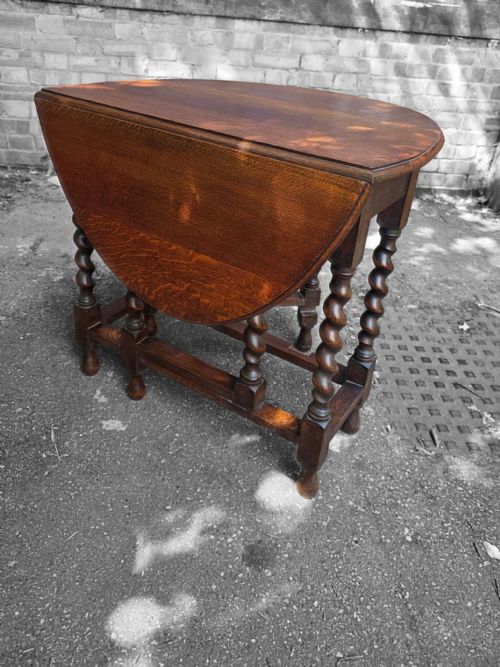
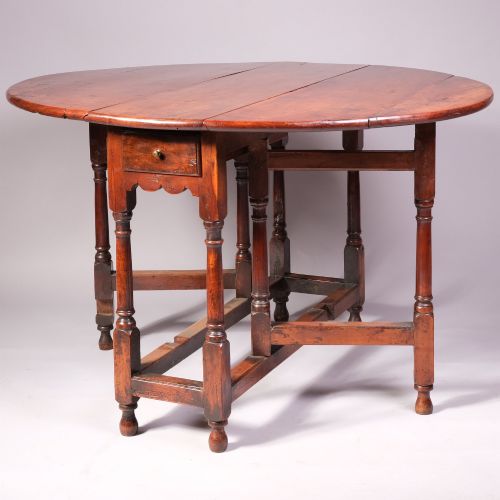
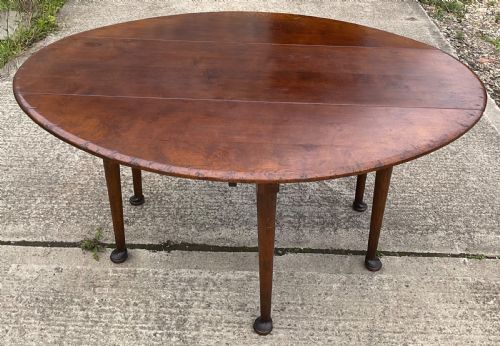
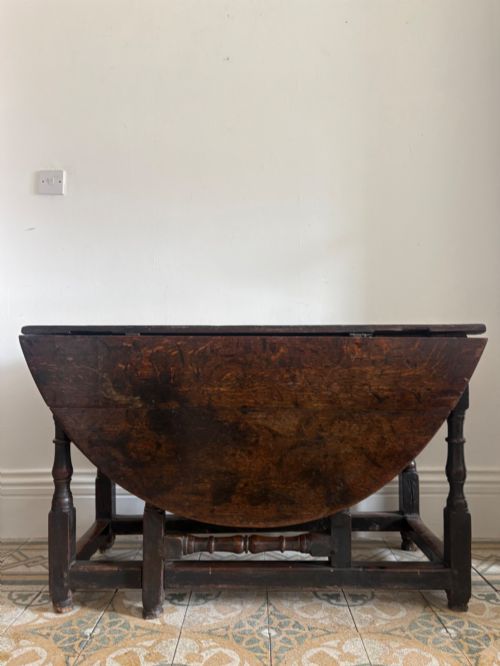


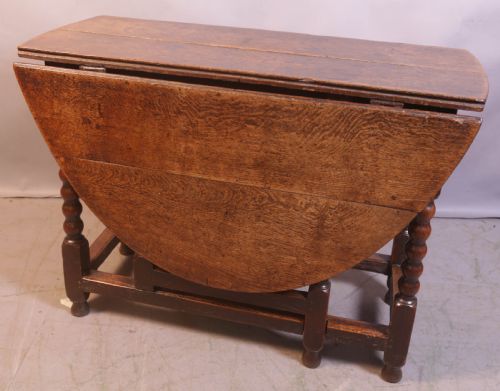

Brown Wood Gateleg Table
These brown wood gateleg table pieces offer folding leaves and sturdy timber construction, making them a practical choice for flexible living spaces.
Understanding the brown wood gateleg table
A brown wood gateleg table provides a versatile surface featuring hinged flaps supported by swing-out legs. The selections span the 1700 period, the 18th Century, and the Edwardian era, showing how these folding tables adapted over centuries.
Forms on this page include dining tables, occasional tables, side tables, and specific gateleg table designs. These are constructed from timbers such as mahogany and oak, often paired with iron components.
The styles range across Georgian, 17th Century British, Edwardian, and English Country aesthetics. Buyers frequently encounter plank tops, spider table variants, and drop leaf arrangements among the current listings.
Materials and construction methods
Joiners built these pieces using solid hardwoods like oak and mahogany, complemented by iron fittings for hinges and structural support. Plank tops and drop leaves relied on precision carpentry to ensure the folding flaps aligned smoothly when raised.
Turned baluster legs feature prominently on earlier examples, providing both decorative appeal and sturdy support for the hinged leaves. Artisans shaped these timbers by hand, resulting in surfaces that developed distinct patinas over time.
Retail Price Guide 2026
Typical UK retail prices for brown wood gateleg table, calculated from the Sellingantiques database of over a million retail prices indexed since 2003. This retail price guide relies exclusively on Sellingantiques data; no external sources or auction records are used, so the figures do not describe the wider market.
Current listings feature pieces spanning the 1700 period, the 18th Century, and the Edwardian era, constructed in mahogany, oak, and iron.
Distinctions in quality and finish
The distinction between standard examples and superior pieces rests in the preservation of original surfaces, such as superb original patina on early oak tables. Finer iterations display careful timber selection, particularly in figured mahogany spider tables.
Structural integrity of the gate mechanism and the crispness of turned baluster legs separate refined craftsmanship from heavier, less articulated builds. The harmony between the fixed centre frame and the pivoting support legs governs the overall success of the piece.
The Brown Wood Gateleg Table Glossary
- Gateleg table
- A table with hinged leaves supported by legs that swing out like a gate. This design allows the surface area to expand or contract as needed.
- Dropleaf table
- A table with a fixed centre section and movable flaps on either side. These flaps drop down when not in use.
- Baluster leg
- A turned vertical support shaped like a miniature pillar or vase. They appear frequently on earlier tables from the seventeenth and eighteenth centuries.
- Spider table
- A lightweight table with slender turned legs, popular during the eighteenth century in mahogany. The delicate proportions distinguish it from heavier dining variants.
- Plank top
- A table surface constructed from solid wooden boards joined edge to edge. This construction method is common in early oak furniture.
Frequently Asked Questions
How do I use a gateleg table daily?
You can keep the leaves dropped down against the wall to save floor space in compact rooms. When guests arrive, simply swing out the supporting legs and raise the flaps to create a full dining surface.
The sturdy timber construction handles everyday dining and writing tasks easily. Positioning the table away from direct heat sources helps protect the antique wood and hinges.
What is the difference between oak and mahogany tables?
Oak examples tend to date from the seventeenth and early eighteenth centuries, often displaying robust plank tops and turned baluster legs. Mahogany versions frequently appear in lighter formats, such as spider tables or Georgian dining designs.
The grain and colour differ significantly between the two timbers, with oak showing a pronounced texture and mahogany offering a smoother, reddish-brown appearance. Both materials provide durable foundations for folding leaf mechanisms.
How do I date an antique drop leaf table?
Examining the timber species, leg turning style, and construction joints provides the primary clues for dating. Tables from the 1700 period and 18th Century typically feature hand-shaped components and pegged joints.
Edwardian iterations display lighter proportions and different secondary woods compared to their Georgian predecessors. Original surface patination also helps confirm the age of earlier oak and mahogany examples.
Can these tables fit in small dining rooms?
The folding mechanism makes these tables ideal for spaces where a permanent large surface is impractical. With both leaves lowered, the footprint shrinks to a narrow central section.
Lifting one or both leaves allows you to adjust the surface area to suit the number of diners. This adaptability explains their enduring popularity in both country and town houses.