
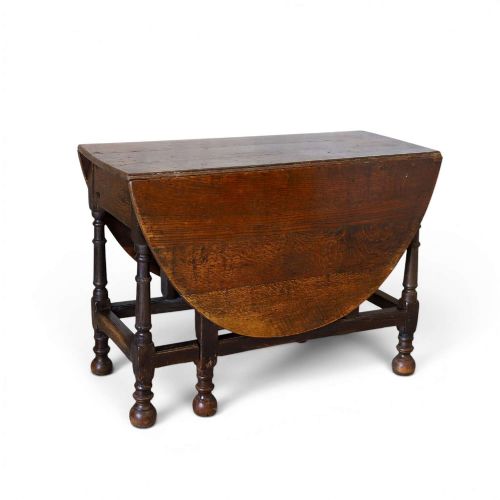
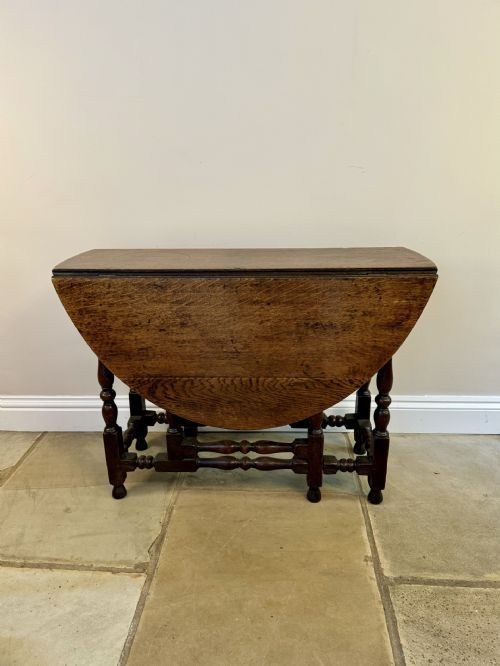
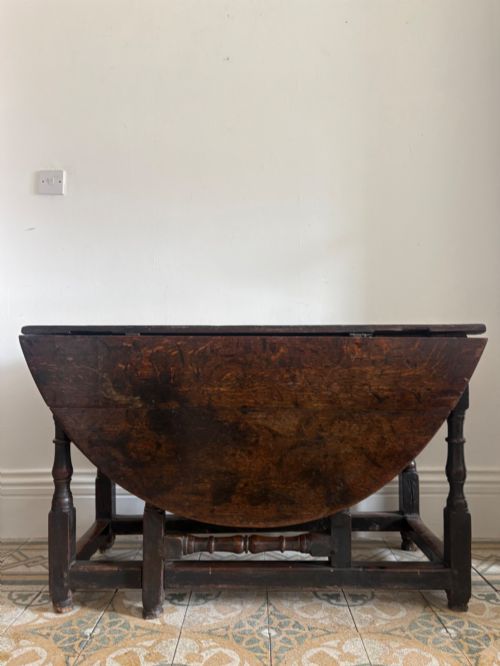


Georgian Oak Gateleg Table
A georgian oak gateleg table provides sturdy daily dining with drop leaves that swing out on hinged legs.
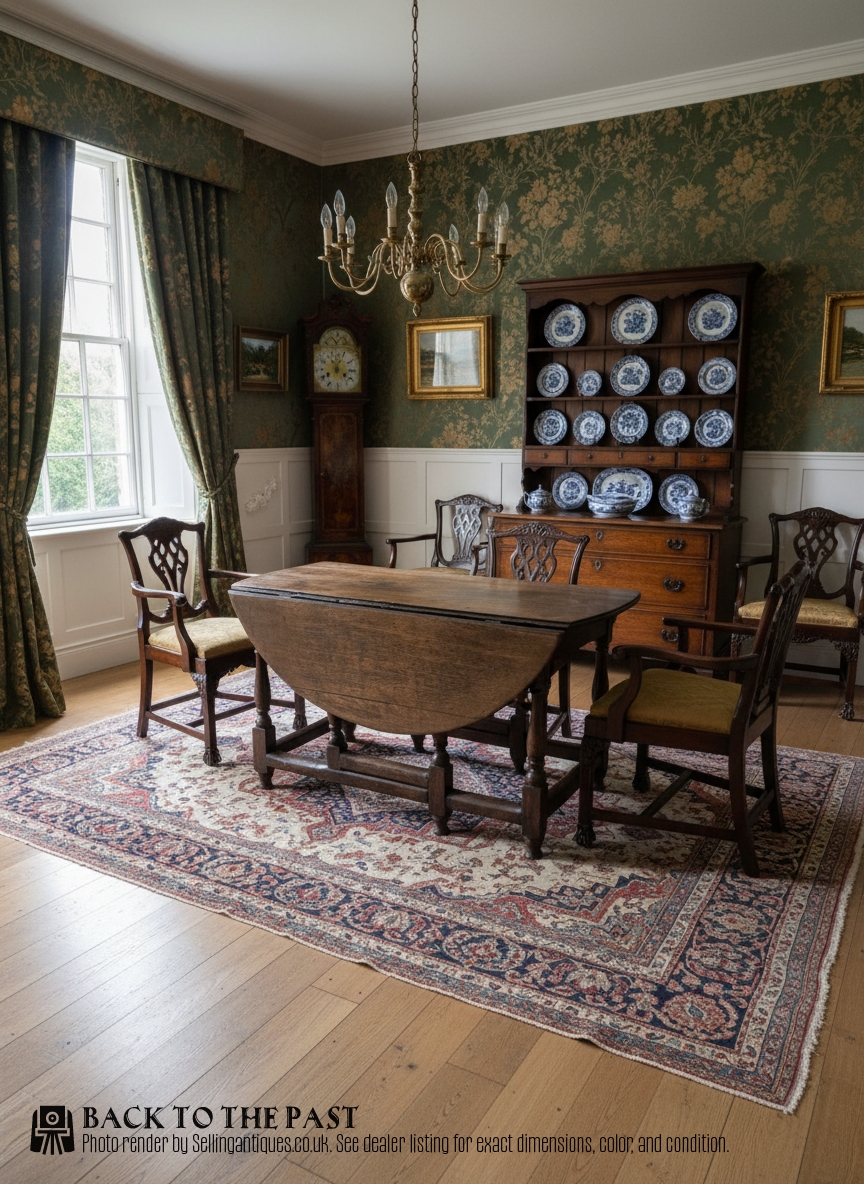
Georgian Oak Gateleg Table
A georgian oak gateleg table is a flexible drop-leaf dining surface designed to expand when guests arrive and fold down against a wall when floor space is needed.
You are most likely to meet rectangular or oval examples seating anywhere from four to eight people, constructed primarily during the eighteenth century.
These pieces bridge formal dining and English country utility, featuring the warm timber tones typical of the period.
How they were made
Joiners built these tables using solid oak timbers, occasionally incorporating elm, walnut, or mahogany for specific panels or secondary elements.
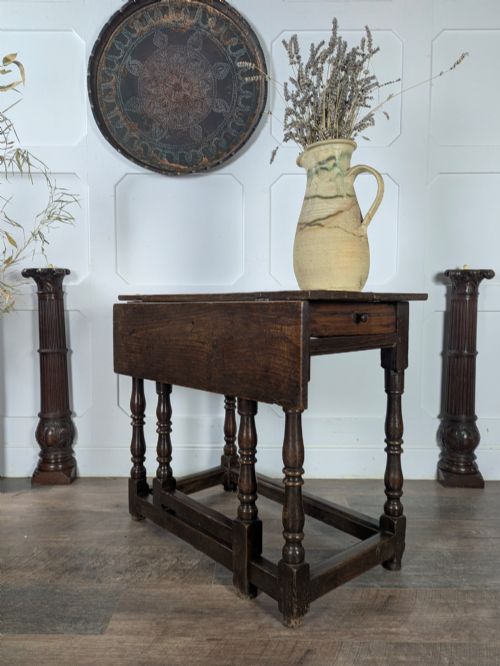
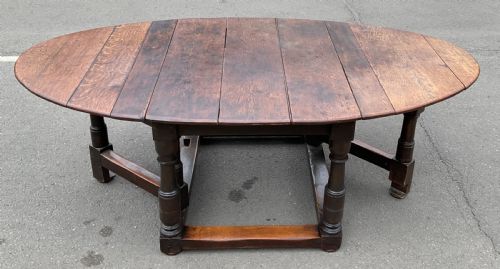
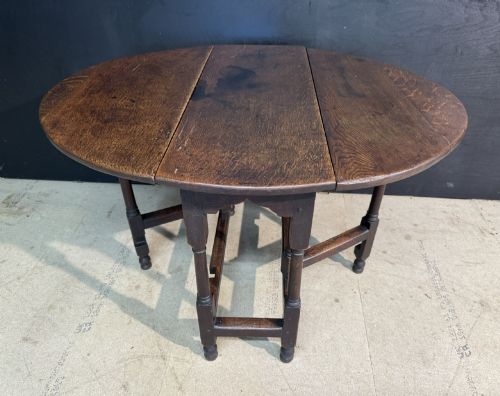
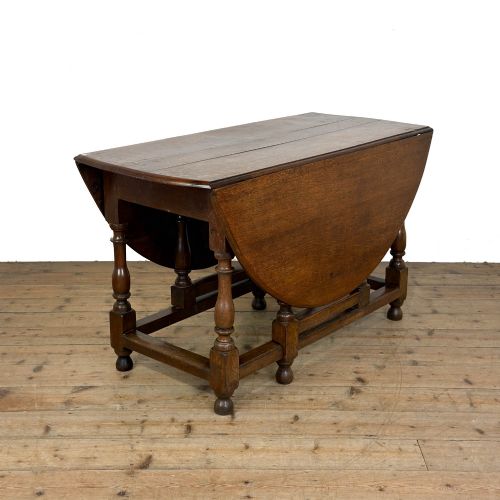
The characteristic drop leaves rely on hinged gatelegs that swing outward to support the extended leaves, often secured with original brass or iron hardware.
Turned baluster legs provide the main structural support, tied together by low stretchers that keep the heavy timber frame rigid.
Georgian Oak Gateleg Table Retail Price Guide 2026
Typical asking prices for georgian oak gateleg table among the pieces listed under this phrase on Sellingantiques today, from the lower quarter to the upper quarter. They describe what is for sale here now, not the wider market.
The listings show timbers spanning solid oak alongside occasional walnut and elm, anchored primarily in eighteenth-century production.
What varies in quality
The depth of the surface patina and the grain figuration in the oak timber set finer examples apart from simpler utilitarian pieces.
Construction details such as the presence of original hinges, untouched drawer linings, and cleanly turned baluster legs dictate the standing of an individual table.
The Georgian Oak Gateleg Table Glossary
- Gateleg
- A table with hinged legs that swing out from the frame to support drop leaves. This design allows the surface area to double when fully extended.
- Drop-leaf
- A hinged table section that hangs down at the side when not in use. It lifts to horizontal and rests on a swinging leg for support.
- Baluster leg
- A vertical support turned on a lathe to resemble a pillar or vase shape. These are typical of seventeenth and eighteenth-century joinery.
- Patina
- The surface sheen and colour developed by wood over decades of handling and wax polishing. A warm patina indicates age and regular use.
- Stretcher
- A horizontal wooden bar connecting the legs of a table near the floor to add stability. They help prevent the turned legs from bowing outward under heavy loads.
Georgian Oak Gateleg Table: Frequently Asked Questions
How many people do these tables seat?
Smaller versions accommodate four diners comfortably when fully opened, while larger double gateleg formats extend to seat six or eight individuals.
The drop-leaf mechanism allows you to adjust the footprint depending on daily seating requirements.
Where were these tables used in a home?
They served primarily as practical dining furniture in kitchens and dining parlours, easily pushed aside against a wall between meals.
Smaller formats also functioned as side or supper tables in reception rooms.
How do I care for an oak surface?
Maintain the wood by applying natural beeswax periodically and buffing it with a soft cloth to preserve the surface sheen.
Avoid placing hot dishes or wet glasses directly onto the bare timber to protect the finish.
How do I distinguish earlier from later periods?
Earlier pieces from the seventeenth or very early eighteenth century typically feature heavier turned baluster legs and stretchers positioned close to the floor.
Later eighteenth-century examples often display lighter framing timbers and simpler joinery details.