


Country Oak Drop Leaf Table
A country oak drop leaf table offers sturdy practicality and warm timber tones, functioning as a versatile centrepiece for dining rooms or kitchens.
Country Oak Drop Leaf Table
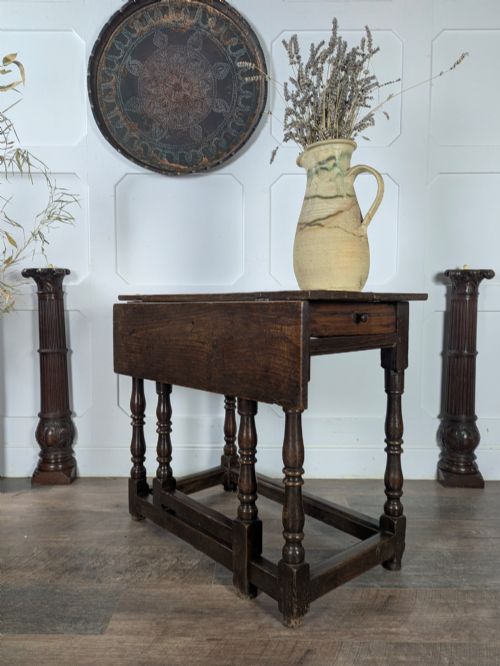
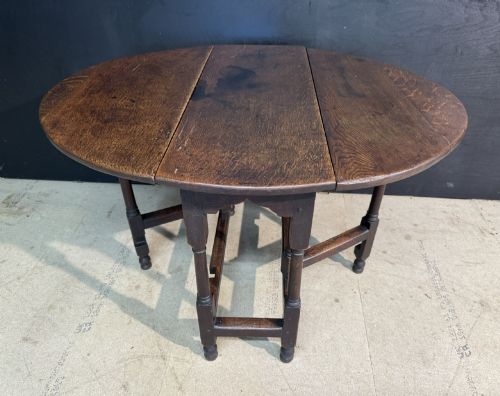
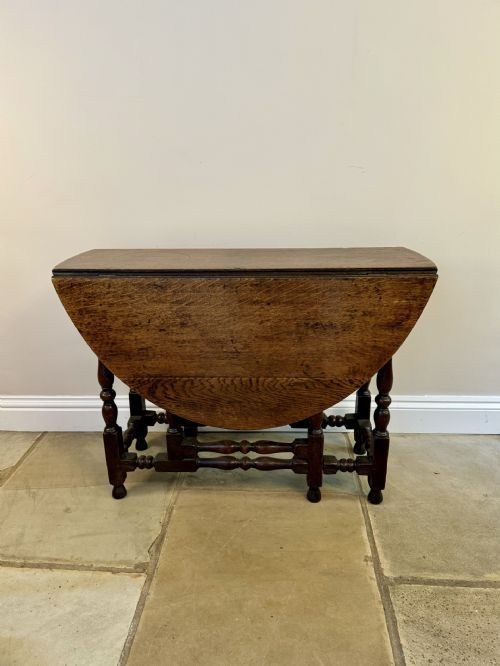
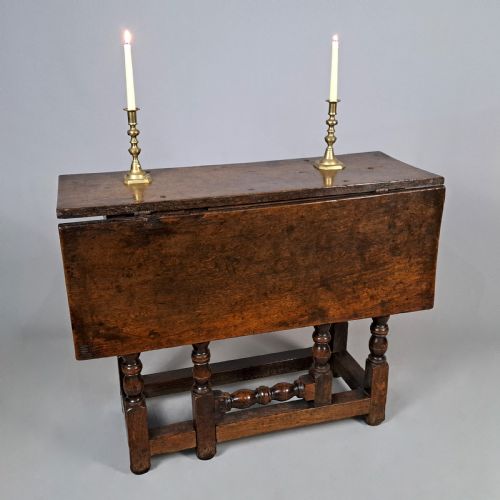
A country oak drop leaf table provides adaptable surface space through hinged flaps that fold down when not in use. These pieces appear frequently in seventeenth and eighteenth-century formats, often taking the form of robust gateleg tables designed to seat several guests.
Buyers encounter examples ranging from compact side tables to large dining versions intended for farmhouse kitchens. The selections span Jacobean, Queen Anne, and Georgian styles, reflecting centuries of domestic utility across English and Welsh homesteads.
How They Were Made
Joiners built these tables predominantly from solid oak, sometimes incorporating secondary timbers like ash or fruitwood for internal framing or secondary elements. Peg joinery secured the structural joints tightly without relying on modern metal fixings, allowing the timber to expand and contract naturally over generations.
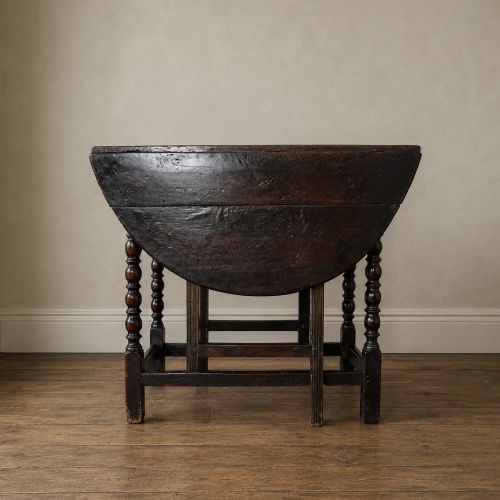
Turning lathes shaped the supporting legs and baluster posts into barley twist or simpler columnar profiles. Hinges made of iron or brass connected the drop leaves to the main top, supporting the folding flaps when extended.
Some seventeenth-century gatelegs served double duty as clandestine supper tables where families tucked away the folding flaps at a moment's notice.
What Varies in Quality
The visual appeal depends heavily on the depth of the timber's patina and surface colour, accumulated through centuries of polishing and daily use. Tables retaining their original untampered finish and untouched construction display greater historical integrity than those stripped or heavily rebuilt.
Proportion and scale dictate the desirability of individual pieces, with smaller side formats and exceptionally large eight-seater dining variations commanding distinct types of interest. The thickness of the top planks and the complexity of the leg turnings further distinguish standard domestic items from finer examples.
The Country Oak Drop Leaf Table Glossary
- Gateleg table
- A table with hinged leaves supported by swinging legs that pull out like a gate. This design provides sturdy support for the drop leaves when the table is fully opened.
- Patina
- The surface sheen and mellowed tone developed on wood over long periods of handling and waxing. It serves as a visual indicator of age and careful maintenance.
- Peg joinery
- A method of securing wooden joints using cylindrical wooden dowels instead of metal nails. This traditional technique accommodates seasonal wood movement.
- Drop leaf
- A hinged flap attached to a fixed tabletop that lowers to save space. These leaves transform compact side tables into generous dining surfaces.
- Baluster
- A moulded column or post supporting the framework of the table. Turned variations add decorative weight to seventeenth and eighteenth-century designs.
Country Oak Drop Leaf Table: Frequently Asked Questions
How many people can sit at a drop leaf table?
Seating capacity depends on the length of the central fixed section and the reach of the swing legs. Smaller versions accommodate four diners, while large double gateleg formats seat eight to ten people comfortably.
Buyers should measure the floor clearance beneath the frame to ensure chairs push in properly when the leaves drop down.
How do I care for antique oak timber?
Maintenance requires applying traditional beeswax periodically to nourish the dry wood and preserve the surface sheen. Avoid placing these tables near direct heat sources or strong sunlight to prevent splitting.
Using coasters and placemats protects the aged finish from moisture rings and heat marks during everyday use.
How can I tell a seventeenth-century table from a Georgian one?
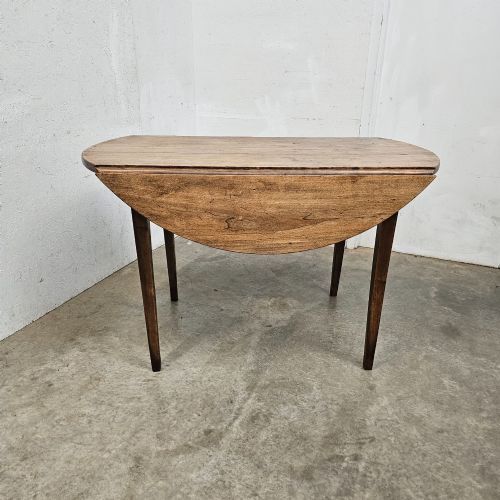
Seventeenth-century examples often display heavier baluster turnings, pegged structural joints, and thick plank tops associated with Jacobean or Charles II aesthetics. Georgian iterations typically feature lighter proportions, slimmer legs, and refined timber framing.
Examining the underside reveals tool marks and construction methods characteristic of specific working periods.
Can these tables fit into modern kitchens?
The folding mechanism allows these tables to function effectively in restricted spaces by lowering one or both flaps against a wall. Their narrow profile when closed makes them practical for breakfast rooms or open-plan areas.
Selecting a smaller side table or a compact gateleg format ensures the furniture matches contemporary room dimensions.