



Traditional Oak Gate Leg Table
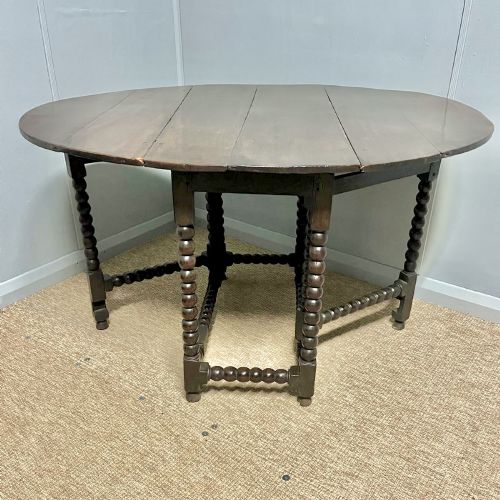
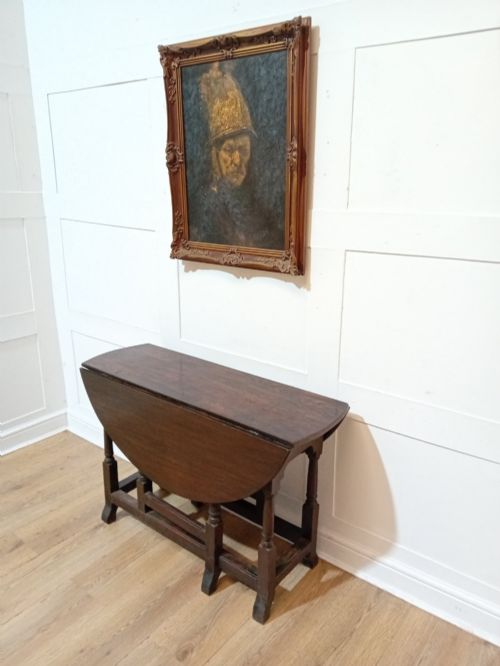
A traditional oak gate leg table is a sturdy folding dining piece that expands to seat a crowd and folds down to save floor space.
Traditional Oak Gate Leg Table
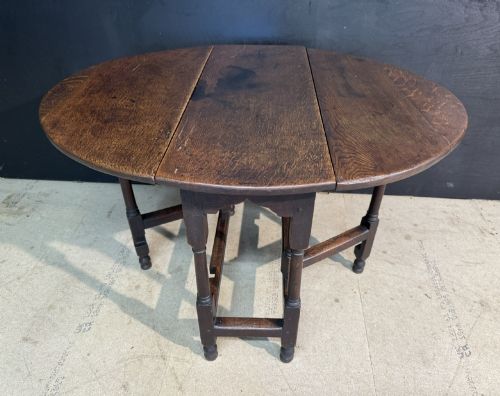
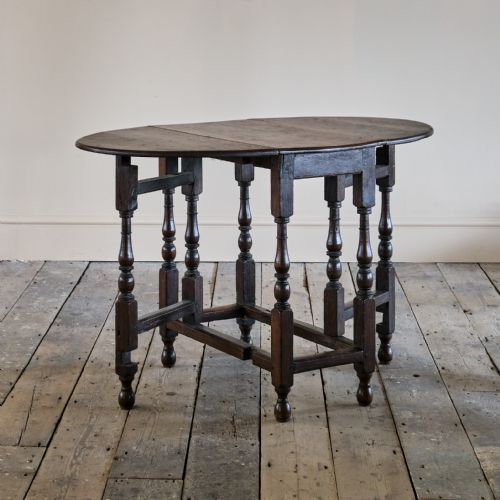
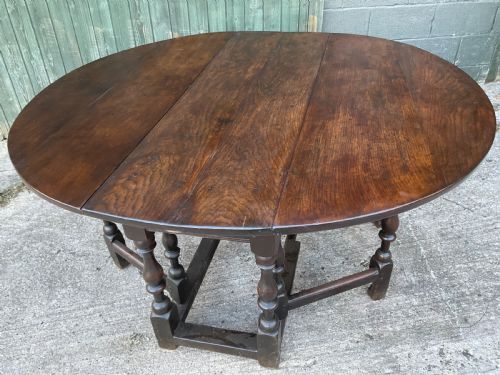
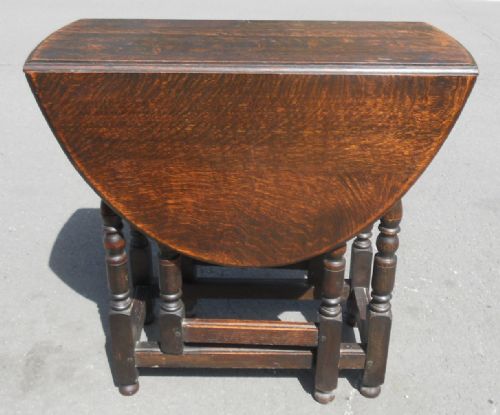
A traditional oak gate leg table provides a flexible surface through drop leaves supported by hinged legs that swing out like gates. When you search for a traditional oak gate leg table, you encounter pieces spanning from the seventeenth century through to the mid-twentieth century.
The selection ranges from large dining tables designed for family meals down to smaller occasional, side, and coffee tables. Oak and solid oak dominate the construction, often manifesting in rectangular or oval formats that suit various domestic settings.
How they were made
These tables rely primarily on solid oak, shaped and joined to create rigid frames and folding leaf mechanisms. Structural support often includes iron or brass hardware on the hinges and joints that allow the gate legs to pivot smoothly.
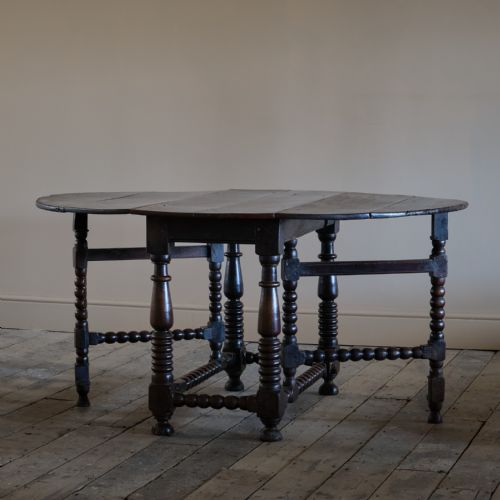
Turned wooden components, such as bobbin turning, provide vertical support and decorative detail on seventeenth-century examples. Joinery techniques connect the fixed centre section to the drop leaves and the moveable swing legs without compromising overall stability.
Traditional Oak Gate Leg Table Retail Price Guide 2026
Typical asking prices for traditional oak gate leg table among the pieces listed under this phrase on Sellingantiques today, from the lower quarter to the upper quarter. They describe what is for sale here now, not the wider market.
Some seventeenth-century tables have survived wars, revolutions, and endless family dinners just to end up holding someone's morning coffee.
What varies in quality
The distinction between ordinary and superior examples lies in the timber selection and the integrity of the turning work. Finer pieces display substantial solid oak construction with crisp detail on the turned legs and well-fitted hinge mechanisms.
Proportion and scale also separate the items, as larger dining versions require robust framing to support extended leaves safely. The condition of the original timber and the smoothness of the gate action dictate the standing of each piece within its period.
The Traditional Oak Gate Leg Table Glossary
- Gate leg table
- A table featuring hinged leaves supported by one or more legs that swing outward on a gate-like pivot. This design allows the surface area to expand or contract according to requirement.
- Bobbin turning
- A form of lathe-turned decoration resembling a string of bobbins or spools, frequently found on seventeenth-century furniture frames. It adds textural rhythm to the upright supports.
- Drop leaf
- A hinged flap of wood attached to a fixed table top that can be raised and supported or lowered when not in use. It provides the primary mechanism for adjusting the table footprint.
- Jacobean style
- An English design aesthetic spanning the early seventeenth century, characterised by heavy oak construction and geometric moulding. Pieces in this style often display dark finishes and sturdy turned posts.
Traditional Oak Gate Leg Table: Frequently Asked Questions
How do I use a gate leg table?
Raise the hinged drop leaves on either side and swing the outer legs outward until they lock underneath to support the extended surface.
Fold the leaves back down and swing the legs inward when you need to save floor space or place the table against a wall.
Are these tables sturdy enough for dining?
Large versions built with solid oak frames and robust swing legs provide a stable surface suitable for daily family meals and hosting guests.
Ensure the gate legs are positioned correctly beneath the leaves to distribute weight evenly across the entire frame.
How do I tell seventeenth-century tables apart from later revivals?
Early pieces typically feature distinct hand-turned elements like bobbin legs, traditional jointing methods, and patinated oak surfaces developed over centuries.
Later interpretations from the nineteenth and twentieth centuries often employ machine turning and cleaner, more uniform timber characteristics.
Can I use a gate leg table as a desk?
Smaller occasional and side table variants fit well in compact rooms where a folding surface serves adequately for writing or laptop use.
Keep in mind the placement of the swing legs underneath, as they may restrict knee room when seated closely.