
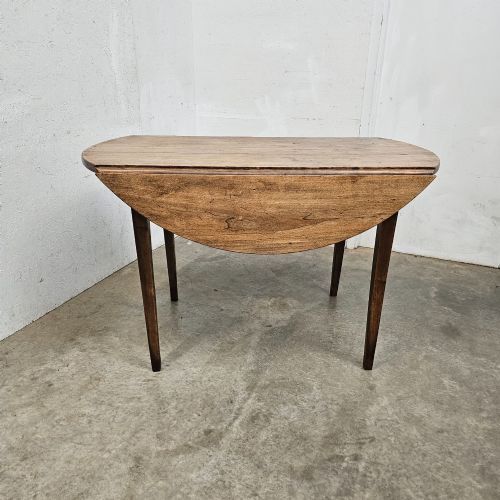
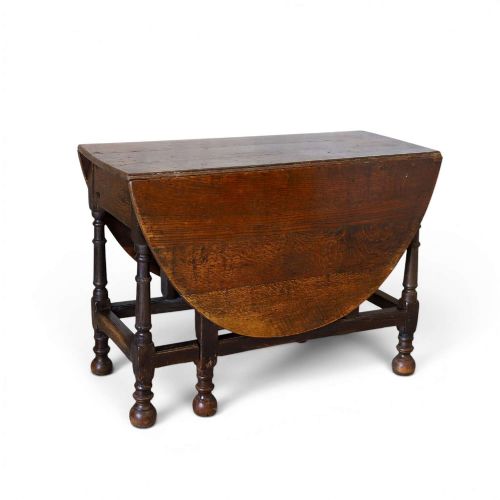
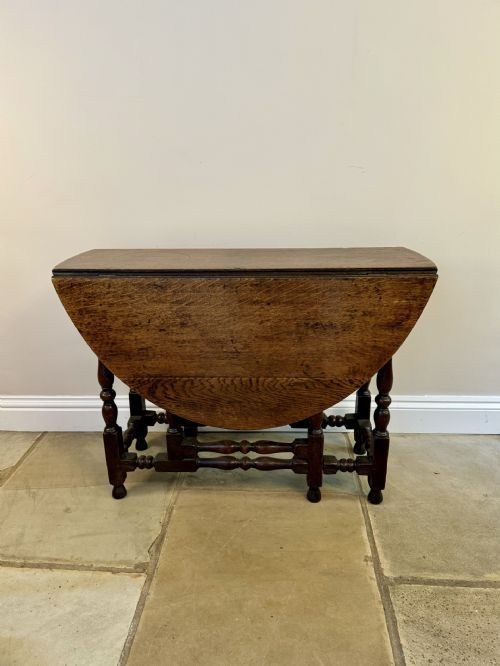
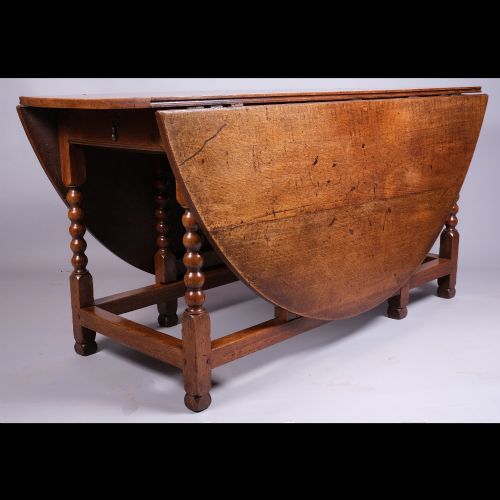


Rustic Oak Drop Leaf Table
A rustic oak drop leaf table offers practical folding utility alongside centuries of robust timber character.
Rustic Oak Drop Leaf Table
A rustic oak drop leaf table bridges centuries of domestic utility, appearing frequently in gateleg and dining forms across this page.
Makers shaped these pieces from the seventeenth through to the nineteenth centuries, drawing on Georgian, Jacobean, and French country styles.
Buyers encounter solid oak and fruitwood constructions designed for flexible dining, occasional use, and everyday spaces.
Materials and construction
Workshops relied heavily on solid oak timber supplemented by fruitwood, pine, and occasional metal hinges or brass fittings.
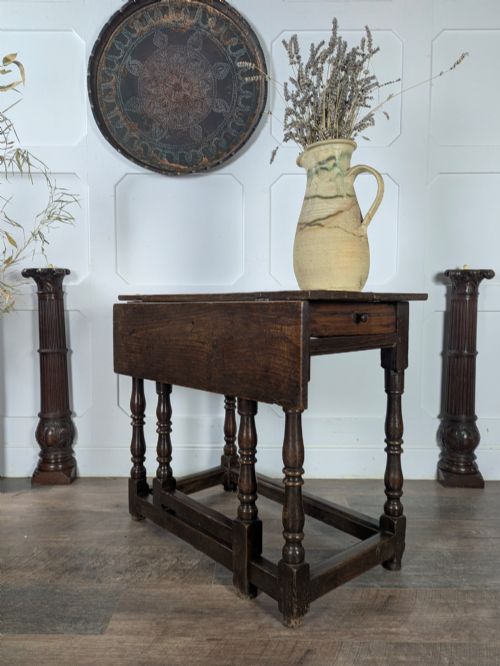
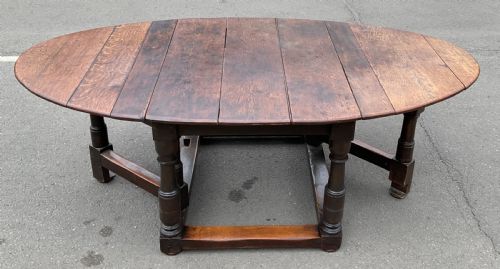
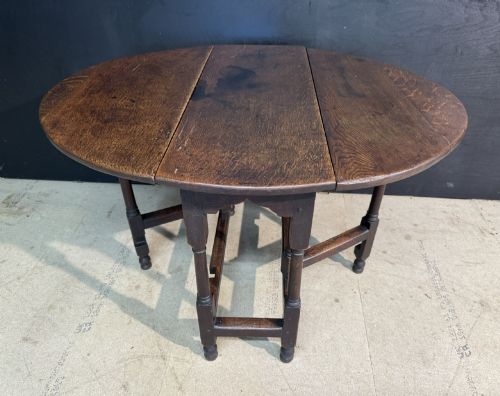
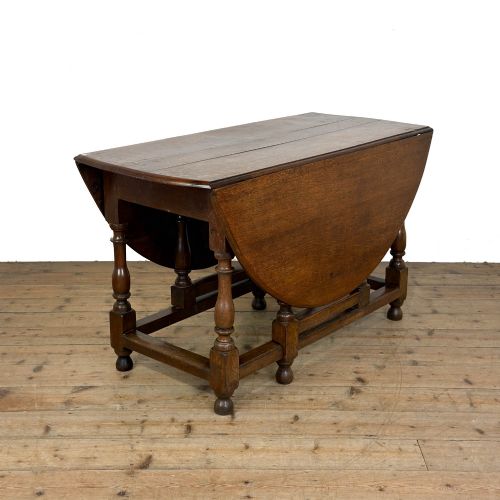
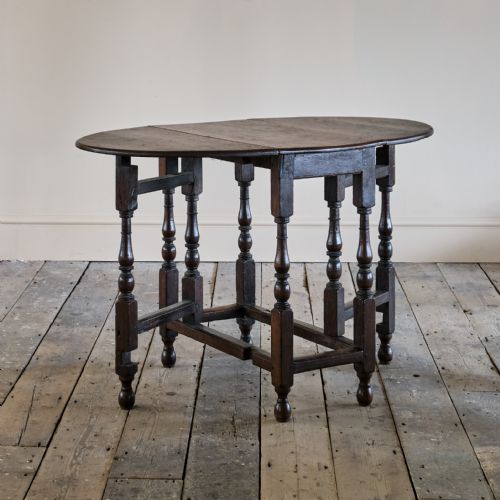
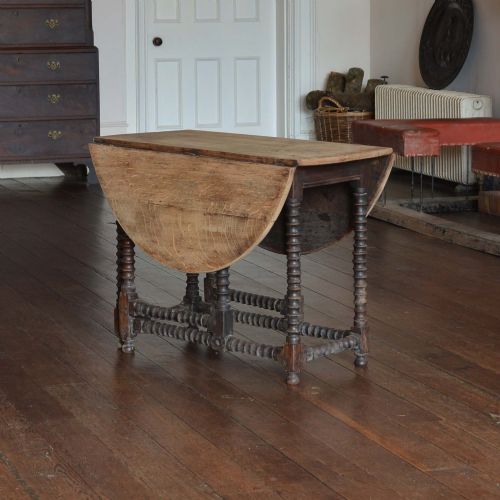
Joinery methods incorporated turned baluster legs, plank tops, and sturdy gateleg frames to support folding flaps.
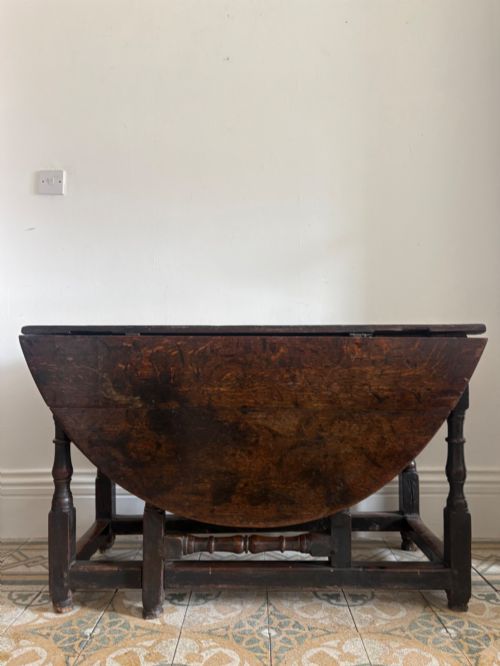
Surfaces often display original hinges and the warm patina accumulated through decades of daily use.
Rustic Oak Drop Leaf Table Retail Price Guide 2026
Typical asking prices for rustic oak drop leaf table among the pieces listed under this phrase on Sellingantiques today, from the lower quarter to the upper quarter. They describe what is for sale here now, not the wider market.
A sixteenth-century dugout metamorphic cupboard hides among the tables, proving early makers enjoyed unexpected transformations.
Quality differences
Excellence in these tables rests upon the integrity of the original timber and the depth of the surviving surface patina.
The sophistication of the turned baluster legs and the smooth movement of the drop leaves distinguish finer examples from simpler provincial work.
The Rustic Oak Drop Leaf Table Glossary
- Gateleg table
- A table with hinged flaps supported by legs that swing out like gates.
- Patina
- The deep surface sheen developed by timber over years of handling and polish.
- Baluster leg
- A turned vertical wooden support shaped like a classical pillar.
- Plank top
- A table surface constructed from boards joined edge to edge.
- Drop-leaf table
- A table featuring a fixed central section and hinged side flaps.
Rustic Oak Drop Leaf Table: Frequently Asked Questions
How do I use a drop leaf table in a small room?
Keep the leaves dropped against the wall for daily floor space, raising them only when guests arrive for meals.
Position the piece as an occasional or coffee table to utilise its folding mechanism within compact modern layouts.
What is the difference between a gateleg and a Pembroke table?
Gateleg tables utilise swing-out legs to support the entire dropped flap on both sides.
Pembroke tables generally feature smaller, shallower flaps supported by pivoting brackets rather than full moving legs.
How do I identify a seventeenth-century oak table?
Look for heavy plank tops, pegged joinery, and characteristic turned baluster or bobbin legs typical of the period.
Examine the timber for hand-worked tool marks and deep surface patina rather than uniform factory finishing.
Are these tables suitable for daily family dining?
Solid oak construction provides immense durability, making these pieces well-equipped for regular household meals.
Care for the antique surface by using heat mats and avoiding excess moisture on the old timber.