



Jacobean Oak Gateleg Table
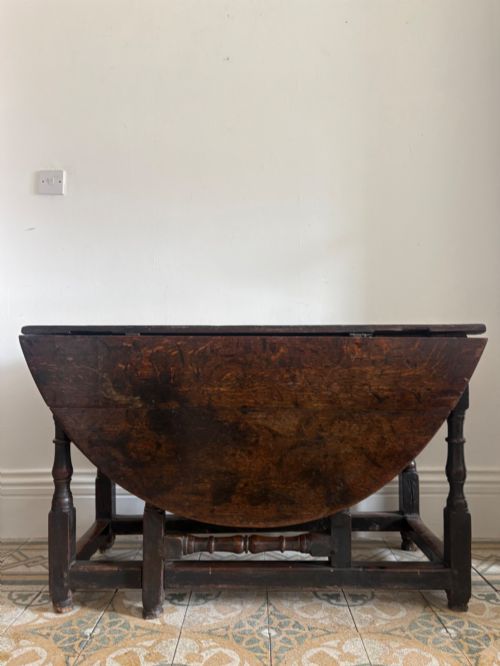
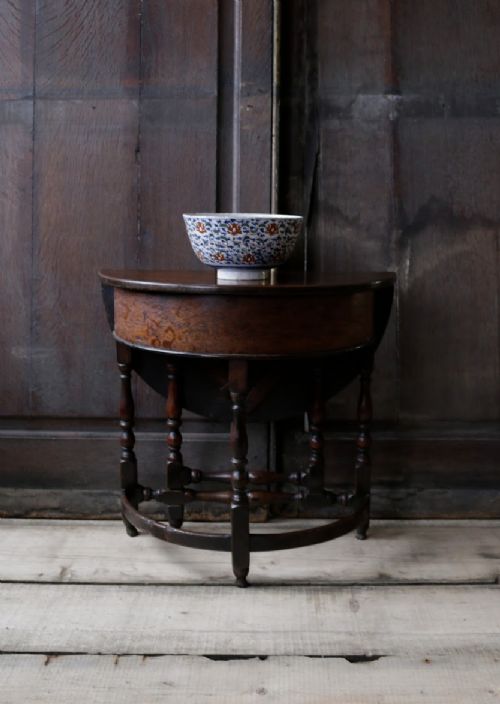
These jacobean oak gateleg table pieces are robust timber dining tables with folding leaves that offer substantial surface space when open and compact storage when closed.
What They Are
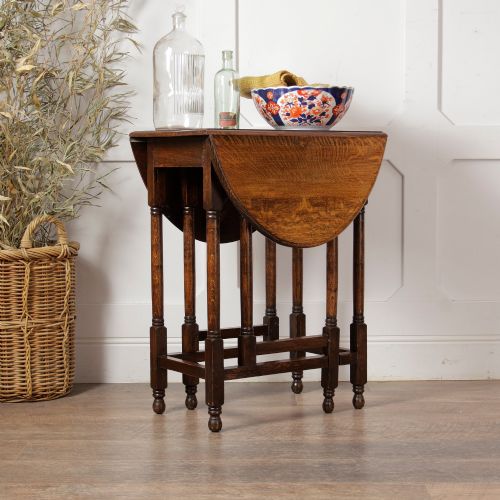
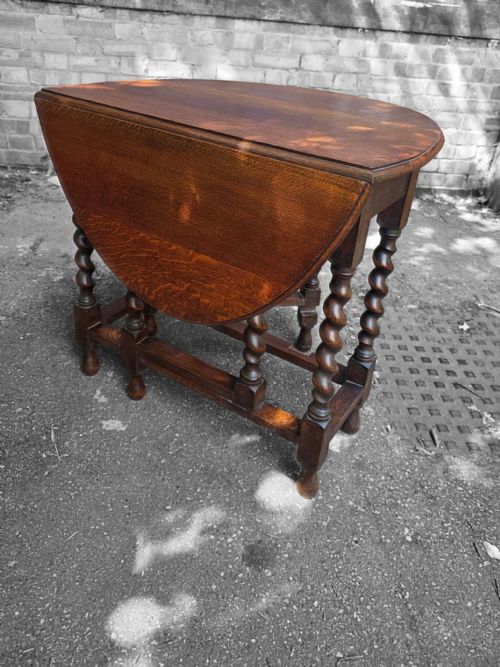
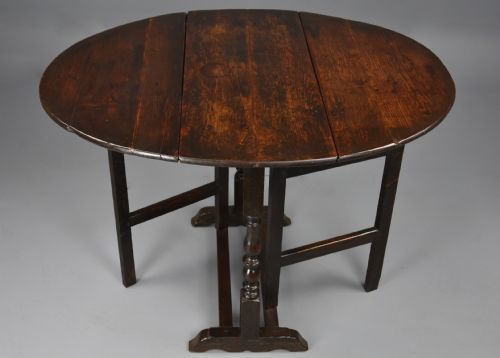
When you search for jacobean oak gateleg table, you are looking at substantial seventeenth century dining tables designed for domestic utility and large gatherings. These pieces typically feature a central fixed top flanked by drop leaves supported on swinging legs.
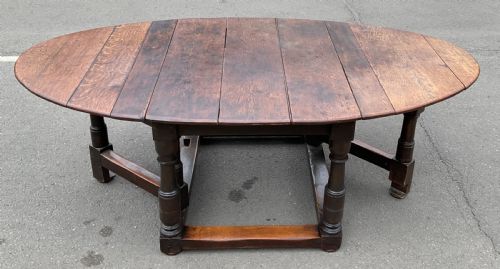
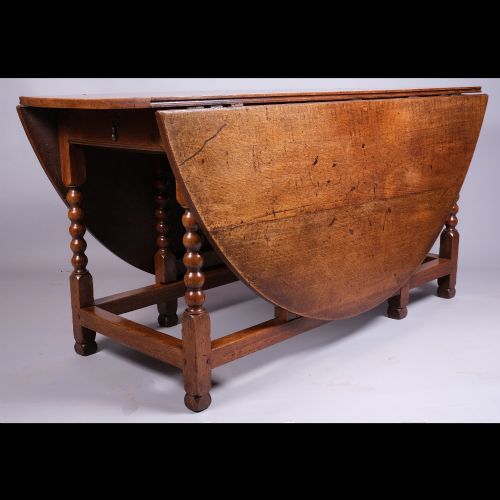
The versions you are most likely to meet on this page span the seventeenth century and around seventeen hundred, taking the form of dining tables and large oval country dining tables. They are built to seat multiple diners, ranging from six to ten people depending on the scale of the frame.
Originating in British tradition, these tables reflect the domestic architecture of their period with heavy timber construction and practical folding mechanisms. Their forms vary from plain plank top surfaces to expansive oval shapes supported by sturdy structural legs.
How They Were Made
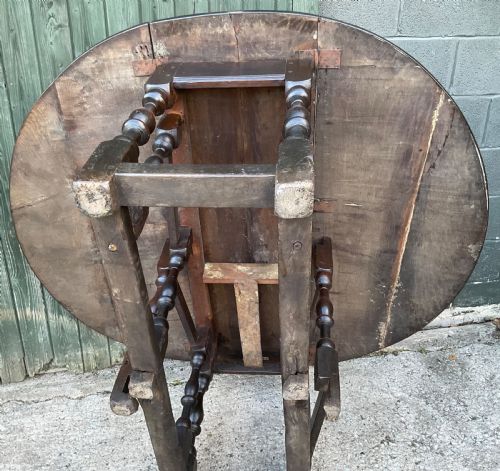
These tables are constructed entirely from oak timber, providing a dense and durable foundation that has survived centuries of use. Iron components are utilised in the hinges and structural fixings that allow the gate legs to swing outward and support the drop leaves.
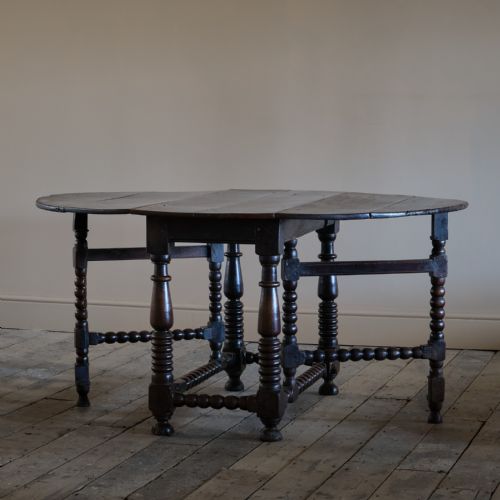
The joinery relies on traditional framing methods, pairing solid timber planks for the tops with sturdy underframes. Carpenters shaped the supports using lathe turning techniques, producing distinctive leg profiles that anchor the heavy leaves.
Retail Price Guide 2026
Typical UK retail prices for jacobean oak gateleg table, calculated from the Sellingantiques database of over a million retail prices indexed since 2003. This retail price guide relies exclusively on Sellingantiques data; no external sources or auction records are used, so the figures do not describe the wider market.
The listings here feature oak and iron materials exclusively, spanning the seventeenth century up to the year seventeen hundred.
What Varies in Quality
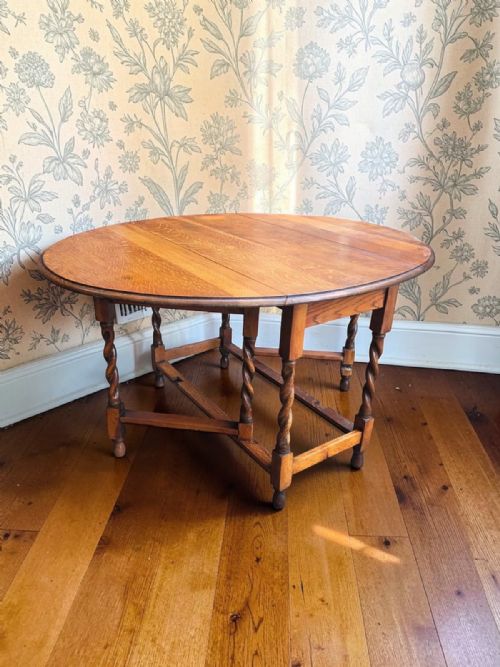
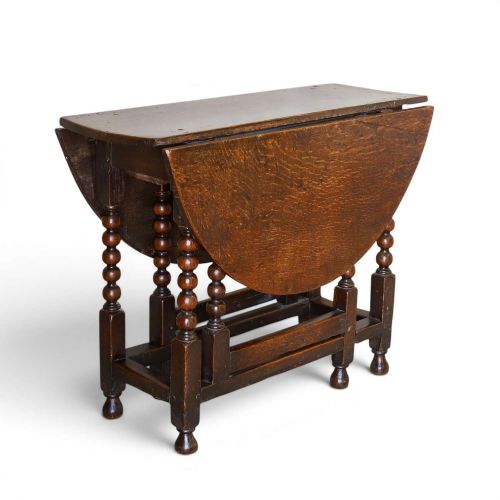
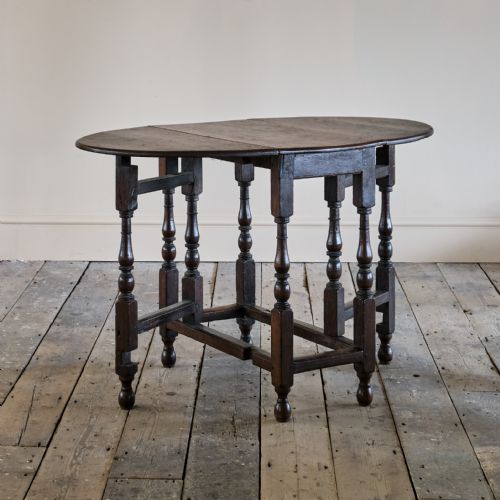
Quality in these pieces is dictated by the proportion of the timber selection and the sophistication of the turned leg supports. Tables featuring bobbin turned legs or turned baluster legs demonstrate a higher degree of joiner craftsmanship than simpler straight-leg counterparts.
The scale and integrity of the top boards also define the upper tier of the range, particularly where wide oak planks are preserved across large oval surfaces. The crispness of the turning and the harmony between the fixed centre and the moving gate legs separate utilitarian examples from finer works.
The Jacobean Oak Gateleg Table Glossary
- Gateleg table
- A table with hinged drop leaves supported by legs that swing outward like a gate. This design allows the surface area to expand or contract significantly.
- Baluster leg
- A turned vertical furniture support resembling a small architectural column. These are shaped on a lathe to create swelling curves.
- Bobbin turning
- A form of lathe turning that produces a series of rounded spheres or discs resembling beads on a string. It creates a highly decorative silhouette on seventeenth century supports.
- Plank top
- A table surface constructed from solid boards laid lengthwise. This method was standard before the widespread use of veneered sheet materials.
Frequently Asked Questions
How many people do they seat?
These tables are built in various scales, with specific examples configured to accommodate six diners comfortably. Larger formats extend further to seat up to ten people when fully opened.
The folding leaf mechanism allows the footprint to shrink when fewer seats are needed. This adaptability made them practical for dining spaces historically just as it does today.
How do I use one daily?
Position the table in a dining room or kitchen where the folding leaves can be raised and lowered without obstruction. Ensure the swinging gate legs are properly positioned underneath the leaves to bear weight securely.
Keep the solid oak timber away from direct heat sources and excessive moisture. Routine dusting and occasional waxing will maintain the finish of the historic wood.
How do I date seventeenth century oak?
Dating relies on examining the construction methods, tool marks, and timber characteristics typical of the period. Joinery details and the style of leg turnings, such as bobbin or baluster forms, provide clear chronological indicators.
Comparison with documented examples from the seventeenth century helps establish the likely decade of manufacture. Hardware like iron hinges also offers clues to the age of the piece.