
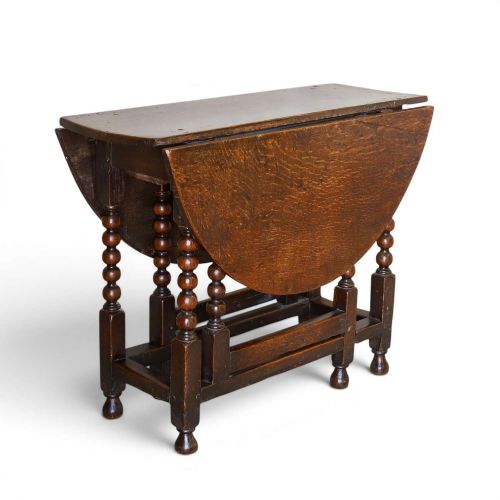
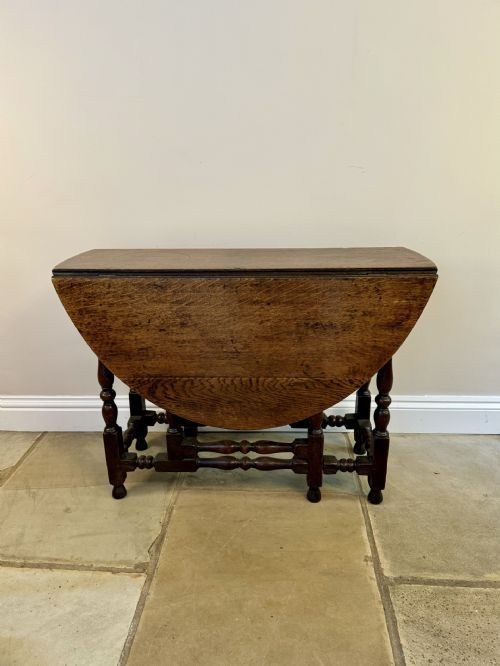
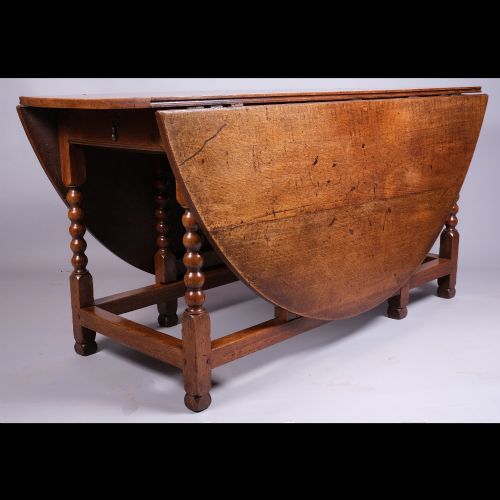
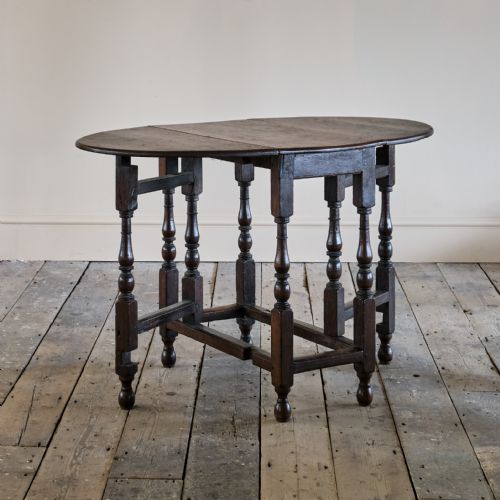
Oak Gateleg Dining Table
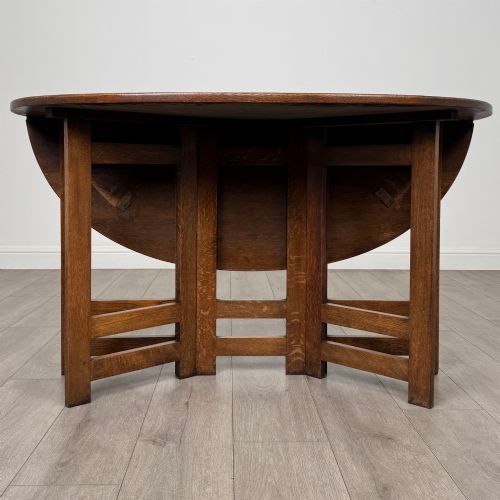
An oak gateleg dining table provides a sturdy timber surface with folding leaves, offering sturdy utility and timeless presence for any dining room.
Understanding Oak Gateleg Dining Tables
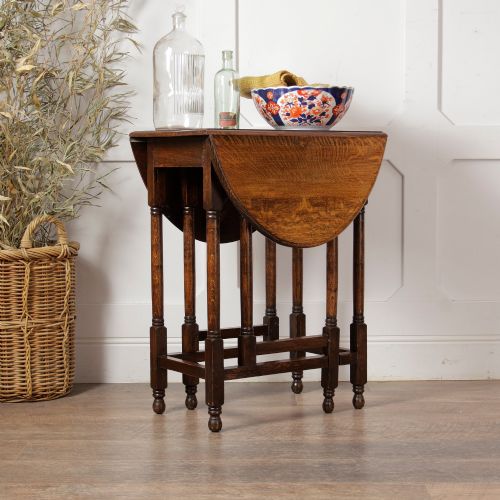
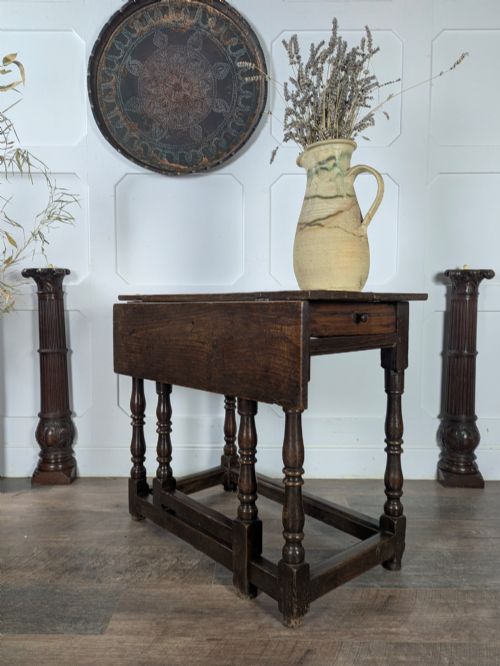
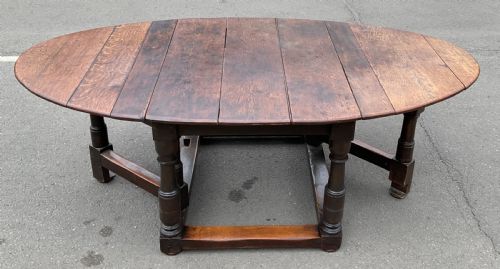
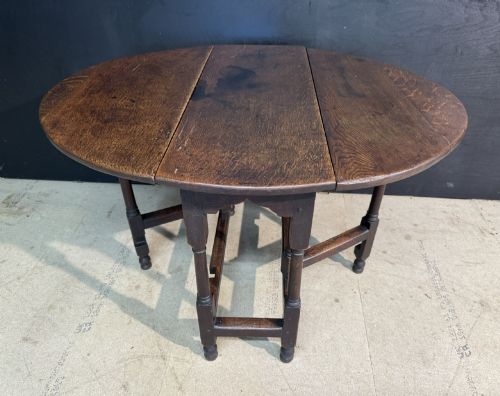
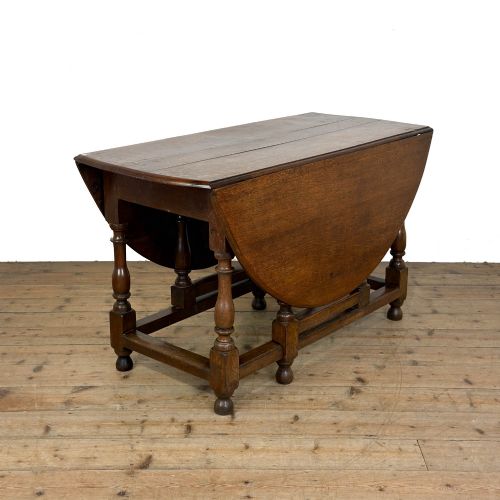
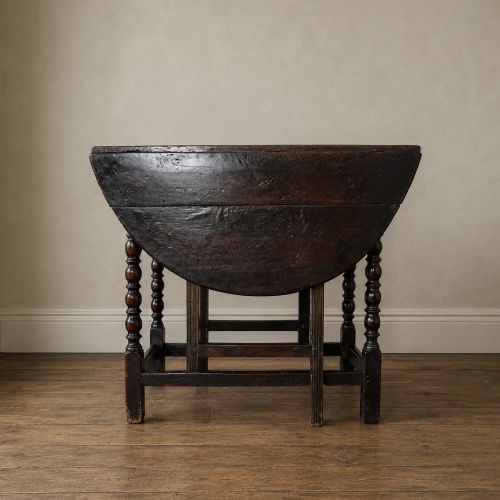
An oak gateleg dining table is a functional domestic timber furnishing defined by hinged flaps and pivoting legs that swing out to support them. These pieces span from the seventeenth century through the eighteenth century and into later revivals, reflecting generations of domestic dining.
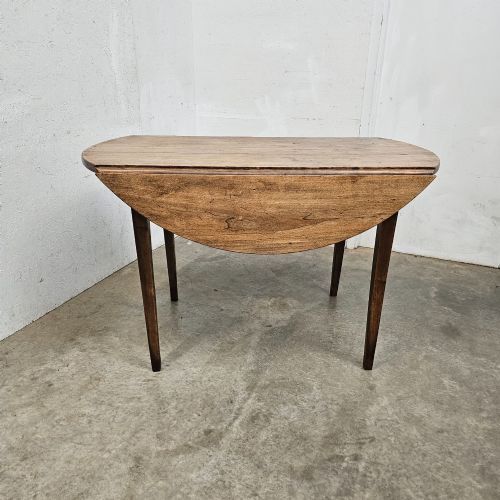
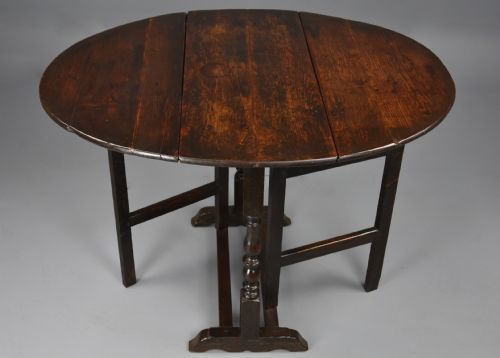
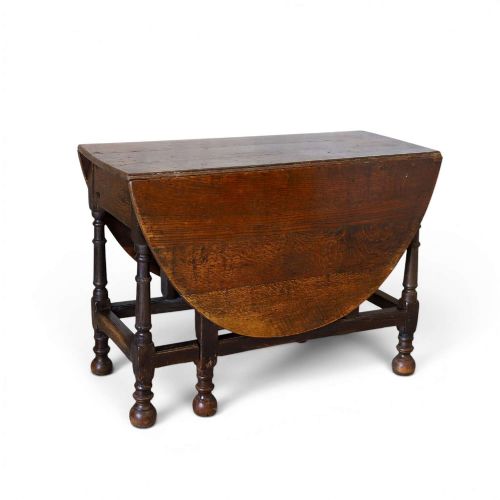
The specimens encountered here range from compact country drop-leaf tables to large double gateleg formats designed to seat eight or ten people. Buyers frequently meet oval and rectangular timber formats originating from English country workshops.
Makers produced these dining tables for versatile daily use, allowing households to drop the leaves against a wall when not dining. The surviving examples demonstrate how timber furniture adapted to changing spaces across centuries.
Distinctions in Quality
Quality in these dining tables rests upon the selection of timber, the thickness of the oak boards, and the proportion of the turned underframe. Superior examples exhibit tightly grained timber with rich, uniform patination accumulated over centuries of use.
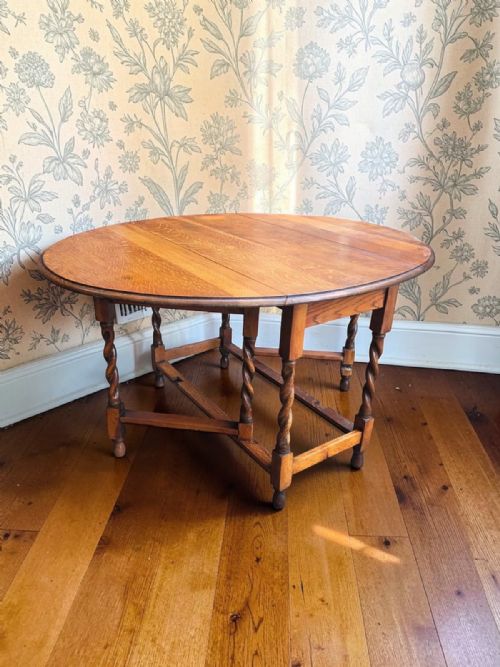
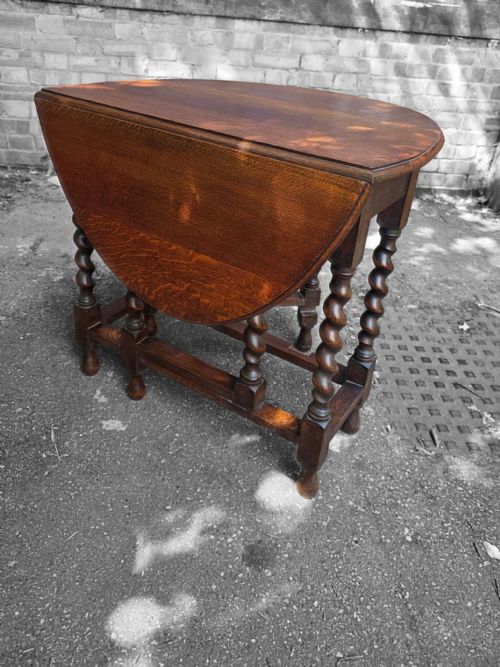
The complexity and execution of the turning on the legs, such as barley twist or faceted supports, distinguish finer workshop output from simpler vernacular furniture. Original hinges, sturdy gate actions, and minimal timber replacement elevate the standing of a piece.
Retail Price Guide 2026
Typical UK retail prices for oak gateleg dining table, calculated from the Sellingantiques database of over a million retail prices indexed since 2003. This retail price guide relies exclusively on Sellingantiques data; no external sources or auction records are used, so the figures do not describe the wider market.
Secret hinges swing quietly while heavy oak leaves wait patiently for the Sunday roast.
Heals
The Oak Gateleg Dining Table Glossary
- Gateleg table
- A table with hinged leaves supported by hinged legs that swing out like a gate. This mechanism allows the surface area to expand or contract significantly.
- Drop leaf
- A hinged section of a table top that can be folded down when not in use. It enables the furniture to sit flat against a wall.
- Barley twist
- A spiral turning carved into furniture legs and stretchers. This decorative technique became prominent during the seventeenth century.
- Mortise and tenon
- A traditional joint where a projecting tongue fits snugly into a corresponding cavity. It forms a rigid connection without relying entirely on metal fasteners.
- Patina
- The surface sheen and colour developed by timber over long periods through handling, polishing, and ageing. It signals the authentic age of wooden antiques.
Frequently Asked Questions
How do I seat eight people?
Larger formats, including double gateleg configurations, extend outward to accommodate eight or ten diners comfortably when both leaves are raised.
The pivoting gate legs swing outward from the central frame to support the expanded oval or rectangular drop leaves securely.
Can I use this daily?
These timber furnishings were built for robust domestic utility and handle everyday dining well when treated with standard care for antique wood.
Protecting the surface from excessive moisture and heat preserves the historical finish and structural joints over years of regular use.
How do I date the timber?
Dating relies upon examining construction methods, joinery style, and the profile of the turned legs, such as seventeenth-century barley twists or eighteenth-century plain turnings.
Changes in hinge types, timber thickness, and overall wear patterns also help specialists distinguish seventeenth-century work from later revivals.