



Jacobean Revival Dining Table
A jacobean revival dining table brings heavy timber and historic character to a room, built to seat large groups in solid oak.
Jacobean Revival Dining Table
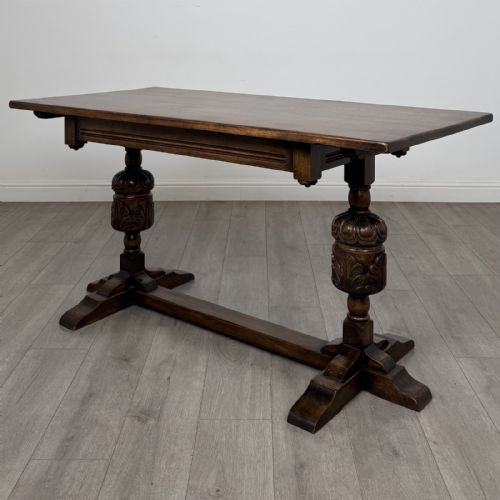
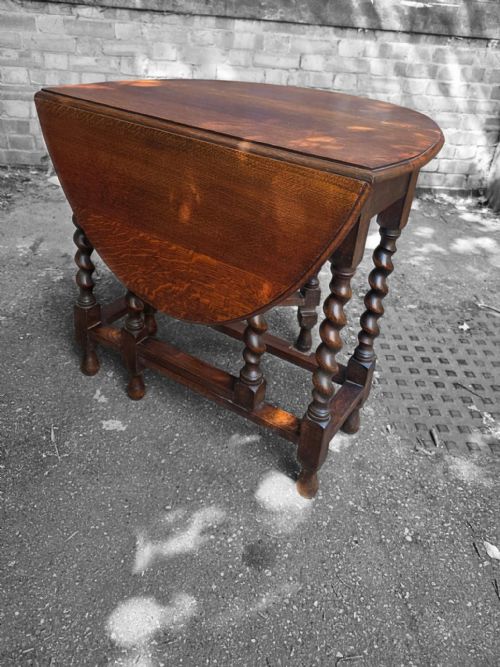
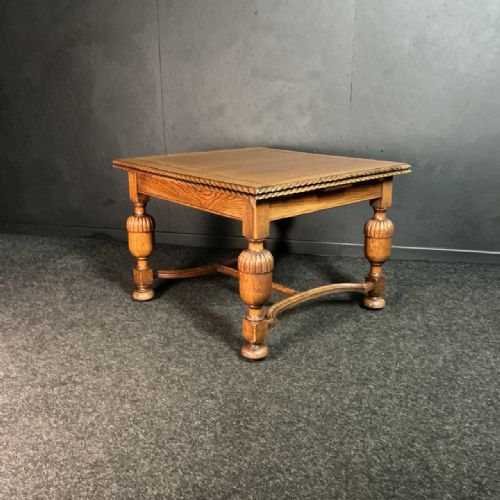
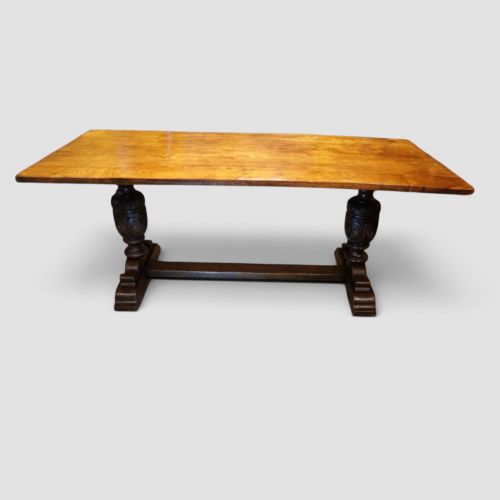
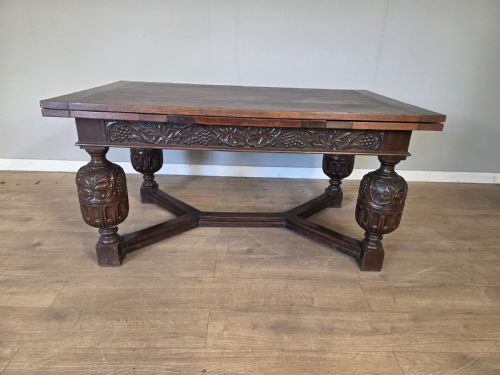
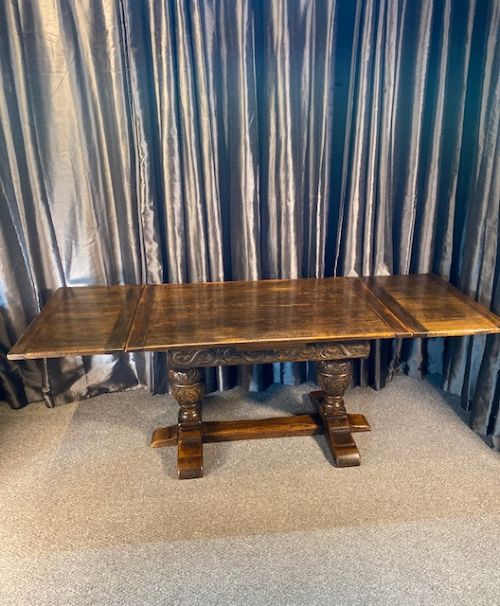
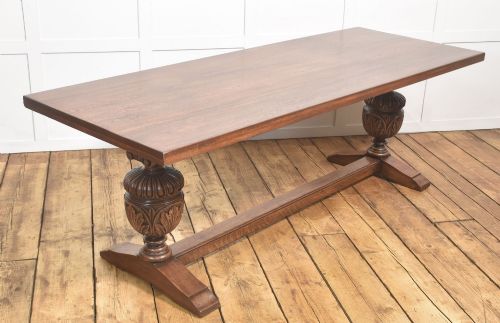
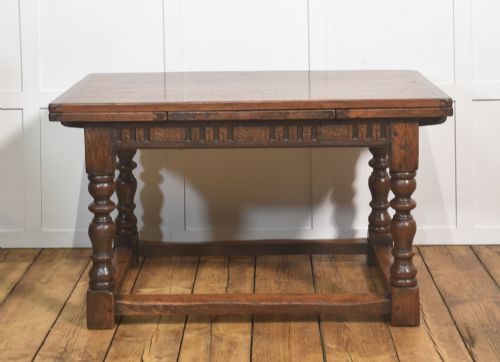
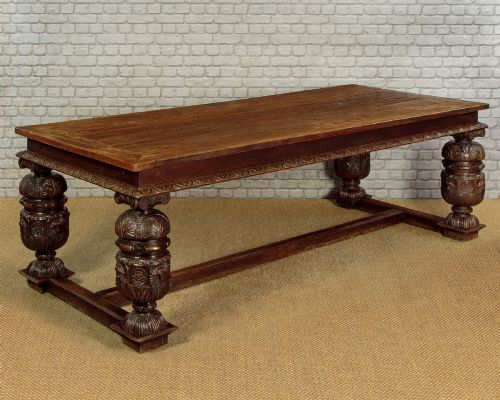
A jacobean revival dining table gathers influences from earlier centuries, appearing most frequently in twentieth-century incarnations like the Edwardian period and the nineteen-twenties. These pieces replicate older forms such as the refectory table, the draw-leaf table, and the gateleg drop-leaf table.
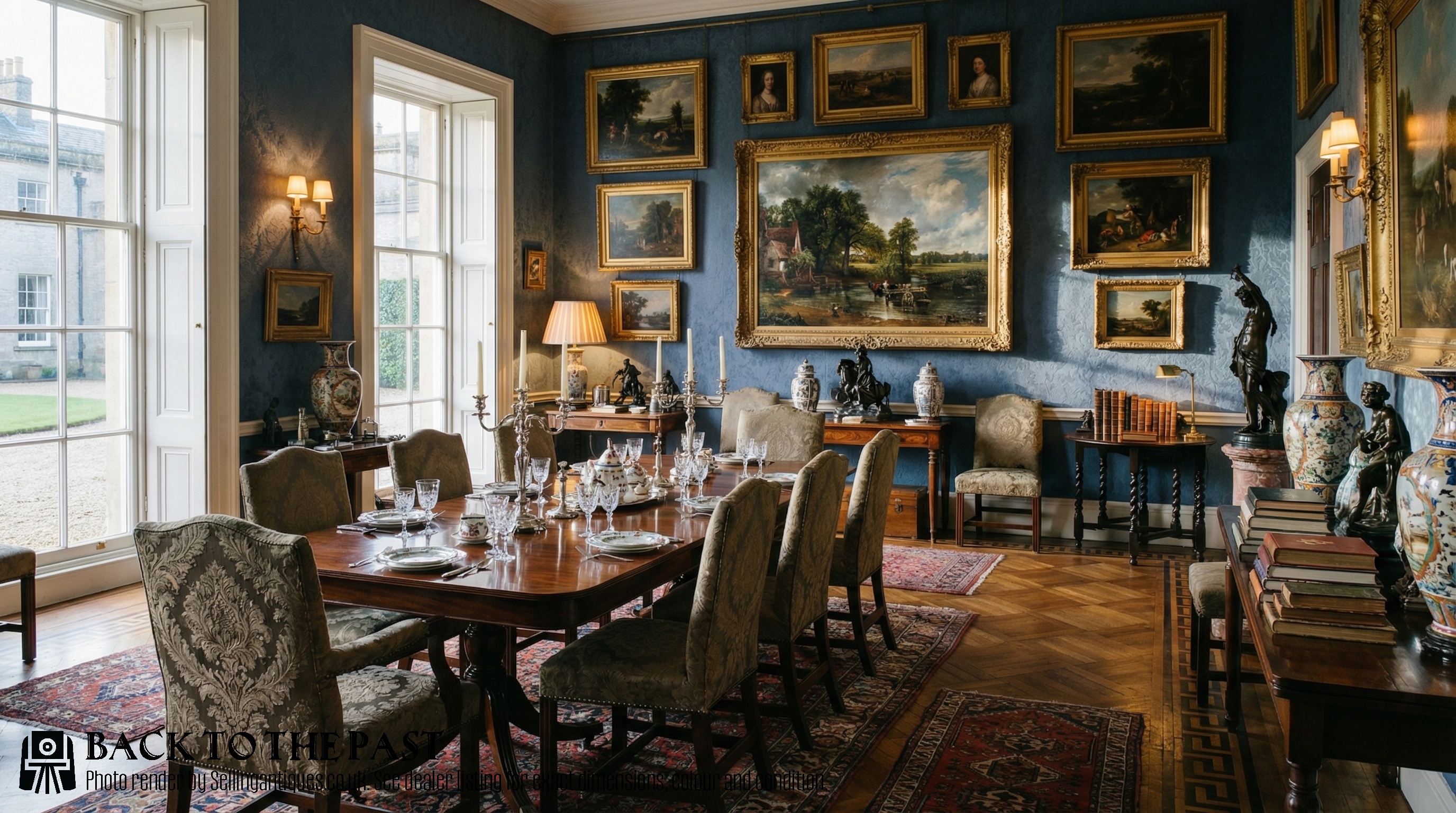
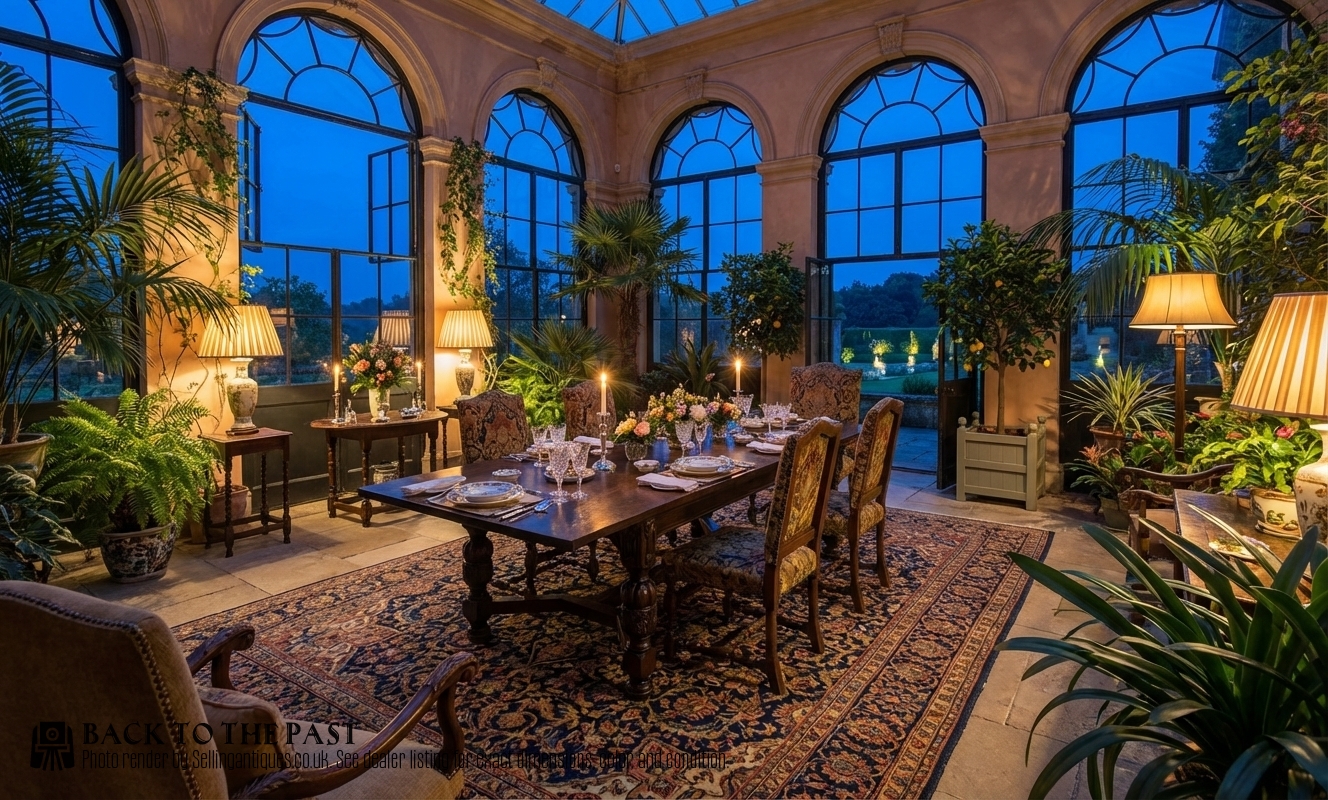
Makers designed these items for substantial dining spaces, often pairing the central table with carved high-back chairs, sideboards, or buffets to form complete dining suites. The overarching aesthetic draws heavily on Elizabethan, Tudor, and seventeenth-century English country traditions.
Buyers encounter formats ranging from compact drop-leaf tables to large extending refectory boards capable of accommodating ten or more diners. Solid oak dominates the selection, though occasional variants incorporate mahogany, brass, leather, and cane elements.
How They Were Made
Carpenters relied almost exclusively on solid oak, utilising its strength to support heavy extending mechanisms, gateleg frames, and thick refectory tops. Construction methods focused on durability, employing robust joinery to sustain daily household use.
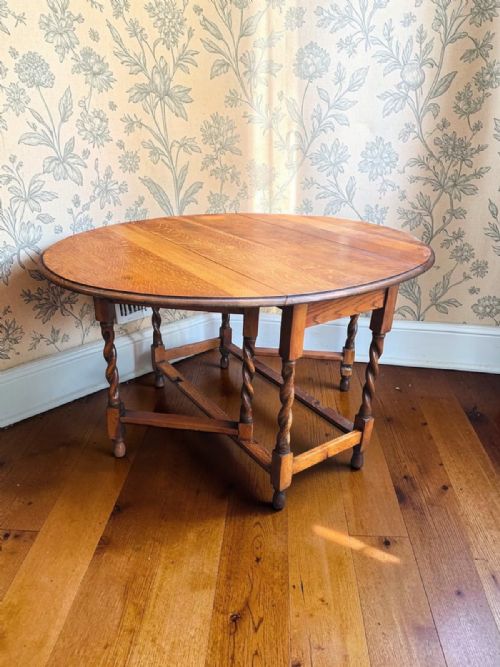
Decoration often involved intricate hand-carving along the aprons, stretcher bases, and bulbous legs. Many pieces incorporated turned elements such as barley twist legs, while others relied on simpler draw-leaf extensions for versatility.
Jacobean Revival Dining Table Retail Price Guide 2026
Typical asking prices for jacobean revival dining table among the pieces listed under this phrase on Sellingantiques today, from the lower quarter to the upper quarter. They describe what is for sale here now, not the wider market.
Listings span multiple eras, including the Edwardian period, the nineteen-twenties, and the nineteenth century, built primarily in solid oak with occasional mahogany.
What Varies In Quality
The standard of carving and timber selection separates standard production from finer workshop output. Crisp, deeply chiselled motifs on the friezes and table legs indicate skilled handwork rather than simple machine milling.
The integrity of the mechanism dictates everyday utility in extending and draw-leaf variants. Smooth operation of the leaves and stable gateleg action reflect careful initial construction and thoughtful ongoing maintenance.
Maple and Co
The Jacobean Revival Dining Table Glossary
- Refectory table
- A long, narrow dining table traditionally used in monasteries and great halls, adapted in later revivals for domestic dining.
- Draw-leaf table
- An extending table equipped with two pull-out leaves stored beneath the main top, allowing the surface area to expand quickly.
- Gateleg table
- A drop-leaf table featuring hinged legs that swing outward like a gate to support the folded flaps when raised.
- Barley twist
- A type of decorative turning resembling a twisted rope, commonly found on the legs and stretchers of revival furniture.
- Dresser base
- A low sideboard or cabinet featuring drawers and open shelving below, often styled to match dining table sets.
Jacobean Revival Dining Table: Frequently Asked Questions
How do I seat more guests?
Many of these tables utilise draw-leaf or extending mechanisms that pull out from each end to lengthen the surface.
Gateleg designs also allow the drop-leaf sides to lift upward, supported by swinging legs to expand the dining area.
What chairs match these tables?
Matching suites frequently include high-back carved chairs upholstered in leather, fabric, or cane work. These seating options echo the historic timber styles of the main table.
Side chairs and armchairs from the same period maintain a cohesive look within the dining room.
How do I care for solid oak?
Keep the timber away from direct heat sources and sudden temperature shifts to prevent the wood from drying out or splitting. Routine dusting and occasional waxing help preserve the natural finish.
Use protective mats underneath hot dishes and liquids to safeguard the surface.
Are these tables from the seventeenth century?
Most pieces belonging to this style category date from the Edwardian era, the nineteen-twenties, and the nineteenth century. Makers revived earlier aesthetic traditions during these later periods rather than building the pieces in the seventeen-hundreds.
Examining the construction methods, hardware, and timber helps clarify the true age of the furniture.