



Barley Twist Dining Table
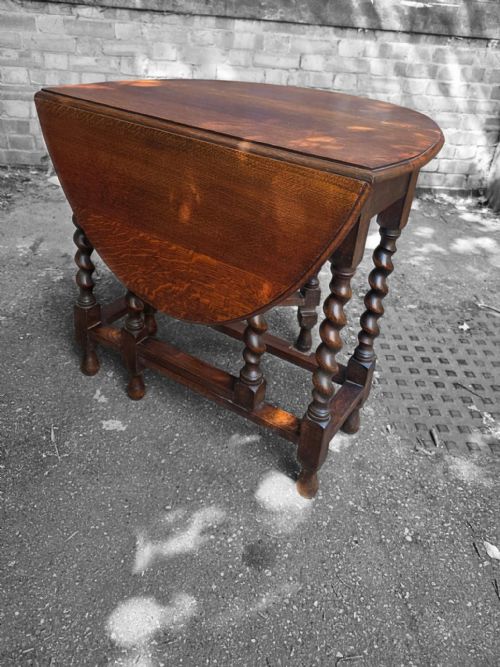
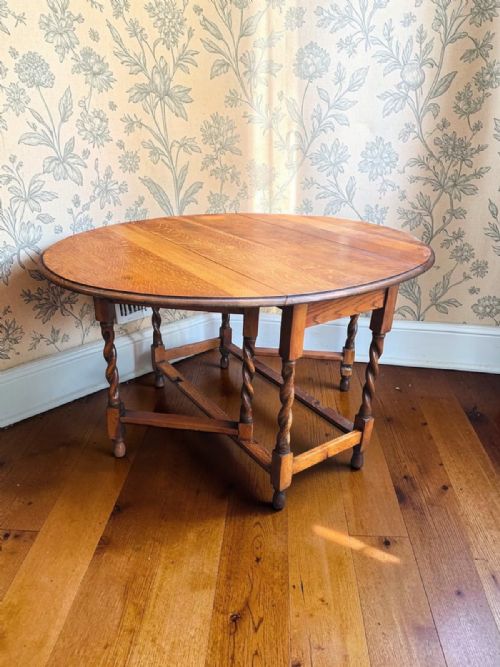
A barley twist dining table brings substantial turning and solid timber to a dining room, offering practical drop-leaf or extending mechanisms.
Barley Twist Dining Table
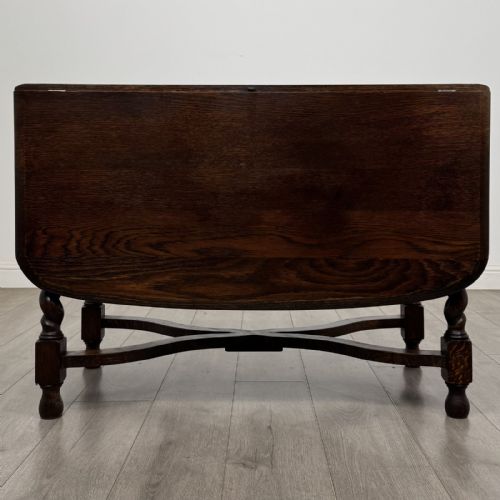
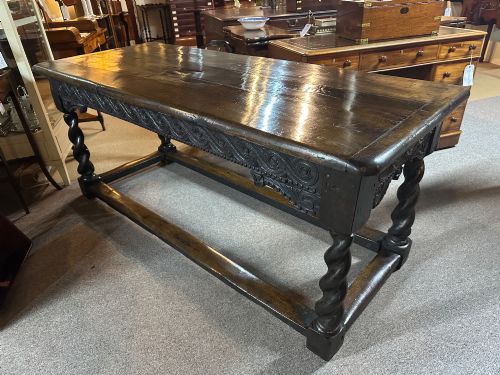
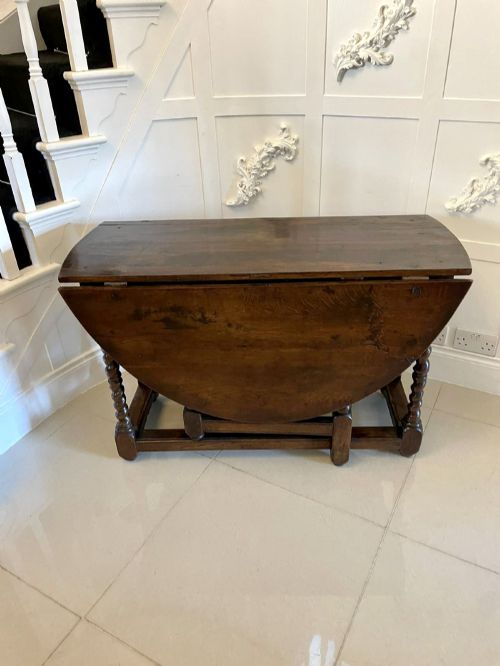
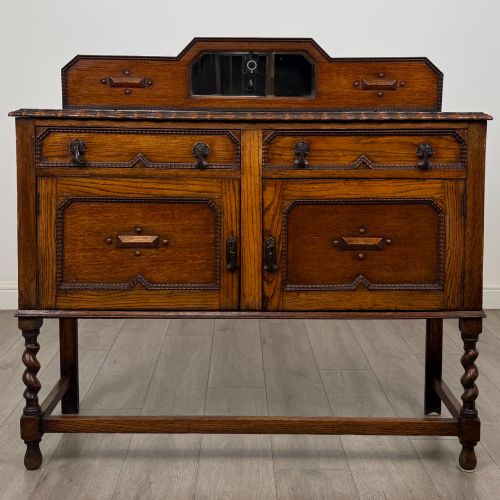
A barley twist dining table brings structural turned woodwork into the dining room, most frequently encountered here as an oak gateleg or drop-leaf form. These pieces bridge several periods, spanning from seventeenth-century origins through Victorian revivals and into twentieth-century production.
The format is designed to save space when folded and expand for meals, utilising hinged leaves supported by swinging legs. Oak predominates among the surviving examples, supported by occasional instances in mahogany or walnut.
Buyers seeking a barley twist dining table will find substantial variations in timber tone and scale, from compact oval shapes to large surfaces seating six or more.

How they were made
Carpenters turned timber on a lathe to create the distinctive helical twist leg, pairing this work with mortise and tenon joinery for the frame. Solid oak is the primary material recorded across the listings, complemented by mahogany and walnut in select examples.
Gateleg and drop-leaf mechanisms rely on pivoted wooden framing that swings out to bear the weight of the extended leaves. Surface finishes typically consist of polished wax or oil applied directly to the timber grain.
Barley Twist Dining Table Retail Price Guide 2026
Typical asking prices for barley twist dining table among the pieces listed under this phrase on Sellingantiques today, from the lower quarter to the upper quarter. They describe what is for sale here now, not the wider market.
Tables occasionally feature wavy edges on their drop-leaves, adding an undulating line to the standard helical turning.
What varies in quality
Quality rests in the precision of the timber turning and the tightness of the joinery where the gatelegs meet the central frame. Better examples utilise dense, well-figured oak with minimal splitting along the leaf hinges.
The proportion of the twist and the stability of the extending or drop-leaf action separate standard utility furniture from finer workshop production.
The Barley Twist Dining Table Glossary
- Gateleg table
- A table with hinged leaves supported by legs that swing outward like a gate. This construction provides a large surface area that collapses for storage.
- Barley twist
- A helical turning carved or turned into wood to resemble a twisted rope. This ornamental detail is characteristic of seventeenth-century style and its later revivals.
- Drop-leaf
- A table design featuring a fixed central section and hinged flaps that lower at the sides. It allows the footprint of the furniture to alter according to space requirements.
- Drawleaf
- An extending table mechanism where two leaves stored beneath the main top pull out to lengthen the surface. This allows the ends to extend without removing a centre leaf.
- Jacobean Revival
- A nineteenth and twentieth-century style imitating seventeenth-century English furniture forms. It typically employs dark oak, heavy turnings and geometric panels.
Barley Twist Dining Table: Frequently Asked Questions
How do I operate a gateleg table?
Lift the drop-leaf upwards until it is horizontal. Swing the hinged leg outward from the central frame until it locks into position beneath the leaf.
Ensure the support gate sits firmly on the floor to bear the weight safely during use.
Are these tables suitable for everyday dining?
Solid timber construction makes these pieces sturdy for daily meals. The drop-leaf and extending designs allow them to fit into smaller dining spaces when not fully expanded.
Care should be taken with hot dishes and moisture by using mats to protect the polished wood surface.
How do I distinguish Victorian revivals from earlier pieces?
Nineteenth and twentieth-century revivals often display standardised machine turning and brighter hardware than seventeenth-century originals. Timber finishing and nail types also offer clues to the actual production era.
Examining the underside reveals tool marks and construction methods consistent with specific historical periods.
What maintenance does solid oak require?
Apply a coat of beeswax periodically to nourish the timber and maintain a soft sheen. Avoid placing the table near direct heat sources or strong sunlight to prevent warping and splitting.
Clean spills promptly with a dry or barely damp cloth to protect the finish.