



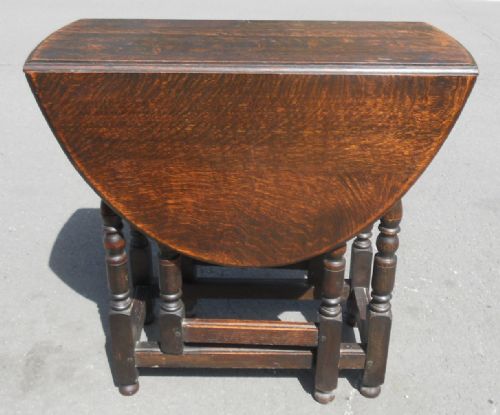


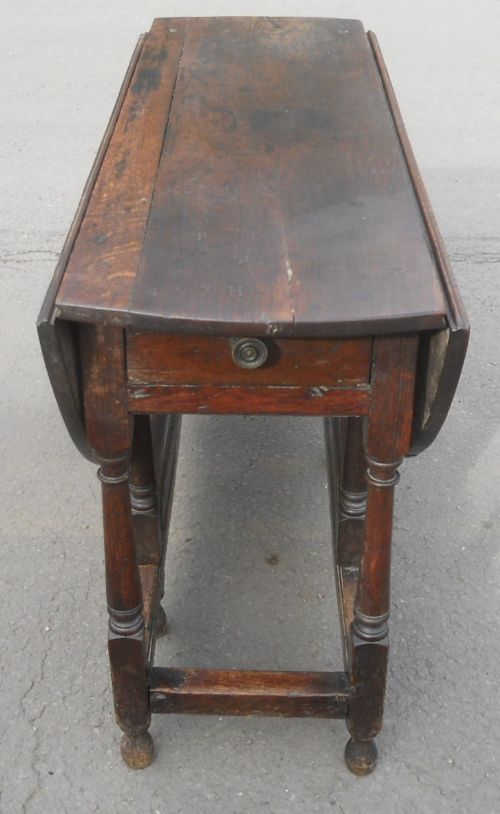


Carved Oak Gate Leg Table
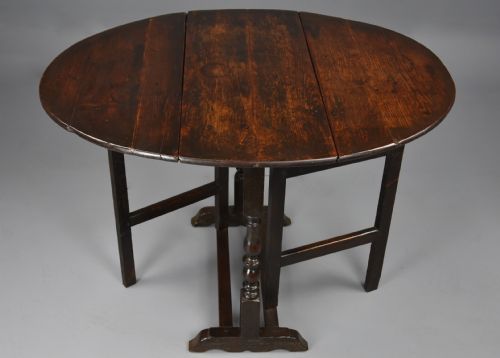
A carved oak gate leg table is a versatile folding piece that expands for dining and folds away neatly against a wall.
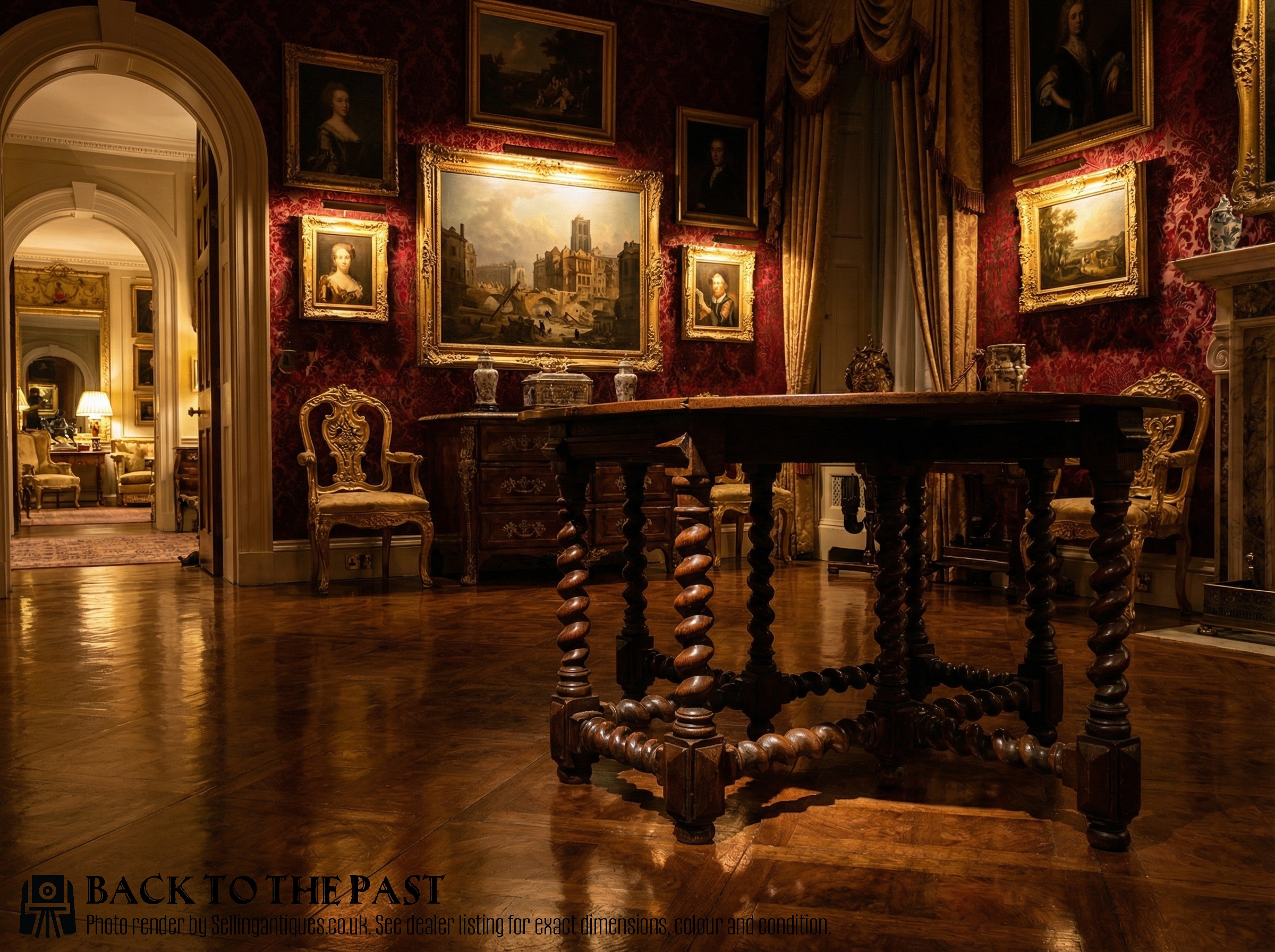
Carved Oak Gate Leg Table
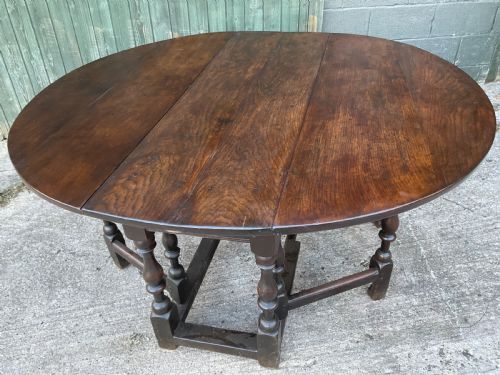
When you search for a carved oak gate leg table, you are looking at sturdy English furniture designed to save space while providing a solid surface for dining or occasional use. These tables feature drop leaves supported by hinged legs that swing out like gates, an ingenious mechanism that has endured for centuries.
The most common examples you will meet on this page date either from the seventeenth century or from later nineteenth and twentieth-century revivals. They range from compact coffee and side tables to large dining tables intended to seat six or more people.
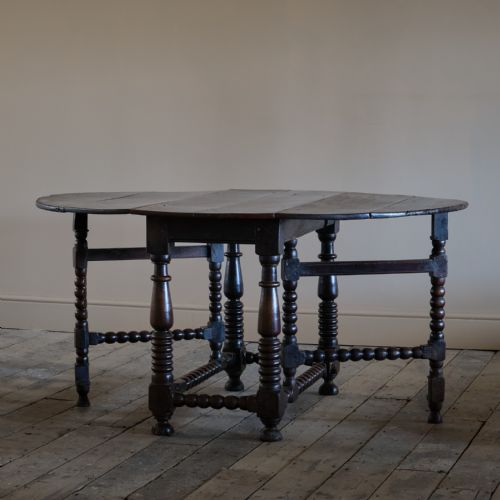
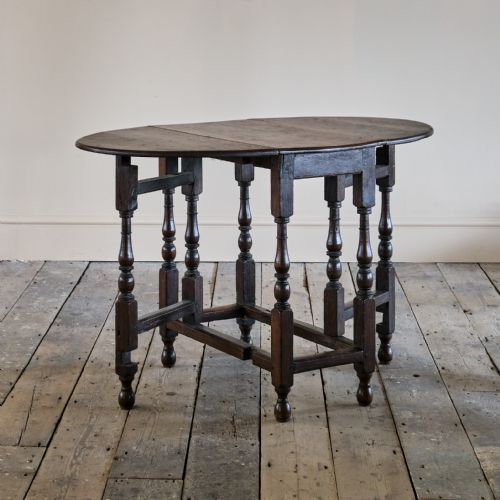
Surfaces frequently display carved decoration, particularly leaf and acorn motifs, alongside plain timber variations. Forms vary from small round and oval shapes to substantial rectangular formats supported by bulbous or bobbin turned legs.
Materials and construction methods
Makers built these tables predominantly from solid oak, sometimes combined with iron and brass for hinges, catches, and supporting pivot mechanisms. Timber was chosen for its strength and durability, allowing the hinged frame to support folding leaves without sagging.
Construction relied on traditional joinery methods, with turned supports shaped on a lathe to create bobbin or bulbous profiles. Carved ornamentation on tops and rails was worked directly into the solid wood by hand.
Carved Oak Gate Leg Table Retail Price Guide 2026
Typical asking prices for carved oak gate leg table among the pieces listed under this phrase on Sellingantiques today, from the lower quarter to the upper quarter. They describe what is for sale here now, not the wider market.
Some tables feature carved acorns so prominent that guests instinctively check their pockets for stray oak leaves.
Distinctions in quality and execution
The distinction between average and superior pieces lies in the crispness of the timber carving and the integrity of the gate leg action. Better examples maintain smooth movement in the swing legs without excessive wobble when fully extended.
Original surface patination and the choice of dense, well-figured solid oak separate authentic period pieces from later revival items. Superior construction ensures that the weight of the drop leaves is evenly distributed across the entire frame.
The Carved Oak Gate Leg Table Glossary
- Gateleg table
- A table with hinged drop leaves supported by one or more legs that swing outward like a gate. This design allowed furniture to occupy minimal space when folded.
- Bobbin turning
- A type of furniture leg formed by a series of rounded wooden spheres resembling bobbins on a thread. It is commonly found on seventeenth-century pieces.
- Drop leaf
- A hinged section of a table top that can be folded down to reduce the footprint of the furniture. When raised, it rests on the swing leg.
- Bulbous support
- A thick, swollen leg turning often carved with vegetal or melon details. This feature adds substantial visual weight to large dining tables.
- Patina
- The surface sheen and colour developed by aged wood through handling, polishing, and exposure to light over many decades.
Carved Oak Gate Leg Table: Frequently Asked Questions
How do I operate the gate leg mechanism?
To open the table, lift the drop leaf upward until it is horizontal. Swing the pivoted leg outward from the base frame until it locks beneath the extended leaf to provide stable support.
To close the table, swing the supporting leg back toward the centre frame and lower the leaf gently. Ensure no items are resting on the leaves before folding.
How many people can sit at these tables?
Seating capacity depends entirely on the open dimensions of the top and the clearance beneath the frame. Smaller occasional versions suit two people, while large dining formats accommodate six.
Check the length of the leaves and the placement of the swing legs to ensure comfortable legroom for chairs.
How do I tell a seventeenth century table from a later revival?
Seventeenth-century examples display construction marks, hand-carved details, and deep natural patination consistent with intense age. Timber selection and tool marks differ significantly from mass-produced Victorian or twentieth-century interpretations.
Revival pieces often utilise machine-cut elements and show different wear patterns around the hinges and feet.
Where should I place a gate leg table at home?
These tables adapt well to dining rooms, kitchens, and living spaces where floor space fluctuates. Placed against a wall with both leaves dropped down, they function as a console or side table.
Keep them away from direct heat sources and strong sunlight to protect the solid oak timber and maintain the finish.