




Jacobean Style Gateleg Table
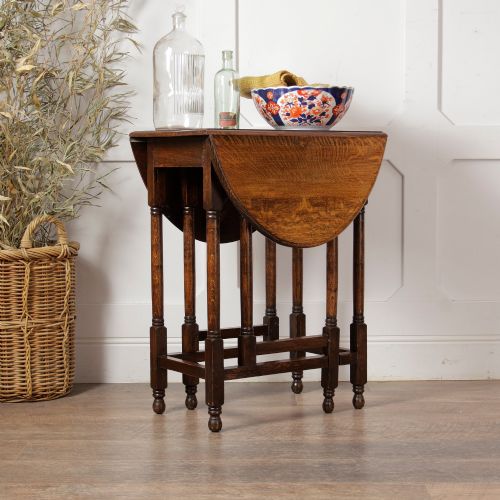
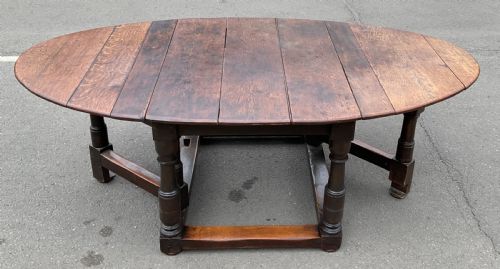
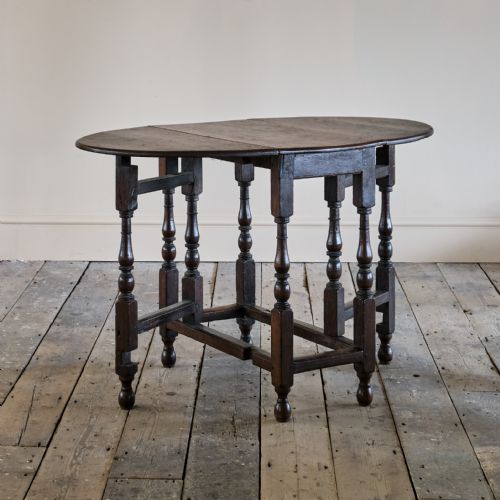
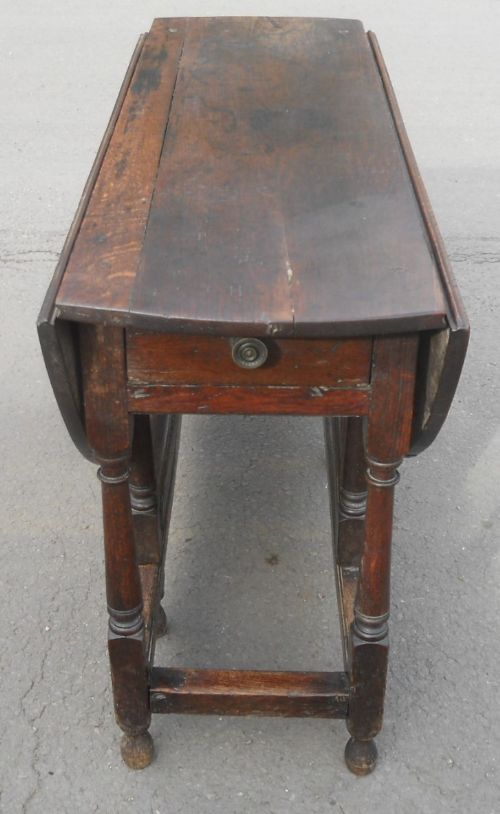
These jacobean style gateleg table examples offer sturdy oak construction and folding leaves that save space.
What a jacobean style gateleg table is
How they were made
Every listed piece is built from solid oak, relying on dense timber to support the heavy hinged leaves and folding gate mechanism. Joinery utilises traditional framing methods suited to the weight of the wood.
The construction incorporates pivoting legs that swing outward to hold the drop leaves level, creating a stable surface when extended.
Retail Price Guide 2026
Typical UK retail prices for jacobean style gateleg table, calculated from the Sellingantiques database of over a million retail prices indexed since 2003. This retail price guide relies exclusively on Sellingantiques data; no external sources or auction records are used, so the figures do not describe the wider market.
Some double gateleg tables require a careful sequence of leg-swinging maneuvers to avoid catching your toes during dinner prep.
What varies in quality
Quality rests in the proportion of the turned supports and the thickness of the oak top boards. Better examples maintain smooth movement in the gate mechanism and solid alignment when the leaves drop or rise.
The distinction between standard nineteenth-century revival pieces and earlier eighteenth-century survivors lies in the depth of the timber patination and the precision of the hand-turned legs.
The Jacobean Style Gateleg Table Glossary
- Gateleg table
- A table with hinged flaps on either side supported by legs that swing outward like a gate. This design allows the surface to fold down compactly when not in use.
- Drop leaf
- A hinged section of a table top that can be raised and supported or lowered to reduce the overall footprint. It creates versatility in domestic spaces.
- Jacobean revival
- A nineteenth-century stylistic movement that revived seventeenth-century English design motifs, heavy turning, and dark oak finishes. It reflects a Victorian interest in earlier craftsmanship.
- Oval table
- A table featuring a rounded or elliptical top shape that softens room layouts and accommodates diners without sharp corners. These often appear with double gate mechanisms.
Frequently Asked Questions
How do gateleg tables work?
These tables operate by lifting the hinged drop leaves on either side of a fixed central section. Movable legs swing outward from the frame to lock underneath the extended flaps and hold them level.
When the meal or task finishes, the support legs swing back inward toward the centre. The leaves then drop down vertically to save floor space in the room.
How do I seat ten people?
Large oval formats provide the extended surface area needed for seating ten guests. The double gateleg construction supplies extra support points along the length of the open flaps.
Checking the clearance under the frame ensures chairs fit comfortably beneath the oak top when the leaves are fully deployed.
Are these tables solid oak?
Every piece recorded in the evidence utilises solid oak for both the structural framework and the top boards. This dense hardwood provides the necessary weight and durability for folding mechanisms.
Over decades of use, the oak develops a rich surface patination that distinguishes older examples from newer furniture.
How do I date these tables?
Dating relies on examining the construction methods, the style of the turned legs, and the condition of the timber. Pieces span from mid-eighteenth-century origins through nineteenth-century revival periods up to nineteen-sixty.
Earlier formats often display hand-worked joinery and deeper patination, whereas later revival items show standardised turning patterns and lighter finishes.