
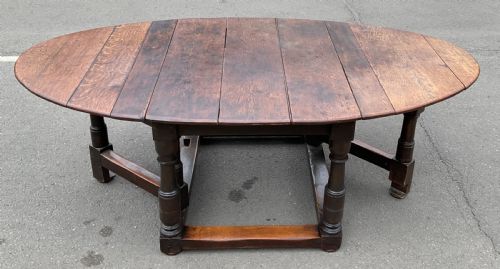

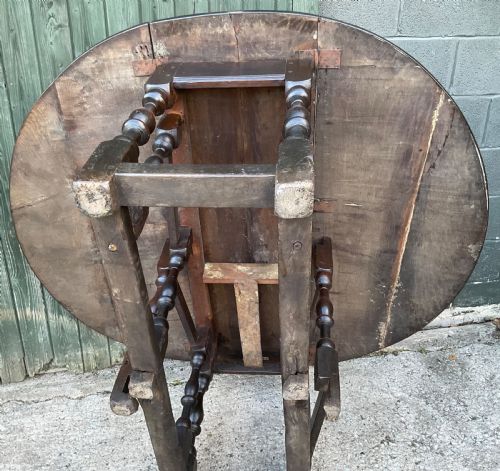


Large Oak Gateleg Table
A large oak gateleg table provides generous dining space with folding leaves and sturdy charm, perfect for gathering.
Understanding the Large Oak Gateleg Table
A large oak gateleg table offers an expandable surface supported by hinged legs that swing outward to hold up the drop leaves. These practical dining tables span multiple periods, appearing across the seventeenth and eighteenth centuries, as well as later periods.
Buyers encounter examples designed to seat six, eight, or even ten people around an oval or rectangular top. The primary periods represented include the seventeenth century, the Georgian era, and the nineteenth century.
Originating as versatile household furniture, these substantial dining tables suit modern rooms that require generous seating capacity combined with historical character.
Materials and Construction
Craftsmen built these pieces primarily from solid oak, sometimes utilising brass or metal fittings for hinges and structural support. The timber shows varied tones, ranging from deep golden oak to rich, darker historical surfaces.
Joinery techniques involve pegged joints and stable framing designed to support the pivoting gateleg action. Certain examples incorporate decorative turnings, such as bobbin turned legs, adding visual detail to the structural framework.
Retail Price Guide 2026
Typical UK retail prices for large oak gateleg table, calculated from the Sellingantiques database of over a million retail prices indexed since 2003. This retail price guide relies exclusively on Sellingantiques data; no external sources or auction records are used, so the figures do not describe the wider market.
Listings feature oak material paired with brass and metal across the seventeenth century, eighteenth century, and nineteenth century.
Assessing Quality and Character
Quality rests in the depth of the patina and the integrity of the timber. Tables displaying rich, untouched surface ageing command greater interest from collectors.
The sophistication of the turning work on the legs and the smoothness of the double gateleg action distinguish superior examples. Proportion and overall scale remain central to the visual presence of each piece.
The Large Oak Gateleg Table Glossary
- Gateleg table
- A table with hinged leaves supported by legs that swing out like gates. This design allows the surface to expand or contract.
- Drop leaf
- A hinged section of a table top that folds down when not in use. It creates flexibility in overall table width.
- Bobbin turned
- A style of leg shaping that resembles a series of wooden bobs or spools threaded together. It appears on seventeenth-century pieces.
- Patina
- The surface sheen and colour developed by wood over centuries of use and exposure. It indicates age and careful handling.
Frequently Asked Questions
How many people do these tables seat?
These large tables commonly accommodate six, eight, or ten diners when fully opened.
The folding leaf design allows the surface area to adjust according to the number of guests.
What periods do these pieces date from?
The pieces span the seventeenth century, the Georgian period, and later nineteenth-century eras.
Construction details and turning styles help indicate the specific period of origin.
Are the tables oval or rectangular?
The surface shapes include oval and rectangular formats designed for dining rooms.
Drop leaves create the curved profile when extended.
What wood is used?
Solid oak forms the primary material for the tables, complemented by metal or brass hardware.
Golden oak and darker historical tones appear throughout the selection.