


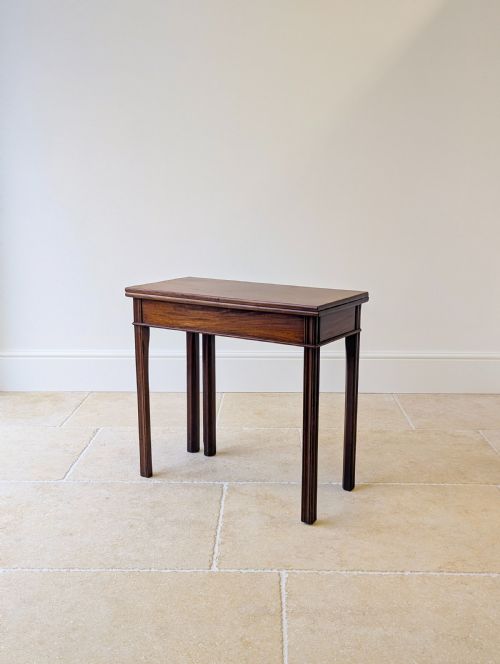


Mahogany Gateleg Side Table
A mahogany gateleg side table offers folding leaves and sturdy pivoting legs, making it a practical space-saving surface for everyday interiors.

Mahogany Gateleg Side Table
A mahogany gateleg side table is a versatile folding piece designed to expand when needed and fold down to save floor space.
The pieces listed here encompass several historical periods, including 18th century examples, Georgian items, and later Edwardian and Victorian creations.
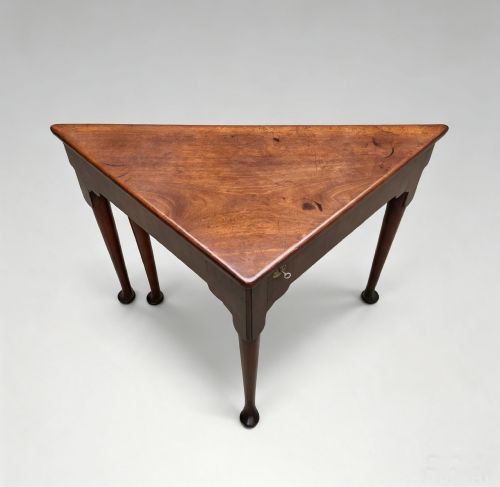
Common forms include drop-leaf dining tables, tea tables, occasional tables, and slender spider leg variations.
How they were made
Cabinet makers constructed these tables primarily from solid and veneered mahogany, often incorporating secondary timbers such as satinwood, boxwood, and ebonised wood for contrast.
Hardware details like original brass castors appear on select pieces, whilst joinery methods support the hinged flaps and pivoting gate legs.
Several tables come equipped with tiny original brass castors designed to help them glide smoothly across historic carpets.
What varies in quality
The standard of timber selection and the crispness of any carving set the finer 18th century and Georgian examples apart from later mass-produced items.
Proportion and structural integrity in the gate mechanism determine how well a table withstands frequent folding and daily use.
The Mahogany Gateleg Side Table Glossary
- Gateleg table
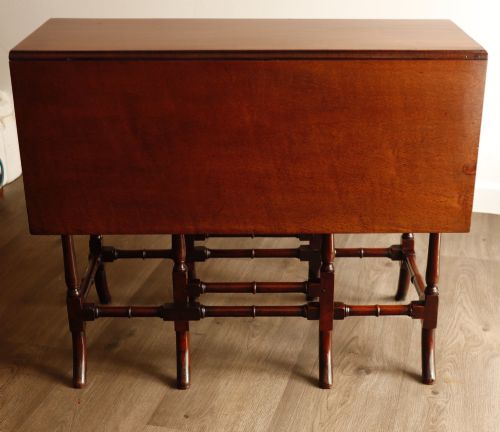
- A table with hinged flaps supported by legs that swing outward like a gate. This design provides extra surface area when extended.
- Spider leg
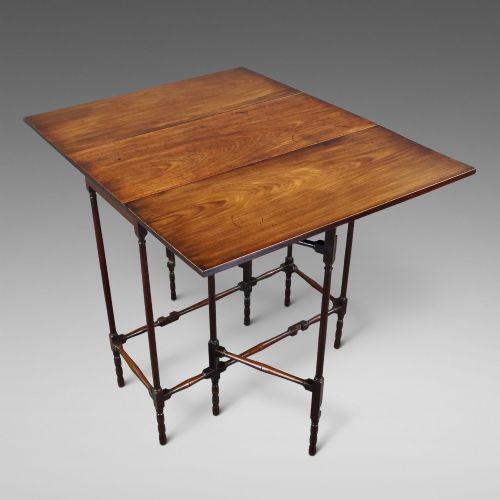
- A style featuring very slender turned wooden legs supporting a lightweight table frame. It is typical of delicate tea and occasional tables.
- Sutherland table
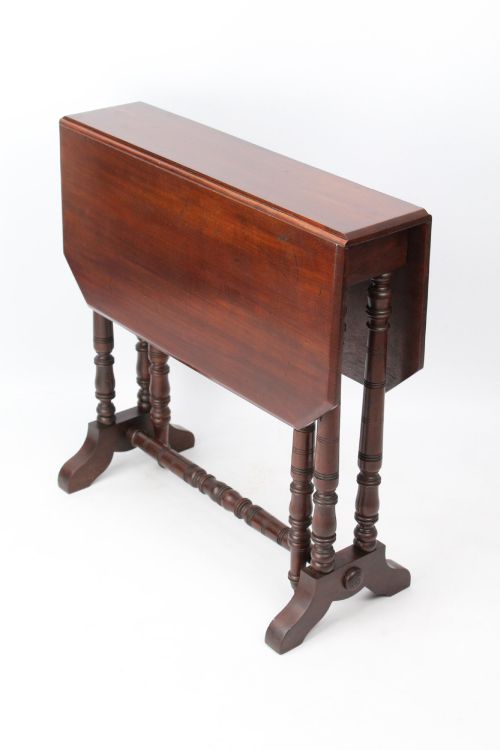
- A narrow drop-leaf table with exceptionally slim legs and leaves that drop almost vertically. It was popular during the Victorian and Edwardian periods.
- Drop-leaf
- A table top with a fixed centre section and hinged leaves that fold down at the sides. These leaves are raised and supported by pivoting brackets or legs.
Mahogany Gateleg Side Table: Frequently Asked Questions
How do I use a gateleg table daily?
Keep the leaves dropped against the sides to use the piece as a narrow console or side surface against a wall. Raise one or both leaves when you need extra room for dining or writing.
Ensure the swing leg is firmly positioned beneath the extended leaf to support weight safely during use.
Are these tables suitable for small rooms?
Their folding design makes them ideal for compact spaces because you can reduce their footprint instantly. Drop the leaves when floor space is tight to keep walkways clear.
They function well as occasional surfaces that adapt to changing room layouts without dominating the interior.
How do I tell an 18th century table from a later copy?
Examine the timber colour, grain depth, and construction joints beneath the top for signs of age. Eighteenth century examples often feature heavier mahogany and hand-cut joinery.
Later Edwardian and Georgian Revival pieces generally show different manufacturing marks and lighter internal framing.
What is a spider leg table?
A spider leg table is a delicate variant featuring unusually thin turned supports. These tables are typically lighter in scale and suited for tea or display use rather than heavy dining.
Their slender frames require careful placement to avoid accidental lateral stress on the joints.