
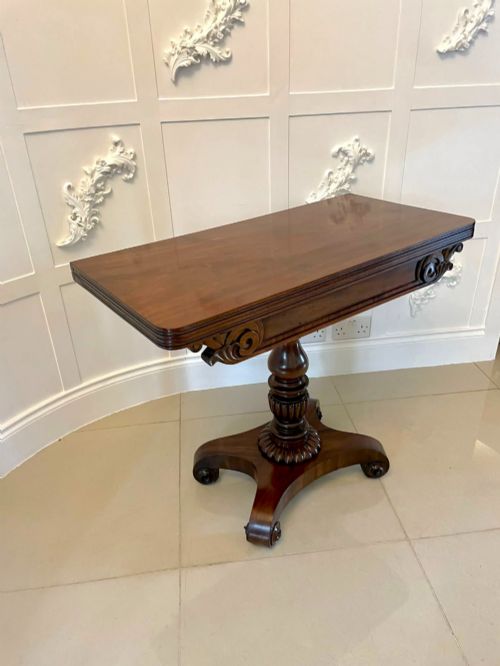
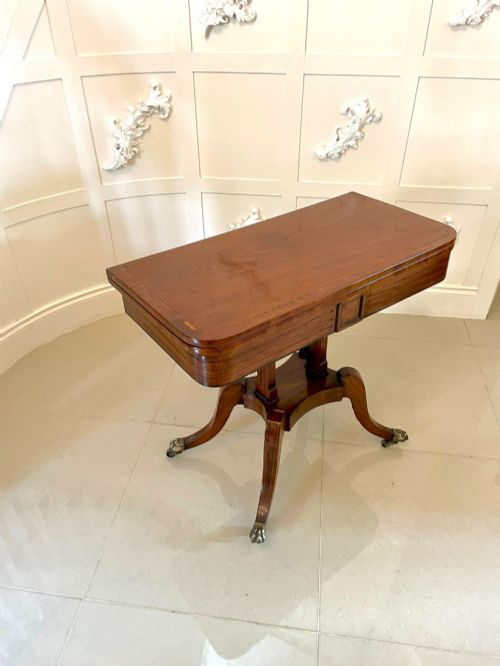
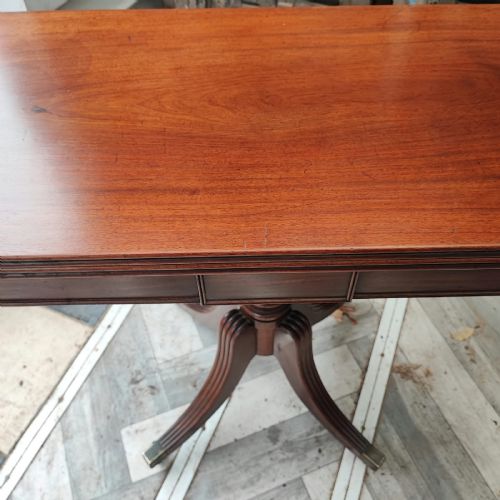
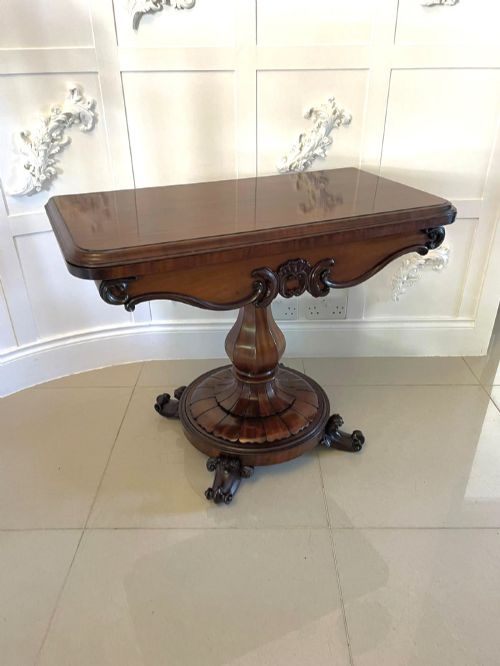


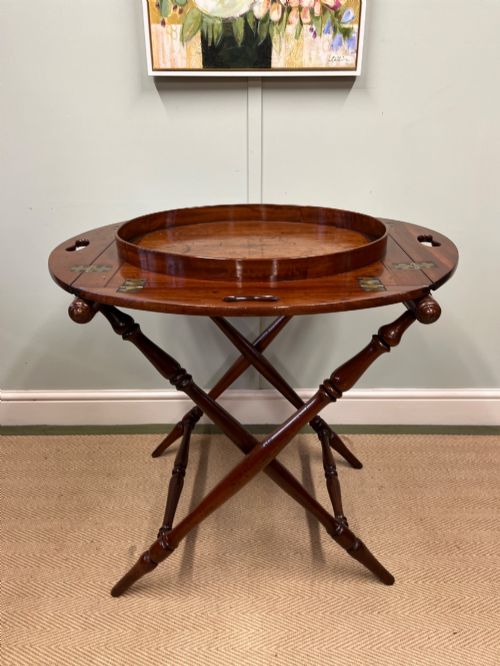
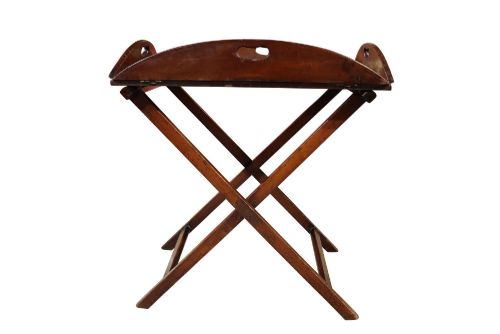
Mahogany Folding Side Table
These mahogany folding side table examples combine practical folding function with rich timber surfaces, offering versatile utility for traditional interiors.

What these pieces are
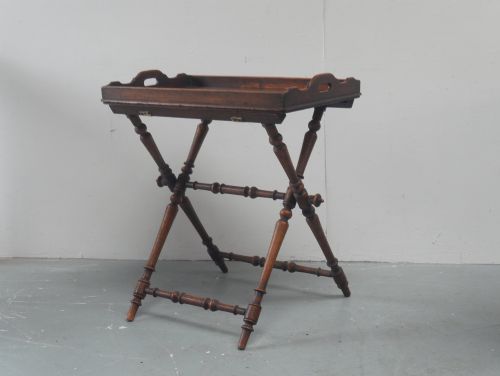
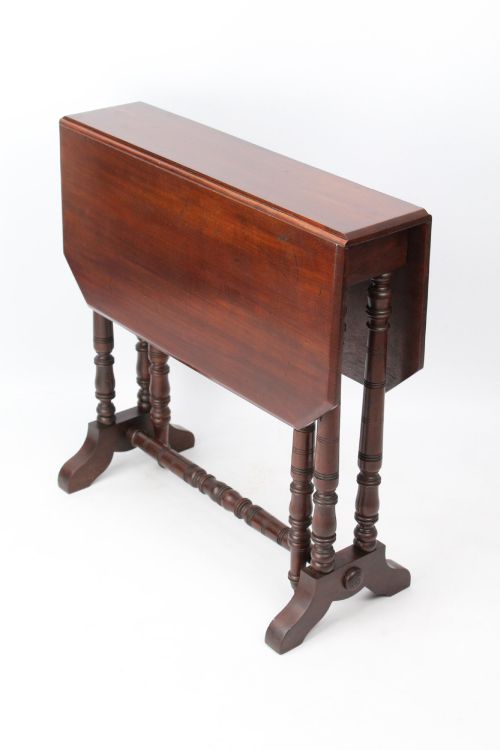
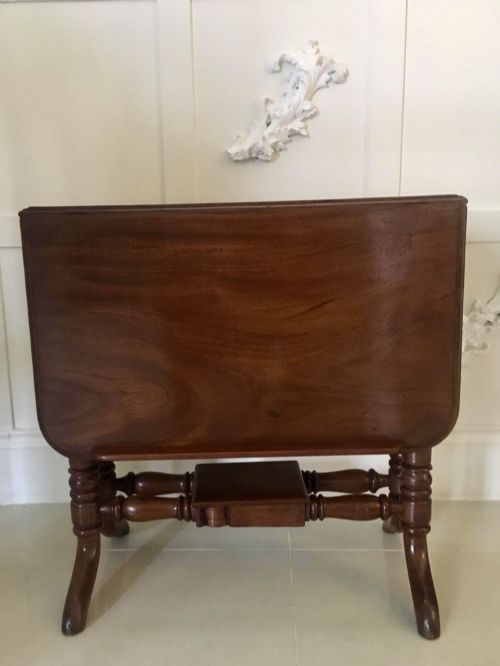
A mahogany folding side table brings together centuries of British furniture making, spanning George III, Georgian, Regency, Victorian, and Edwardian periods. These versatile items appear in forms such as butler trays, drop leaf tea tables, and gateleg tables.
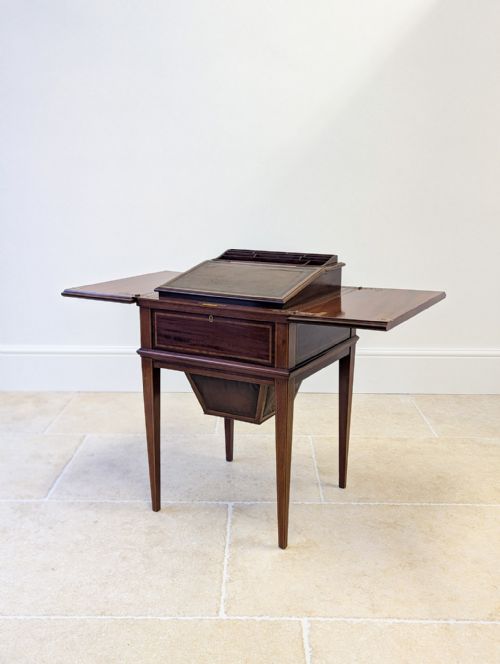
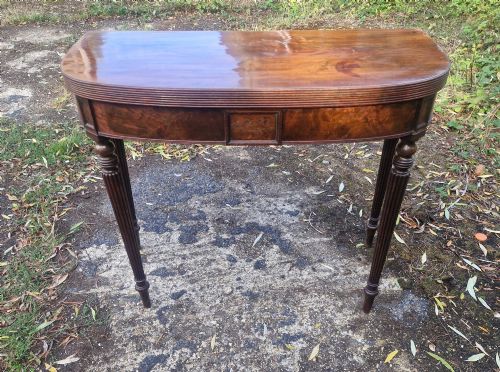
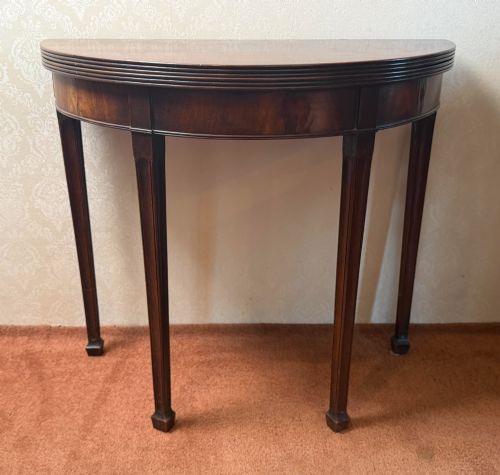
Buyers encounter folding mechanisms designed to save space, including flap actions, demi lune fold over card tables, and portable coaching tables. The physical evidence shows various configurations created for occasional use in domestic settings.
How they were made
Workshops utilised solid mahogany alongside mahogany veneers, often incorporating contrasting timbers such as satinwood for decorative inlay work. Structural hardware relied on brass hinges and fittings to enable the folding action.
Internal components occasionally integrated secondary materials including ceramic, iron, and baize lining for gaming surfaces. Joinery techniques supported hinged leaves, drop sides, and folding stands designed for easy relocation.
Retail Price Guide 2026
Typical UK retail prices for mahogany folding side table, calculated from the Sellingantiques database of over a million retail prices indexed since 2003. This retail price guide relies exclusively on Sellingantiques data; no external sources or auction records are used, so the figures do not describe the wider market.
Listings span five distinct periods: Edwardian, Georgian, 19th Century, Victorian, and Regency.
What varies in quality
Quality separates through the selection of timber grain, the precision of satinwood inlay, and the crispness of George III or Regency period carving. Superior examples demonstrate thoughtful proportion in their folding stands and drop leaves.
Lesser items show simpler construction with plain mahogany boards and basic brass or iron hardware. The presence of specialised forms like butler trays with dedicated folding stands elevates the piece.
The Mahogany Folding Side Table Glossary
- Mahogany
- A durable tropical hardwood prized for its deep reddish brown colour and stability in furniture construction. It forms the primary material across the majority of these pieces.
- Demi Lune
- A half moon shape characteristic of folding top card and side tables. This profile allows the table to sit flat against a wall when folded.
- Gateleg table
- A drop leaf table where hinged legs swing out like a gate to support the raised flaps. This construction provides sturdy support for folding dining and tea surfaces.
- Butler tray
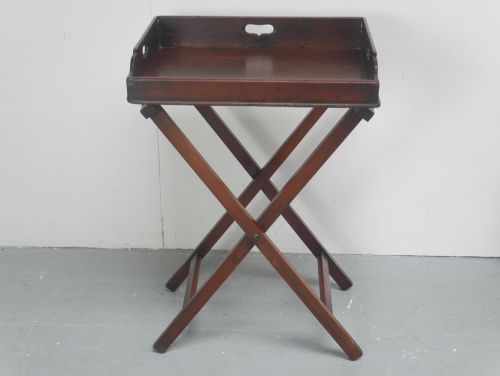
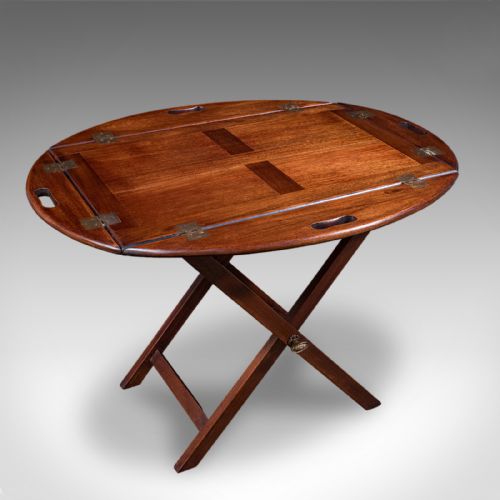
- A portable rectangular tray with hinged or fixed sides, typically paired with a folding X frame stand. It originated for serving purposes before becoming a stationary occasional table.
- Satinwood
- A pale, lustrous timber utilised for contrasting inlay and banding details on Edwardian pieces. It adds visual brightness against darker mahogany surfaces.
Frequently Asked Questions
How do you fold a tea table?
Many folding tea tables utilise a swivel top or a fold over leaf mechanism supported by a swinging leg. Lifting the top section reveals a hidden well or creates a larger surface area for serving.
Carefully pivot the folded leaf back into position while ensuring the underlying wooden or brass hinges bear the weight evenly. Avoid forcing any joint that feels stiff due to seasonal wood movement.
What is a coaching table?
A coaching table consists of a removable tray top resting upon a collapsible folding wooden stand. These pieces were designed for portability during travel in the nineteenth century.
Today, they function well as flexible side or lamp tables that can be easily stored when floor space is required.
How do I date a mahogany table?
Dating relies on observing stylistic markers, construction methods, and timber characteristics from periods such as George III, Regency, or Edwardian. Earlier pieces often display hand cut joinery and dense solid mahogany.
Later Victorian and Edwardian examples may incorporate machine produced fixings, satinwood stringing, or different secondary woods beneath the polish.
Where should I place a drop leaf table?
These tables fit comfortably in hallways, living rooms, or dining spaces where surface area needs to adapt quickly. With the leaves dropped down, they occupy minimal depth against a wall.
Raising one or both flaps transforms the piece into an occasional tea table or lamp stand when entertaining guests.