

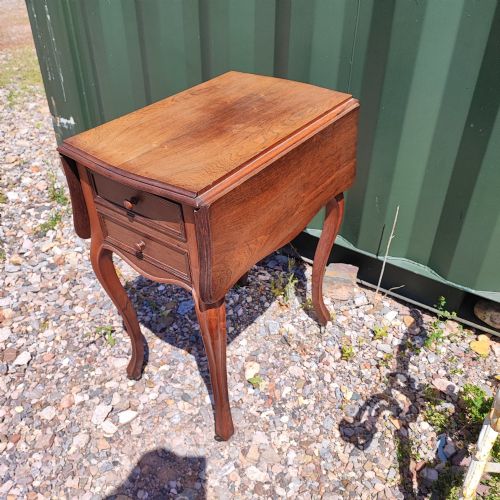
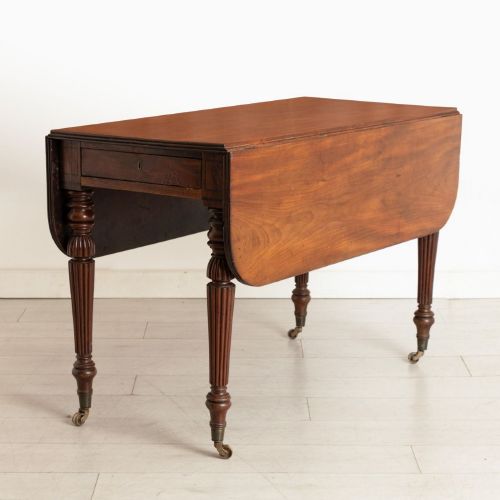
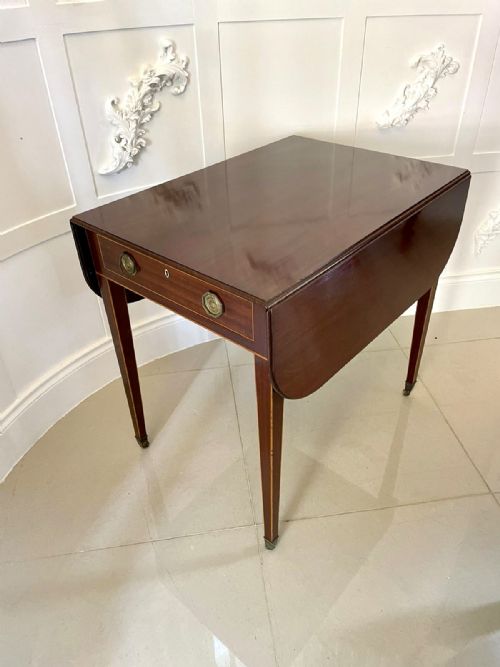
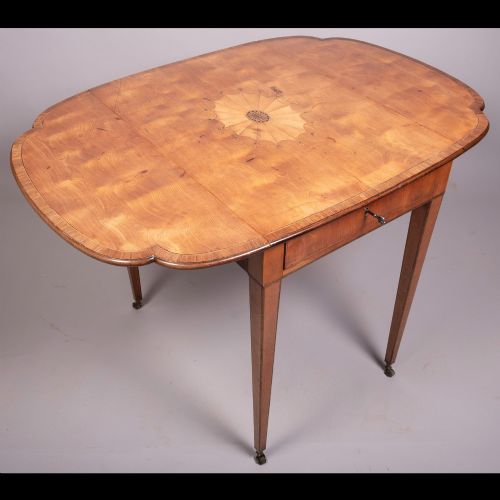
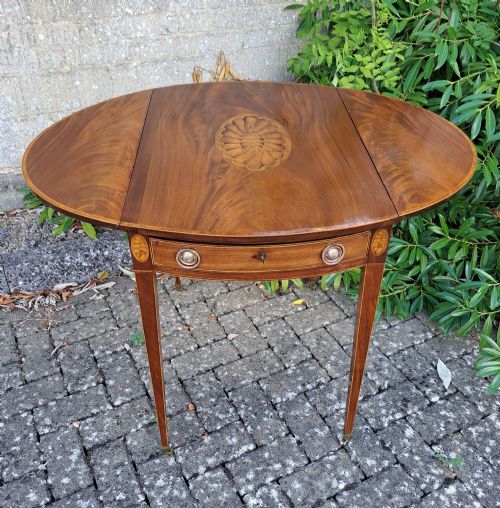
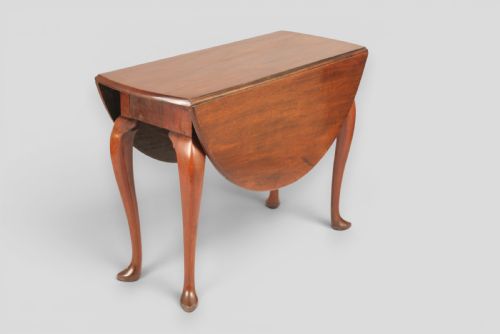

Drop Leaf End Table
A drop leaf end table brings compact versatility to a room, offering expandable surfaces rooted in centuries of cabinet-making tradition.
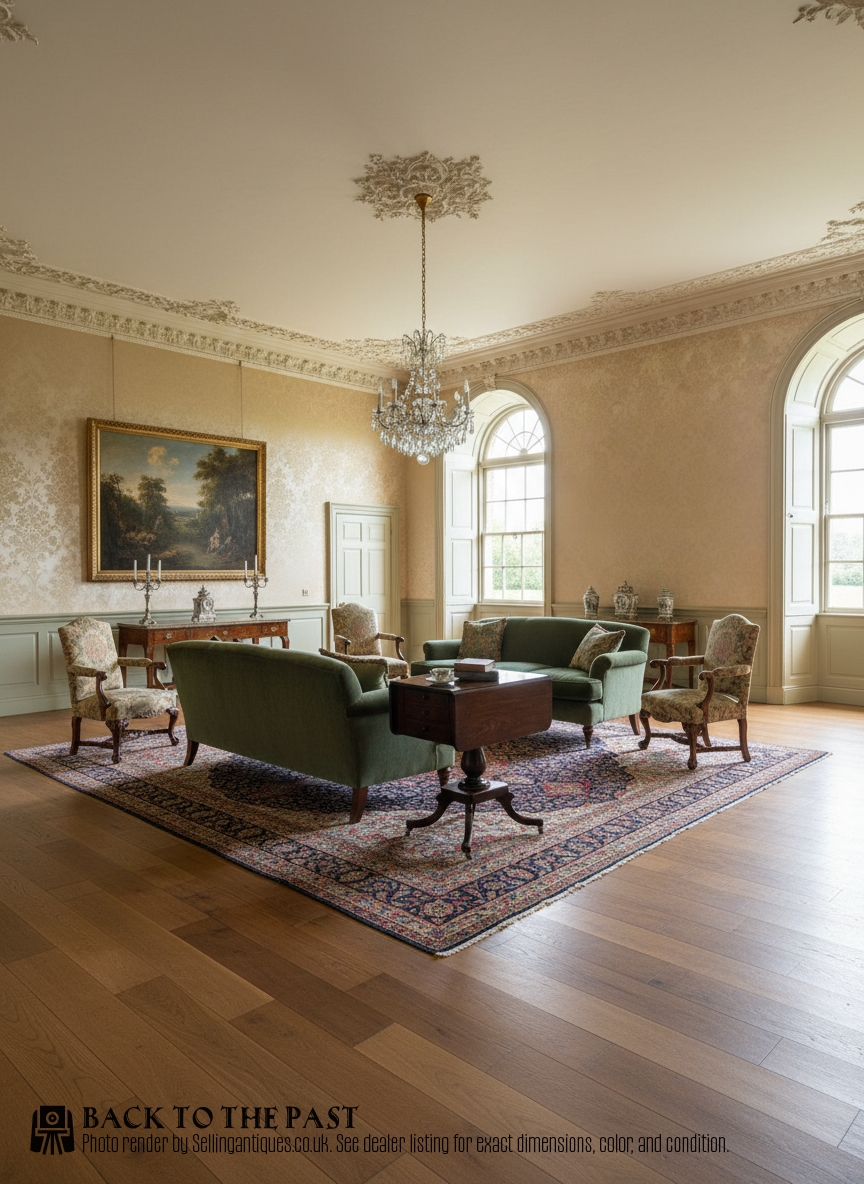
Drop Leaf End Table
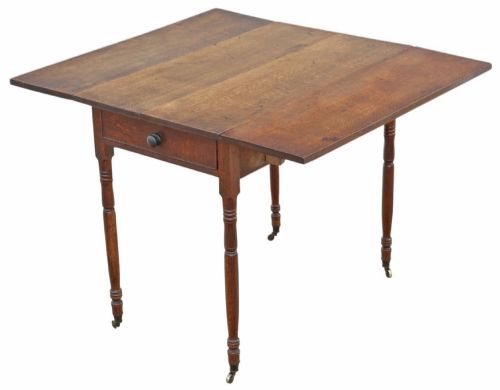
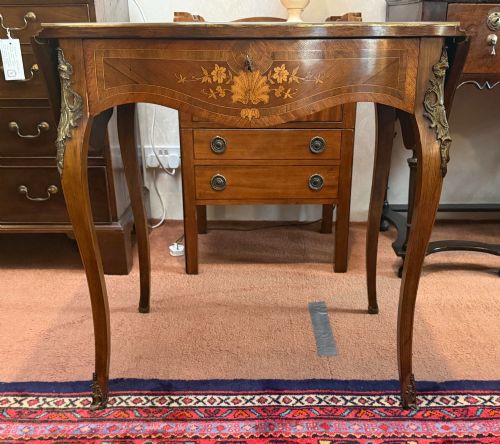
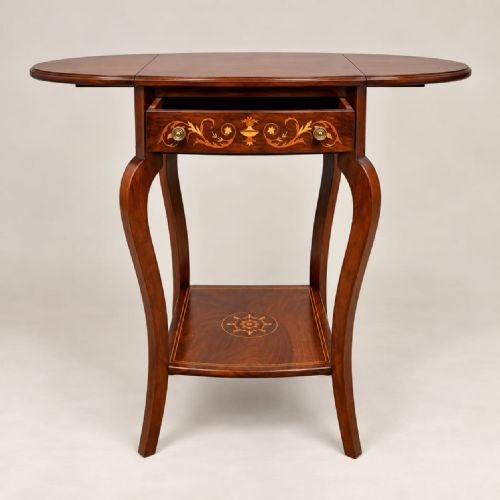
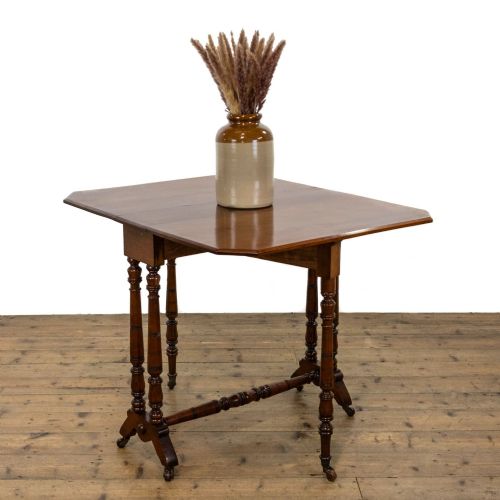
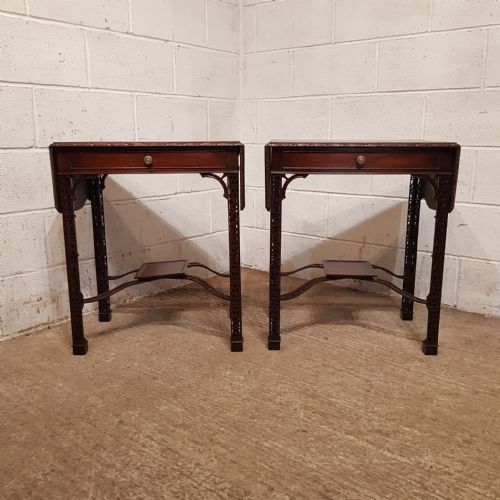
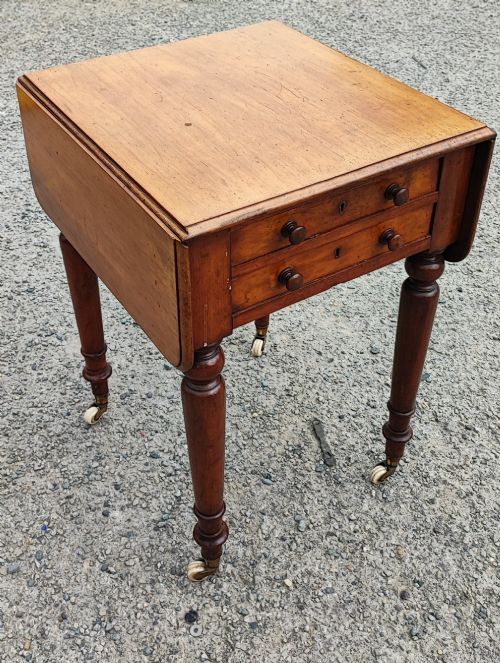
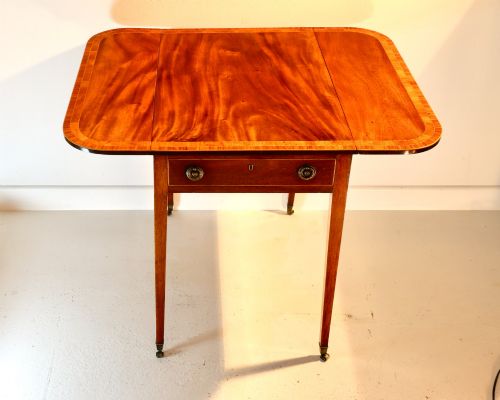
When you search for a drop leaf end table, you encounter a variety of antique forms designed to save space while providing an extendable surface. The selection spans compact lamp tables, occasional pieces, and Pembroke tables originating from Georgian, Regency, and Victorian periods.
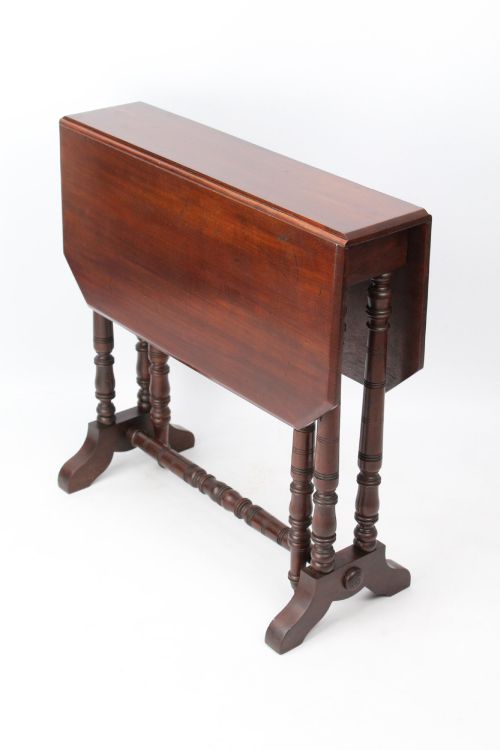
Most examples function as side or lamp tables, featuring folding flaps supported by pivoting brackets or swing legs. These pieces emerge in materials ranging from figured mahogany to rosewood and walnut, reflecting the domestic habits of earlier centuries.
How they were made
Cabinet-makers relied heavily on solid and veneered timbers, selecting mahogany, walnut, and rosewood for their durability and grain patterns. Inlaid details in satinwood and marquetry appear alongside brass fittings and ceramic castors on selected examples.
Structural integrity relied on traditional joinery methods, including pegged joints and stable gateleg or drop flap mechanisms. Turned legs, pedestal bases, and lyre ends provided the necessary support for the hinged leaves.
Mahogany, rosewood, and walnut dominate the timber selections across these nineteenth-century listings.
What varies in quality
The standard of timber selection and cabinet work dictates the standing of each piece, distinguishing utilitarian items from high-status furniture. Finely figured veneers, crisp inlay work, and robust folding mechanisms signal superior workshop production.
Proportion and decorative restraint also separate the finer examples from simpler provincial items. Thoughtful detailing on the turned legs and underframes indicates the original maker's skill.
Gillow
The Drop Leaf End Table Glossary
- Pembroke table
- A small rectangular table with two hinged drop leaves on opposing sides, often featuring one or more drawers.
- Sutherland table
- A narrow drop-leaf table with unusually slender leaves that fold down almost vertically, supported by swinging gate legs.
- Sofa table
- A long, narrow occasional table designed to stand in front of a sofa, typically fitted with drop leaves and twin pedestals or trestle ends.
- Gateleg table
- A table with hinged leaves supported by legs that swing outward like a gate to hold the flaps in place.
- Marquetry
- Decorative patterns formed by fitting together thin slices of various coloured woods onto a structural surface.
Drop Leaf End Table: Frequently Asked Questions
Where did people use these tables?
These tables served primarily in sitting rooms and parlours as convenient surfaces for lamps, work materials, or drinks. Their drop leaves allowed households to adjust the surface area depending on the immediate domestic requirement.
In larger rooms, they stood beside sofas or against walls until needed for extra guests. Their adaptable nature made them suitable for multiple daily functions across different rooms.
How do I identify a Georgian drop leaf table?
Georgian examples typically display clean lines, solid mahogany or oak construction, and subtle inlay work. The woodwork often exhibits hand-cut joinery and straightforward structural proportions.
Legs on these pieces range from straight tapered styles to pad feet or early turned supports. Hardware such as brass pulls aligns with late eighteenth and early nineteenth-century manufacturing methods.
How should I care for antique wood surfaces?
Keep wooden drop leaf tables away from direct heat sources and strong sunlight to prevent the timber and veneer from drying out. Consistent indoor humidity levels protect the antique joints and prevent warping.
Apply a traditional wax polish occasionally to nourish the grain and maintain the surface sheen. Avoid placing damp items directly onto the polish without protective coasters.