
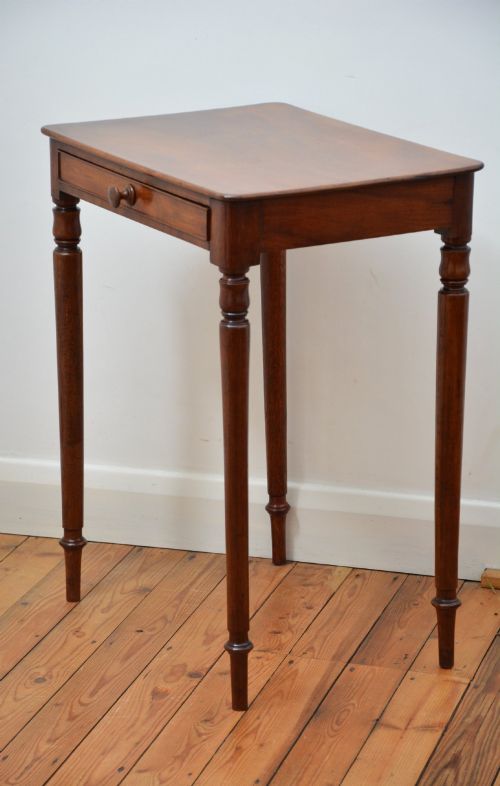


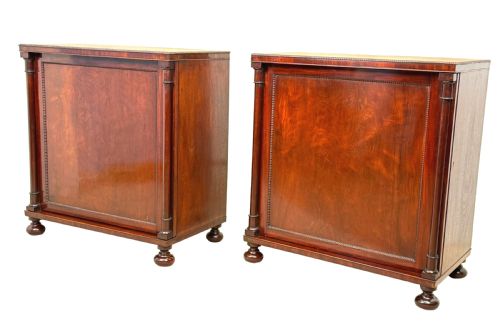


Regency Pedestal Nightstand
A regency pedestal nightstand brings architectural proportion and rich timber to the bedside, combining enclosed storage with a steady column form.
Regency Pedestal Nightstand
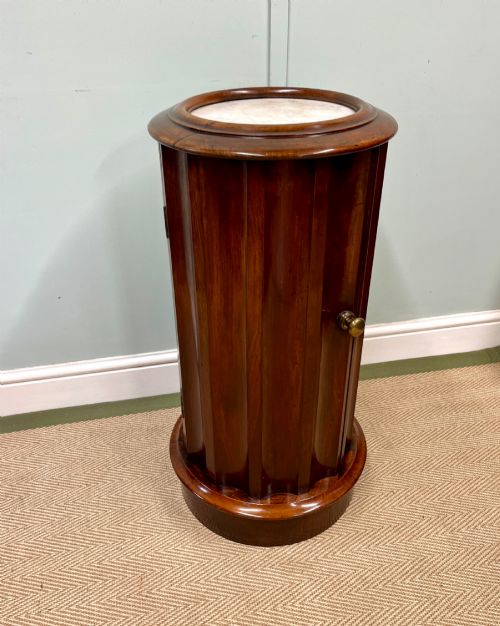
A regency pedestal nightstand typically takes the form of a cylindrical or column-supported cabinet designed to sit beside a bed. These pieces belong primarily to the Regency period and the wider nineteenth century, though revival pieces from later decades also appear.
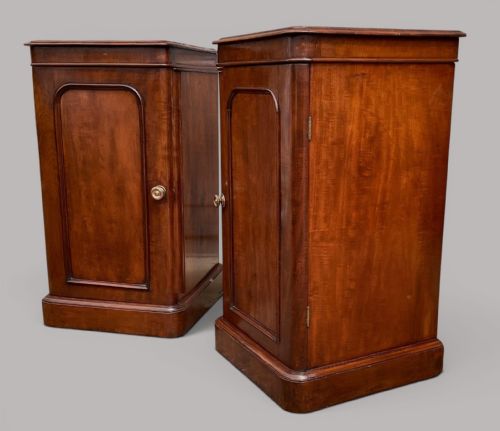
Makers constructed these cabinets with doors enclosing internal shelving, and certain examples incorporate pull-out steps or drawer compartments. The selection includes individual items as well as matched pairs suited for symmetrical placement in a bedroom.
Materials and Construction
Cabinetmakers relied heavily on solid mahogany and flame mahogany veneer, often selecting timber with pronounced grain patterns to wrap around cylindrical and bowfront bodies. Secondary woods provided structural stability inside the pedestals.
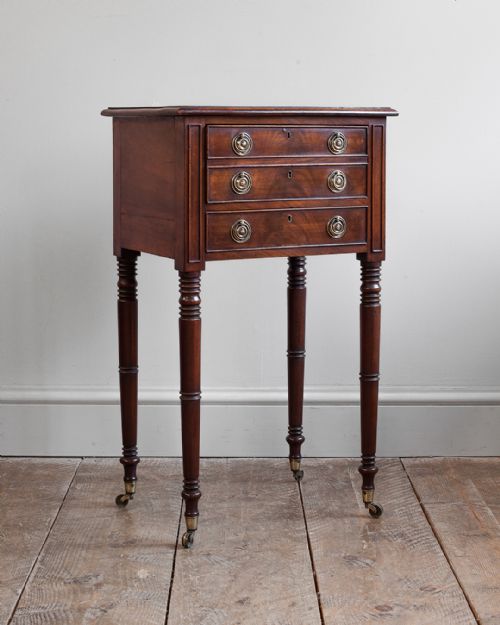
Details such as brass fittings, ebonised wood accents, and marble tops added contrast and durability to the primary mahogany surfaces.
One exceptional bedside cabinet includes a pull-out step for mounting a high nineteenth-century bed.
Assessing Quality
Quality rests upon the selection of the timber veneer and the precision of the joinery on curved or cylindrical doors. Pieces that maintain crisp moulding definition and retain original brass hardware stand apart from simpler iterations.
The sophistication of internal fittings, such as integrated steps or neatly dovetailed drawers, marks the distinction between standard utilitarian cabinets and superior commission work.
Holland and Sons·Gillows
The Regency Pedestal Nightstand Glossary
- Flame mahogany
- A veneer cut from timber where the branches join the trunk, creating a distinct flickering, flame-like grain pattern. This decorative surface is typical of higher-end nineteenth-century case pieces.
- Bowfront
- A curved cabinet front that swells outward in the centre. This shape requires skilled carpentry to ensure the doors close flush against the frame.
- Cylindrical
- Built with a fully round body rather than a square or rectangular footprint. These circular cupboards conceal storage behind curved doors.
- Pedestal
- A column-like supporting structure beneath the main cabinet body. It lifts the storage compartment off the floor on a solid base.
Regency Pedestal Nightstand: Frequently Asked Questions
What is a regency pedestal nightstand used for?
These cabinets served historically to hold bedside items, water jugs, or chamber pots within an enclosed cupboard space.
Today, they function as bedside tables or lamp tables, providing concealed storage beneath a flat surface.
Are these nightstands usually found in pairs?
Many examples survive as matched pairs, particularly those intended for symmetrical placement beside a large bed.
Single pedestals also appear frequently, often originating as standalone washstands or lamp tables.
How do I care for flame mahogany veneer?
Flame mahogany requires protection from direct sunlight and excessive moisture to prevent the thin veneer from fading or lifting.
Regular dusting with a dry cloth and occasional application of appropriate furniture wax keeps the timber nourished.
How can I tell a Regency period piece from a revival?
Original Regency pieces display construction methods, timber selections, and secondary woods consistent with the early nineteenth century.
Revival pieces from later eras often use machine-cut elements and different internal framing techniques.