

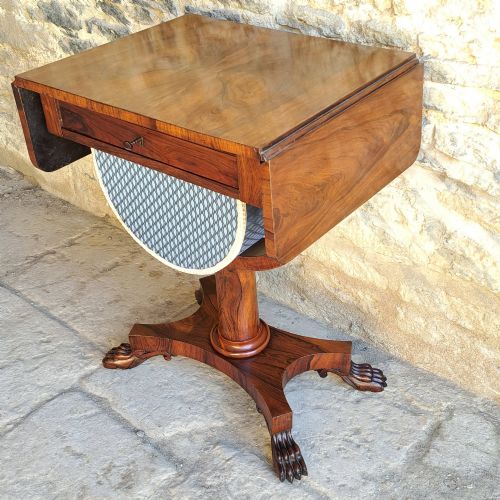
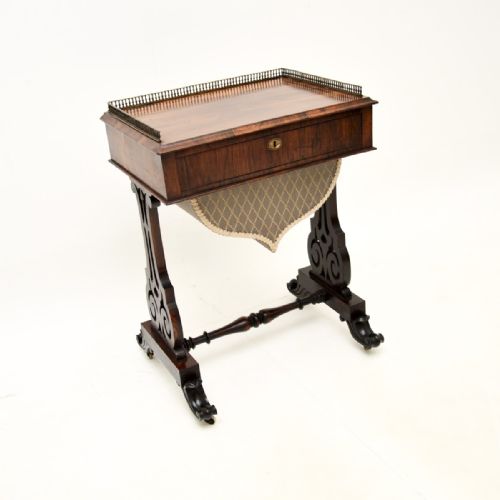


Fabric Well Sewing Table
A fabric well sewing table combines refined timber construction with a textile compartment designed to hold needlework.
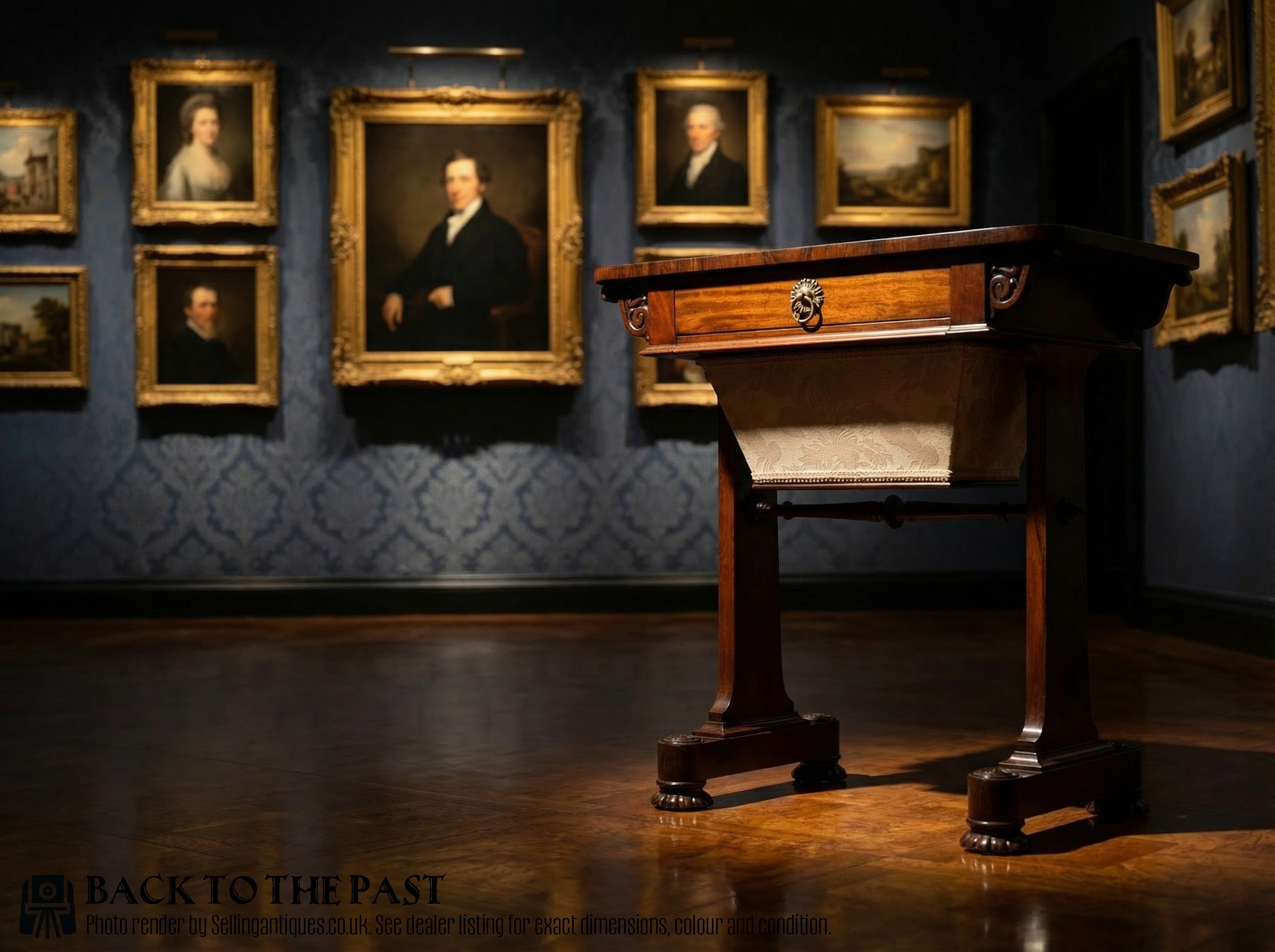
Fabric Well Sewing Table
A fabric well sewing table serves as both a functional workspace for needlecraft and an elegant occasional piece for the reception room. When searching for a fabric well sewing table, collectors encounter examples spanning the Regency, William IV and Victorian eras.
The primary forms on this page include dedicated work tables, sewing tables and occasional side tables equipped with internal compartments. Most pieces date from the nineteenth century, including specific years such as eighteen hundred, eighteen thirty, eighteen fifty and eighteen sixty.
Makers designed these items to accommodate sewing paraphernalia while remaining decorative enough for general domestic use. Surviving specimens frequently double as lamp tables or game tables, reflecting the versatile nature of nineteenth-century furniture.
How they were made
Cabinet makers utilised choice hardwoods including rosewood, walnut, burr walnut, mahogany and pollard oak for the structural frames. These timbers were selected for their rich grain patterns and polished to a high finish.
The characteristic textile component integrates with the woodwork, often taking the form of a suspended fabric well or textile pouch beneath the main surface. Brass fittings and drop flaps frequently supplement the primary timber construction.
Victorian ladies stored their tangled threads and ivory needles in fabric wells so deeply hidden that modern finders occasionally unearth forgotten twentieth-century buttons inside.
What varies in quality
The grade of timber selection dictates the visual appeal of each piece, with burr walnut and figured rosewood standing apart from standard mahogany. Superior examples display careful matching of wood veneers across the top and sides.
Execution of the internal compartment and the integration of the textile well demonstrate the skill of the original workshop. Finer constructions exhibit refined turning on the supports and robust joinery that withstands daily movement.
The Fabric Well Sewing Table Glossary
- Work table
- A small domestic table fitted with drawers or compartments specifically designed for needlework and domestic crafts.
- Burr walnut
- A highly figured timber veneer taken from the warted growths of walnut trees, prized for its swirling grain patterns.
- Pollard oak
- Oak timber derived from trees that were cut back above livestock height, producing a dense and heavily figured grain.
- Drop flap
- A hinged leaf attached to the side of a table that raises to extend the surface area when needed.
- Regency
- A British design period spanning the early nineteenth century, characterised by classical restraint and polished hardwoods.
Fabric Well Sewing Table: Frequently Asked Questions
What is a fabric well sewing table?
A fabric well sewing table is a nineteenth-century furniture form featuring a suspended textile pouch beneath a wooden top, built to hold sewing materials.
These pieces were kept in sitting rooms where ladies practiced needlework, combining a functional craft workspace with an attractive occasional table.
How do I date a sewing table?
Dating relies on observing the timber choices, stylistic markers and structural proportions typical of periods like the Regency or Victorian eras.
For instance, rosewood and pollard oak often point toward earlier nineteenth-century workshops, while burr walnut frequently aligns with the eighteen sixties.
Can these tables be used today?
These tables adapt easily to modern interiors as side tables, lamp tables or bedside storage units.
The fabric well provides a convenient concealed space for contemporary items, while the top surface functions just as it did in the nineteenth century.
What woods were used for sewing tables?
Cabinet makers predominantly employed rosewood, walnut, burr walnut and mahogany for these domestic furnishings.
Pollard oak also appears on select Regency examples, showcasing complex wood grains chosen for formal reception rooms.