






Victorian Sewing Cabinet
A Victorian sewing cabinet gathers silks, needles and small implements in polished timber, offering a neat resting place for needlework.
Victorian Sewing Cabinet
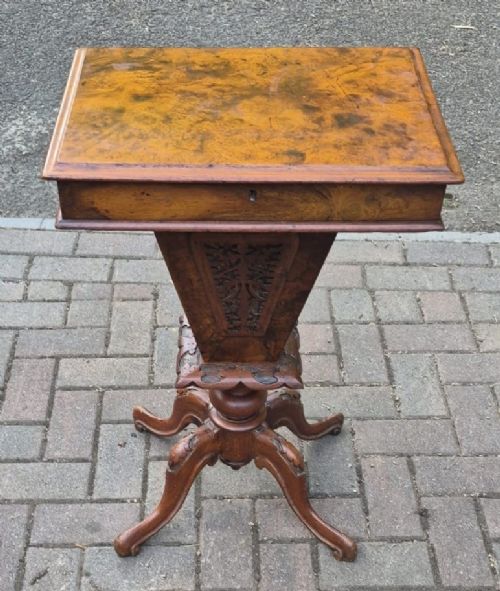
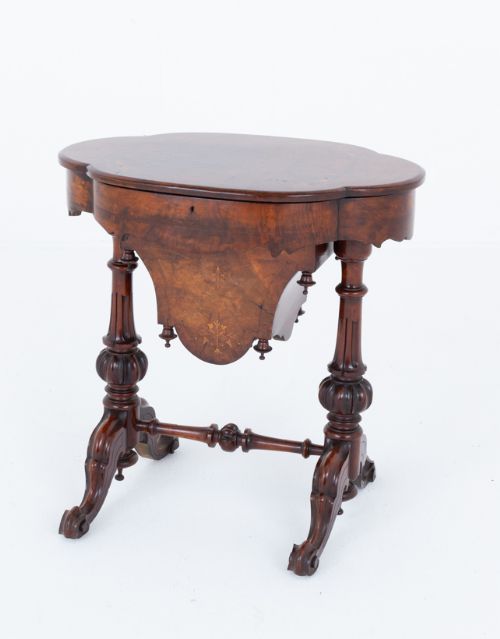
A victorian sewing cabinet appears most frequently on this page as a work table, side table or specialised box fashioned during the nineteenth century. These pieces bring together functional compartments for threads and fabrics with domestic elegance, often standing on slender legs or pedestal bases.
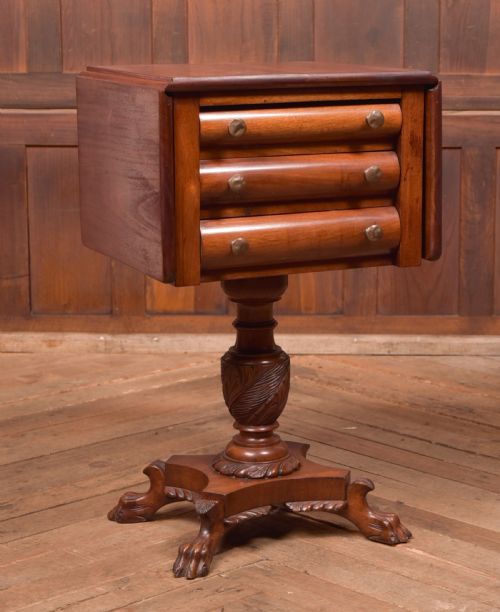
Makers produced these items in various configurations, ranging from drop-leaf tables and burr walnut boxes to larger haberdashery display cases and Chinoiserie cabinets. The selection reflects both private boudoir use and commercial shop displays from the era.
Materials and construction
Cabinet makers utilised dense hardwoods such as mahogany, walnut, burr walnut and rosewood, frequently applying fine veneers or figuration to the primary surfaces. Specialised items also incorporate bamboo, papier-mâché, glass panels and fabric linings.
Joinery techniques supported practical internal storage, featuring lift lids, fitted trays, drop-leaves and small drawers designed to hold delicate sewing implements securely.
Victorian Sewing Cabinet Retail Price Guide 2026
Typical asking prices for victorian sewing cabinet among the pieces listed under this phrase on Sellingantiques today, from the lower quarter to the upper quarter. They describe what is for sale here now, not the wider market.
Listings on this page span the Victorian period into the early twentieth century, featuring mahogany, walnut, rosewood, and glass.
Judging quality
Quality rests upon the choice of timber and the dexterity of the grain arrangement, where highly figured burr walnut or rich rosewood elevates a piece above standard mahogany. The crispness of carved details and the integration of specialised glass display elements also distinguish finer examples.
Construction integrity determines how well internal compartments, drop leaves and hinged lids withstand handling over generations, separating utilitarian boxes from exceptional cabinet work.
Waring & Gillow·Chadwick’s Sewing Cottons·Ermen & Roby
The Victorian Sewing Cabinet Glossary
- Work table
- A small domestic table fitted with drawers, bags, or compartments specifically designed to hold needlework and sewing supplies.
- Haberdashery cabinet
- A glass-fronted or multi-drawer case originally utilised in retail shops to store and display sewing cottons, ribbons and small haberdashery goods.
- Burr walnut
- A veneer sliced from the bulbous growths on walnut trees, prized by cabinet makers for its swirling, highly figured grain patterns.
- Drop-leaf table
- A table featuring hinged flaps on the sides that fold down to save space or lift up to extend the surface area.
Victorian Sewing Cabinet: Frequently Asked Questions
What is a Victorian sewing cabinet?
A Victorian sewing cabinet is a specialised nineteenth-century piece of furniture designed to store threads, needles, and textiles for domestic needlework.
These items range from small tabletop boxes to freestanding work tables and glass-fronted haberdashery display cases.
How were sewing cabinets used?
Victorian ladies kept their sewing cabinets in drawing rooms or boudoirs to organise ongoing embroidery, lace-making, and mending projects.
Fitted interiors with small compartments, trays, and fabric bags kept delicate needles and spools tidy and within reach.
What woods were used?
Cabinet makers predominantly utilised hardwoods such as mahogany, walnut, burr walnut, and rosewood for their durability and rich colour.
Some examples also incorporate exotic materials like tiger bamboo, papier-mâché, and glass for display purposes.
How do I spot a shop display case?
Shop display cases often feature glass panels, maker lettering for brands like Chadwick’s or Ermen & Roby, and numerous shallow drawers.
Unlike private domestic work tables, these pieces were built for commercial retail environments to showcase sewing cottons to customers.