


Commercial Counter Cabinet
These commercial counter cabinet pieces are retail display fittings built for trading goods, offering glass views and timber frames that suit modern interiors.
Commercial Counter Cabinet
A commercial counter cabinet brings original retail heritage into a room, serving as a display case or serving counter. Buyers searching for a commercial counter cabinet encounter formats ranging from tall mahogany shop counters to glazed countertop display cases.
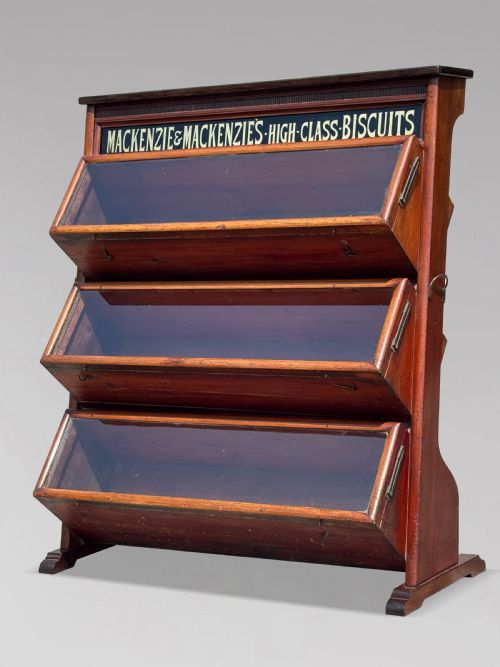
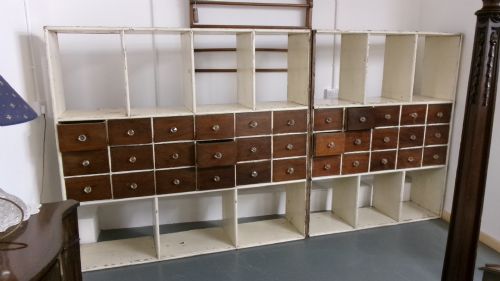
The selection includes pieces spanning the Victorian and Edwardian eras through to the 1930s. Common forms involve banks of drawers for drapers, haberdashery units, and specialised confectionary advertising cases.
Origins stretch across British workshops and European makers, utilising sturdy timbers suited for daily merchant trade. These items adapt easily to domestic settings as unique storage and display furniture.
Materials and construction
Makers relied heavily on solid mahogany and oak for structural carcasses, complemented by pine for internal framing and drawer construction. Glass panels provide visibility on countertops and floor-standing display units.
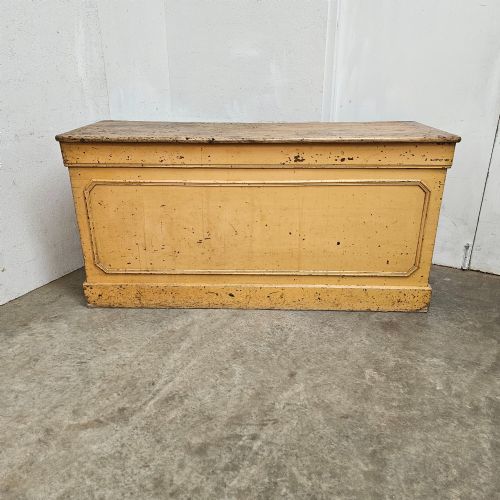
Metal elements such as brass, aluminium, and chrome appear in framing, handles, and specialised fittings, particularly on pieces from the early twentieth century. Original painted finishes and mirrored interiors frequently survive on period examples.
Materials span mahogany, oak, pine, brass, aluminium, and glass across Victorian, Edwardian, and 1930s periods.
Assessing quality and build
Quality rests in the integrity of the timber framing and the clarity of the original glass panels. Superior examples retain intact maker plates, specialised brand advertising, and original hardware.
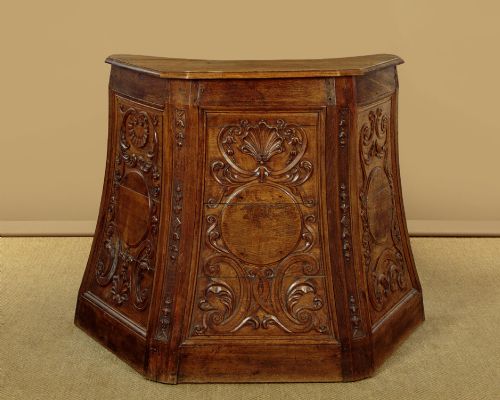
The sophistication of the joinery, from bow ends to pentagonal geometries, separates standard utility counters from high-end retail display pieces. Original painted surfaces and untouched patina elevate the standing of a piece.
Dudley & Co·John Stow Ltd·Manoah Rhodes & Sons Ltd·F. Sage & Co·Saml. Elliott & Sons·E. Pollard & Co. Ltd
The Commercial Counter Cabinet Glossary
- Haberdashery cabinet
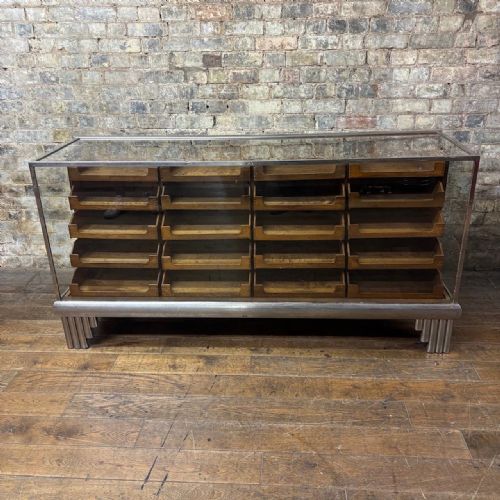
- A multi-drawer unit designed for storing small sewing goods, ribbons, and textiles. These typically feature numerous shallow drawers with glass fronts or brass pulls.
- Bow end
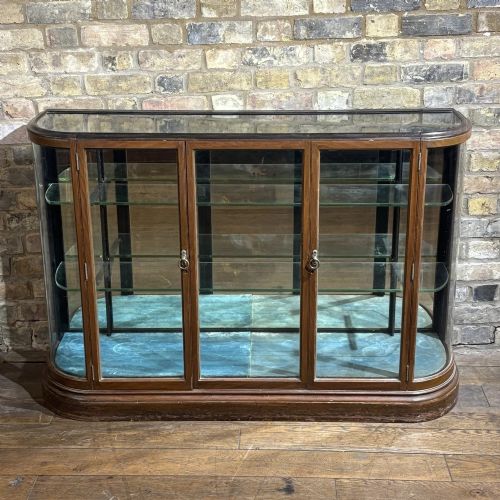
- A curved glass or timber termination on a counter or display cabinet. This shape softens the profile of large retail fittings.
- Countertop display case
- A smaller glazed cabinet designed to sit atop a main shop counter for close customer inspection of goods. They frequently house confectionery or small accessories.
- Shop fitting
- Custom furniture built specifically for commercial retail premises. These range from full serving bars to banks of multi-drawer chests.
Commercial Counter Cabinet: Frequently Asked Questions
What were commercial counter cabinets used for?
Merchants used these cabinets to store, protect, and display goods to customers across retail shops. They held items ranging from haberdashery and tea to specialised confectionery.
In modern spaces, they function as display furniture for collections, tableware, or dry goods storage.
How do I date a counter cabinet?
Dating relies on materials, hardware styles, and construction techniques visible in the framing and drawers. Victorian and Edwardian pieces often use heavy mahogany or pine, while 1930s examples introduce aluminium and chrome.
Maker signatures or brand advertising glass panels provide further clues to the manufacturing decade.
Are these cabinets suitable for home use?
These retail fittings adapt well to domestic environments as kitchen islands, sideboards, or display units. Their glass panels and drawer configurations offer practical storage while showcasing decorative objects.
Placing them in a home requires measuring floor space and ceiling clearance, as many historical commercial counters have generous proportions.
What is the difference between a shop counter and a display cabinet?
A shop counter is a heavy serving barrier often featuring drawers or shelving on the staff side and display glass facing the customer. A display cabinet is primarily a glazed case designed solely to exhibit goods.
Many surviving pieces combine both functions by incorporating glazed top sections above wooden storage drawers.