


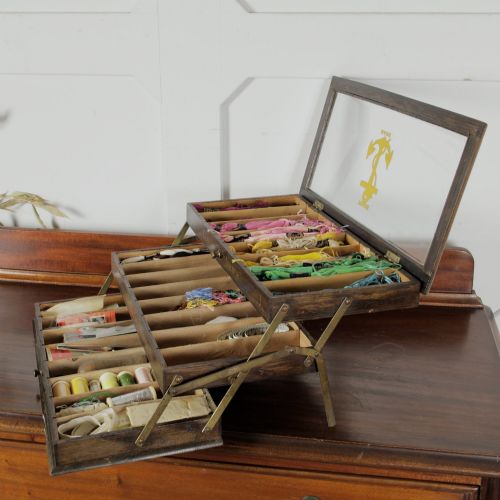






Haberdashery Display Case
A haberdashery display case brings trade history into the home, offering clear glass and timber framing to house small collections.
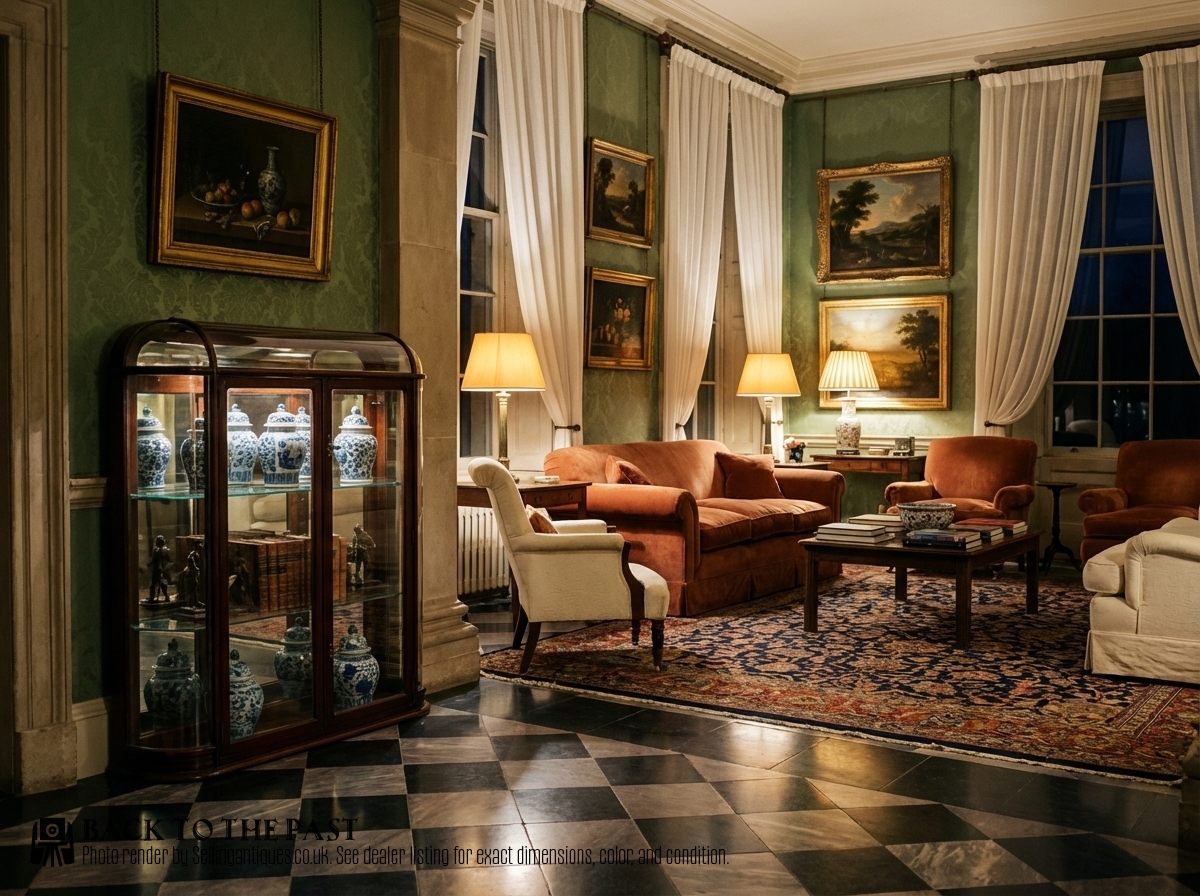
Haberdashery Display Case
A haberdashery display case is a retail unit designed to showcase small wares, cottons, or confectionery on a shop counter or floor. These pieces span from the mid-nineteenth century through to the nineteen-twenties, incorporating Victorian, Edwardian, and Art Deco commercial styles.
Buyers regularly encounter countertop models alongside larger serving counters and glazed wall cabinets. Materials range from traditional mahogany and oak to polished brass, often featuring original glass panels and maker lettering.
The objects serve modern interiors by providing visible storage for collections while retaining their original retail character. Pieces vary from simple wooden frames to gold leafed or sign written advertising cabinets.
Construction and materials
Makers built these commercial units using sturdy timbers such as mahogany and oak to withstand daily shop use. Glass panels provided maximum visibility for goods, held securely within wooden or brass framing.
Surface decoration included gold leaf application and sign writing for brand promotion, as seen on chocolate and sewing cotton advertising units. Internal fabric linings occasionally provided a contrasting backdrop for displayed items.
Haberdashery Display Case Retail Price Guide 2026
Typical asking prices for haberdashery display case among the pieces listed under this phrase on Sellingantiques today, from the lower quarter to the upper quarter. They describe what is for sale here now, not the wider market.
The recorded inventory spans the Victorian, Edwardian, and nineteen-twenties periods, utilising mahogany, oak, brass, and gold leaf.
Assessing quality and character
Quality rests in the integrity of the original timber frame and the clarity of the surviving glass panels. Superior examples retain their authentic advertising lettering, gold leaf, or maker plaques rather than later replacements.
Proportion and execution elevate certain pieces, distinguishing standard retail furniture from finer neoclassical revival or bespoke commercial designs. The presence of untouched brass hardware and original internal shelving adds distinction.
Ermen and Roby·Frys Chocolate·Siegel·Lovells Toffee
The Haberdashery Display Case Glossary
- Countertop display cabinet
- A glazed retail unit designed to sit upon a shop counter for customer browsing. These smaller pieces allow merchandise to be viewed from above and the sides.
- Sign written
- Lettering hand painted directly onto glass or timber for commercial advertising. This historical detail identifies the original retail brand associated with the unit.
- Apothecary style
- A commercial aesthetic characterised by numerous small drawers or compartmentalised glass sections. Such units overlap with haberdashery forms in retail pharmacy interiors.
- Neoclassical revival
- A decorative style drawing upon classical Greek and Roman motifs popular in later commercial cabinet making. It brings formal symmetry and restrained ornament to shop fittings.
Haberdashery Display Case: Frequently Asked Questions
What is a haberdashery display case?
A haberdashery display case is a glazed commercial cabinet originally used in shops to exhibit small goods, textiles, or confectionary.
Today, these units function as domestic display furniture, protecting collections behind glass while displaying them clearly.
How do I date a display cabinet?
Dating relies on timber choice, construction methods, and stylistic cues such as Victorian mouldings or nineteen-twenties commercial lines.
Original advertising lettering and maker plaques also provide a precise timeframe for the piece's commercial origin.
Were these cabinets used in homes originally?
These pieces were built strictly for retail environments, including mercers, confectioners, and apothecary shops.
They entered domestic spaces later as collectors recognised their utility for displaying small antiques and curiosities.
How should I clean the glass and brass?
Glass panels require a gentle glass cleaner applied to a cloth rather than directly sprayed near historic timber.
Brass fittings benefit from light dusting, avoiding harsh metal polishes that can remove patination or damage surrounding wood.