



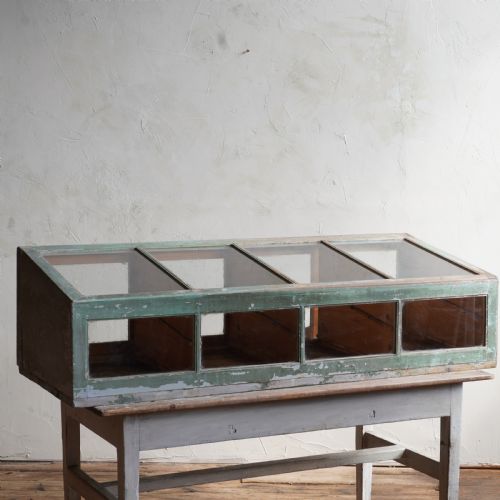


Countertop Display Case
A countertop display case brings the tidy order of a nineteenth-century shop into a modern room to hold small collections safely behind clear glass.

Countertop Display Case
A countertop display case sits upon a shop counter or table, designed to show merchandise or treasured items at close range. These pieces span from the late nineteenth century through the Edwardian era and into the Art Deco period, capturing the practical needs of past retailers.
The selections here include glazed table top display cabinet cases, haberdashery cabinets, and sweet shop display cabinets bearing advertising for brands like Fry's, Rowntree's, and Cadbury's. Oak and mahogany frames predominate, often fitted with hinged or sliding glass doors for easy access.
Victorian and Edwardian examples sit alongside 1920s commercial units and apothecary cases, offering compact storage with maximum visibility. Buyers encounter everything from plain timber frames to specialised shopfitting cabinets with mirror backs and interior shelves.
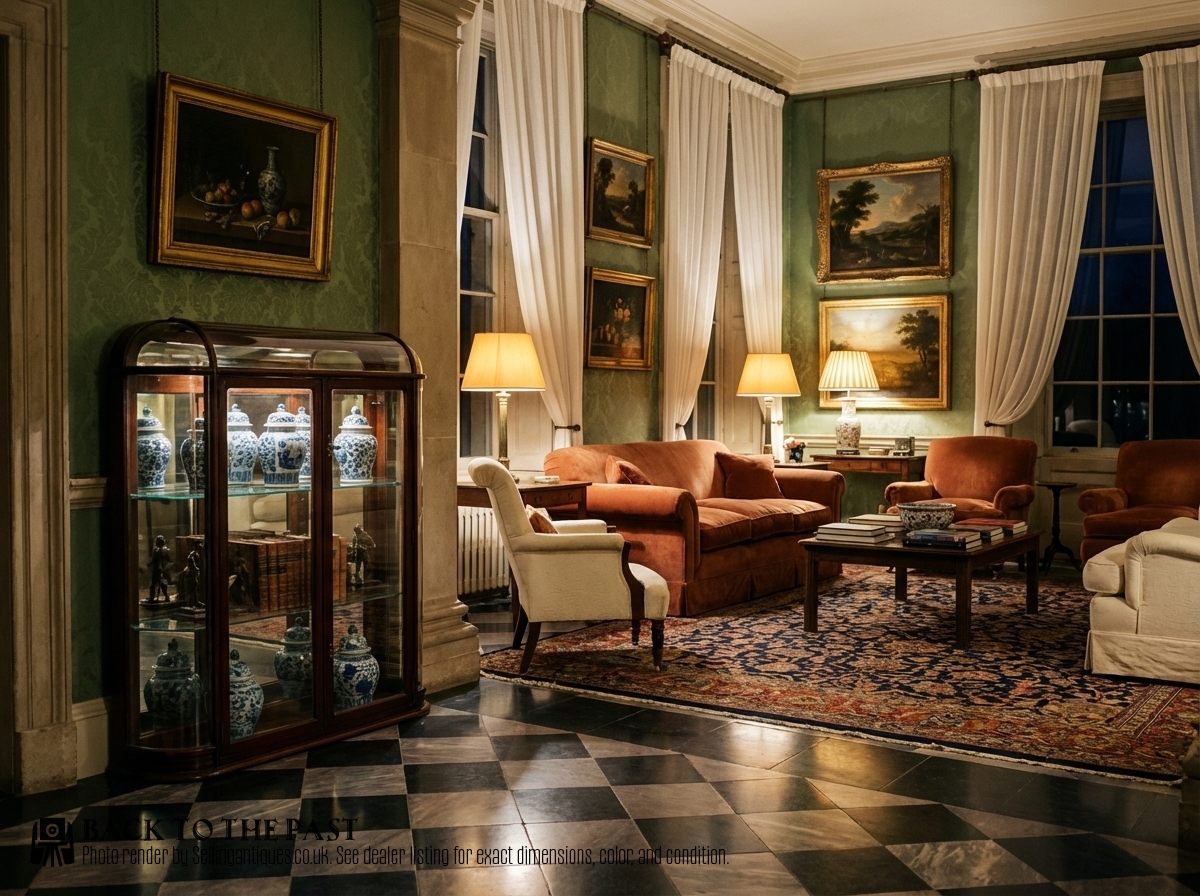
Materials and Construction
Makers built these frames primarily in solid oak, mahogany, walnut, and ebonised wood, sometimes incorporating brass fittings and mirrored backs to catch the light. Glass panels form the principal viewing areas, held securely within rebated wooden joints or slender metal frames.
Interior surfaces often feature felt or velvet linings to cushion delicate wares such as jewellery or sewing cottons. Sign-written glass and hand-painted advertising lettering appear on specialist retail pieces from confectioners and grocers.
Countertop Display Case Retail Price Guide 2026
Typical asking prices for countertop display case among the pieces listed under this phrase on Sellingantiques today, from the lower quarter to the upper quarter. They describe what is for sale here now, not the wider market.
Several pieces retain original advertising for chocolate and cocoa, including Fry's, Rowntree's, and Cadbury's.
Judging Quality and Craftsmanship
The refinement of the timber framing and the clarity of the original glass set finer examples apart from utilitarian boxes. Superior pieces display tight corner joints, well-fitted doors that run smoothly, and intact brass hardware.
Original advertising signage and authentic maker branding elevate specific retail pieces, whereas later sign-written decoration alters the historical character. The presence of original mirrored backs, internal shelving, and working locks distinguishes better-surviving specimens.
John Stow Ltd of Bradford·F. Sage and Co London
The Countertop Display Case Glossary
- Haberdashery cabinet
- A compartmentalised cabinet originally used in drapery shops for ribbons, buttons, and sewing supplies. These feature multiple shallow drawers or glass-fronted compartments.
- Bijouterie case
- A table top or countertop display case with a glazed lid, traditionally used for jewellery and small ornaments. They often lift open from the top rather than swinging from side doors.
- Ebonised
- Wood finished with a dark stain or polish to imitate expensive ebony. This treatment was common during the Victorian period for decorative effect.
- Shopfitting
- The trade and craft of manufacturing and installing fixtures for retail premises. Pieces bearing maker plates from established shopfitters reflect commercial grade durability.
Countertop Display Case: Frequently Asked Questions
How were countertop display cases used?
Merchants placed these cabinets on service counters so customers could inspect small goods like chocolates, sewing cottons, and jewellery while keeping stock secure.
The glass protected delicate items from dust and handling while inviting purchase through clear presentation.
What woods were used for these cabinets?
Cabinet makers relied heavily on durable timbers such as oak and mahogany for everyday retail environments, alongside walnut for finer bijouterie pieces.
Some examples also utilise ebonised wood or brass frames to create distinct visual contrasts.
How do I date a shop display case?
Dating relies on construction methods, timber choices, and style markers such as Edwardian edgings or Art Deco geometry.
Maker plaques, original brass hardware, and period advertising lettering also help narrow the decade of manufacture.
Where should I place a countertop display case?
These compact cabinets sit well on sideboards, desks, or low tables where natural light can pass through the glass panes.
They function best when positioned at eye level to showcase collections of small antiques.