






Curved Glass Showcase
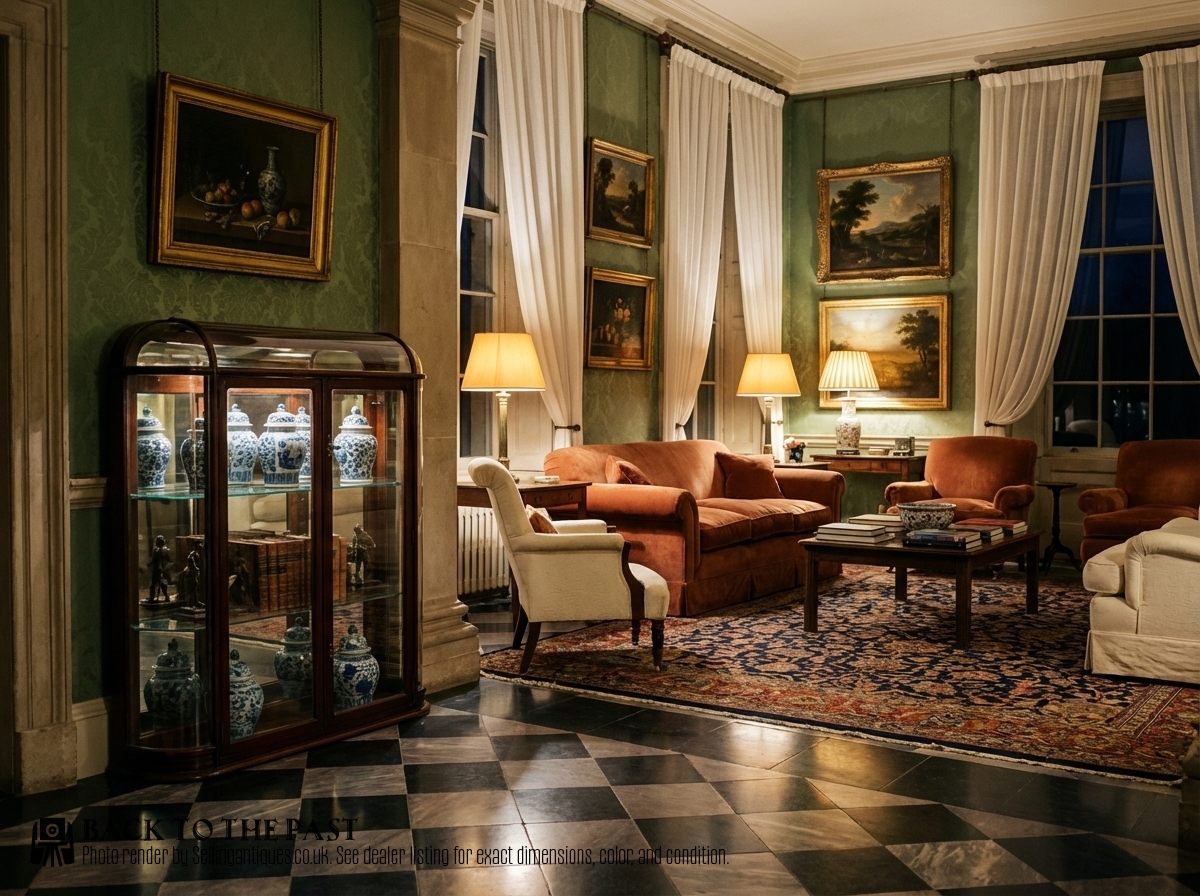
A curved glass showcase offers a panoramic view for precious objects, combining transparent elegance with sturdy period framing.
Curved Glass Showcase
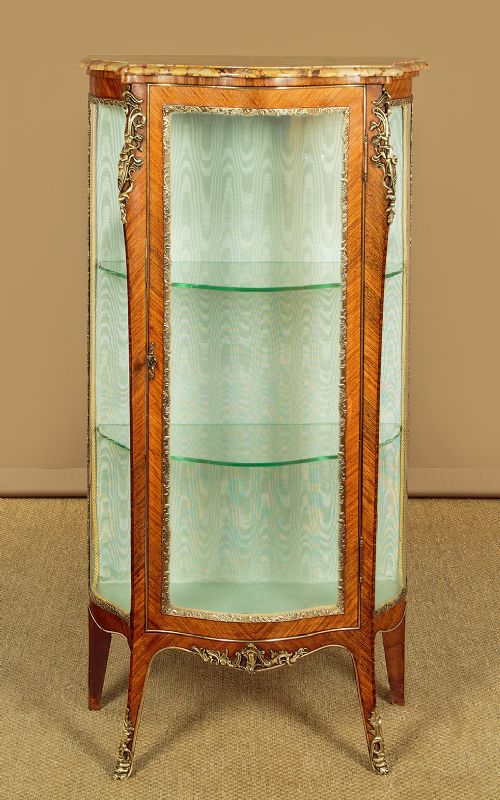
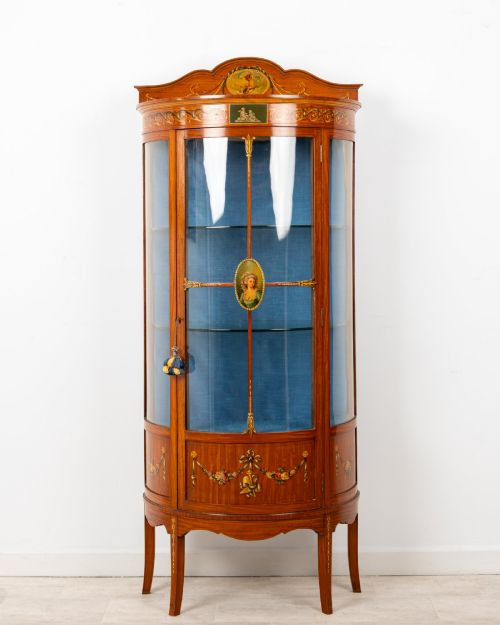
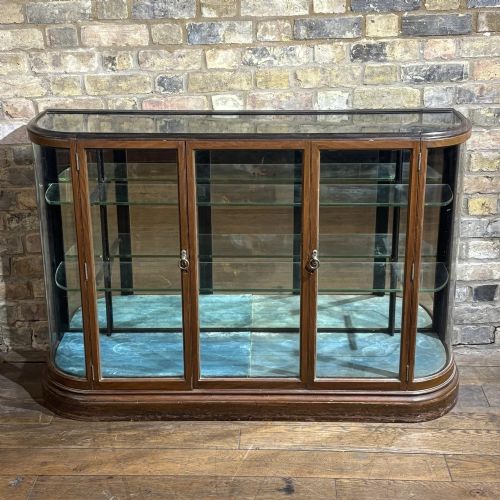
A curved glass showcase provides an unobstructed view of collections from multiple angles, utilising bent glazing to create soft lines. When searching for a curved glass showcase, buyers encounter various forms including freestanding vitrines, countertop counters, and corner cabinets. These pieces serve both domestic interiors and commercial shops, housing everything from porcelain to jewellery.
The pieces on this page span several decades, reaching from the Victorian era through the Edwardian period and into Art Deco designs. Mahogany, satinwood, and oak provide the primary timber frames for these enclosures. Domestic vitrines sit alongside commercial shop display counters from makers such as F. Sage and Co.
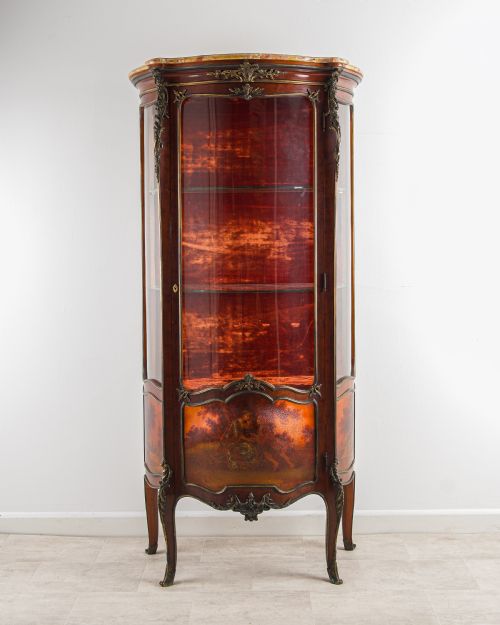
French influence appears frequently through Louis XV style, Louis XVI style, and Vernis Martin decoration. Makers and designers sometimes work in specific regional traditions, employing marble tops and ormolu mounts. Buyers find both large generous proportions and smaller kidney-shaped or bow front formats.
How they were made
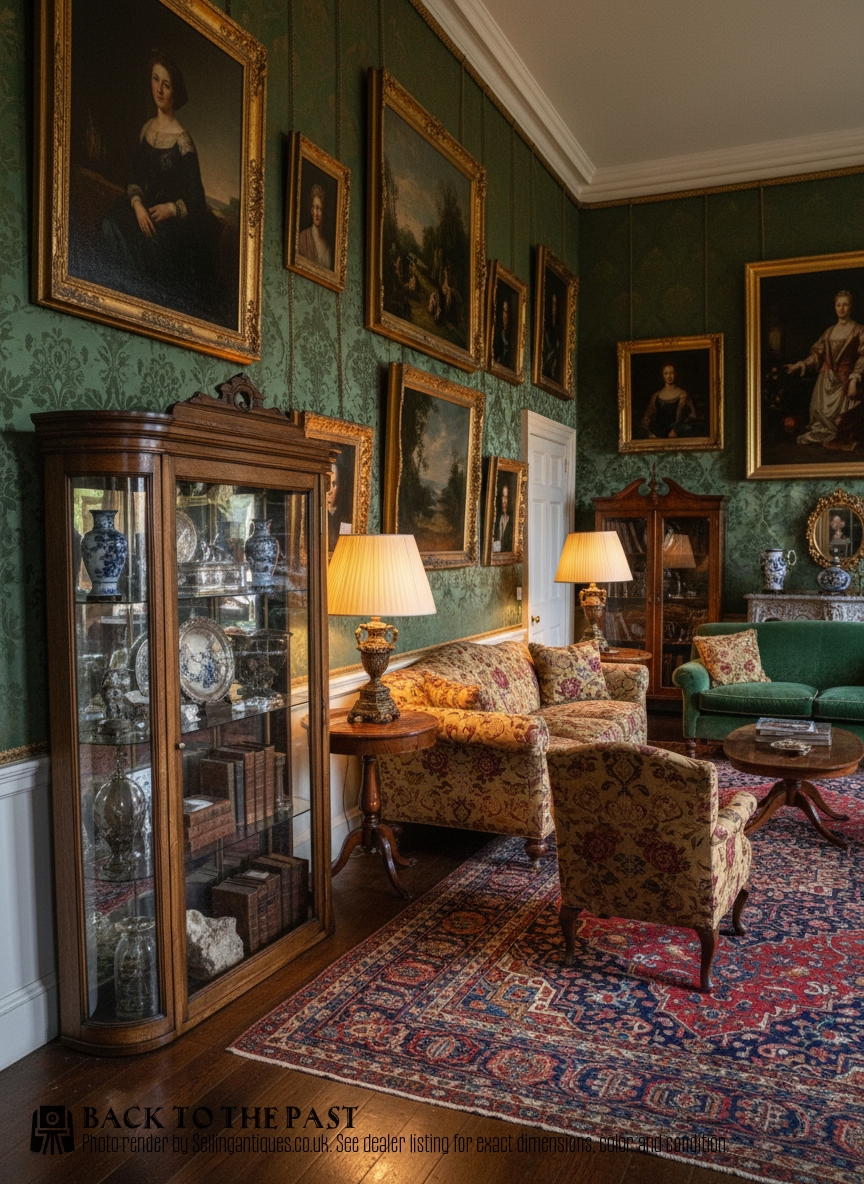
Cabinet makers constructed these enclosures using seasoned hardwoods like mahogany, walnut, and satinwood, often applying intricate inlay or painted satinwood decoration. Frames required precise joinery to support the weight of heavy glass panels without warping over time.
Bending glass for these showcases involved controlled heat processes to achieve smooth, continuous curves without optical distortion. Metal elements such as brass, ormolu, and aluminium framing provided structural reinforcement and decorative contrast to the timber.
Curved Glass Showcase Retail Price Guide 2026
Typical asking prices for curved glass showcase among the pieces listed under this phrase on Sellingantiques today, from the lower quarter to the upper quarter. They describe what is for sale here now, not the wider market.
Display formats range from wall-hanging cabinets and corner units to large freestanding vitrines and commercial shop counters.
What varies in quality
The calibre of timber selection and the precision of the bent glass distinguish finer examples from standard commercial units. Superior cabinets exhibit seamless glass curves and tight, stable joinery in woods like figured mahogany or satinwood.
Decorative embellishments reveal the hand of skilled workshops, particularly in cast ormolu mounts, hand-painted Vernis Martin panels, and delicate marquetry. The integrity of the original glass and the finish of the timber frame indicate the level of care invested during manufacture.
F. Sage and Co·James Hicks·François Linke
The Curved Glass Showcase Glossary
- Vitrines
- Glass-fronted cabinets designed specifically for displaying fine porcelain, curiosities, and decorative objects. They often feature glazed sides to maximise light penetration.
- Vernis Martin
- A type of simulated Japanese lacquer developed in eighteenth-century France and revived in later nineteenth-century furniture. It uses translucent varnishes over painted metallic leaf or decorative scenes.
- Ormolu
- Gilded bronze mounts applied to furniture and cabinets for decorative accent. The technique involves treating brass or bronze with a gold amalgam.
- Bow Front
- A convex curved cabinet facade that projects outward in a smooth arc. This shape softens the corners of a room and expands internal display space.
- Bijouterie Cabinet
- A low glass-topped table or cabinet designed for displaying small portable valuables like jewellery and medals. These pieces typically feature hinged glazed lids.
Curved Glass Showcase: Frequently Asked Questions
What fits inside a curved glass showcase?
These cabinets suit porcelain collections, glassware, silver, and small objects of vertu. Their glass panels allow light to reach the contents from multiple directions.
Larger floor-standing vitrines accommodate taller decorative items, while countertop versions and bijouterie tables highlight flat or smaller pieces.
How do I clean the curved glass?
Use a soft microfiber cloth and a mild glass cleaner sprayed onto the cloth rather than directly onto the glass. This prevents liquid from seeping into the wooden frame or antique putty.
Take care near glued joints and painted surfaces such as Vernis Martin panels to avoid chemical damage.
Where should I place a curved glass showcase?
Position the cabinet away from direct sunlight to protect interior fabrics and prevent excessive temperature fluctuations that stress the glass and timber. Ensure the floor is level so the frame does not twist and jam the doors.
Allow enough surrounding clearance to open hinged or sliding doors comfortably.
How do I identify the period of a showcase?
Examine the timber species, construction methods, and decorative styles such as Edwardian satinwood inlay or Art Deco geometric framing. Trade labels or stamp marks on the timber frame can also point to specific workshop origins.
Hardware styles like brass hinges and lock mechanisms often reflect manufacturing techniques characteristic of nineteenth or early twentieth-century production.