





Retail Display Case
A retail display case brings commercial history home, offering glazed protection for cherished objects.
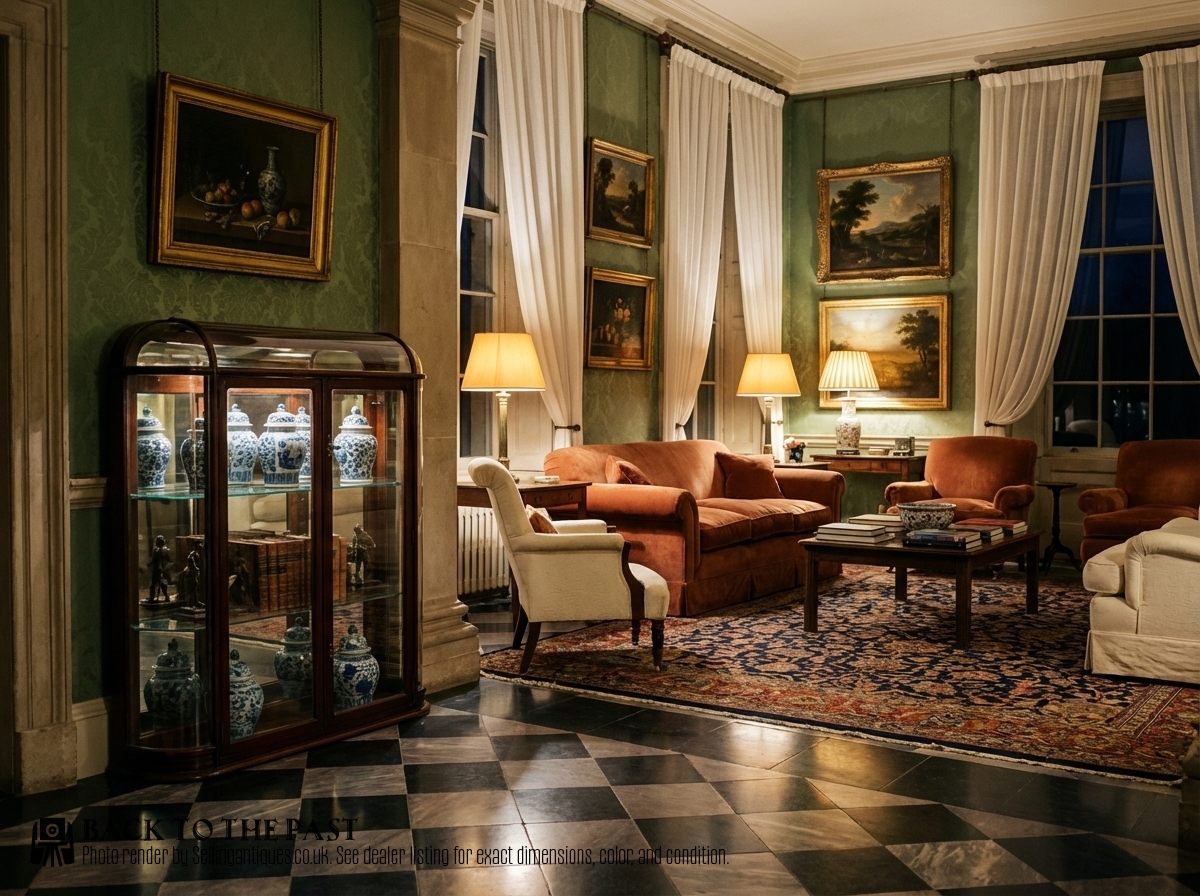
Retail Display Case
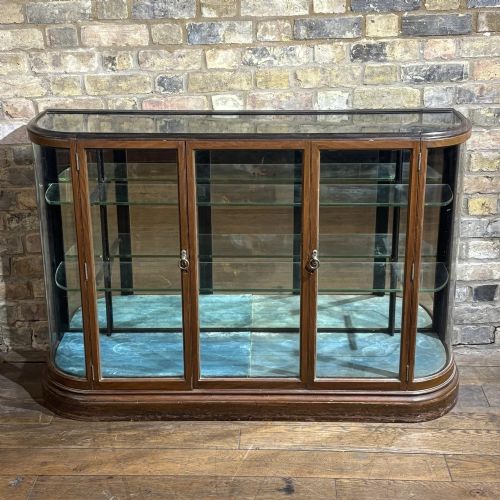
A retail display case is a piece of commercial furniture designed to showcase goods securely to customers. The versions most commonly met on this page originate from the Victorian, Edwardian, and 1930s periods, encompassing large freestanding cabinets, countertop units, and glazed display counters.
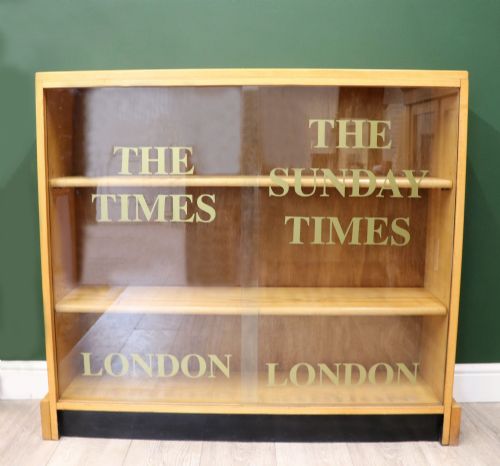
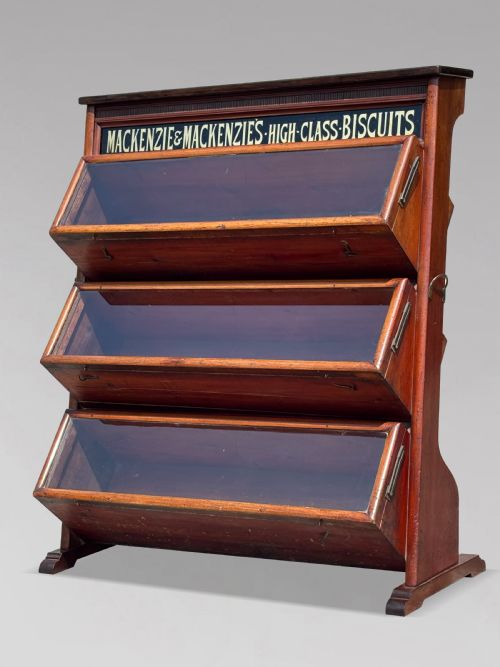
These pieces served various trades, appearing as apothecary cabinets, jewellery display cases, and confectionary advertising counters for brands like Fry's, Cadbury's, and Rowntree's. Forms range from tall tower cabinets and bow-end counters to compact bijouterie tables intended for tabletop viewing.
Originating primarily from commercial environments of the late 19th and early 20th centuries, these display cases combine practical storage with maximum visibility. Buyers seek them to house collections behind glass while introducing period character into domestic or commercial interiors.
Materials and Construction
Makers constructed these cabinets using durable timbers such as mahogany and oak, often paired with extensive expanses of glass to maximise light penetration. Ebonised finishes and brass or aluminium frames appear across later Edwardian and 1930s commercial designs.
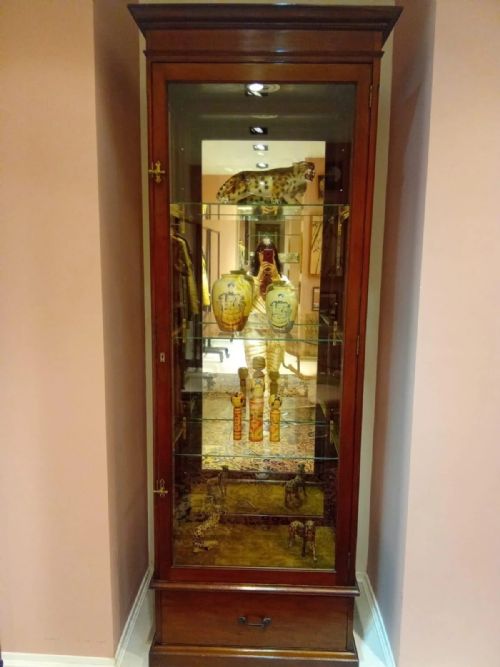
Interior elements frequently incorporated mirrored panels to reflect light and adjustable glass shelves to accommodate objects of varying heights. Details like velvet linings, fitted locks, and specialist advertising signage on the glass or timber define the construction of trade-specific shop counters.
Retail Display Case Retail Price Guide 2026
Typical asking prices for retail display case among the pieces listed under this phrase on Sellingantiques today, from the lower quarter to the upper quarter. They describe what is for sale here now, not the wider market.
Markers of Quality
Quality in a retail display case rests upon the calibre of its framing timbers and the integrity of the original glazing. Superior examples exhibit refined joinery, such as bow ends or pentagonal configurations, executed by established shopfitters rather than anonymous workshops.
The survival of original details, including functioning brass hardware, mirrored backs, and maker's plaques, distinguishes high-grade commercial pieces. Alterations to shelves, linings, or framing materials lower the architectural purity of the cabinet.
F. Sage & Co·John Stow Ltd·Saml. Elliott & Sons·J W Benson Ltd·Mabie Todd & Co
The Retail Display Case Glossary
- Bijouterie table
- A glass-topped display table originally designed for small valuables, jewellery, and specimens. These tables typically feature hinged lids and velvet-lined interiors.
- Countertop cabinet
- A smaller display case meant to sit atop a shop counter for eye-level customer browsing. These units often served pharmacies and confectioners.
- Bow end
- A curved glass or timber end to a cabinet or counter that softens the linear profile. This curved construction required advanced glazing techniques.
- Tower cabinet
- A tall, vertical freestanding display case designed to maximise floor space while offering multi-shelf visibility. Ebonised and mahogany variants are common.
- Advertising cabinet
- A branded retail showcase featuring maker's names or product details integrated into the woodwork or glass. Companies like Fry's and Rowntree utilised these for point-of-sale marketing.
Retail Display Case: Frequently Asked Questions
What trades used these display cases?
These cabinets served a wide range of Victorian and Edwardian merchants, including chemists, jewellers, and confectioners.
Specific brands and retailers utilised branded countertop units to market chocolates, pocket watches, and fountain pens directly to the public.
How do I date an Edwardian display case?
Edwardian display cases typically date between 1901 and 1910, often showing transitional styles from late Victorian heavy timber designs towards lighter commercial glazing.
Maker's marks, patent brass hardware, and registration numbers can help narrow the production year.
Can I adjust the shelves inside?
Many surviving shop display cabinets feature adjustable glass shelves supported by notched timber strips or metal brackets.
This adaptability allowed merchants to alter the interior layout depending on the height of the goods being showcased.
Where should I place a countertop cabinet?
Countertop cabinets sit securely on top of sideboards, tables, or existing retail counters to bring small collections up to eye level.
Their compact footprints make them suitable for displaying pocket watches, ceramics, and small curiosities within domestic rooms.