






Tabletop Collectors Cabinet
A tabletop collectors cabinet sits on a surface to house small treasures, bringing orderly historic charm into a room.
Tabletop Collectors Cabinet
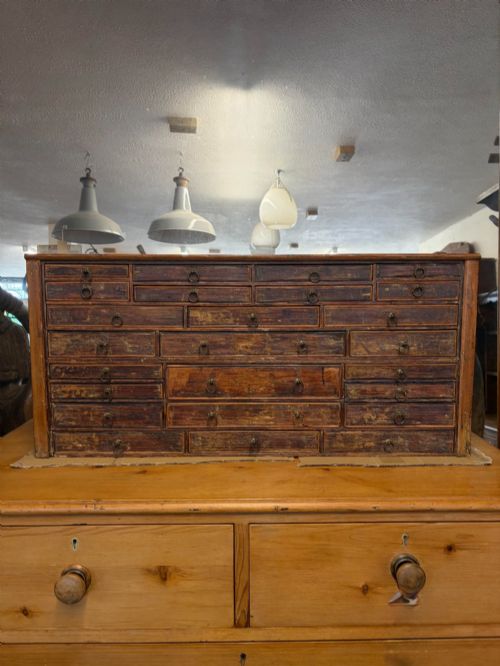
A tabletop collectors cabinet is a small piece of furniture designed to sit upon a desk, counter or table rather than stand on the floor. These compact repositories serve to organise and display everything from geological specimens and coins to jewellery and microscope slides.
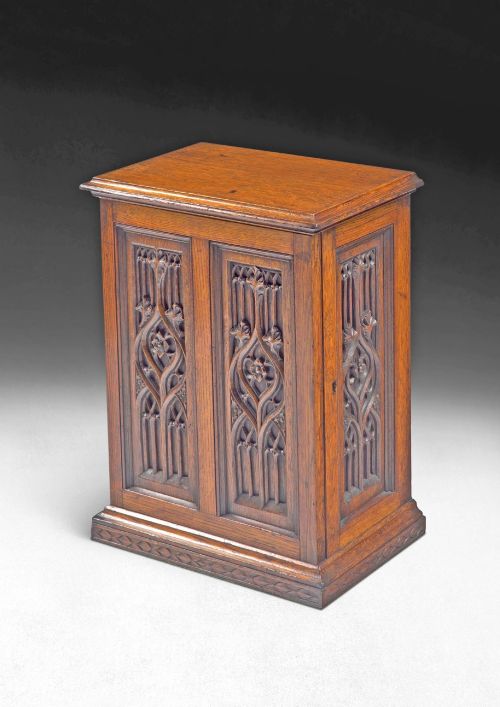
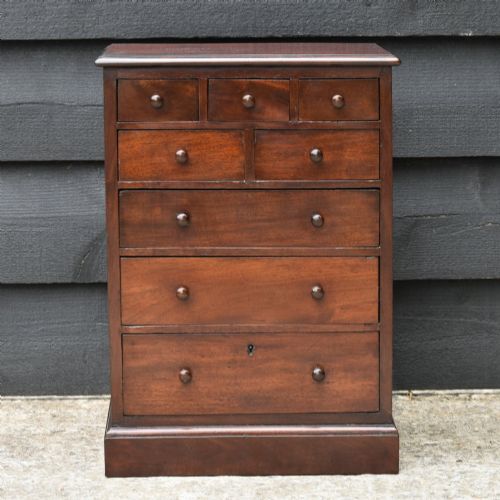
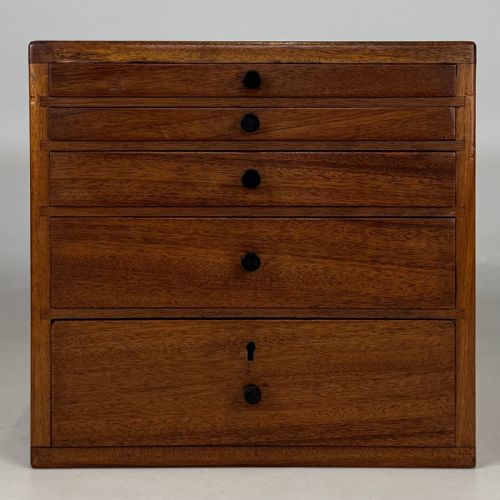
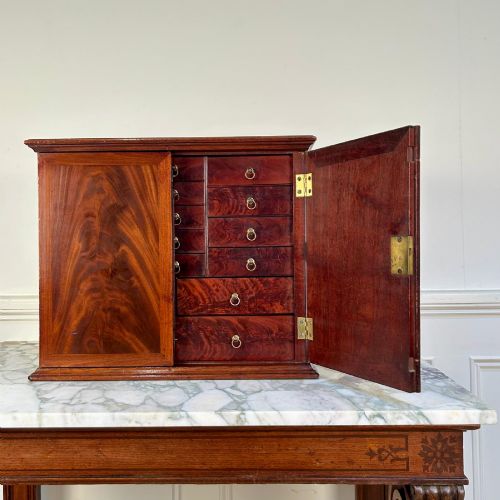
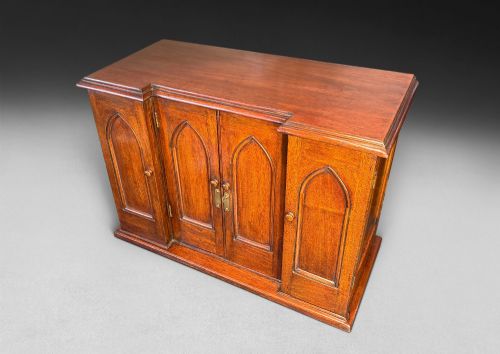
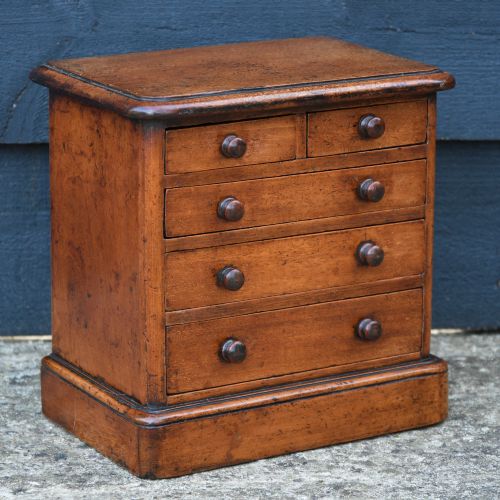
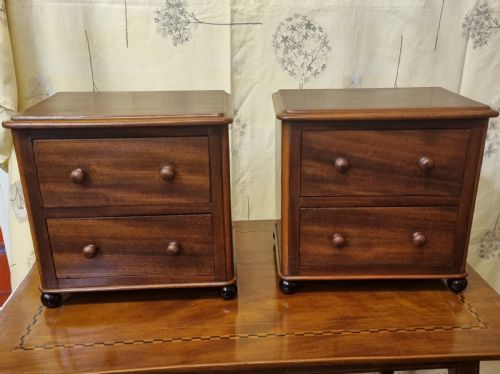
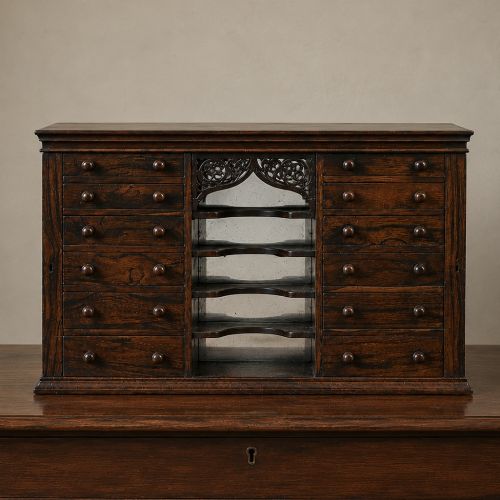
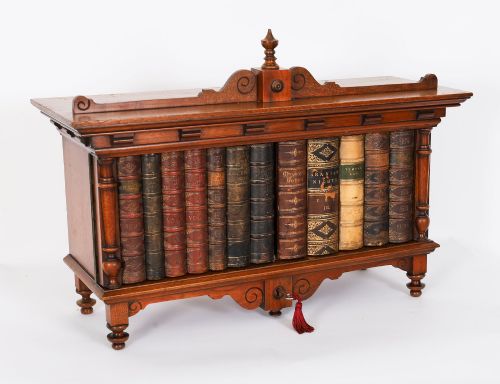
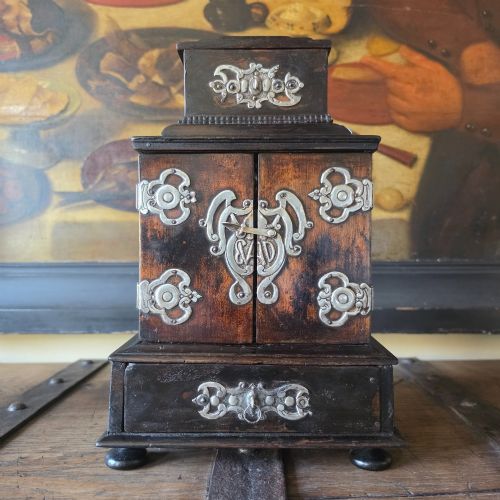
The versions met most frequently on this page span the Georgian, Victorian and Edwardian eras through to the 1920s. They appear as miniature chests of drawers, glazed display cases, spice drawers and panel-doored table cabinets.
Makers shaped these small forms from domestic woods like oak, mahogany and walnut, alongside occasional exotic materials. Their origins stretch from British workshops to Japanese lacquerware and Anglo-Indian hardwood chests.
Materials and Construction
Makers built these cabinets using solid timbers and veneers of mahogany, oak, walnut, pine and fruitwood, often jointed tightly to protect delicate contents from dust. Brass hardware such as drop handles, escutcheons and carrying side handles appears regularly across the periods.
Tabletop Collectors Cabinet Retail Price Guide 2026
Typical asking prices for tabletop collectors cabinet among the pieces listed under this phrase on Sellingantiques today, from the lower quarter to the upper quarter. They describe what is for sale here now, not the wider market.
Some miniature chests hide secret compartments behind lower drawers for safeguarding tiny valuables.
Craftsmanship and Proportion
Quality rests in the precision of the joinery and the selection of timber figures, such as burr walnut or figured mahogany, which elevate a utilitarian box into a piece of fine furniture. Cabinet makers invested considerable skill into miniature proportions, ensuring that tiny drawers slide smoothly and locking mechanisms operate cleanly.
Fittings dictate distinction, separating simple pine workshop boxes from brass-mounted, lockable cabinets equipped with keys and dedicated slotting trays.
Luxmore's of Ilfracombe
The Tabletop Collectors Cabinet Glossary
- Apprentice piece
- A small item of furniture demonstrating mastery of technique, traditionally created by someone learning a trade. These miniature chests replicate full-sized furniture with working drawers and joints.
- Specimen cabinet
- A piece designed specifically for storing natural history samples, fossils or scientific items. They contain shallow drawers sized for organised categorisation.
- Escutcheon
- A protective plate surrounding a keyhole. Brass examples are common on period cabinet doors to prevent timber wear.
- Wellington chest
- A tall vertical chest of drawers secured by a hinged locking side stile. Miniature variants appear on table tops.
- Burr walnut
- Timber taken from a tree growth showing complex swirling grain patterns. Cabinet makers used veneers of this wood on high-status surfaces.
Tabletop Collectors Cabinet: Frequently Asked Questions
What fits inside a tabletop collectors cabinet?
These cabinets suit small curiosities, jewellery, coins, shells, stamps and mineral samples. Many feature shallow drawers originally built for specific items like microscope slides or apothecary bottles.
Buyers today use them to store modern collections or small keepsakes while keeping tabletops tidy.
How do I date a tabletop cabinet?
Dating relies on timber choices, construction methods and stylistic markers like Georgian bracket feet, Victorian brass handles or 1920s ebonised finishes. Secondary woods inside drawers also help determine the period.
Examining the hinges, locks and screws reveals whether hardware is original to the piece.
Were these cabinets used in shops?
Some Edwardian and 1920s examples functioned as countertop display cases for retail environments. Glazed doors and panels allowed customers to view goods while keeping merchandise secure.
Domestic cabinets, by contrast, remained in private studies, libraries and drawing rooms for personal collections.
How do I care for antique wood?
Keep wooden cabinets away from direct heat sources and strong sunlight to prevent timber warping and veneer cracking. Occasional gentle dusting with a dry cloth maintains the finish without needing harsh polishes.
Checking that locks and hinges move freely prevents undue stress on old brasswork.