


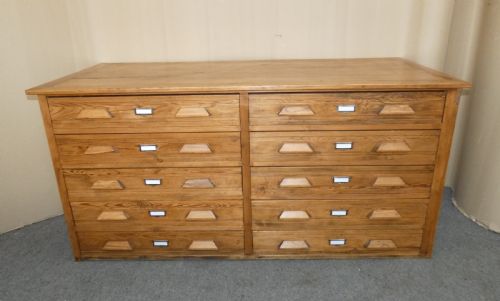

Antique Counter Cabinet
An antique counter cabinet brings commercial heritage into the home, offering glazed protection for curated objects.

Antique Counter Cabinet
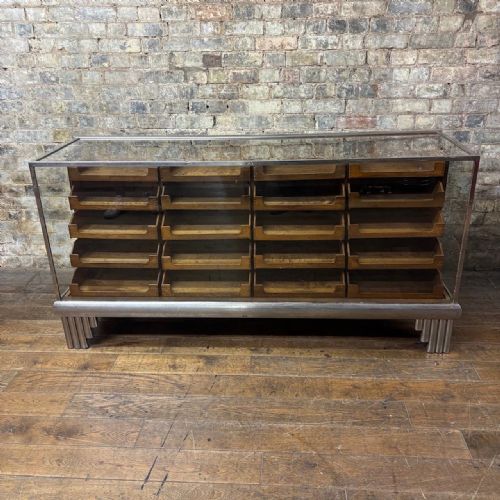
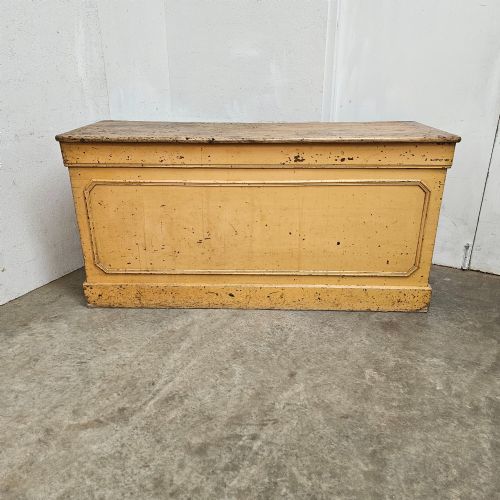
An antique counter cabinet is a piece of commercial retail furniture designed to display goods on top of or behind a shop counter. These units originate from various commercial settings, including haberdashers, chemists, grocers, and general merchants, dating primarily from the Victorian era through to the nineteen-thirties.
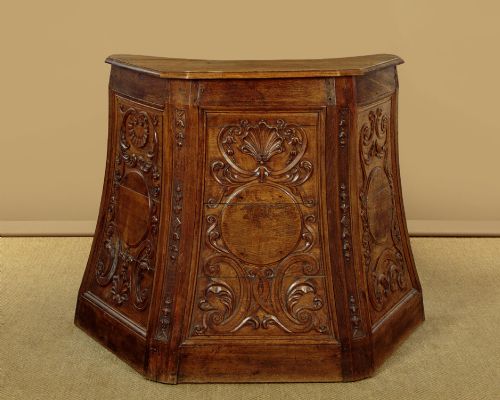
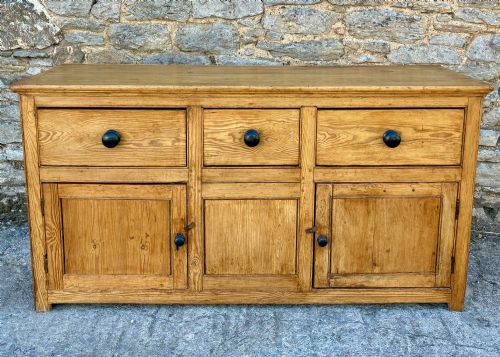
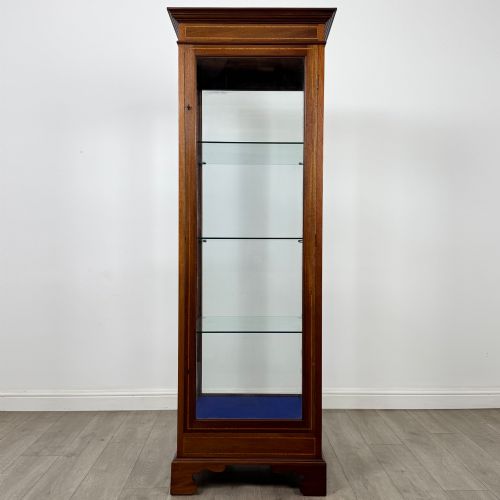
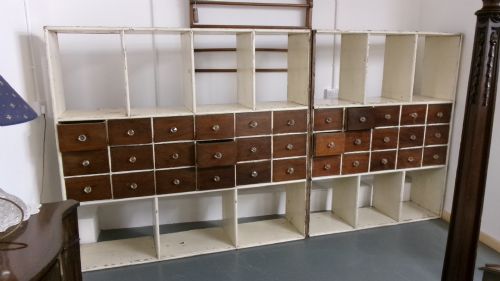
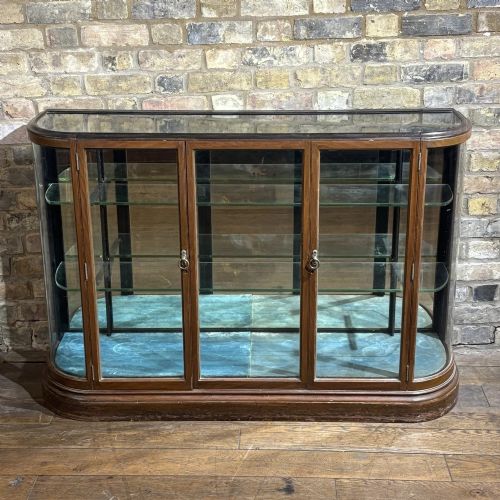
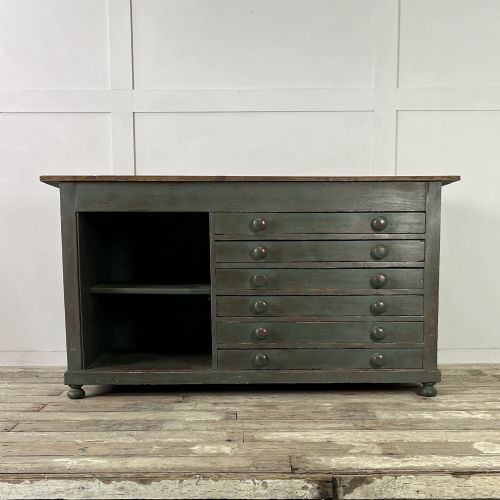
The buyer meets several distinct forms on this page, ranging from small glazed tabletops and countertop display cases to large freestanding shop counters and multi-drawer haberdashery fittings. Materials span native and imported timbers like oak, mahogany, and pine, combined with thick plate glass and brass hardware.
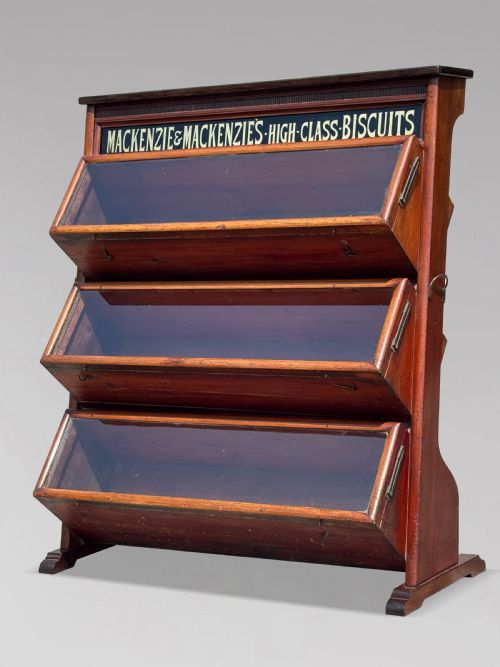
Many survivors retain original advertising scripts, manufacturer plaques, or painted finishes that reveal their commercial past. Whether intended for biscuits, seed packets, or sewing notions, each cabinet was built for daily retail use and customer interaction.
How they were made
Cabinetmakers constructed these retail fixtures using robust hardwoods like mahogany and oak, alongside pine and walnut for internal framing and carcass work. Joints were pegged or dovetailed to withstand the heavy daily wear of a busy shop floor.
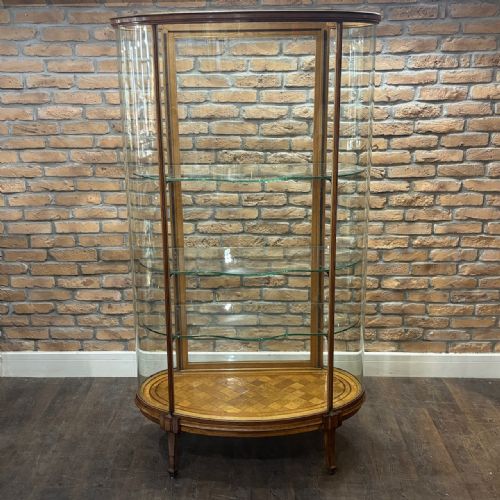
Glazing was a central element, utilising large sheets of clear glass held by wooden rebates, brass mouldings, or curved bow-front frames to maximise visibility for customers. Surfaces were finished with French polish, varnish, or left with functional painted coats.
Hardware such as brass handles, card holders, lock escutcheons, and sliding rear doors were engineered for repetitive use by shop assistants. Many countertop designs incorporated mirrored interiors to reflect light and create depth within restricted display spaces.
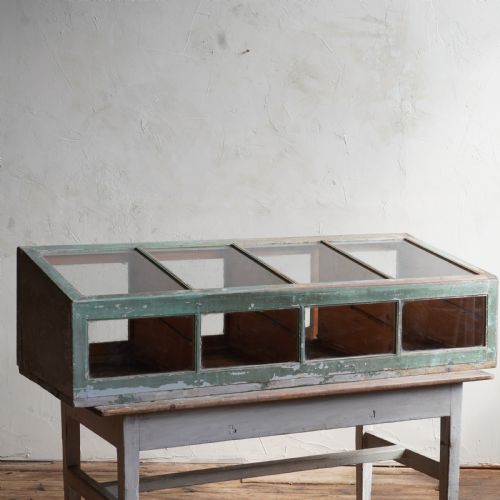
Several cabinets retain original paint finishes that survived decades of retail scrubbing before finding a quiet retirement in domestic display.
What varies in quality
Quality rests upon the integrity of the original glazing, the weight of the timber framing, and the survival of maker details. Cabinets bearing legible merchant plaques or maker signatures from firms like F. Sage or Dudley demonstrate superior commercial provenance.
F. Sage & Co·Dudley & Co·John Stow Ltd·Albert Barker
The Antique Counter Cabinet Glossary
- Countertop
- A furniture piece designed to sit directly upon a shop counter or table surface. These smaller display cases bring merchandise to eye level for customers.
- Haberdashery
- A shop category dealing in sewing items, buttons, ribbons, and threads. Cabinets from these trades typically feature banks of shallow drawers with glass fronts.
- Vitrine
- A glass-fronted display cabinet used for showcasing decorative objects or valuable wares. The term derives from the French word for glass.
- Bow end
- A display cabinet or counter featuring curved glass or framing at one or both ends. This technique softens the rectangular geometry and improves viewing angles.
- Chemist shop fitting
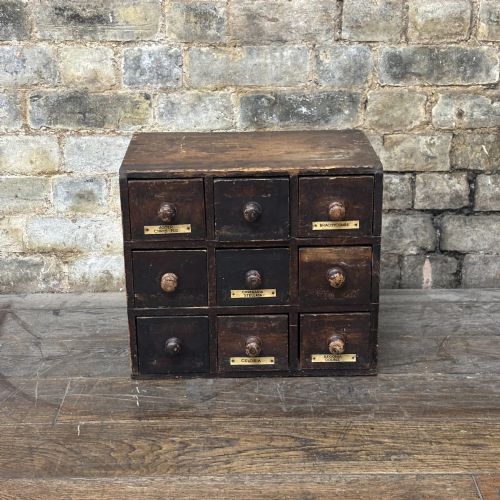
- Commercial furniture produced for pharmacies and apothecary shops. These pieces often incorporate numerous small drawers, labelled compartments, and glass display enclosures.
Antique Counter Cabinet: Frequently Asked Questions
Where should I place an antique counter cabinet?
These cabinets work exceptionally well in kitchens, living rooms, or studies where their glazed compartments can protect collections of small items. Their shallow depth allows them to sit comfortably on existing sideboards or tables.
Freestanding counters suit larger hallways or open-plan spaces, serving as functional room dividers with display capacity on top and storage underneath.
How do I clean the glass safely?
Old glass is often thinner and more fragile than modern equivalents, and may be secured with historic putty or delicate wooden beads. Use a gentle glass cleaner applied to a cloth rather than sprayed directly onto the surface.
Avoid pressing heavily against the glass panes, particularly on curved bow-front cabinets or sliding doors where the framing joints have aged.
Can I use the drawers for daily storage?
The multi-drawer haberdashery fittings and seed chests were built to hold small inventory items like threads or packets. They remain ideal for organising modern stationery, craft supplies, or jewellery.
Drawers constructed from pine or oak operate smoothly when waxed along their runners, though historic wood movement can cause slight sticking in humid conditions.