


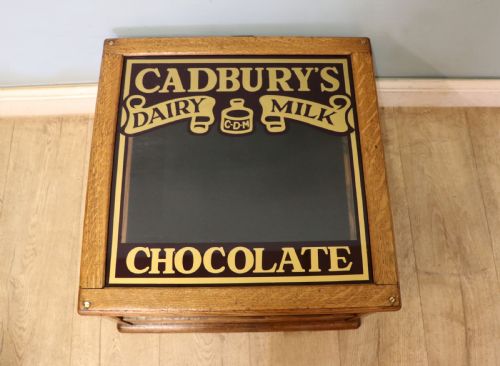


Antique Advertising Box
These antique advertising box examples are commercial shop fixtures and branded containers that carry trade names into modern homes.
Antique Advertising Box
An antique advertising box encompasses commercial display cabinets, storage crates, novelty tins, and apothecary boxes used in shops and trade. When exploring this selection, buyers encounter countertop display cabinets, desktop cabinets, and haberdashery cabinets alongside smaller storage pieces.
The objects span the Victorian, Edwardian, and early twentieth-century periods, including the 1850s, 1890s, 1900s, 1910s, 1920s, and 1930s. Styles range from Victorian novelty and rustic country to French vintage and interwar commercial designs.
Makers and brands such as Ermen and Roby, Fry, William Crawfords and Son, Peek Frean and Co, Hunter and Palmer, Cadburys, Wills Capstan, and Venus Pencil appear across the inventory. These pieces served tea rooms, cafes, and general stores before entering the collector market.
How they were made
Makers constructed these storage and display pieces using solid woods like mahogany, oak, pine, and polished wood, complemented by metal, brass, and glass elements. Many items incorporate painted finishes and sign-writing to display brand names and trade details clearly.
Novelty biscuit tins and containers utilise shaped and printed metal to mimic objects such as tractors, satchels, and carved hardwood boxes. Display cases combine timber framing with glass panels to protect merchandise while keeping goods visible to customers.
Listings feature items spanning the Victorian era through the 1930s, constructed from oak, mahogany, pine, and glass.
What varies in quality
The standard of construction depends upon the selection of timber, such as heavy oak or mahogany versus utilitarian pine, and the complexity of the cabinetry. Superior pieces feature integrated brass hardware, polished wood finishes, and intact original glass.
The clarity and preservation of original sign-writing, brand lettering, and painted decoration significantly influence the character of each box. Surviving manufacturer labels and specialised mechanisms, such as those on vending cabinets, separate standard containers from desirable examples.
Ermen and Roby·William Crawfords and Son Ltd·Peek Frean and Co·Hunter and Palmer·Colman
The Antique Advertising Box Glossary
- Countertop display cabinet
- A glazed shop fixture designed to sit upon a counter for customer browsing. These units often feature timber frames and maker lettering.
- Haberdashery cabinet
- Multi-drawer storage furniture originally utilised in drapery and sewing shops. They provide organised storage through numerous small compartments.
- Novelty biscuit tin
- Decorated metal packaging produced in elaborate shapes by biscuit manufacturers to attract buyers. Examples replicate vehicles, bags, and carved boxes.
- Apothecary box
- A specialised container designed for storing medicines and remedies. These wooden boxes frequently include internal compartments and glass bottles.
- Sign-written
- Lettering painted directly onto the surface of wood or glass to advertise a specific brand. This technique identifies the original commercial context of the piece.
Antique Advertising Box: Frequently Asked Questions
What were antique advertising boxes used for?
Merchants utilised these containers to display and store goods in Victorian and Edwardian shops, tea rooms, and cafes. Items ranged from sewing cottons and biscuits to tobacco and pencils.
Manufacturers also designed decorative tins to hold biscuits and sweets, encouraging customers to reuse the containers at home after the contents were finished.
How do I identify the period of a display cabinet?
Dating relies upon the materials, construction methods, and style of lettering used on the piece. Victorian examples often display heavier ornamentation, while 1930s interwar commercial pieces lean towards simpler lines.
Maker names and brand associations listed on the cabinet also help narrow down the decade of production, alongside common timber choices like oak and pine.
Where can I place these boxes in a modern home?
Countertop cabinets work well on kitchen worktops or sideboards to display collections behind glass. Smaller storage crates and novelty tins fit easily on shelves or desks.
Their commercial history makes them practical for organising dry goods, stationery, or everyday items while adding character to a room.
Are novelty biscuit tins collectible?
Makers such as Peek Frean and William Crawfords produced imaginative metal tins shaped like satchels, tractors, and carved boxes. Collectors value these containers for their whimsical forms and surviving lithographic decoration.
They represent a specific shift in early twentieth-century marketing where packaging doubled as a decorative object.