





Victorian Needlework Cabinet
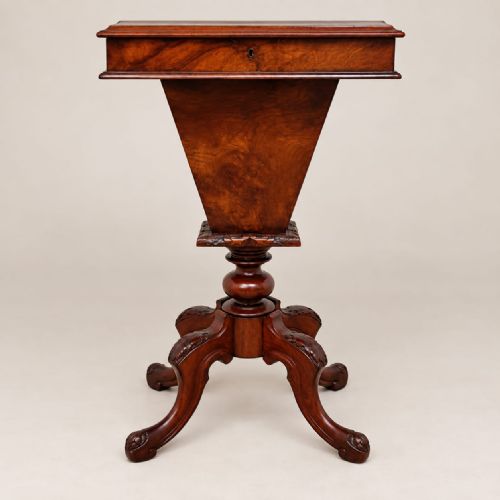
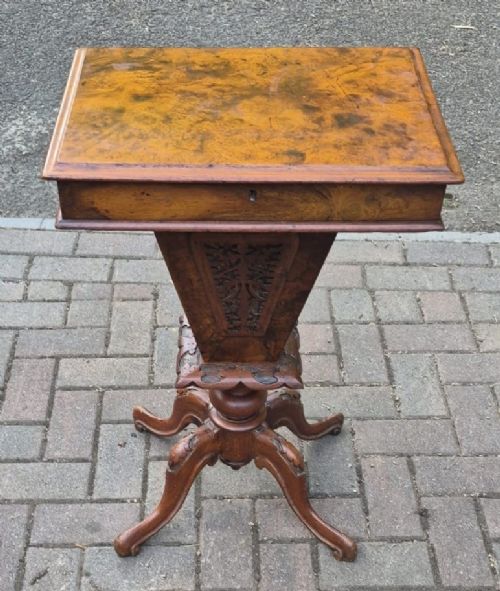
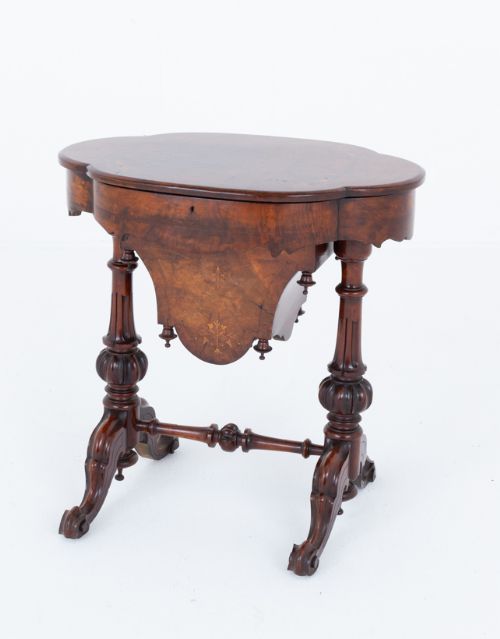
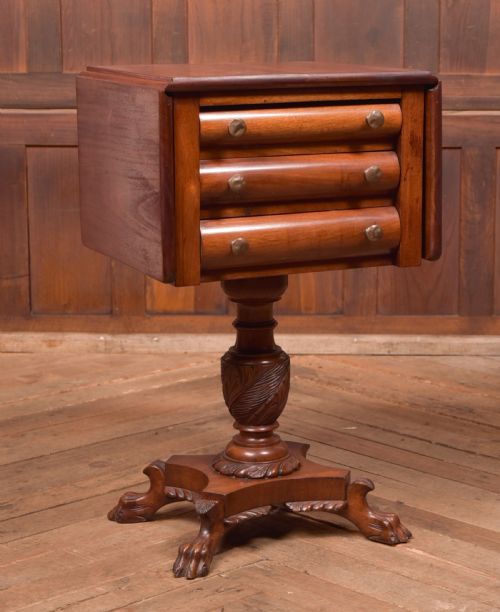
These Victorian needlework cabinet pieces are practical work tables and sewing tables designed for domestic craft, crafted to keep threads and needles close at hand.
Victorian Needlework Cabinet
When you search for a Victorian needlework cabinet, you find nineteenth-century sewing tables, work tables, and occasional tables designed for domestic craft. These pieces appear primarily from the Victorian period, alongside examples spanning the nineteenth century up to nineteen-ten.
The most common forms met on this page are walnut and mahogany work tables, often equipped with fitted compartments or fabric bags for textiles. Variations in form include tiger bamboo and lacquered two-tier sewing tables, as well as occasional side tables from the William IV, Regency, and Aesthetic Movement styles.
How they were made
Cabinetmakers utilised dense timbers such as walnut, burr walnut, mahogany, and rosewood, often highlighting figured grain patterns on the main surfaces. Brass hardware and occasional bamboo structures appear in the construction, paired with internal fabric fittings.
Tables incorporate turned or carved supports, with some examples featuring tiered shelves and lacquered finishes. Joinery follows traditional nineteenth-century techniques suited to domestic furniture production.
Listings feature walnut, burr walnut, mahogany, rosewood, brass, fabric, wood, and bamboo.
What varies in quality
The choice of timber creates a distinct separation in quality, with burr walnut and figured walnut veneers sitting above standard plain woods. Finer pieces demonstrate superior timber selection on the primary top surfaces and more intricate carving on the supports.
Construction detail in the interior compartments and the execution of turned elements determine the standard of the piece. Maker attribution, such as Waring & Gillow, elevates the standing of an individual sewing table within the range.
Waring & Gillow
The Victorian Needlework Cabinet Glossary
- Work table
- A small table equipped with drawers, compartments, or a suspended fabric bag designed to hold sewing and needlework materials. These pieces served a functional purpose in nineteenth-century parlours.
- Burr walnut
- A veneer taken from the knotted growth of a walnut tree, prized for its swirling, decorative grain pattern. Cabinetmakers used it on the top surfaces of finer tables.
- Aesthetic Movement
- A late nineteenth-century design style that emphasised visual beauty over narrative subject matter, often incorporating oriental influences. Tiger bamboo and lacquered surfaces align with this aesthetic.
- William IV
- A transitional design period spanning the early nineteenth century, bridging Regency styles and full Victorian heavy proportions. Pieces from this era often feature rich rosewood timbers.
Victorian Needlework Cabinet: Frequently Asked Questions
What is a Victorian needlework cabinet?
A Victorian needlework cabinet refers to sewing tables and work tables designed during the nineteenth century to store threads, fabrics, and sewing tools.
These pieces combine display surfaces with practical internal compartments for domestic craft.
How were sewing tables used?
Victorian ladies used these tables to hold embroidery, needlepoint, and sewing accessories while sitting in the parlour or drawing room.
The top provided a surface for handwork while drawers and fabric bags stored loose materials.
What woods were used?
Cabinetmakers built these tables primarily using walnut, burr walnut, mahogany, and rosewood.
Some later or exotic examples also incorporate tiger bamboo and lacquered finishes.
How do I identify the period?
Dating relies on timber choices, leg turning styles, and construction details associated with nineteenth-century cabinetmaking.
Specific design cues link pieces to the Regency, William IV, or Victorian eras.