


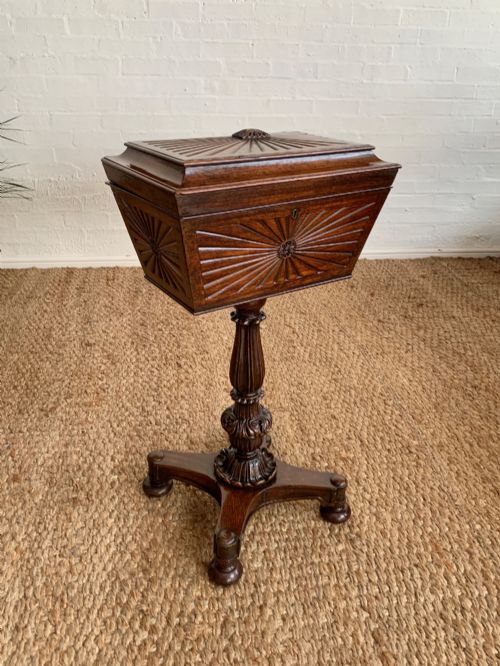
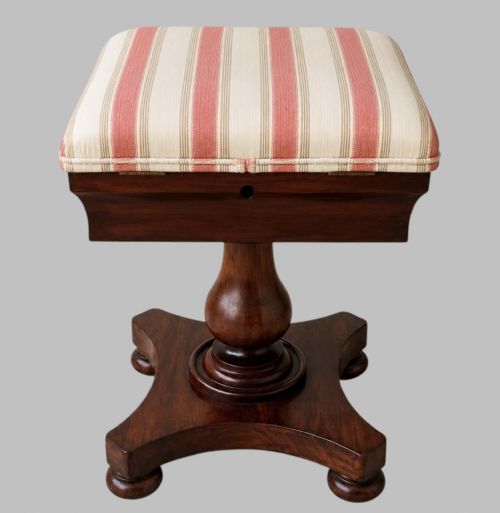
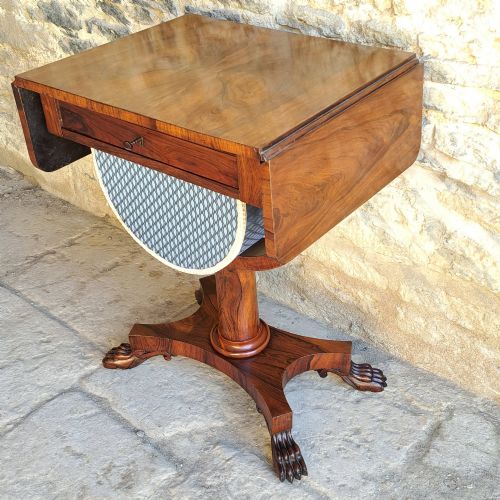
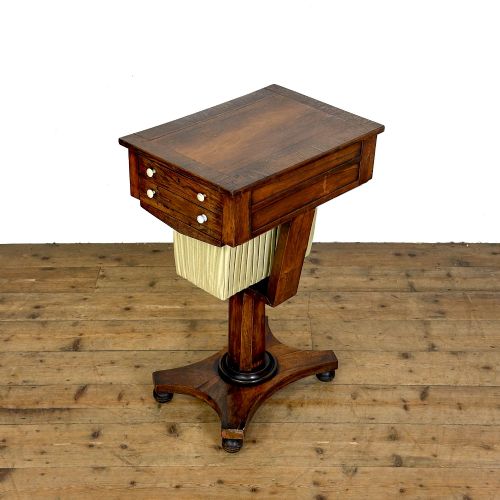


Carved Pedestal Work Table
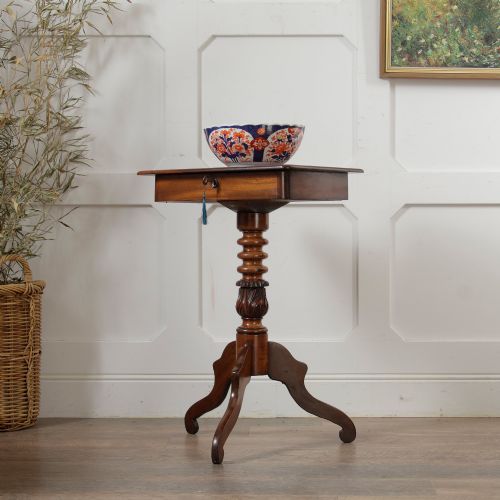
A carved pedestal work table combines domestic utility with decorative poise, offering compartments for needlework and surfaces for lamps.
Carved Pedestal Work Table
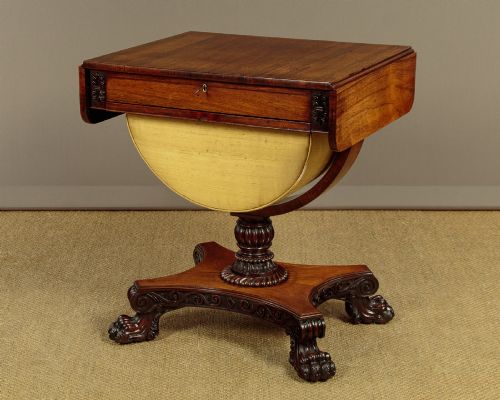
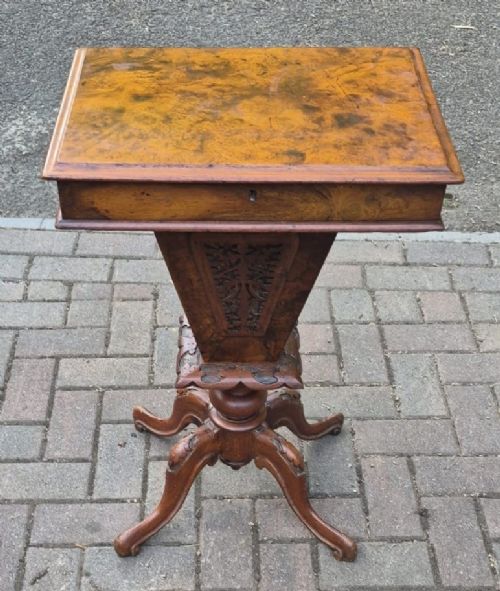
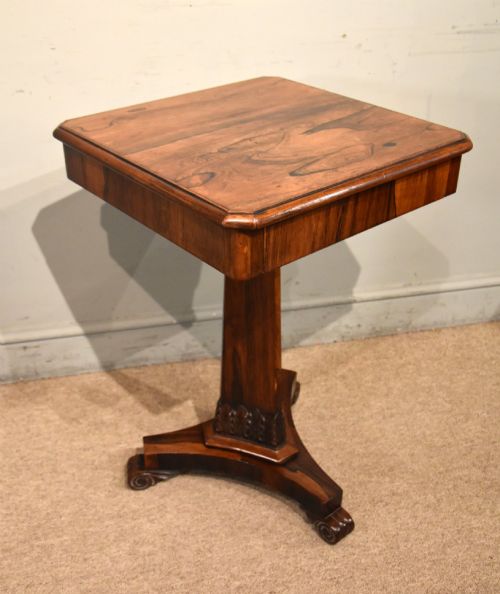
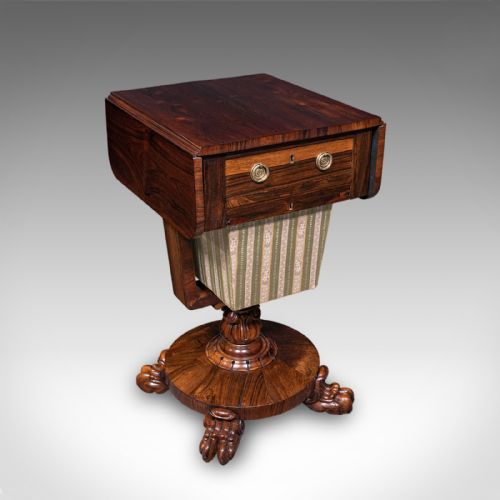
A carved pedestal work table serves as both a practical sewing station and a refined parlour piece. Buyers examining these listings will find examples spanning the Georgian, Regency, William IV, and Victorian periods.
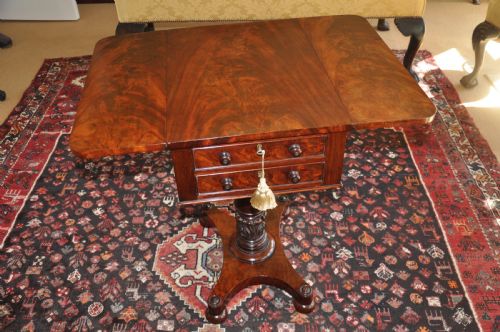
The form typically incorporates a central pillar supporting a compartmented top, occasionally featuring drop leaves or fitted interiors. Rosewood, mahogany, and burr walnut dominate the selection, often enriched with marquetry or sunburst carving.
Markers of quality
Quality rests on the depth and crispness of the carving, the choice of timber figure, and the cleverness of the internal fittings. Superior examples display carefully matched burr walnut or flame mahogany veneers that continue seamlessly across the surfaces.
The engineering of the pedestal base and the smooth operation of drawers or drop leaves also distinguish finer pieces from standard production.
Carved Pedestal Work Table Retail Price Guide 2026
Typical asking prices for carved pedestal work table among the pieces listed under this phrase on Sellingantiques today, from the lower quarter to the upper quarter. They describe what is for sale here now, not the wider market.
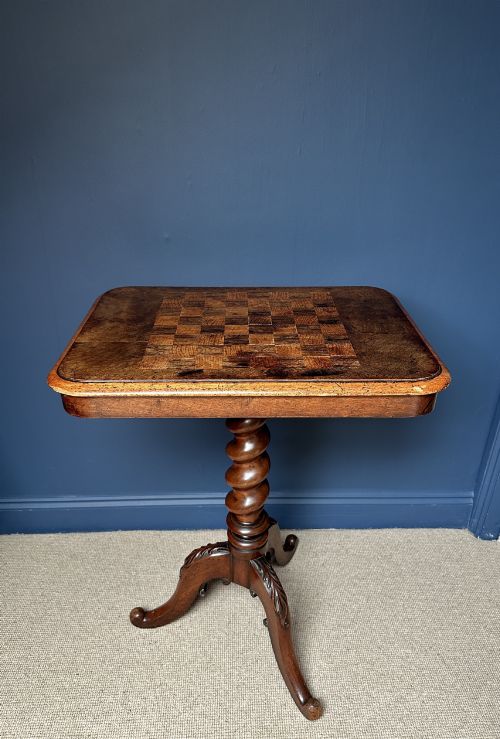
Some Victorian sewing tables secretly doubled as chess boards, keeping your pastime close to your needlework.
The Carved Pedestal Work Table Glossary
- Caddy top
- A hinged lid resembling a tea caddy, frequently found on sewing and work tables to enclose storage compartments.
- Marquetry
- The art of applying pieces of veneer to a structure to form decorative patterns and pictures.
- Drop leaf
- A hinged flap on a table top that can be raised to extend the surface area.
- Killarney Ware
- Irish decorative woodwork characterised by intricate inlaid motifs utilising local woods like arbutus.
- Bobbin turned
- A style of turning wood on a lathe to create a series of rounded, bead-like shapes resembling bobbins.
Carved Pedestal Work Table: Frequently Asked Questions
What is a work table used for?
These tables were designed for ladies to store needlework, thread, and sewing accessories within fitted internal compartments. They also functioned as versatile parlour furniture for holding lamps or small decorative items.
Today, they adapt easily to modern living spaces as bedside stands, lamp tables, or compact desks.
How do I date a pedestal table?
Dating relies on observing timber choices, hardware, and decorative motifs characteristic of specific periods like Regency or Victorian. Regency pieces often feature flame mahogany and classical pedestal bases, while Victorian examples frequently show burr walnut and richer inlay.
Construction methods inside drawers and compartments also offer clues to the era of manufacture.
Are these tables sturdy enough for daily use?
Most pieces were built from solid hardwoods like mahogany and rosewood, ensuring robust structural integrity. The central pedestal and heavy base provide stable support for everyday placement in a room.
Care should be taken with delicate drop leaves and veneered surfaces to avoid excessive weight or moisture.
What distinguishes a games table from a work table?
Games tables typically incorporate inlaid chess or backgammon boards directly into the table top or reveal them beneath a reversible panel. Work tables prioritize internal storage compartments and sewing bags suspended beneath the top.
Many Victorian examples successfully combine both functions within a single piece.