


Early Victorian Side Table
An early victorian side table brings nineteenth-century timber and versatile proportions into daily domestic use.
Forms and periods
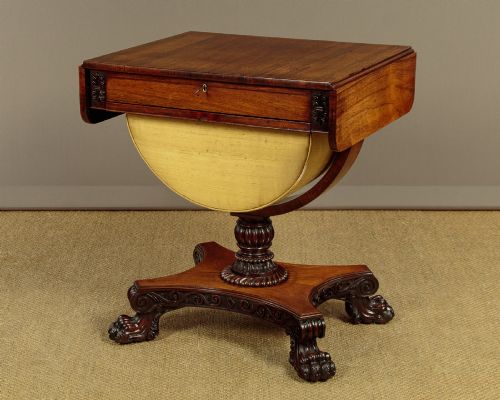
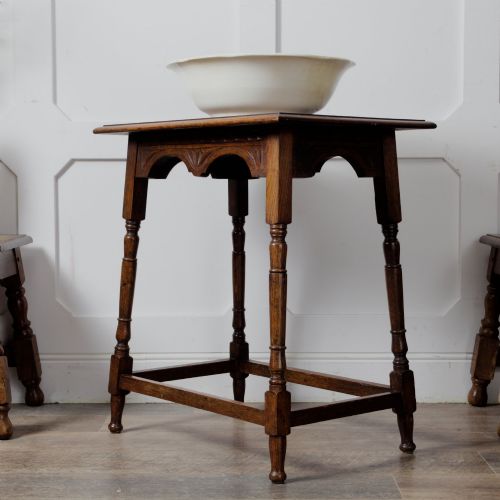
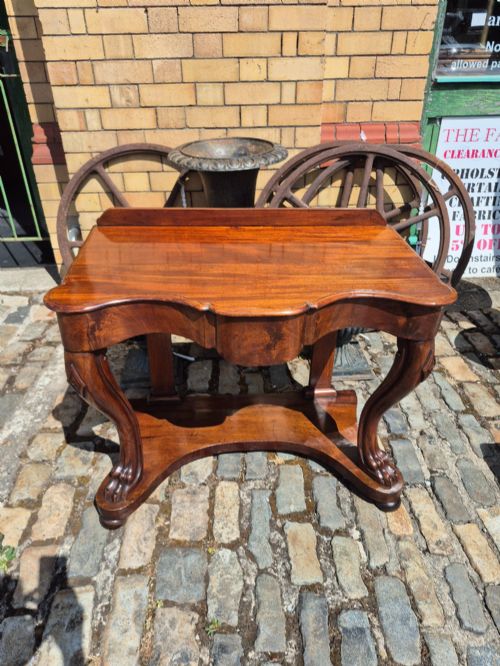
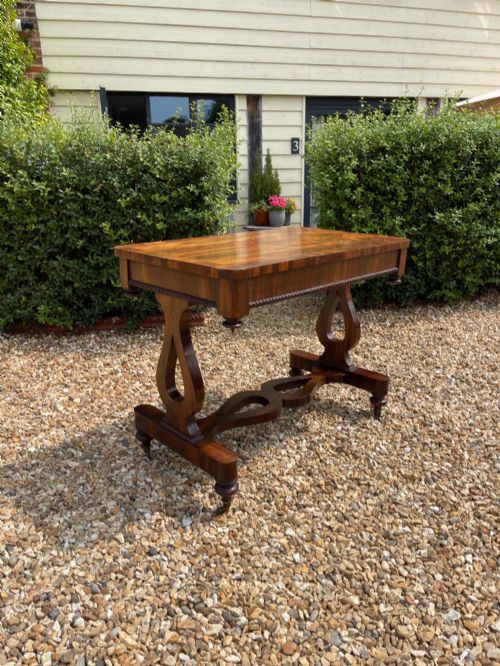
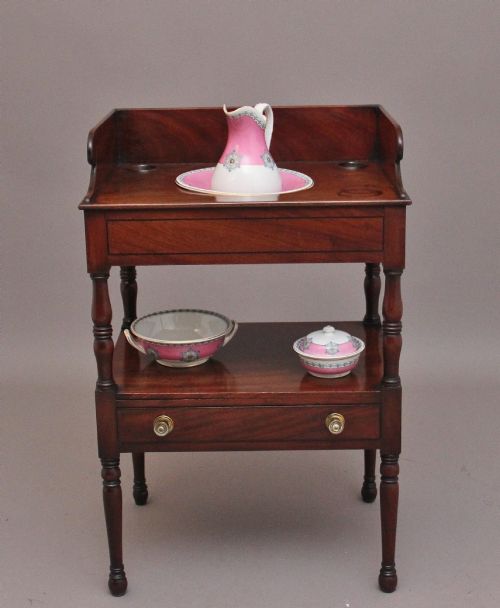
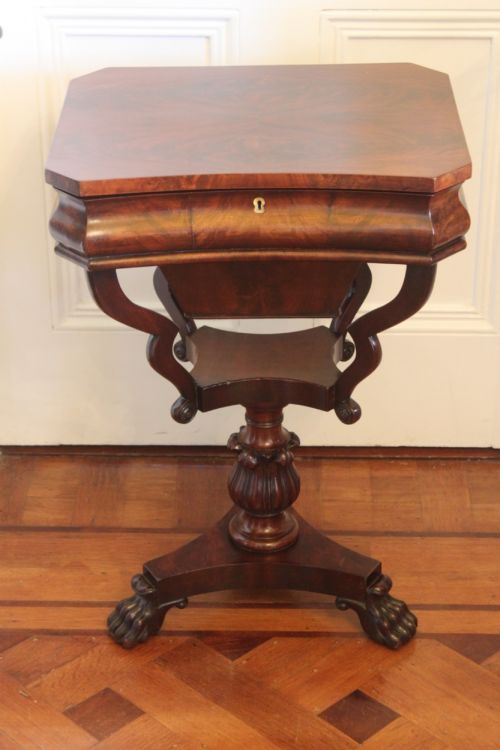
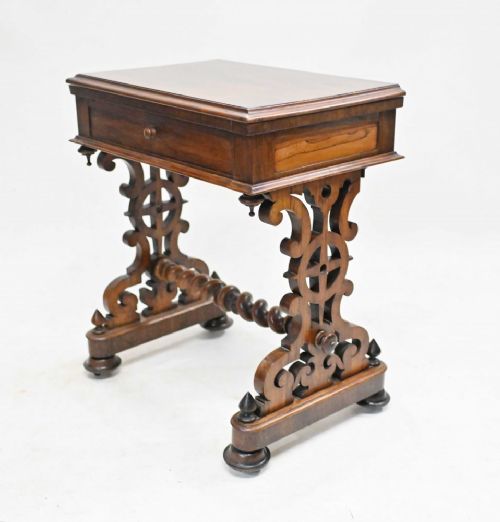
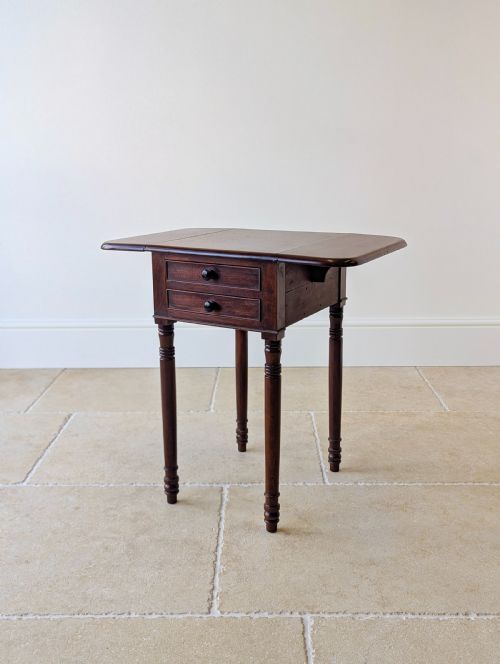
An early victorian side table encompasses diverse nineteenth-century forms including pembroke tables, work tables, console tables, and occasional lamp stands. These pieces emerge from the early victorian period alongside transitional william iv influences.
Mahogany and rosewood dominate the surviving examples, accompanied by walnut, oak, satin birch, and silk components. The selection on offer spans simple single-drawer variants up to complex multi-drawer kneehole and marquetry pieces.
Materials and construction
Cabinet makers utilised dense hardwoods such as mahogany and rosewood, frequently selecting flame mahogany veneers and burr walnut surfaces. Brass fittings provide functional handles and castors on movable work tables.
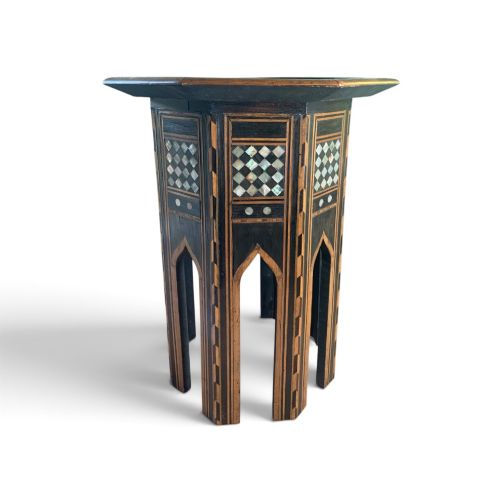
Decorative techniques incorporate painted floral garlands, marquetry star motifs, and elaborate inlay work alongside carved structural elements. Silk linings appear within specialised sewing and work tables.
Retail Price Guide 2026
Typical UK retail prices for early victorian side table, calculated from the Sellingantiques database of over a million retail prices indexed since 2003. This retail price guide relies exclusively on Sellingantiques data; no external sources or auction records are used, so the figures do not describe the wider market.
Several ladies kept their secret threads tucked securely inside rosewood work boxes built right into the table.
Standards of execution
The distinction between standard utility items and finer examples rests on the selection of timber figures and the precision of the joinery. Superior pieces display carefully matched veneers and robust internal framing.
Decorative elaboration separates basic tables from high-status commissions, seen in refined marquetry, painted surfaces, and sculptural carvings rather than plain structural timber.
Holland and Sons·Gillows
The Early Victorian Side Table Glossary
- Pembroke table
- A small occasional table featuring two hinged drop leaves on opposing sides. It typically includes one or two small drawers beneath the top.
- Work table
- A specialised domestic table containing an integrated storage box or silk bag beneath for sewing and needlework supplies. These are frequently designated as sewing or side work tables.
- Console table
- A wall-mounted or freestanding table designed to stand flat against a room divider or perimeter. They often function as hall or lamp stands.
- Marquetry
- The decorative art of applying small pieces of varied veneered timber to a structural surface to form pictorial or geometric patterns. Star motifs appear frequently in this tradition.
Frequently Asked Questions
What is an early victorian side table used for?
These tables served multiple domestic functions across nineteenth-century rooms, operating as lamp stands, writing surfaces, and hall consoles. Specialised variants accommodated sewing equipment and needlework.
Today they adapt easily into modern interiors as bedside stands, hallway drop spots, or sofa-side surfaces.
What woods were used for these tables?
Makers relied heavily on dense tropical hardwoods, primarily mahogany and rosewood, for both structural framing and decorative veneering. Flame mahogany and burr walnut provided highly figured surfaces.
Secondary choices include oak, satin birch, and walnut, often paired with brass hardware and silk internal components.
Are these tables suitable for small rooms?
Their compact nineteenth-century proportions make them exceptionally well-suited for confined spaces and hallways. Pembroke tables with drop leaves offer adjustable surface areas.
Single-drawer and demi-lune variants fit flush against walls without dominating the floor plan.