

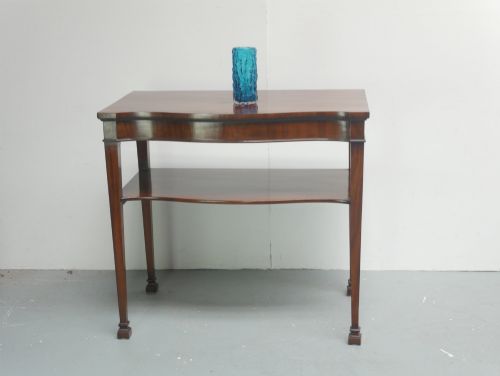

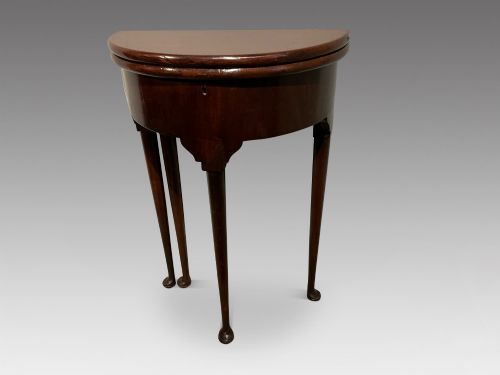
Mahogany Hallway Side Table
A mahogany hallway side table brings refined timber and practical surface space to an entryway, drawing on Georgian, Victorian, and Edwardian cabinet-making.
Mahogany Hallway Side Table
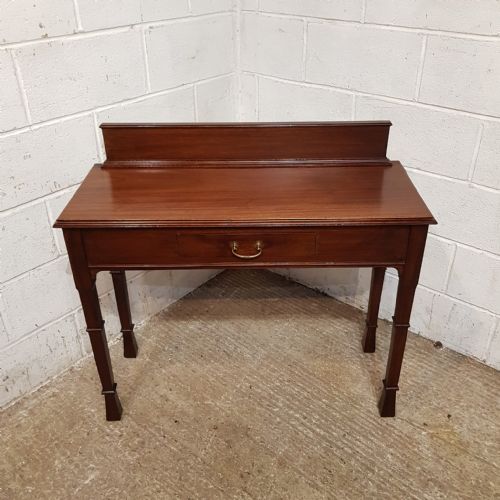
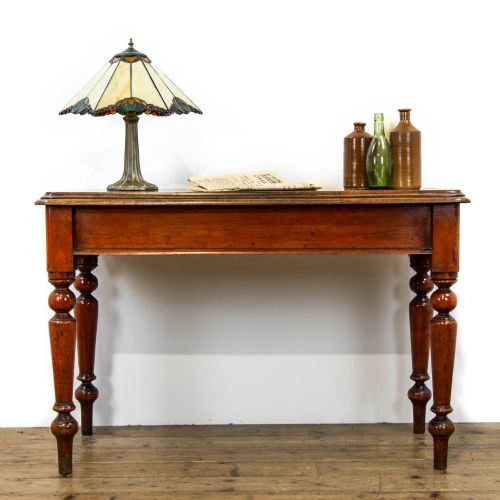
A mahogany hallway side table encompasses console tables, demi lune shapes, bow front servers, and washstands produced across the eighteenth, nineteenth, and twentieth centuries. These pieces originate primarily from English and French workshops, utilising dense tropical timber suited to narrow circulation spaces.
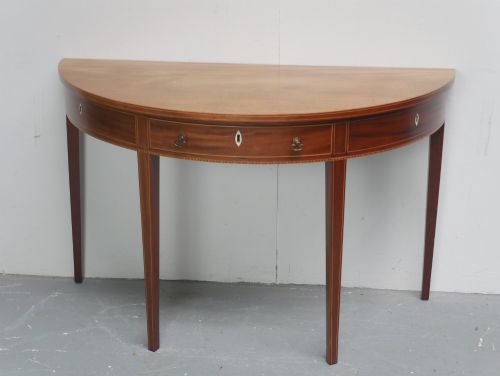
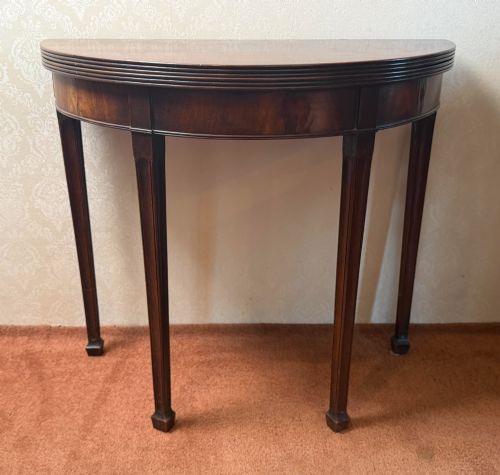
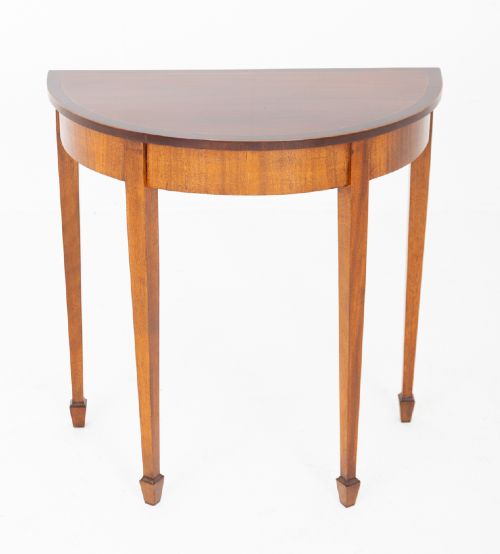
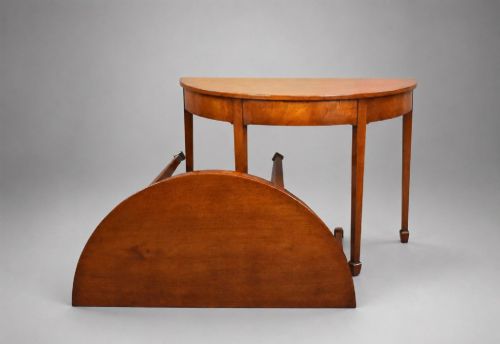
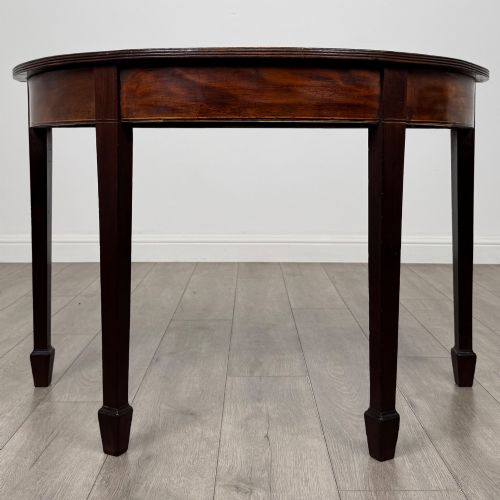
The most frequently encountered examples on this page are Georgian and Victorian console tables, alongside Edwardian variations. Many feature semi-circular demi lune profiles designed to fit flat against narrow walls, occasionally accompanied by fold-over tops or single drawers.
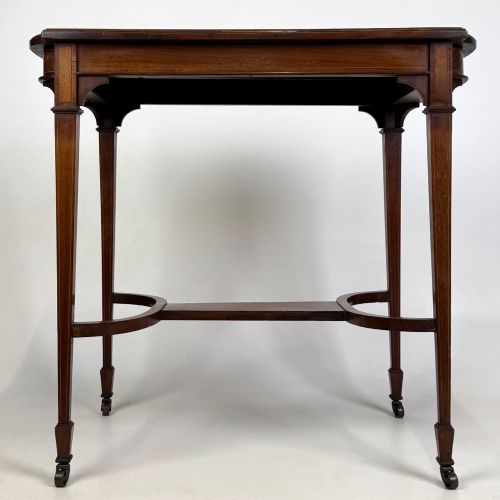
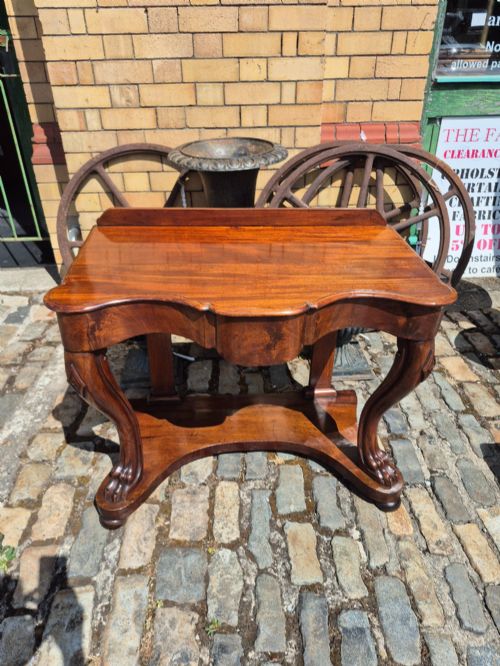
Makers adapted these tables for domestic entryways and reception rooms, balancing shallow depths with decorative presence. Forms range from strict neo-classical lines to carved William IV proportions and French Empire styling.
Materials and Technique
Cabinet-makers constructed these tables using solid mahogany and flame mahogany veneer applied to secondary woods. Surfaces frequently display contrasting boxwood and satinwood inlay arranged in geometric or neoclassical stringing patterns.
Structural embellishments rely on brass fittings, hand-carved mahogany details, and inset marble tops on French Empire variants. Joinery techniques from the eighteenth and nineteenth centuries ensure stable, weight-bearing frames despite shallow console proportions.
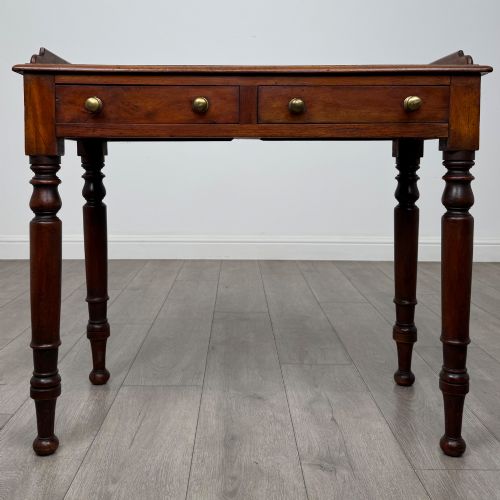
Object forms include console tables, demi lune tables, washstands, writing desks, and serving tables originating from English and French makers.
Design and Execution
The distinction between standard domestic pieces and top-tier examples lies in the selection of timber figures and the precision of the inlay work. Flame mahogany veneer with strong chatoyancy and crisp boxwood stringing signal superior craftsmanship.
Makers' signatures, such as stamps from Parisian workshops like Krieger, elevate historical standing. Furthermore, balanced proportions, integrated marble slabs, and symmetrical brass mounts separate standard production from exceptional design.
The Mahogany Hallway Side Table Glossary
- Demi lune
- Half-moon shape. This semi-circular profile allows console tables to sit flush against a hallway wall.
- Bow front
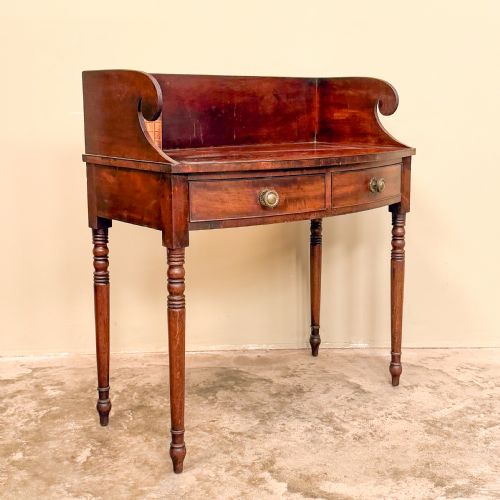
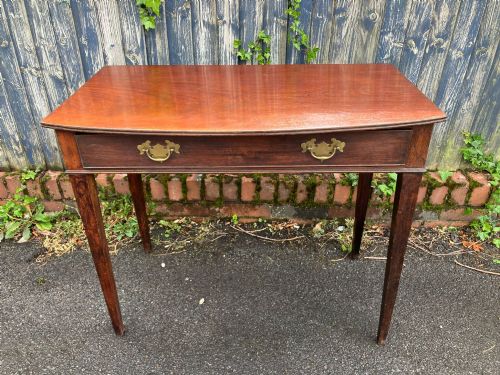
- Convex curved facade. This shape softens the linear geometry of narrow passage furniture.
- Console table
- Wall-mounted or bracketed table. Many surviving examples stand on front legs while relying on the wall for balance.
- Flame mahogany
- Timber veneer with a distinctive flickering flame pattern. Cabinet-makers used this grain on primary focal surfaces.
- Serving table
- Large dining or hallway board. These deep formats provided functional storage before moving into domestic reception spaces.
Mahogany Hallway Side Table: Frequently Asked Questions
What is a demi lune table?
A demi lune table is a half-moon shaped furniture piece designed to stand flat against a wall. Its shallow profile made it a popular choice for narrow hallways.
Cabinet-makers frequently fitted these tables with fold-over tops or drawers for small items.
How do I date a mahogany table?
Dating relies on stylistic markers, construction techniques, and timber characteristics. Georgian pieces typically show restrained classical lines, whereas Victorian items often feature heavier carving.
Inlay materials and secondary woods also provide clues to the decade of manufacture.
Where should I place a console table?
A console table fits well in entryways, corridors, and reception rooms where floor space is restricted. Its shallow depth leaves walkways clear while offering a display surface.
Mirrors are frequently hung above them to complete a traditional hall arrangement.
What is flame mahogany?
Flame mahogany is a veneering cut taken from the fork of the tree where branches join the trunk. It creates a repeating, fire-like pattern across the wood.
Craftsmen reserved this decorative grain for the most prominent visible surfaces of high-end tables.