
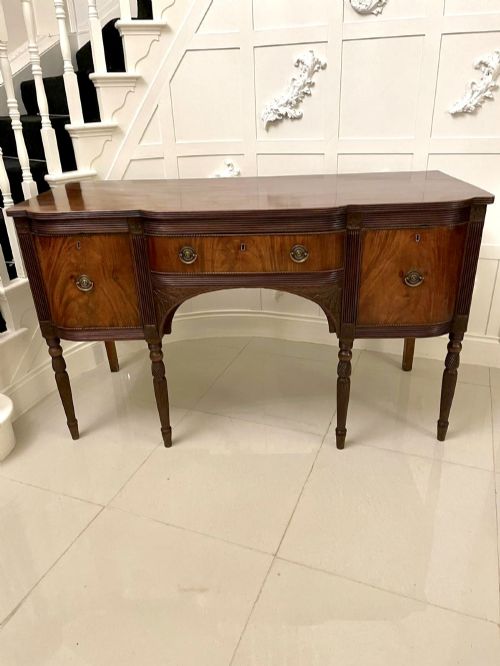
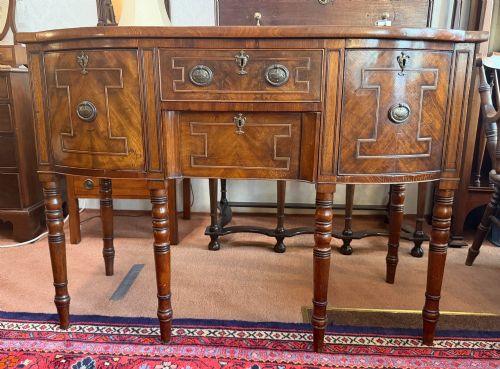
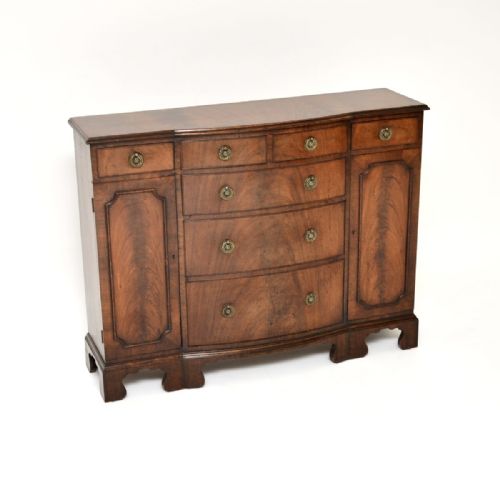
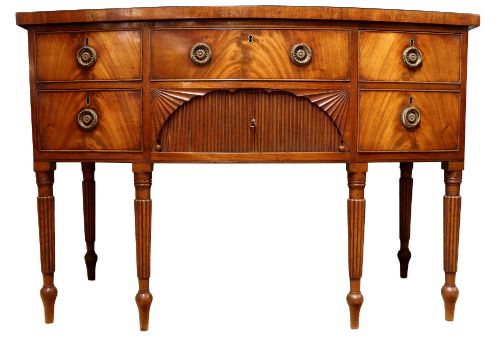
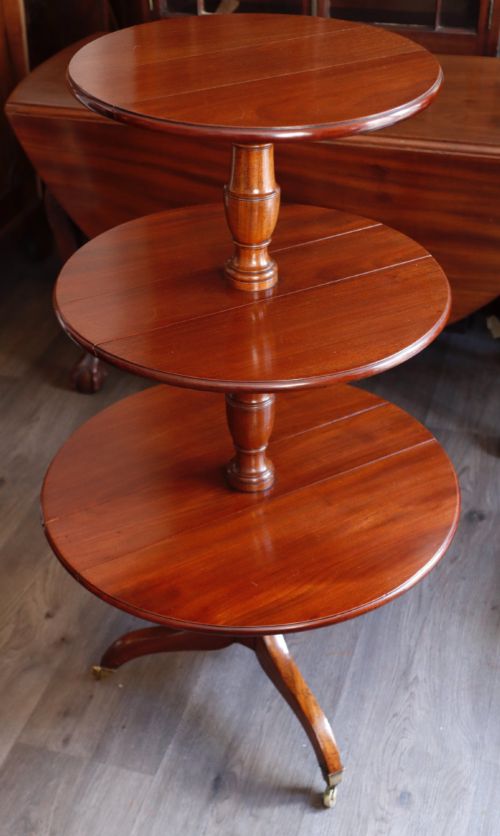
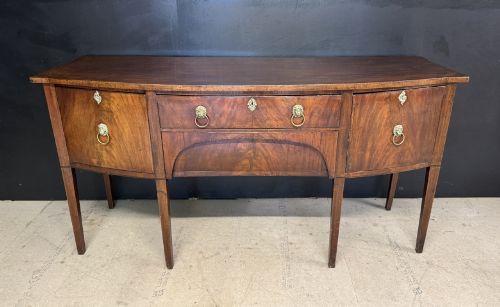
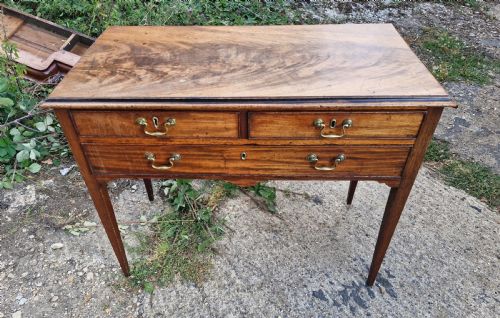
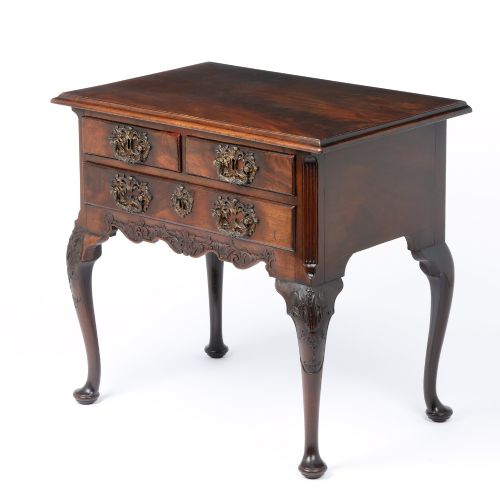
Georgian Mahogany Server Table
A Georgian mahogany server table brings substantial timber and practical elegance to a dining room, offering a surface built to hold heavy service dishes.

Identifying a georgian mahogany server table
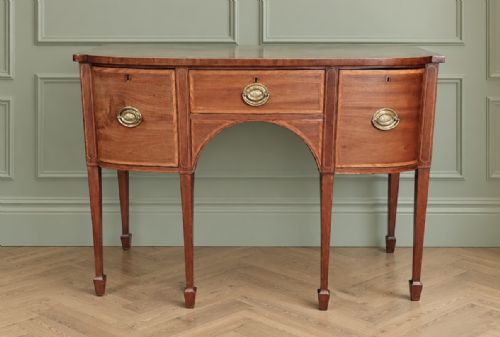
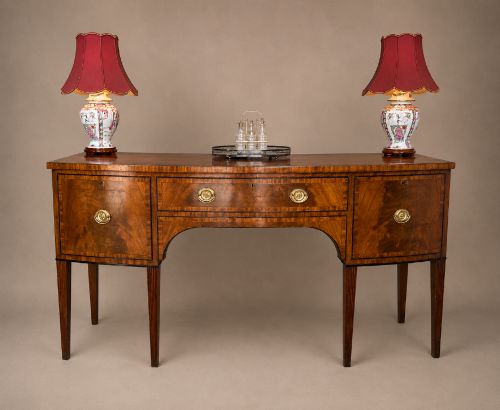
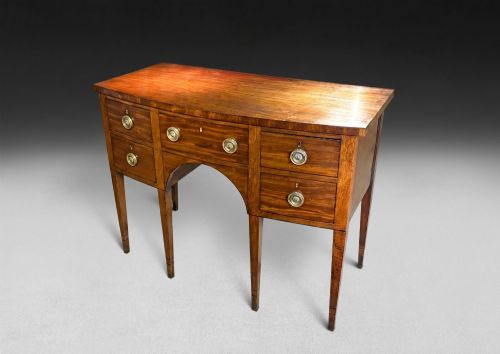
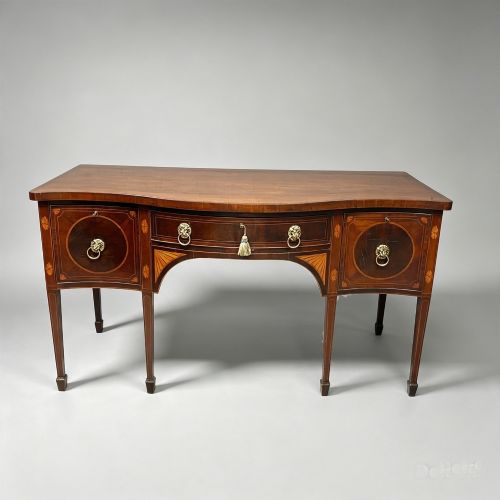
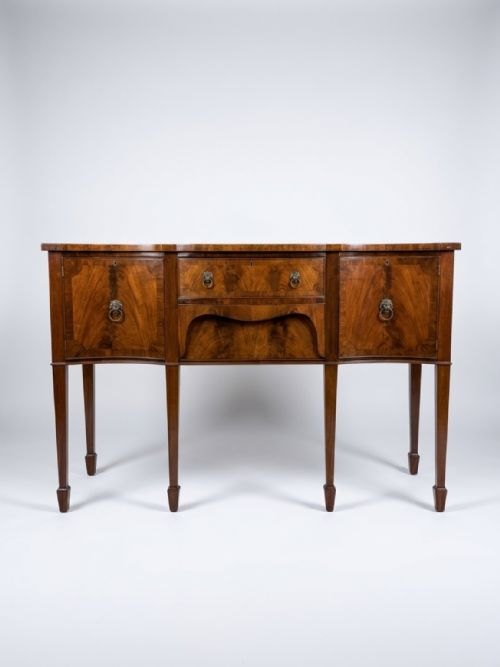
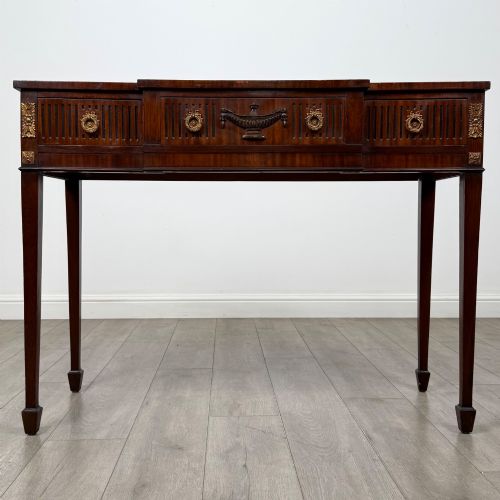
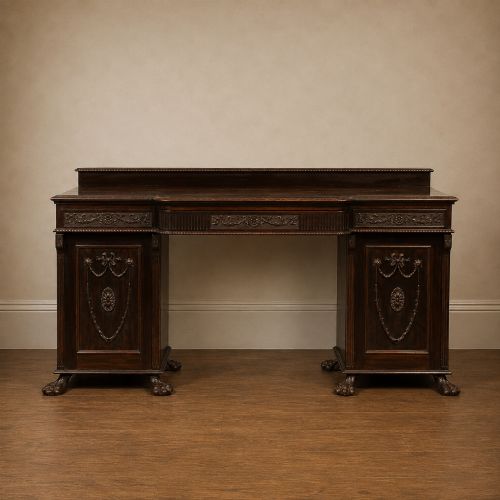
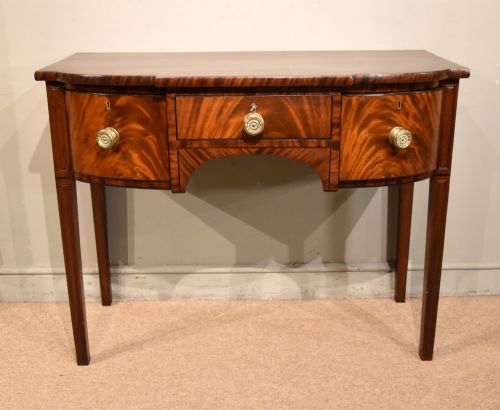
A georgian mahogany server table is a substantial serving surface designed for dining rooms during the eighteenth and nineteenth centuries, appearing across the Georgian, Regency, and William IV periods. These pieces take various forms on this page, including bow-fronted sideboards, console tables, hall tables, and serpentine server tables.
Buyers most frequently meet bow-front and straight-front variations spanning the eighteenth century and the year 1800. These tables frequently incorporate multiple legs, ranging from four to six, and occasionally feature raised galleries or delicate stringing.
Origins stretch from English workshops to Irish examples, while styles occasionally lean toward neoclassical designs reminiscent of Gillows. The primary function remains serving and display, combining deep storage capabilities with long, low surfaces.
Construction and materials
Makers built these tables primarily using solid mahogany and flame mahogany veneer, often enhanced by contrasting stringing and inlay work. Secondary woods provide structural stability inside drawers and beneath top surfaces.
Surface decoration frequently relies on figured veneers that exploit the natural grain of the timber. Additional detailing includes boxwood stringing, brass handles, and fine edge banding to define drawer fronts and tabletops.
Retail Price Guide 2026
Typical UK retail prices for georgian mahogany server table, calculated from the Sellingantiques database of over a million retail prices indexed since 2003. This retail price guide relies exclusively on Sellingantiques data; no external sources or auction records are used, so the figures do not describe the wider market.
Object forms span console tables, hall tables, serpentine servers, and multi-legged bow-front sideboards.
Judging quality
Quality rests upon the selection of timber, particularly the grain pattern visible in flame mahogany veneers. Uniformity in the choice of wood across secondary surfaces and drawer linings distinguishes finer work.
Construction details such as tight joinery, original brass hardware, and clean inlay work separate superior examples from standard production. The crispness of carved details and the balance of proportions ultimately determine the standing of each piece.
The Georgian Mahogany Server Table Glossary
- Serpentine
- A curved front shape with a convex centre flanked by concave ends, creating a flowing line across the front of the table. This profile demands high skill from the cabinetmaker.
- Bow front
- A convex curved front that projects outward in a smooth arc. This shape appears frequently on eighteenth-century sideboards.
- Flame mahogany
- A veneer cut from timber where the branch meets the trunk, producing a distinctive flickering flame pattern. It is prized for its decorative visual impact on tabletops and drawer fronts.
- Stringing
- Thin inlay lines of a contrasting wood, such as boxwood, embedded into the mahogany surface to outline panels and borders. This adds linear definition to the piece.
Frequently Asked Questions
What is a georgian mahogany server table used for?
These tables served as functional furniture in dining rooms, holding heavy platters, dishes, and serving utensils during large meals. Their long tops provided ample space for food preparation and presentation before the invention of fitted dining room units.
Today, they function well as sideboards, console tables, or display surfaces in hallways and living spaces. Their generous proportions and deep surfaces remain practical for modern storage and display needs.
How do I identify a Georgian piece?
Georgian furniture is characterised by solid mahogany construction, precise joinery, and restrained classical proportions. Cabinetmakers of this era focused on architectural lines and timber quality rather than heavy ornamentation.
Details such as boxwood stringing, hand-cut dovetails, and period brass hardware help confirm the era. Examining the secondary woods inside drawers also provides clues to the manufacturing date and origin.
What is the difference between a sideboard and a server table?
A server table generally provides a flat surface and occasional drawer storage primarily for serving food during meals. Sideboards often evolved to include more extensive internal cabinetry, bottle drawers, and fitted compartments.
On this page, the terms frequently overlap, with servers, console tables, and sideboards sharing similar proportions and structural layouts. Both forms utilise mahogany and share eighteenth and nineteenth-century design traits.
How do I care for antique mahogany furniture?
Mahogany requires stable room temperatures and protection from direct sunlight to prevent the timber and veneer from drying out or fading. Regular dusting with a soft, dry cloth preserves the finish without building up unwanted residues.
Applying a traditional beeswax polish occasionally helps nourish the wood and maintain its natural lustre. Avoid placing these tables near direct heat sources or damp areas to protect the antique glue and veneer.