

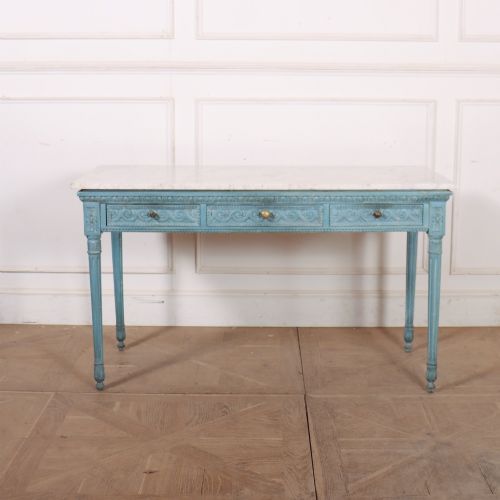
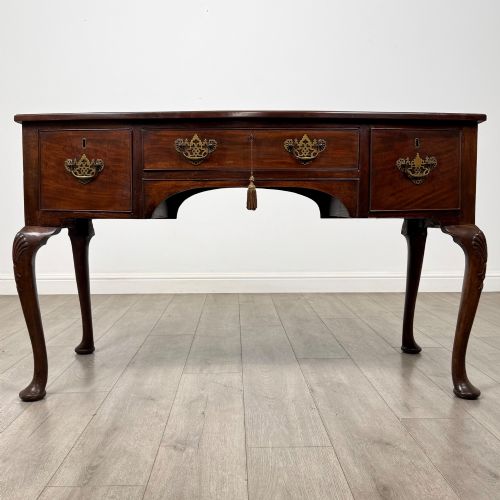
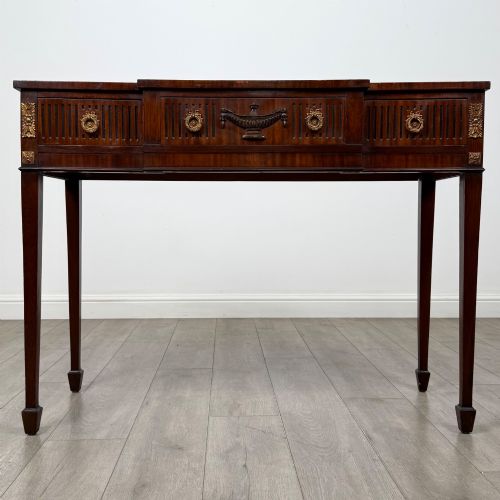
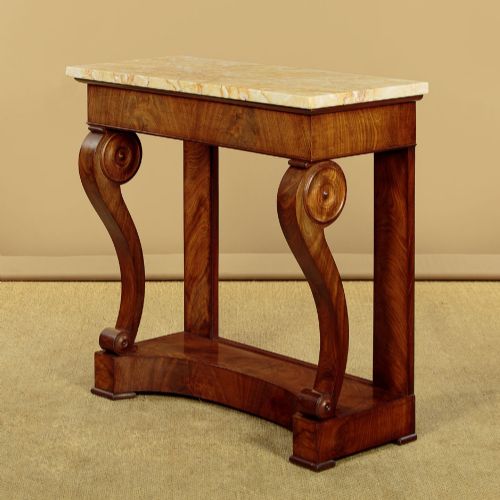
Carved Leg Console Table
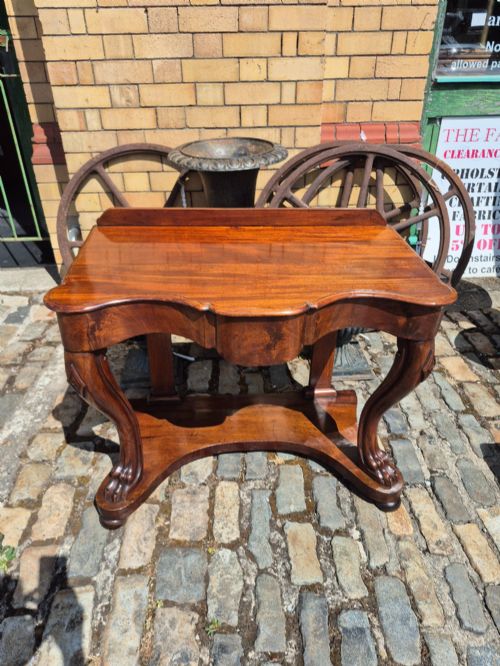
These carved leg console table pieces bring architectural presence and classical proportion to a hallway or reception room.
What carved leg console table pieces are
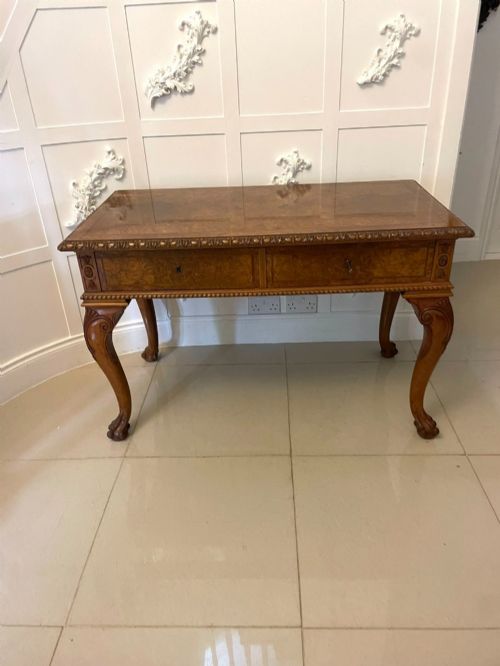
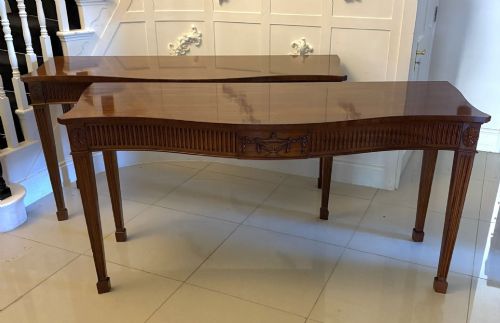
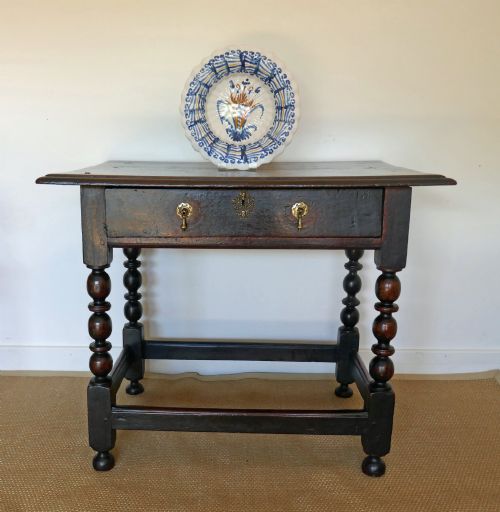
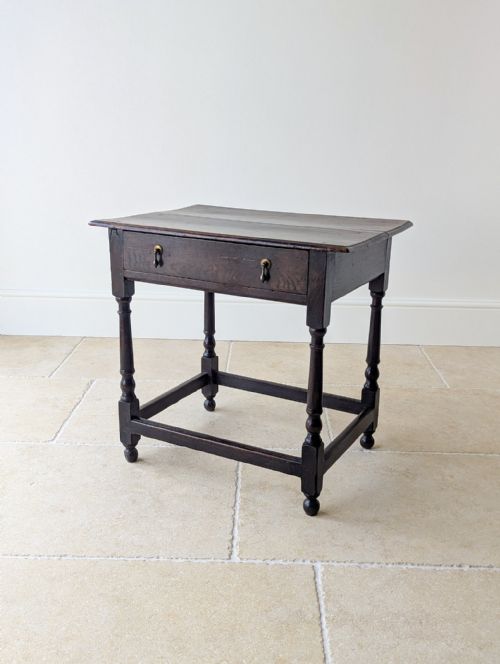
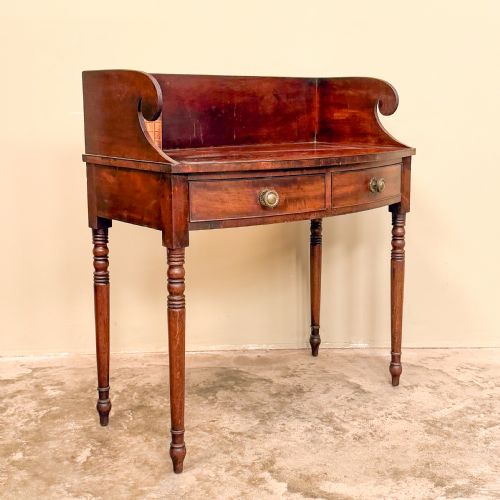
A carved leg console table stands against a wall as a focal point, designed historically to display ornaments or serve food. The examples found here span the nineteenth century, including Regency, William IV, and Victorian iterations, alongside Georgian Revival and Italian Empire interpretations.
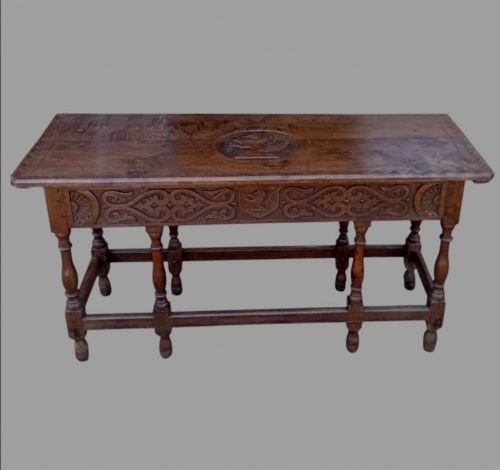
Most pieces date to the nineteenth century, utilising dense hardwoods and rich veneers to create substantial furniture. Formats range from narrow side tables and servers to occasional tables and marble-topped variants meant for formal drawing rooms.
Materials and construction
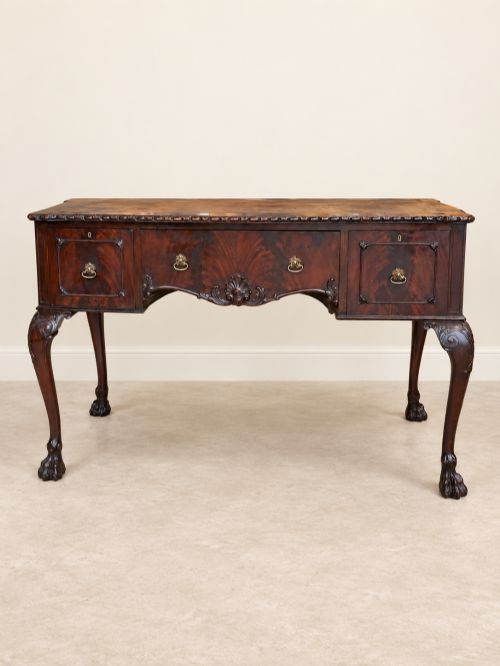
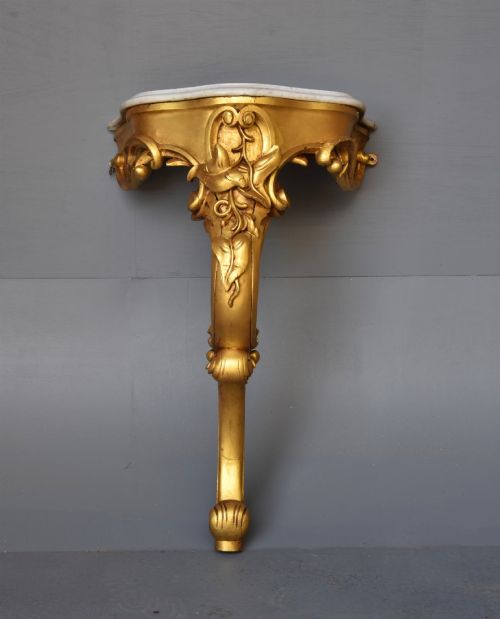
Cabinet makers relied heavily on mahogany, flame mahogany veneer, and walnut, often mounting heavy marble slabs upon wooden carcasses. Brass fittings appear regularly, adding structural contrast and decorative hardware to the timber frames.
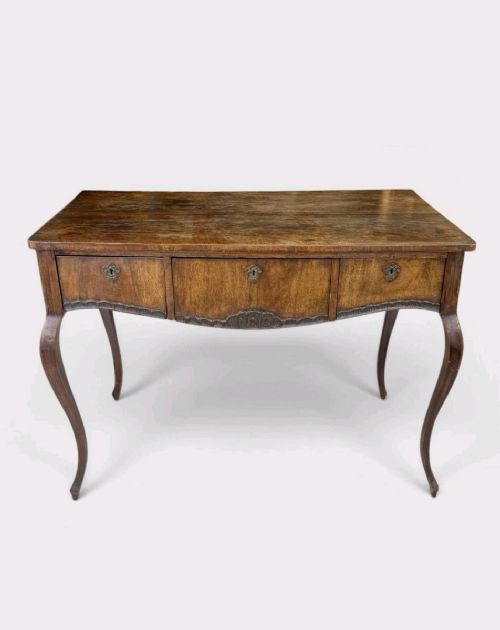
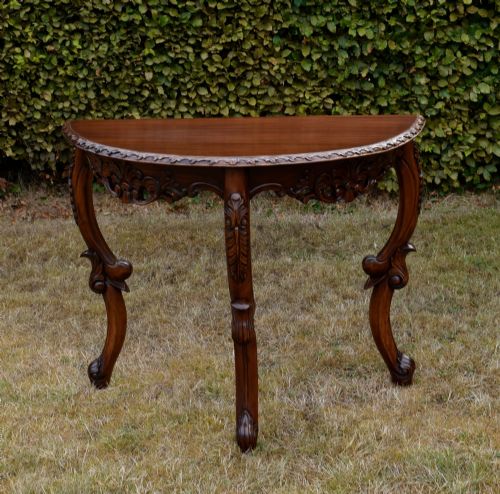
Carving defines the support structures, with craftsmen shaping solid timber into cabriole legs, scroll ends, and stretcher bases. Wood veneer techniques allowed workshops to display striking grain patterns across flat surfaces while maintaining structural integrity underneath.
Retail Price Guide 2026
Typical UK retail prices for carved leg console table, calculated from the Sellingantiques database of over a million retail prices indexed since 2003. This retail price guide relies exclusively on Sellingantiques data; no external sources or auction records are used, so the figures do not describe the wider market.
Materials appearing across the inventory include solid mahogany, flame mahogany veneer, walnut, brass, marble, and wood veneer.
Distinctions in quality
The highest-grade pieces demonstrate crisp, deep hand-carving on the legs and supports, where every decorative flourish remains sharp and well-defined. Lesser examples rely on shallower tool work and simpler turned elements that lack sculptural ambition.
Material selection dictates much of the distinction at the upper end, featuring figured flame mahogany or pristine marble tops rather than plain secondary timbers. The integration of secondary woods and the precision of veneer matching reveal the original maker's investment of time.
The Carved Leg Console Table Glossary
- Console table
- A table designed to stand flat against a wall, traditionally fixed with brackets or supported by front legs.
- Flame mahogany veneer
- A thin slice of wood cut from the fork of a mahogany tree to produce a dramatic, flickering grain pattern.
- Cabriole leg
- A furniture leg that curves outward in an S-shape, typically ending in an ornamental foot.
- Stretcher
- A horizontal wooden bar connecting the legs of a table to increase structural rigidity.
- Marble top
- A polished stone slab fitted to the upper surface of a table to provide a cool, durable finish.
Frequently Asked Questions
Where should I place a console table?
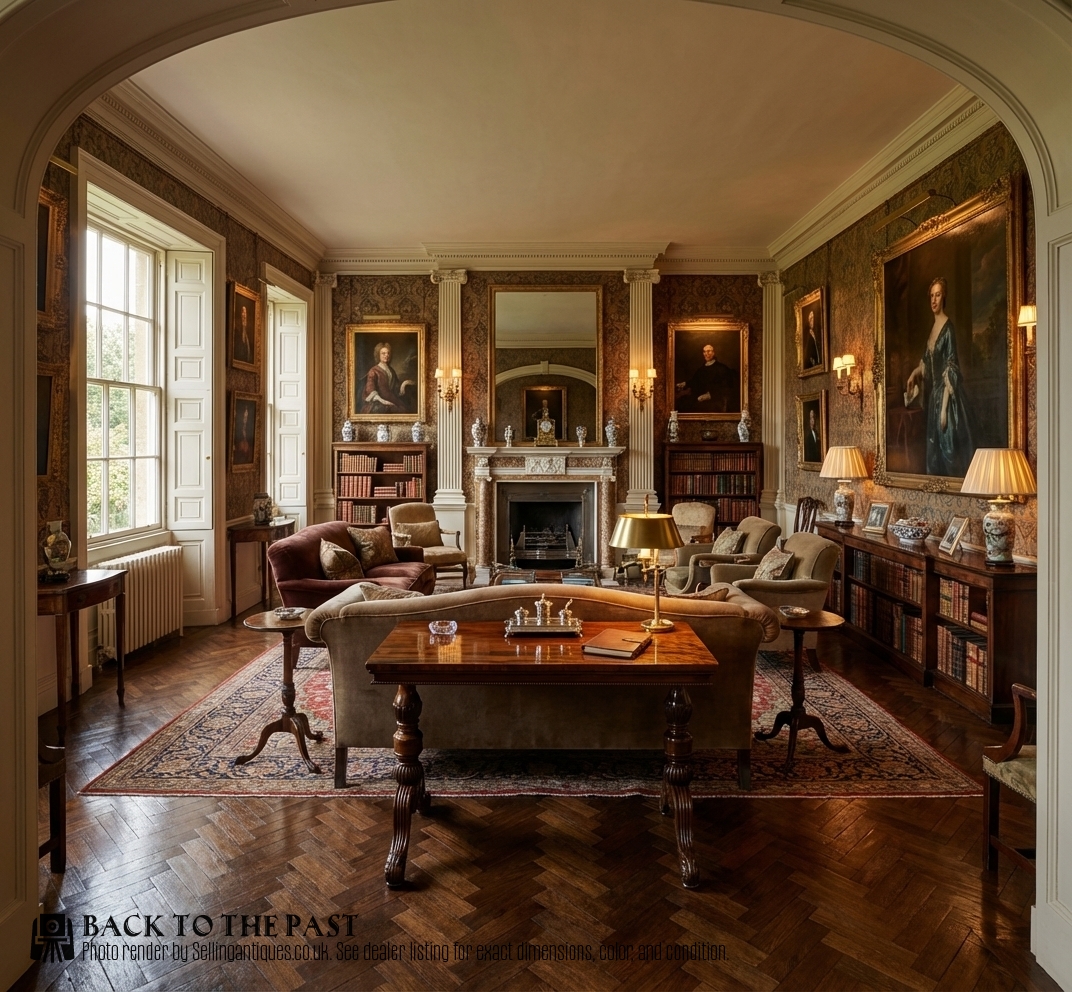
These tables suit narrow circulation spaces like hallways or entryways where depth is at a premium. They also function effectively against living room walls beneath large mirrors.
Because they traditionally stood against walls, their backs are often finished more plainly than the carved front legs. Ensure the wall space allows clearance for the specific depth of the top.
How do I care for mahogany surfaces?
Regular dusting with a soft cloth prevents particle buildup on polished timber and delicate veneers. Avoid placing items with high moisture content directly onto the wood.
Keep these tables away from direct heat sources and strong sunlight to prevent the timber and veneer from drying out or fading over time.
What distinguishes Regency from Victorian styles?
Regency pieces draw heavily on classical antiquity, featuring clean architectural lines, rosewood or mahogany grains, and restrained brass mounts. They reflect early nineteenth-century tastes influenced by Greek and Roman design.
Victorian furniture tends to be heavier and more exuberant in its carving, frequently incorporating cabriole legs and marble tops. The forms display a diverse revival of earlier historical periods.
Can these tables hold heavy objects?
Solid mahogany and walnut construction provides robust daily support for lamps, books, and decorative ceramics. Tables equipped with marble tops carry substantial weight safely across their stone surfaces.
Wall attachment was historically common for taller or narrower console designs to prevent tipping. Checking the stability of the leg joints helps determine appropriate loading.