


Rich Brown Console Table
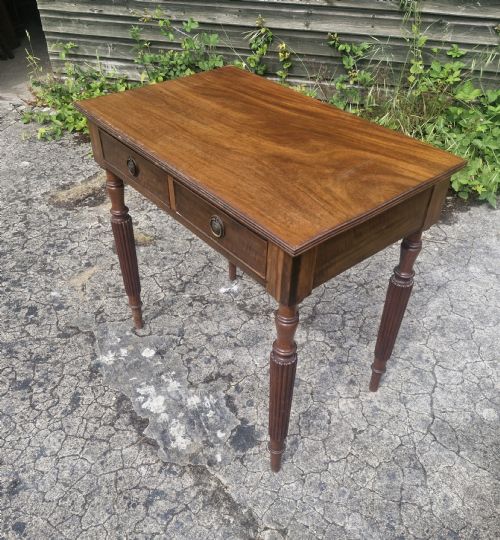
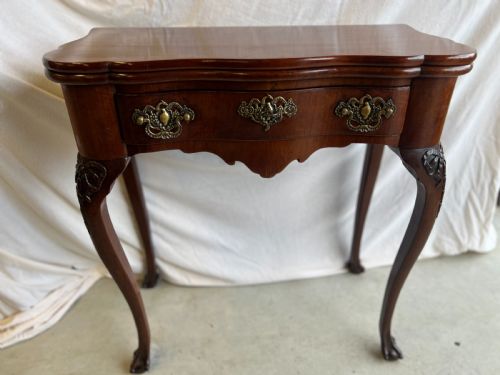
A rich brown console table brings deep timber tones and classic proportions to a hallway, drawing the eye with the warmth of aged mahogany, walnut, or kingwood.
Rich Brown Console Table
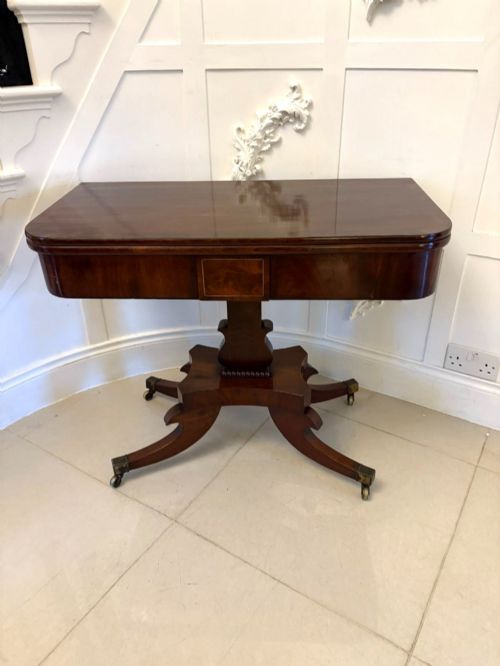
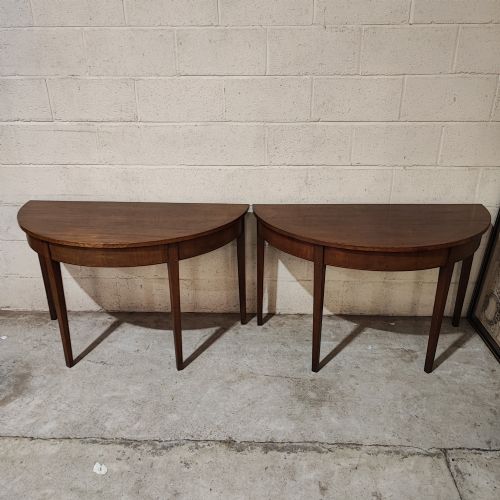
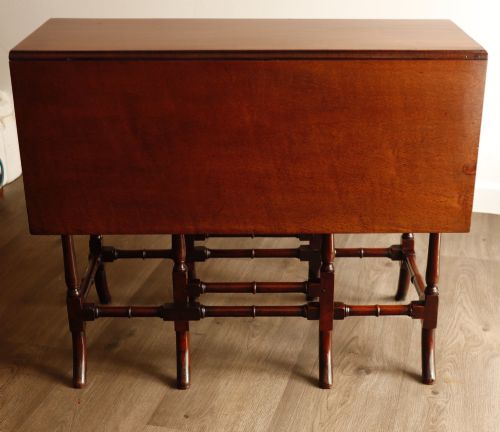
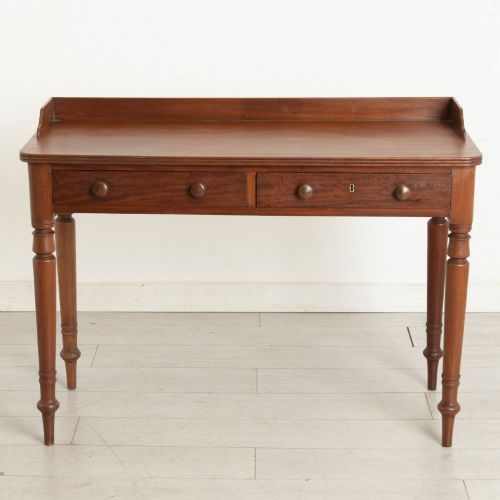
A rich brown console table on this page typically spans the Georgian, Victorian, and Edwardian periods, manifesting in forms such as side tables, serving tables, and demilune card tables. These pieces are designed to sit against a wall in hallways, reception rooms, or dining spaces, offering a functional surface with deep timber colour.
The selection ranges from George II and George III craftsmanship to later 19th-century interpretations, featuring solid mahogany, flame mahogany veneer, and walnut. Buyers will find variations from simple single-drawer side tables to elaborate folding games tables and pairs of demilune tables.
Origins stretch across English workshops, including pieces attributed to Gillow, alongside continental examples in kingwood and walnut. The overarching characteristic is the rich, dark brown patina developed over centuries through the natural ageing of wood and polished finishes.
Materials and construction methods
Cabinet makers utilised solid mahogany and oak for structural integrity, often pairing them with figured mahogany veneer or kingwood to create striking surface patterns. Boxwood stringing and brass details frequently appear as subtle accents on tabletops and drawer edges.
Joinery techniques relied on traditional hand-cut joints, while folding mechanisms on card and tea tables allowed timber tops to pivot and rest against polished friezes. Timber was hand-finished to bring out the natural grain and deep brown tones inherent in mature hardwoods.
Rich Brown Console Table Retail Price Guide 2026
Typical asking prices for rich brown console table among the pieces listed under this phrase on Sellingantiques today, from the lower quarter to the upper quarter. They describe what is for sale here now, not the wider market.
Several tables retain clever folding mechanisms designed so homeowners could swiftly conceal card games when unexpected callers knocked.
Distinguishing quality across pieces
Quality rests in the selection of the timber, particularly the depth of figure in flame mahogany veneers and the crispness of carved mouldings along the frieze and legs. Superior examples display seamless alignment in folding tops and precise matching of wood grain across drawers and tabletops.
The integrity of the original timber structure, minimal restoration to the polish, and the presence of period brass hardware separate standard utility furniture from pieces produced by skilled cabinet makers.
Gillow
The Rich Brown Console Table Glossary
- Console table
- A table designed to stand against a wall, traditionally fixed with brackets or supported by front legs. These pieces serve as decorative furniture in entrance halls and living spaces.
- Demilune
- A half-moon shape commonly utilised for card and side tables during the Georgian period. This design allows the piece to sit flush against a wall while opening up for dining or games.
- Flame mahogany veneer
- A thin slice of mahogany timber cut from the fork of the tree where branches meet the trunk. This cut produces a distinctive, flamelike pattern with intense visual depth.
- Frieze
- The horizontal decorative band situated directly beneath the tabletop. On these tables, the frieze frequently incorporates one or more drawers.
- Kingwood
- A dense, heavy exotic timber featuring rich brown and dark violet striping. It was favoured by cabinet makers for fine decorative tables in the 18th and 19th centuries.
Rich Brown Console Table: Frequently Asked Questions
What is a console table used for?
A console table provides a narrow surface for displaying decorative objects, lamps, or mirrors in hallways and living rooms. Their compact depth makes them suitable for spaces where larger furniture would obstruct movement.
Historically, many tables designed in this format also functioned as serving surfaces in dining rooms or convertible card tables for evening entertainment.
How do I identify a Georgian console table?
Georgian pieces typically display solid mahogany or figured veneers, with proportions reflecting 18th-century design standards. Look for hand-cut joinery and traditional timber ageing.
Stylistic markers from this era include straight or cabriole legs, occasionally terminating in pad or claw-and-ball feet, along with restrained brass hardware.
Can these tables be used for everyday dining?
Many examples on this page, such as tea and card tables, feature folding or pivoting tops supported by hinged legs. These formats were originally built to expand when needed for guests.
While they accommodate occasional use, modern dining demands care with historic polished surfaces, making coasters and protective mats essential for daily interaction.
How should I care for antique mahogany timber?
Antique mahogany benefits from stable room environments away from direct heat sources and strong sunlight, which can fade the rich brown finish. Regular dusting with a soft, dry cloth preserves the polish.
Application of traditional beeswax can be used sparingly to nourish the wood and maintain the natural lustre without building up heavy chemical residues.