


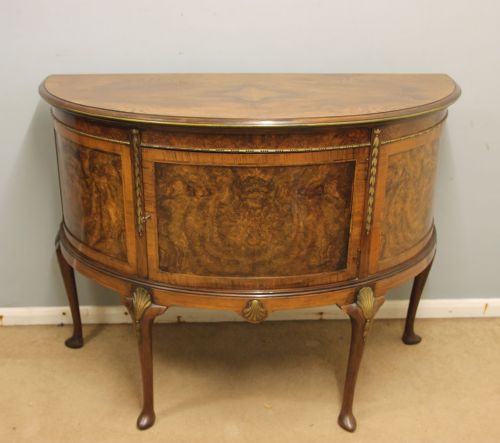
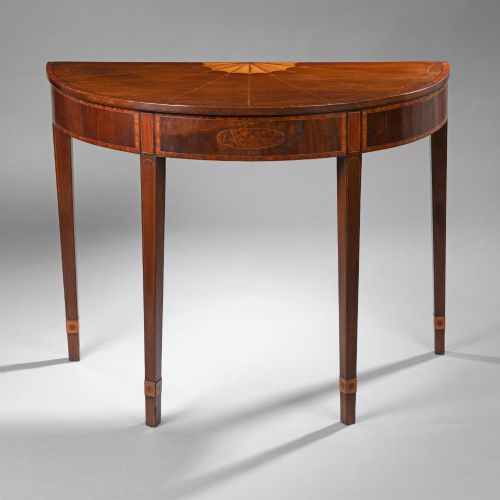
Georgian Half Moon Table
A georgian half moon table brings curved elegance to a hallway or drawing room, offering a functional surface that fits neatly against a wall.
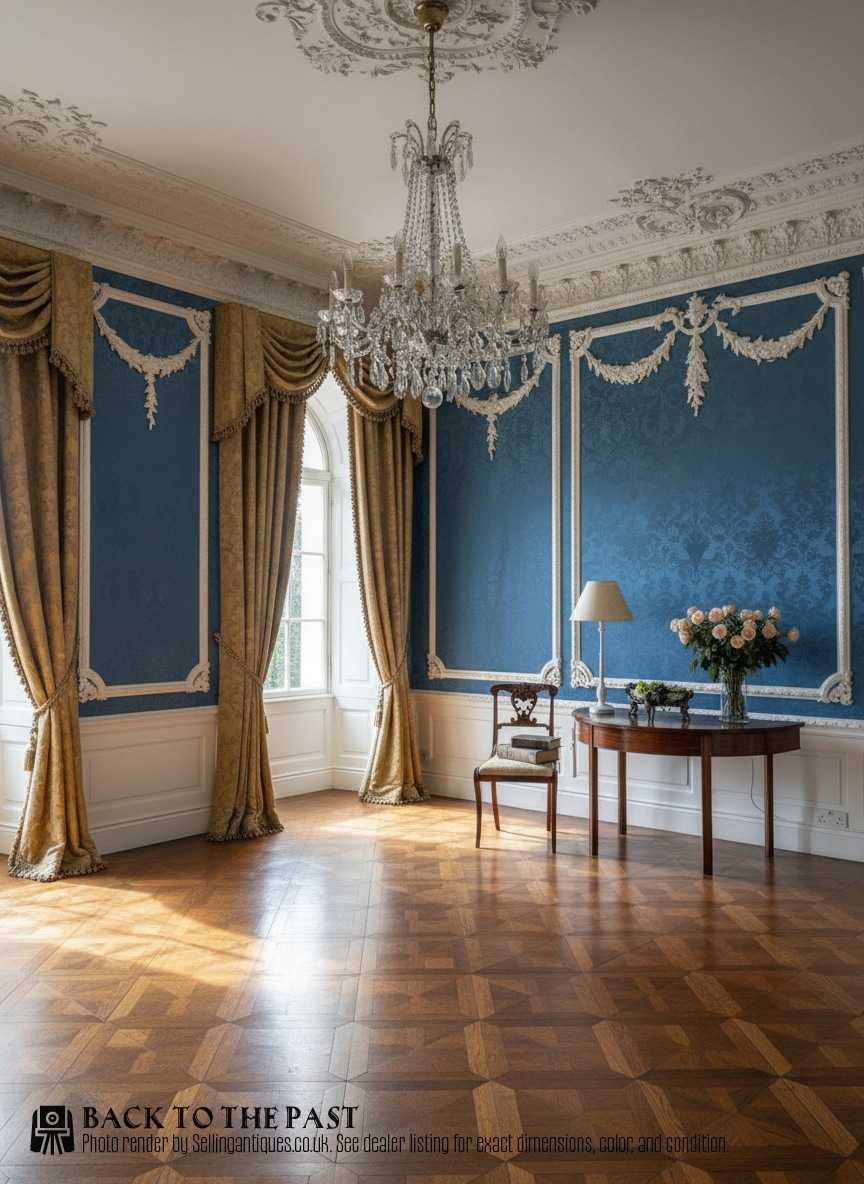
Georgian Half Moon Table
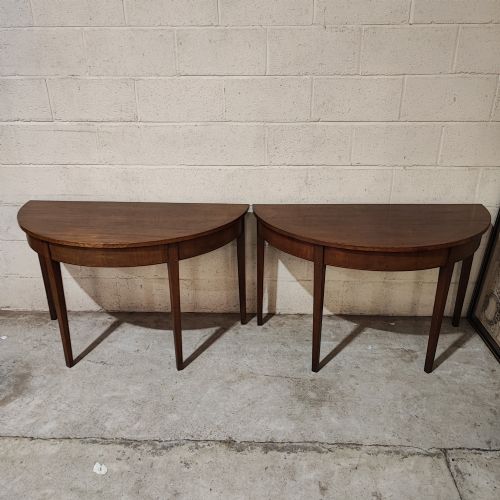
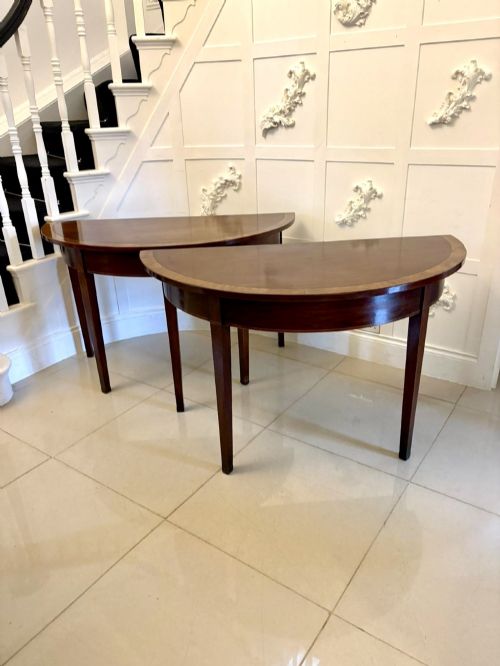
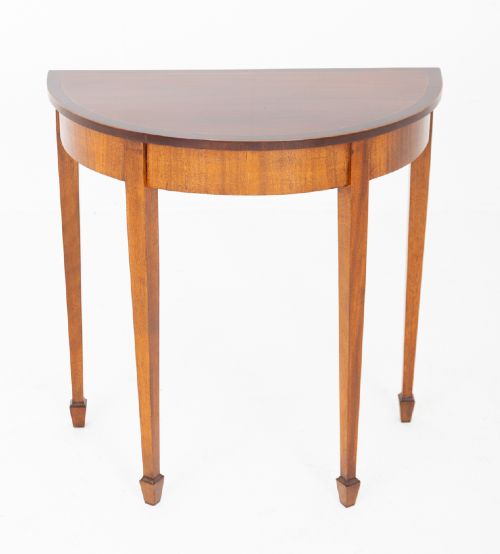
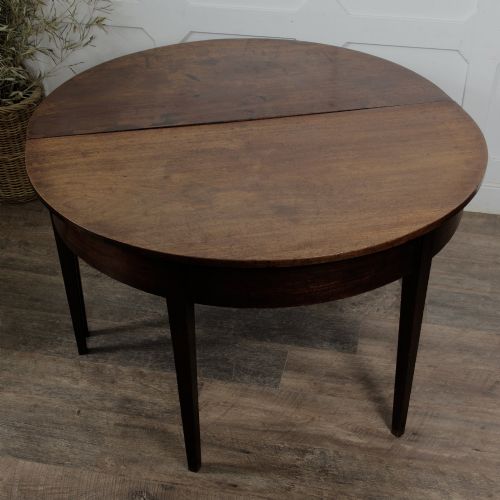
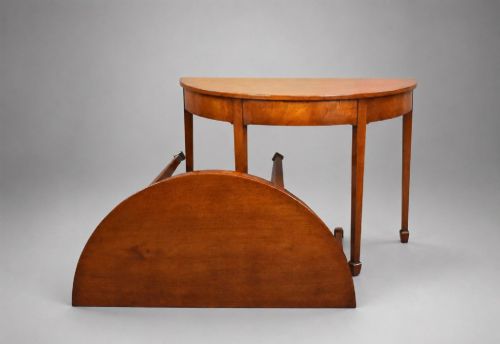
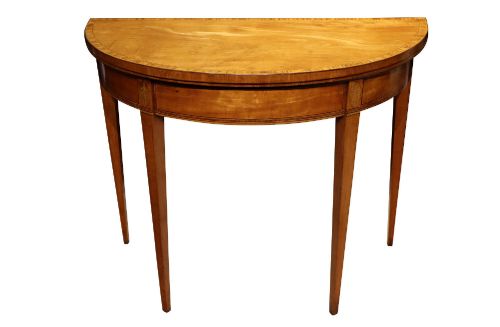
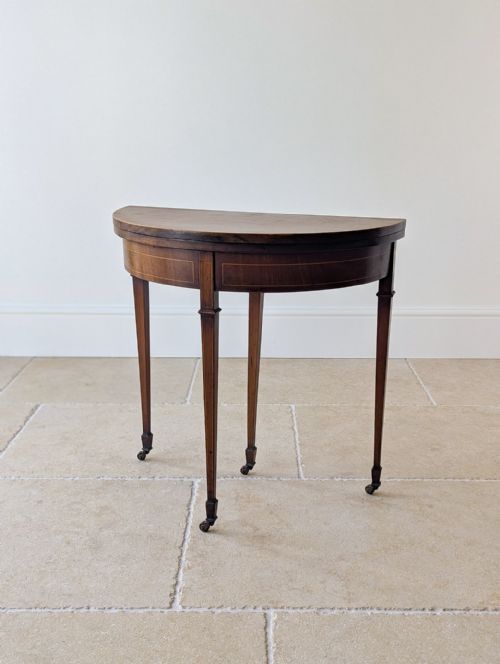
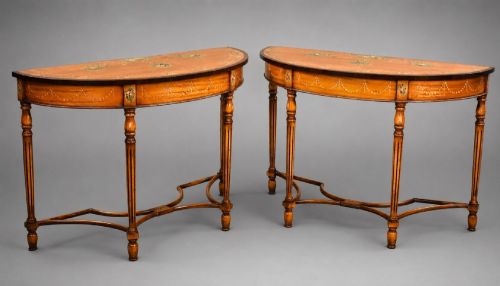
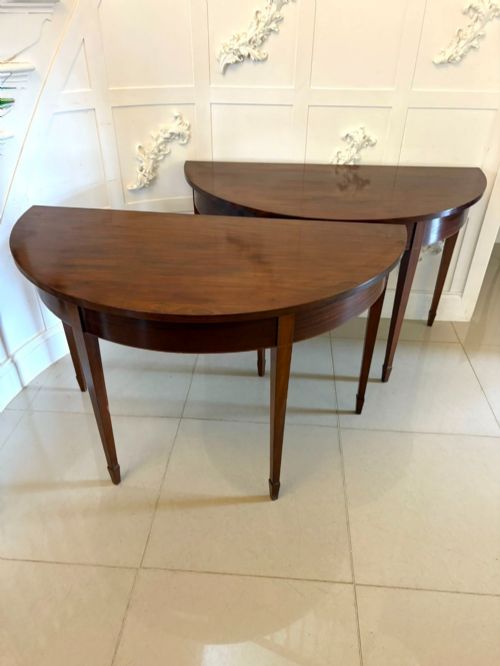
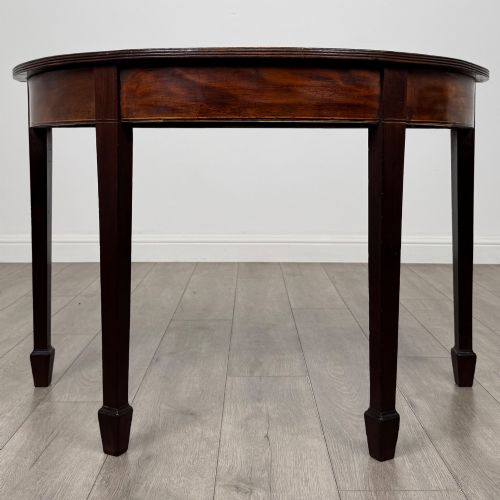
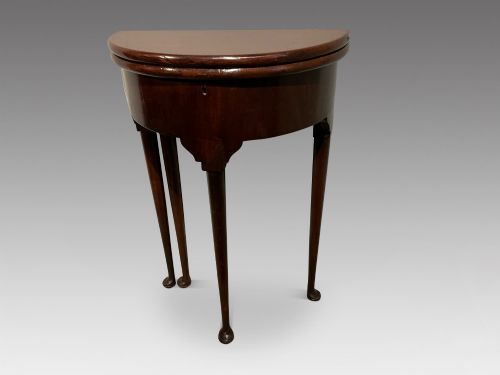
A georgian half moon table typically takes the form of a console, card, or tea table designed with a flat straight back and a semicircular front. These pieces emerge predominantly from the eighteenth and nineteenth centuries, spanning Georgian, Regency, and Victorian periods.
Materials and Technique
Cabinetmakers utilised solid timbers and veneers of mahogany, walnut, and satinwood, frequently embellishing the surfaces with boxwood inlay and crossbanding. The construction relies on sturdy framing to support the hinged leaves of card and tea tables.
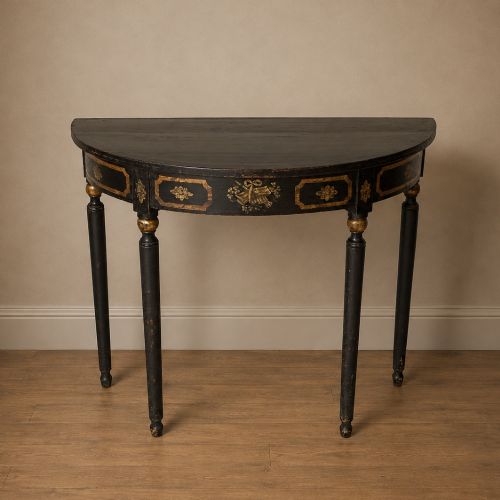
Surface decoration ranges from natural wood grain figures to painted details and parcel gilding, particularly on pieces produced during the Regency era and later revival periods.
Georgian Half Moon Table Retail Price Guide 2026
Typical asking prices for georgian half moon table among the pieces listed under this phrase on Sellingantiques today, from the lower quarter to the upper quarter. They describe what is for sale here now, not the wider market.
Listings feature mahogany, satinwood, and walnut tables spanning the Georgian, Victorian, and Edwardian eras, alongside later revival styles.
Quality and Construction
The distinction between tiers rests upon the selection of timber figures, such as highly figured mahogany or detailed satinwood, and the precision of the boxwood inlay. Superior examples demonstrate crisp carving on the legs and flawless movement in the fold-over mechanisms.
The integrity of the structural joints and the crispness of painted or gilded decoration further separate standard domestic pieces from finer works associated with high cabinetmaking traditions.
The Georgian Half Moon Table Glossary
- Demi-lune
- A French term meaning half-moon, describing furniture with a semicircular shape and a flat back edge.
- Crossbanding
- A narrow strip of veneer applied to the border of a table top so the grain runs perpendicular to the central panel.
- Console table
- A table designed to stand against a wall, historically supported by brackets or legs at the front.
- Card table
- A folding table with a hinged top that opens to reveal a baize-lined surface for gaming.
- Inlay
- A technique where contrasting woods or materials are inserted into recesses within the primary timber surface to create decorative patterns.
Georgian Half Moon Table: Frequently Asked Questions
What is a demi-lune table?
A demi-lune table is a half-moon shaped piece of furniture designed to sit flat against a wall. These tables function as console surfaces, sideboards, or fold-over card tables.
Cabinetmakers shaped them to save floor space while providing a decorative surface for lamps or ornaments in narrow hallways and parlours.
How do I use a half moon table?
These tables fit smoothly into hallways, entryways, and reception rooms where a full round table would block foot traffic. Console versions stand flush against the wall for display.
Card and tea table variants feature hinged tops that open up when guests gather for games or social evenings.
Are these tables solid mahogany?
Many examples combine solid timber frames with figured mahogany or satinwood veneers applied to the top surfaces. Cabinetmakers used veneers to display striking grain patterns.
Secondary woods like oak or pine often appear in the internal framing and drawer construction.
How can I tell the period?
Dating relies on the choice of primary woods, decorative inlay styles, and leg construction. Georgian pieces favour figured mahogany and simple tapered legs.
Later Victorian and Edwardian revivals often incorporate painted finishes, satinwood, or elaborate crossbanding reflecting nineteenth-century tastes.