


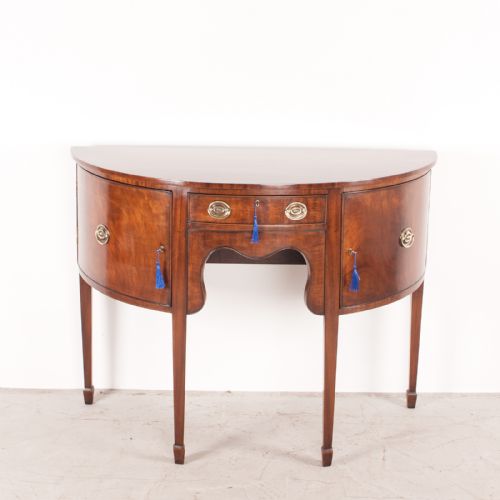

Vintage Half Moon Console
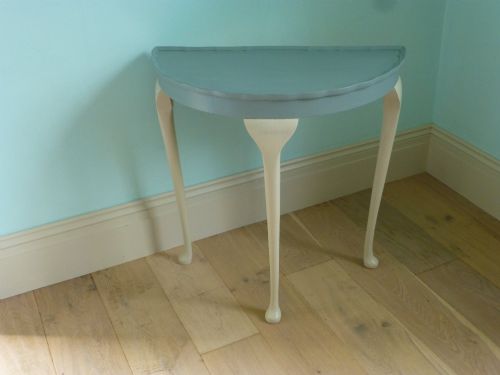
These vintage half moon console tables and cabinets fit snugly against walls to save space while adding architectural curve to a room.
Vintage Half Moon Console
A vintage half moon console provides a semicircular profile designed to sit flat against a wall, making it a practical choice for narrow hallways and compact living areas. When searching for this phrase, buyers encounter console tables, folding card tables, side cabinets, and sideboards shaped with a flat back and a curved front.
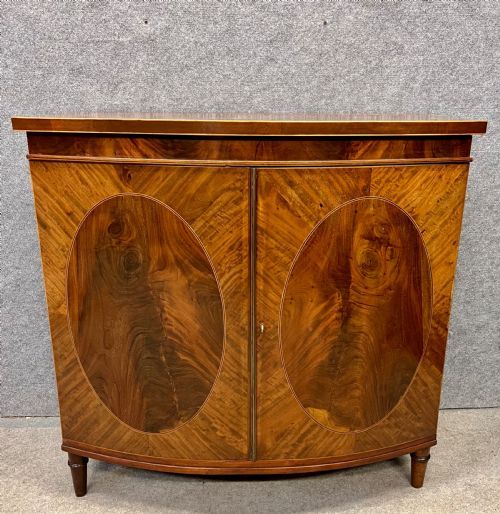
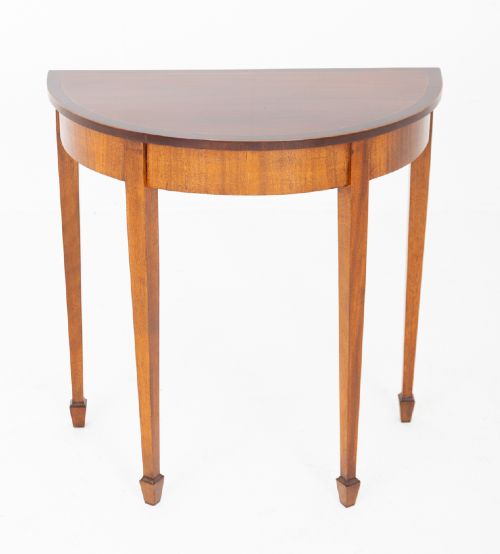
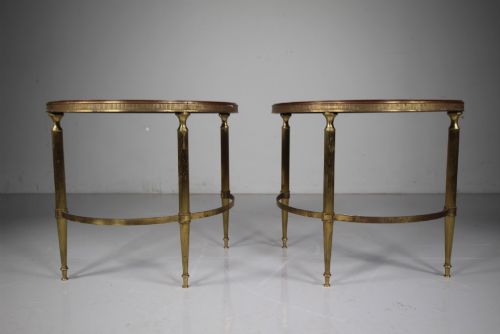
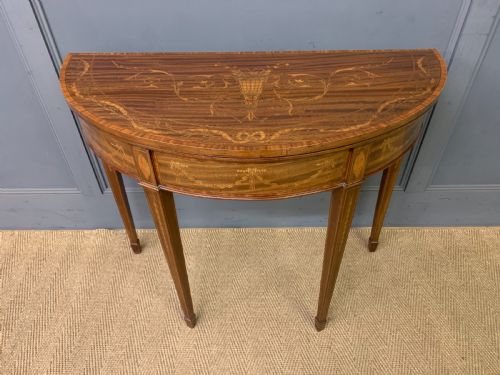
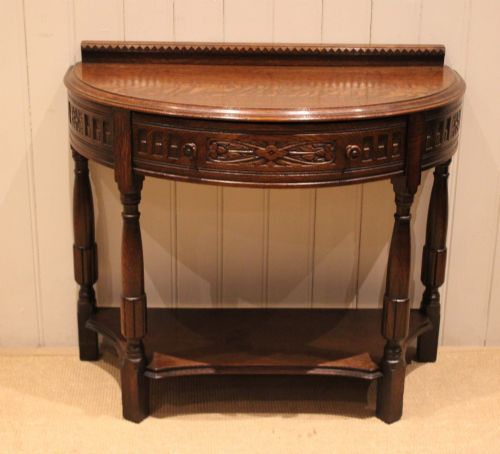
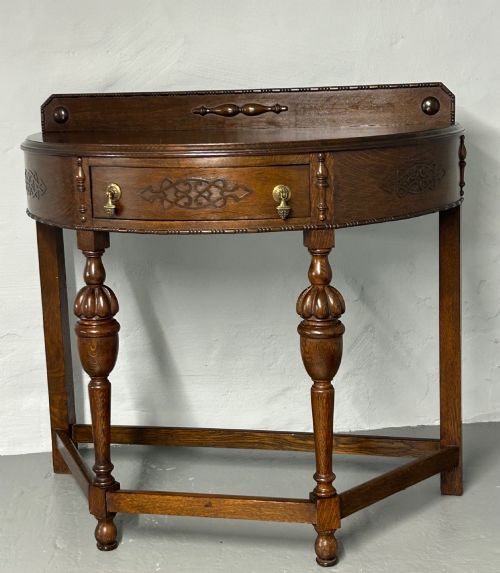
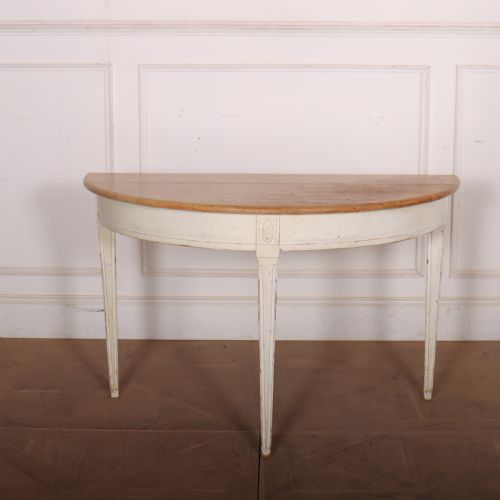
The pieces appearing on this page span several eras from the nineteenth century through the 1930s, including Edwardian, Victorian, and Georgian periods. Formats range from simple oak and mahogany side tables to elaborate painted satinwood cabinets and marble-topped variants.
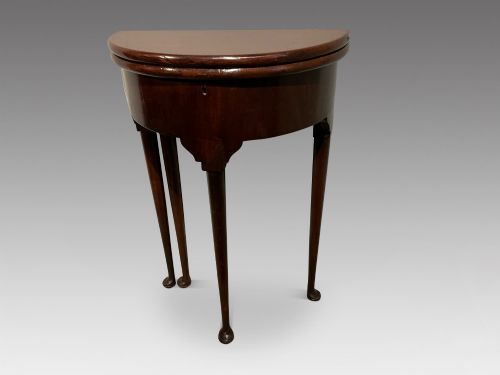
Makers and designers drew on Georgian, Queen Anne, Sheraton Revival, and Gustavian styles to shape these semicircular items. Many examples incorporate clever folding tops that transform a slim console into a full card or tea table when needed.
How they were made
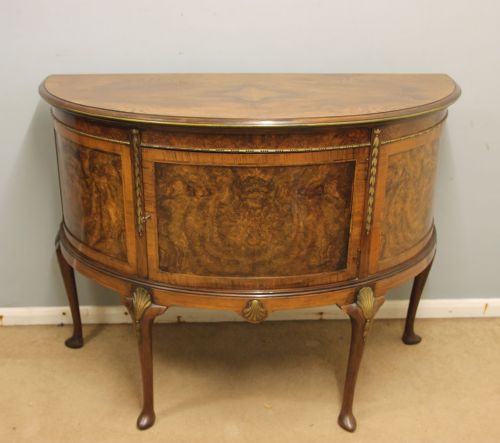
Cabinetmakers relied on rich timbers such as mahogany, walnut, burr walnut, satinwood, oak, and pine to construct the curved frames. These woods were often selected for distinctive grain patterns or used as a base for intricate inlaid decoration.
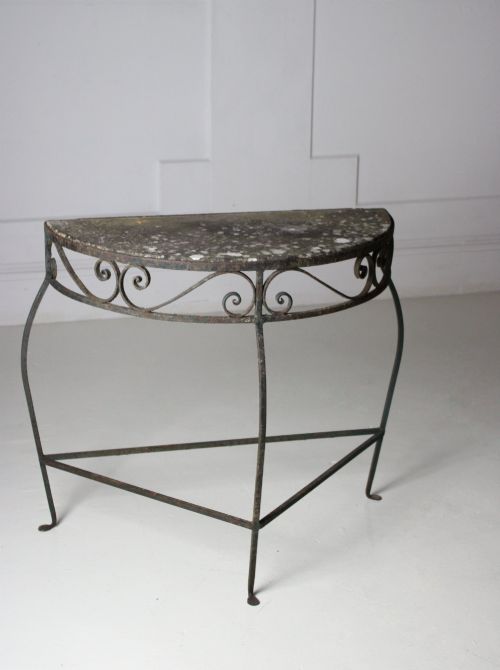
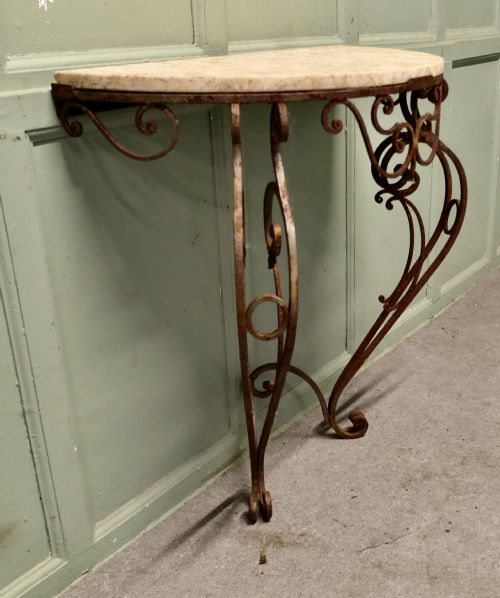
Surfaces frequently feature contrasting wood veneers, painted finishes, or heavy polished marble slabs set into the timber tops. Metal details like brass mountings and wrought iron supports appear across various French and English examples.
Design styles span Georgian, Queen Anne, Sheraton Revival, Gustavian, and French Country traditions.
What varies in quality
The standard of timber selection and cabinetmaking distinguishes standard pieces from exceptional ones. Finely figured burr walnut, delicate satinwood marquetry, and precise mahogany joinery elevate a piece above simpler pine or oak constructions.
The integrity of the curved structure and the smooth operation of hinged folding tops indicate the original maker's skill. Pieces retaining their original painted decoration or heavy marble inserts demonstrate greater artisanal investment than later adaptations.
The Vintage Half Moon Console Glossary
- Demi-lune
- A French term meaning half-moon, commonly used to describe furniture with a semicircular footprint. It applies directly to tables and cabinets designed to stand flat against a wall.
- Inlay
- A decorative technique where pieces of contrasting wood, brass, or other materials are inserted into depressions in the base wood to form patterns. This adorns many Edwardian and Sheraton Revival surfaces.
- Card table
- A folding table designed specifically for playing card games, often featuring a baize-lined interior. Many half moon examples have a fold-over top that doubles the surface area when opened.
- Satinwood
- A durable, yellowish-brown timber with a lustrous satin-like sheen. Cabinetmakers utilised it extensively for fine eighteenth-century and revival painted decorative pieces.
- Console table
- A table supported against a wall by wall brackets or legs, historically designed to display decorative objects rather than bear heavy central loads.
Vintage Half Moon Console: Frequently Asked Questions
Where should I place a half moon console?
These pieces suit narrow entryways, hallways, and tight landings because their flat backs sit flush against the wall without projecting far into the room. They also function well beneath mirrors or paintings in sitting rooms.
Fold-over versions can stand quietly against a living room wall until guests arrive and you need an extra surface for cards or tea.
How do I use a folding card table?
The semicircular top unfolds on hinges to create a full circular or square playing surface, often supported by a swing leg that pivots out from the frame. Inside, you will frequently find a felt or baize lining designed for playing games.
When not in use, simply fold the top back and push the swing leg inward so the piece rests flat against the wall as a standard console.
What is the difference between a console and a side cabinet?
Console tables are open furniture frameworks supported by legs, built primarily for display and surface use in hallways or reception rooms. Side cabinets and sideboards incorporate enclosed storage space behind doors.
Both share the distinctive semicircular profile, but cabinets offer concealed practicality while consoles maintain a lighter, more open visual presence.
How can I tell a Georgian piece from a revival piece?
Original Georgian pieces date from the eighteenth century and show authentic period construction methods, timber ageing, and hand-cut joinery. Revival pieces, such as those from the Edwardian era or the 1930s, imitate these earlier styles using the manufacturing techniques of their own time.
Examining the secondary woods inside drawers and the wear patterns on the finish generally helps distinguish the original eighteenth-century work from later revivals.