


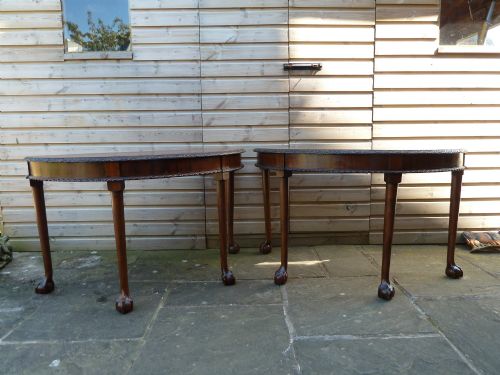

Half Moon Wall Table
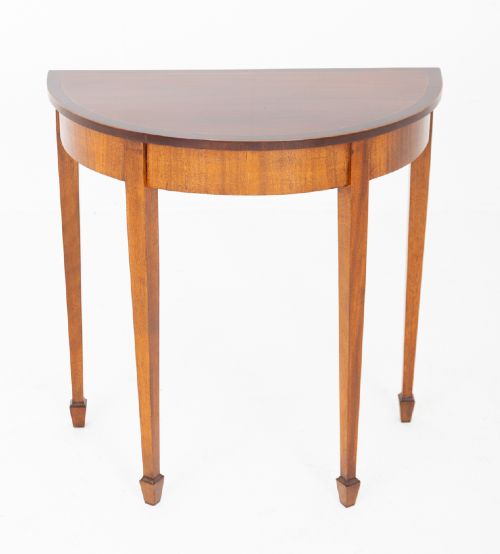
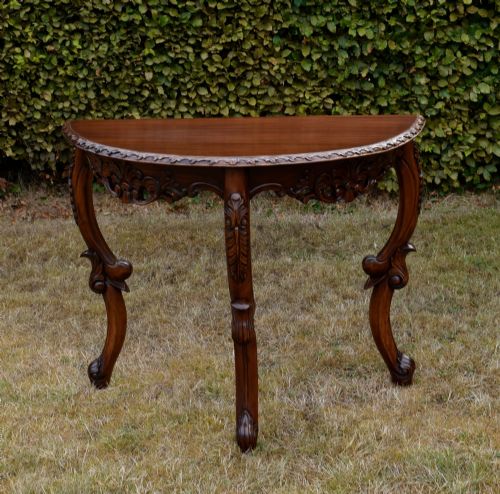
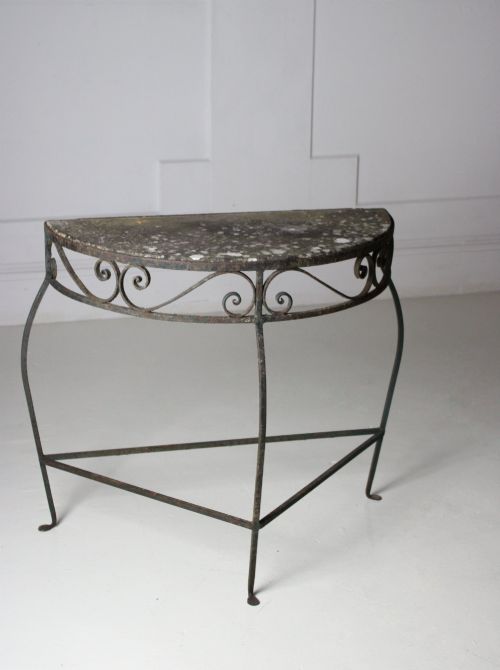
A half moon wall table brings elegance and neat proportion to a hallway or drawing room.
What they are
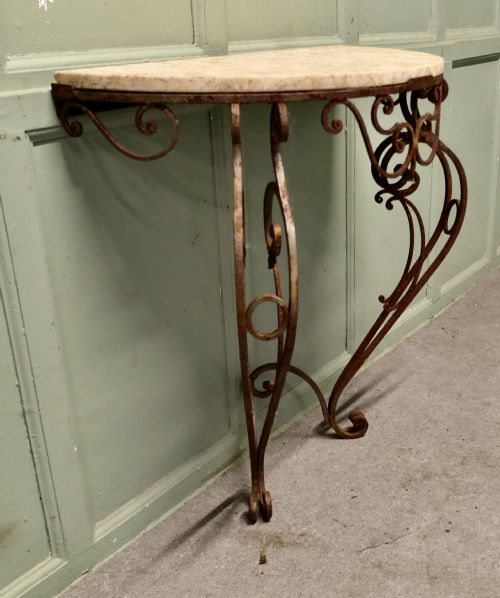
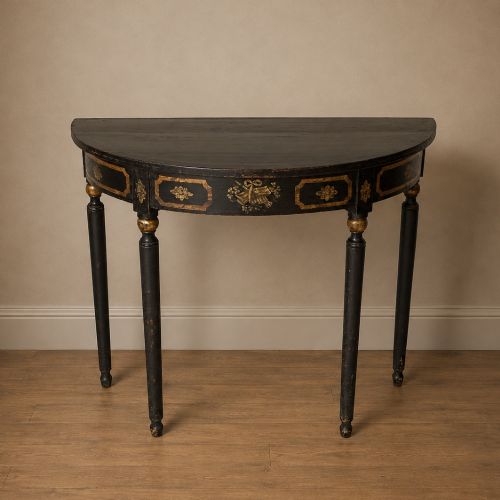
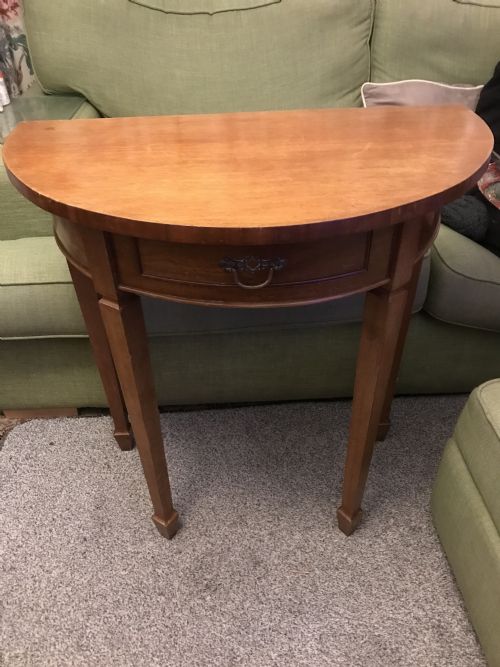
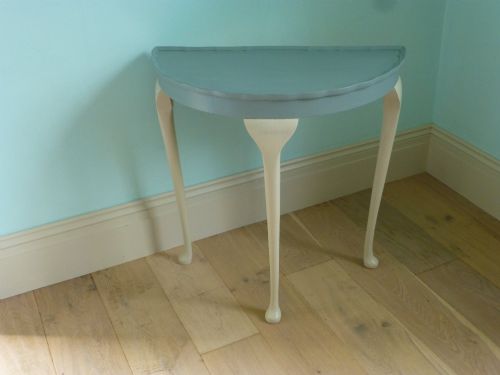
A half moon wall table sits flat against a surface, offering a shallow top for display without crowding a narrow space. These pieces typically take the form of console tables or card tables designed to occupy perimeter walls.
The inventory on this page shows examples ranging from Georgian origins to the nineteenth century, including revival pieces from the Sheraton and Chippendale traditions. Swedish and Italian regional variations also appear alongside standard British forms.
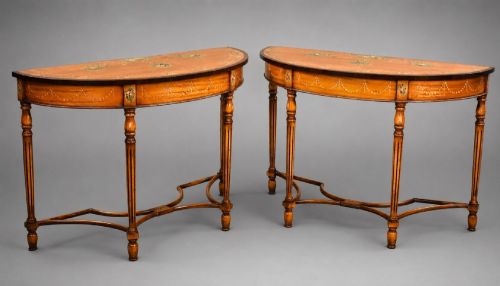
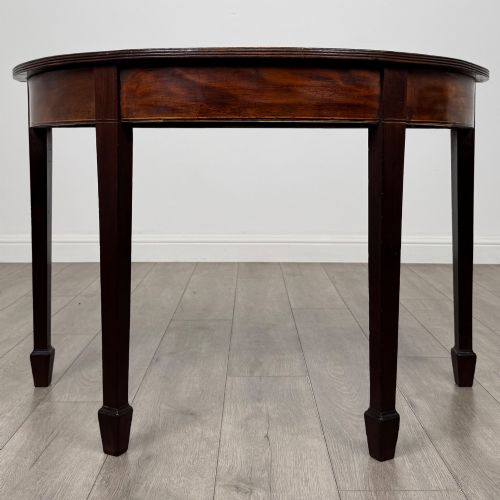
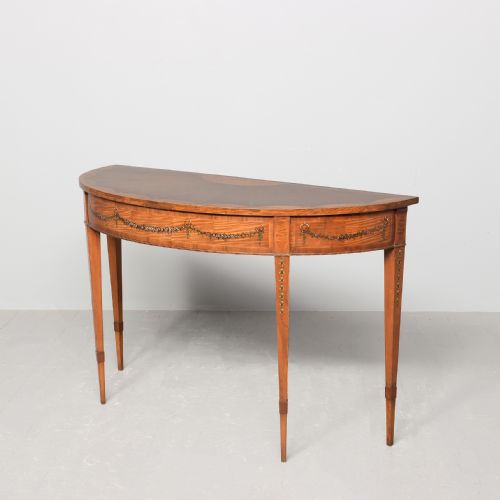
Buyers will most frequently encounter mahogany and satinwood constructions, often decorated with wood inlay or hand-painted enamel details. The selection spans single tables and matched pairs suited for symmetrical placement.
How they were made
Cabinetmakers constructed these tables primarily from solid timbers like mahogany, walnut, and pine, applying figured veneers to the curved tops and aprons. Wood inlay work creates geometric borders and contrasting panels across the surface.
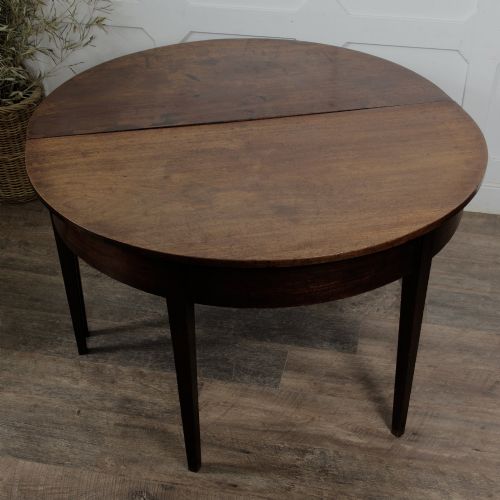
Satinwood examples frequently incorporate hand-painted enamel decoration, reflecting the neoclassical taste of the periods represented. Fold-over mechanisms allow certain tables to convert from a console format to a card surface.
Retail Price Guide 2026
Typical UK retail prices for half moon wall table, calculated from the Sellingantiques database of over a million retail prices indexed since 2003. This retail price guide relies exclusively on Sellingantiques data; no external sources or auction records are used, so the figures do not describe the wider market.
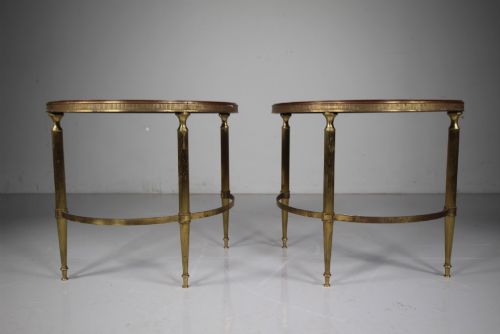
Several tables arrive in matched pairs, proving that even furniture appreciates good company.
What varies in quality
The refinement of the timber and the precision of the inlay separate standard examples from finer works. Finely figured mahogany grain and crisp satinwood banding indicate superior material selection by the maker.
Hand-painted enamel detail ranges from simple linear borders to intricate figurative motifs executed with high technical skill. The integrity of the structural joints and the smoothness of any folding mechanisms also determine the standing of each piece.
The Half Moon Wall Table Glossary
- Demi-lune
- A half-moon shape used to describe tables with a curved front and a straight back edge designed for walls.
- Console table
- A table supported by brackets or legs against a wall, primarily used for decorative display rather than heavy dining.
- Satinwood
- A durable, yellowish wood native to Ceylon and India, prized for its lustrous grain in late eighteenth and nineteenth-century furniture.
- Inlay
- The technique of embedding contrasting woods or materials into a solid timber base to form decorative patterns.
- Sheraton Revival
- A late nineteenth-century style replicating the lighter, neoclassical forms associated with designer Thomas Sheraton.
Frequently Asked Questions
Where should I place a half moon wall table?
These tables fit naturally in narrow entrance halls, corridors, or beneath living room mirrors where floor space is at a premium. Their flat back rests securely against the wall while the curved front softens the geometry of the room.
Pairs can also be deployed symmetrically flanking a doorway or fireplace to create a balanced architectural arrangement.
Can I use a demi lune table for cards?
Certain examples feature fold-over tops that open to reveal a larger surface suitable for card games or writing. The hinged flap swings out to rest on a pivoting rear leg.
Many other variants are purely console tables designed for display and do not possess a folding mechanism.
How do I care for antique mahogany and satinwood?
Maintain these polished wood surfaces by dusting regularly with a dry, soft cloth and avoiding prolonged exposure to direct sunlight. Excessive heat and moisture fluctuations can cause timber to warp and veneers to lift over time.
Applying a traditional beeswax polish occasionally helps nourish the grain without building up heavy chemical residues.
How do I identify Georgian pieces from later revivals?
Georgian pieces from the eighteenth century display structural joinery and timber patination characteristic of the period's active workshop production. Revival pieces made during the nineteenth century often employ machine-cut elements and distinctively bright satinwood finishes.
Examining the secondary woods on the underside of the table provides further clues to the manufacturing date and origin.