


Georgian Style Pier Table
A georgian style pier table brings architectural presence and classical proportion to a hallway or drawing room.
What these pieces are
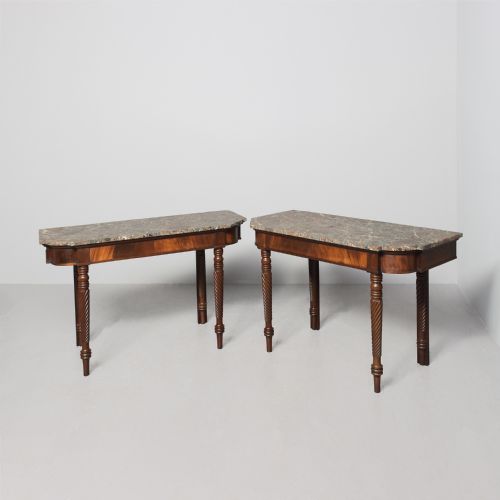
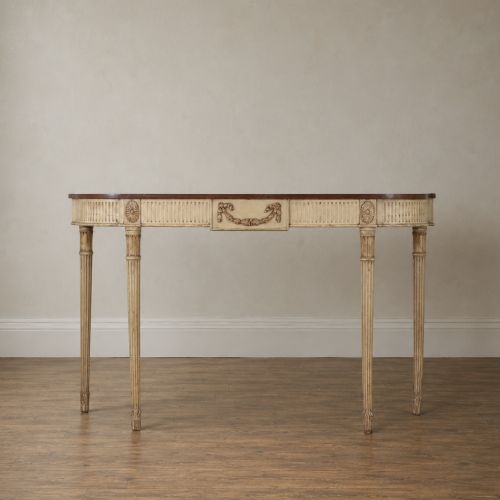
A georgian style pier table encompasses console tables, side tables, and side cabinets designed for placement against a wall, frequently beneath a mirror. These pieces emerge across the nineteenth and twentieth centuries, spanning the Victorian era, the 1920s, and the 1930s.
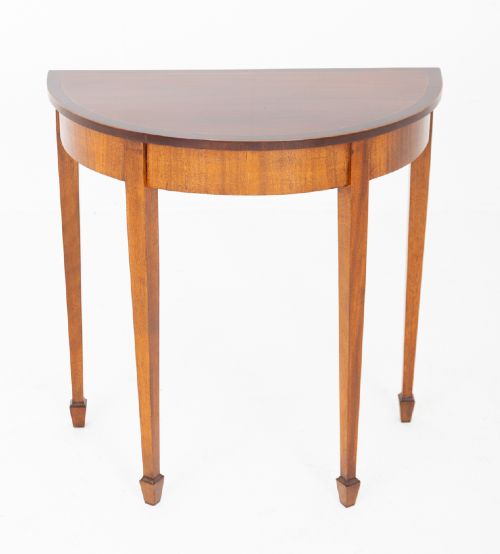
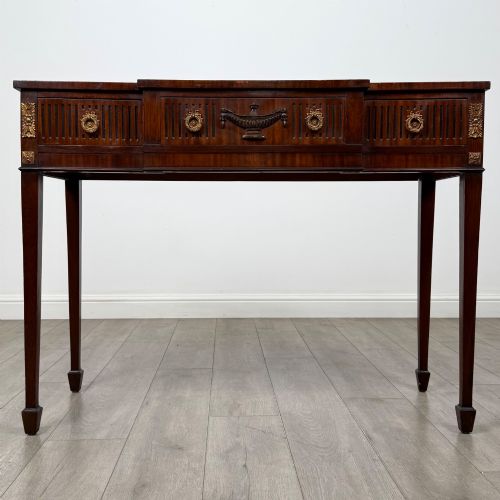
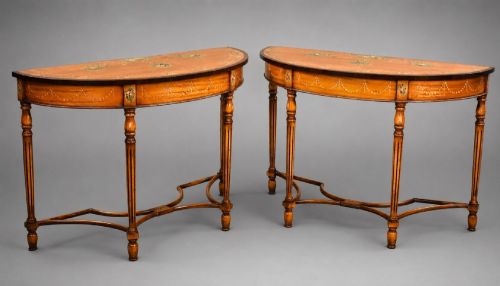
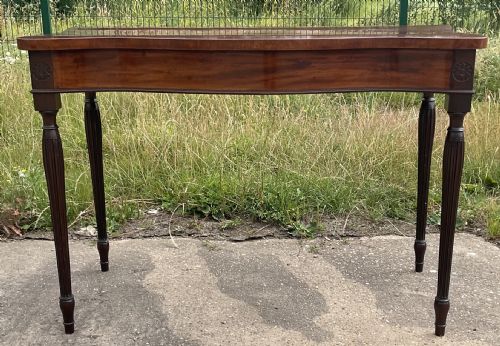
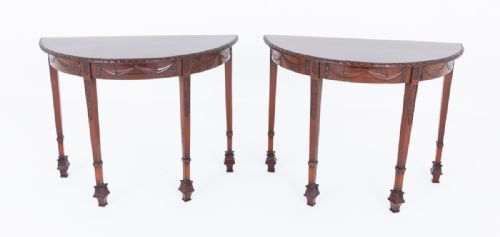
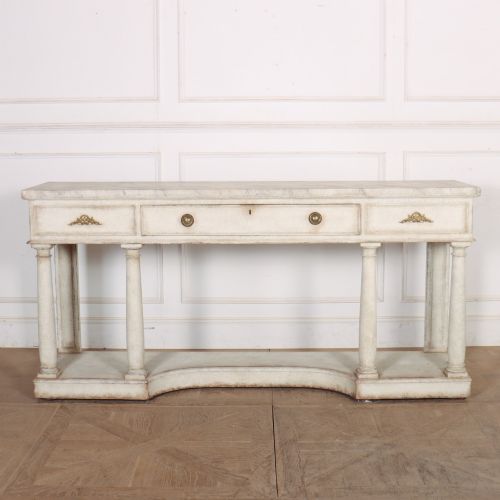
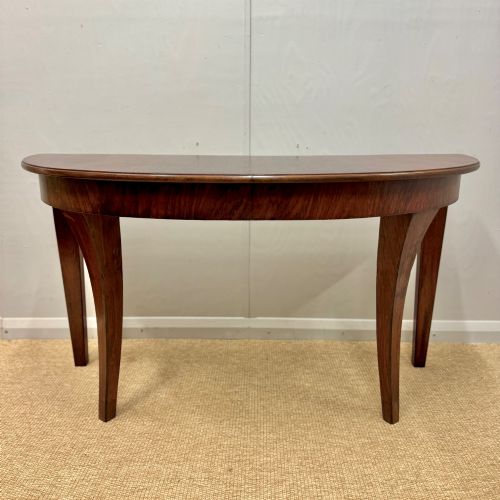
The dominant forms on this page include mahogany demi lune console tables, break-front hall or side tables, and painted console tables reflecting George II Revival and Chippendale styles. Alongside these stand tripod-base tables featuring pierced brass gallery-edge tops and crystal cabinets.
Makers and workshops across these periods reinterpret eighteenth-century idioms, producing sturdy side tables and refined console tables intended for formal domestic settings.
How they were made
Makers construct these tables primarily from solid timber and veneers, utilising mahogany and satinwood alongside painted surfaces and gold leaf decoration. Structural elements often incorporate wood inlay to create decorative borders and contrasting panels.
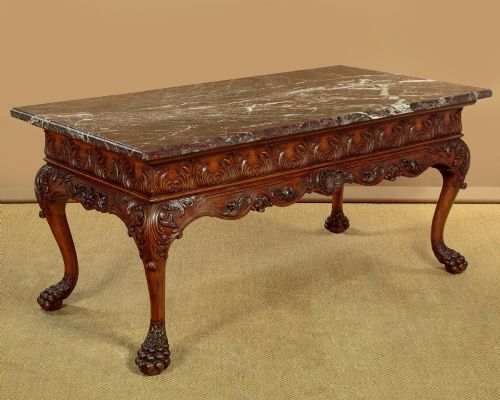
Tops frequently feature heavy marble slabs fitted to wooden frames, while tripod bases utilise turned wooden columns and supports. Brass components appear as detailed gallery edges, adding metallic contrast to the timber and stone constructions.
Retail Price Guide 2026
Typical UK retail prices for georgian style pier table, calculated from the Sellingantiques database of over a million retail prices indexed since 2003. This retail price guide relies exclusively on Sellingantiques data; no external sources or auction records are used, so the figures do not describe the wider market.
One past table stands on three legs with a pierced brass fence around the top, ensuring nothing rolls onto the rug.
What varies in quality
Quality rests upon the selection of timber and the precision of the wood inlay, where tighter grain and more ambitious patterning elevate a piece. The integration of heavier materials, such as a fitted marble top, demands robust framing and stable joinery to support the weight over time.
Decorative execution divides standard production from finer work, visible in the crispness of painted surfaces and the finesse applied to brass gallery-edge tops. Surface finishes that respect the underlying wood grain distinguish superior craftsmanship from heavier, obscuring treatments.
The Georgian Style Pier Table Glossary
- Demi Lune
- A half-moon shape commonly applied to console tables designed to sit flush against a flat wall. This curved form creates a softer silhouette in a narrow hallway.
- Break-front
- A furniture facade where the central section projects forward from the flanking parts. This architectural device introduces depth and shadow to side and hall tables.
- Pier Table
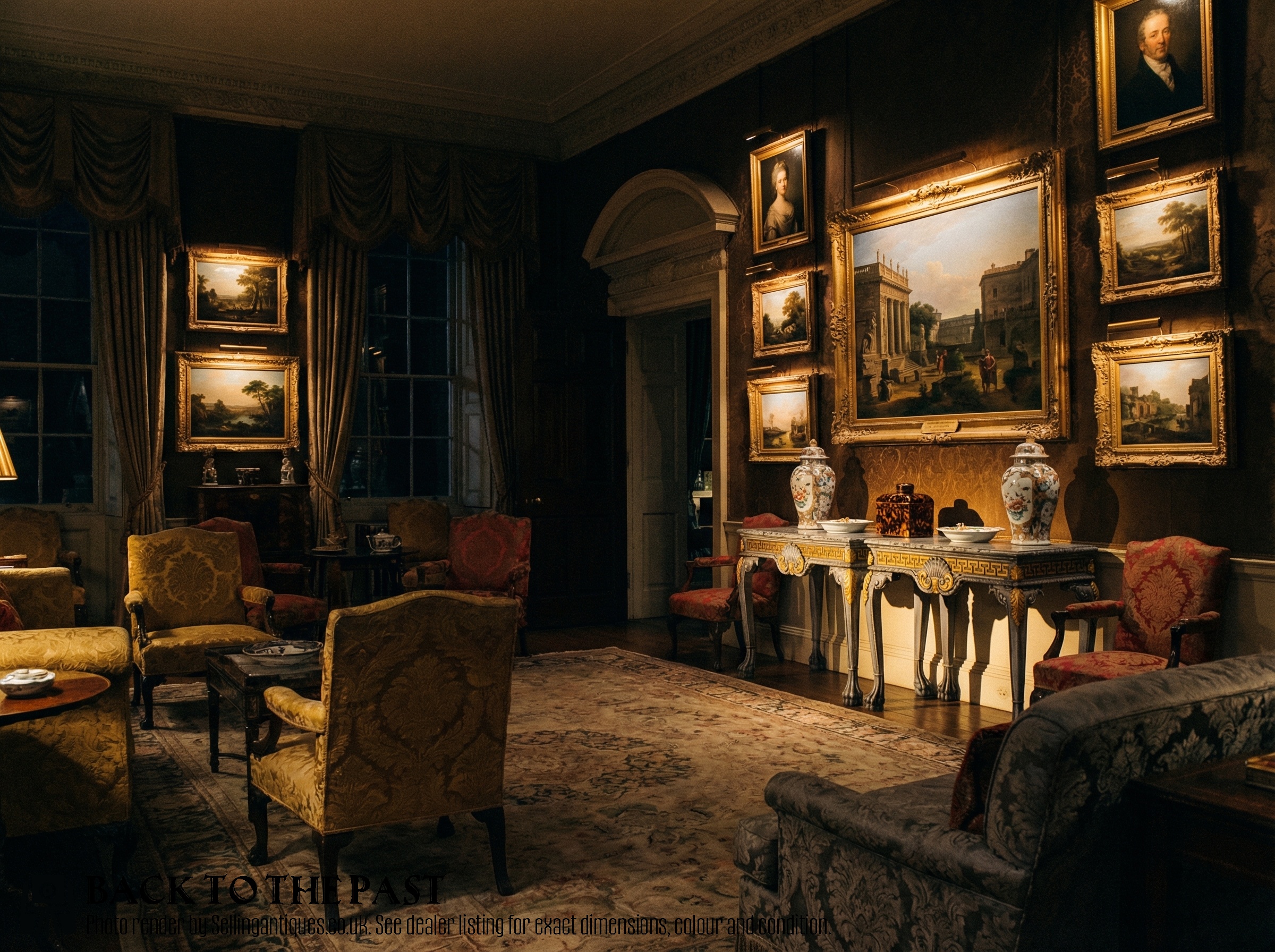
- A table designed specifically to stand against the wall space between two windows. These pieces traditionally accompanied large vertical wall mirrors.
- Tripod-base
- A support structure resting on three feet or legs radiating from a central column. This arrangement provides stability for smaller display and serving tables.
- Gallery-edge
- A raised rail or border fitted around the perimeter of a tabletop. This feature prevents items from sliding off the surface.
Frequently Asked Questions
Where should a pier table be placed?
These tables find a natural home against a flat wall in an entrance hall or living room. Placing one beneath a mirror echoes historical placement.
The shallow profile ensures the furniture occupies minimal floor space while offering a display surface.
How do I identify a George II style table?
George II style pieces draw inspiration from early eighteenth-century English design, often featuring heavy timber construction and classical proportions.
Revival versions from the twentieth century replicate these formal architectural characteristics using period woodworking techniques.
What materials are used for these tabletops?
Tabletops vary between solid timber, wood veneer, and heavy marble slabs fitted directly into the wooden frames. Some examples incorporate painted finishes or gold leaf decoration.
Tripod versions occasionally feature pierced brass gallery edges running around the perimeter.