

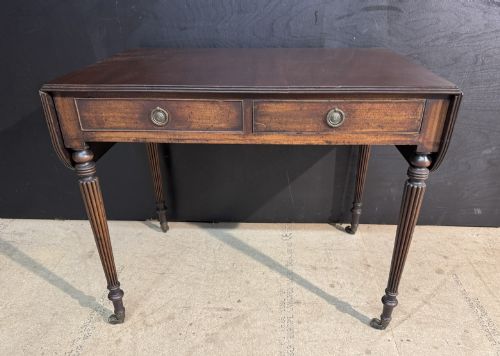
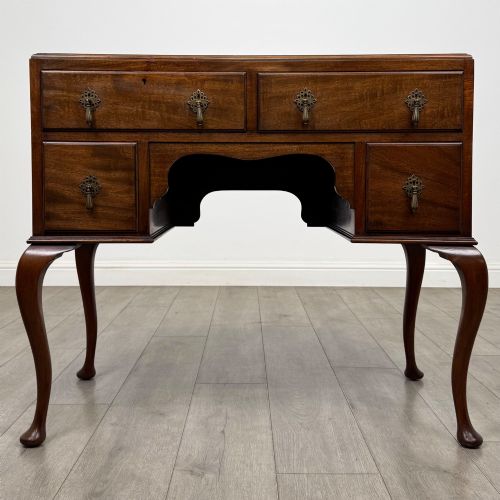
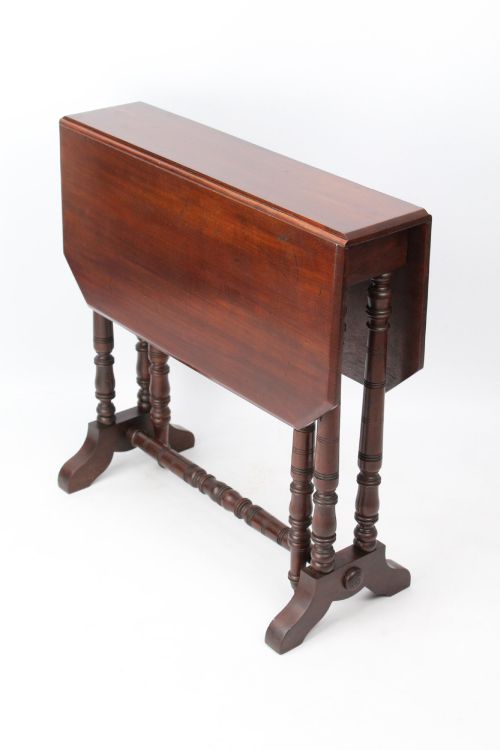
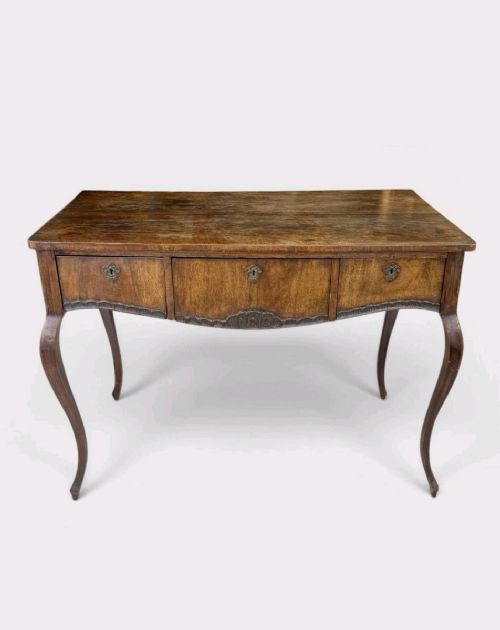
Edwardian Mahogany Console Table
An Edwardian mahogany console table brings refined timber surfaces and subtle classical lines into a hallway or drawing room.
Identifying the Edwardian mahogany console table
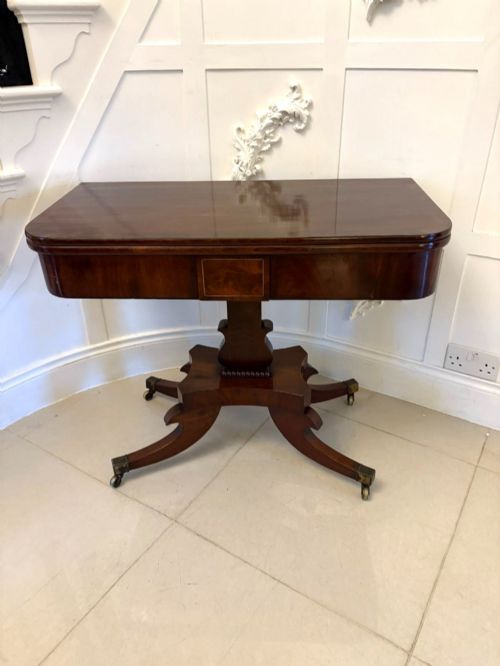
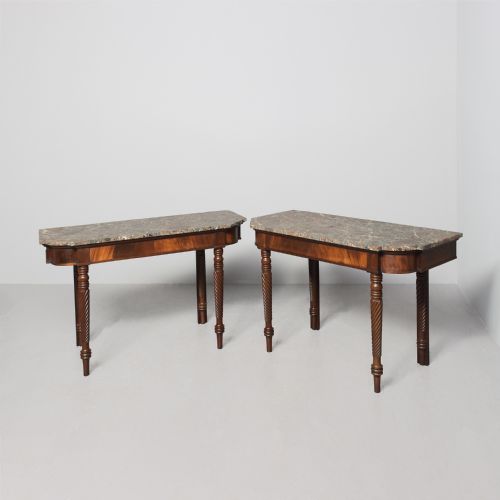
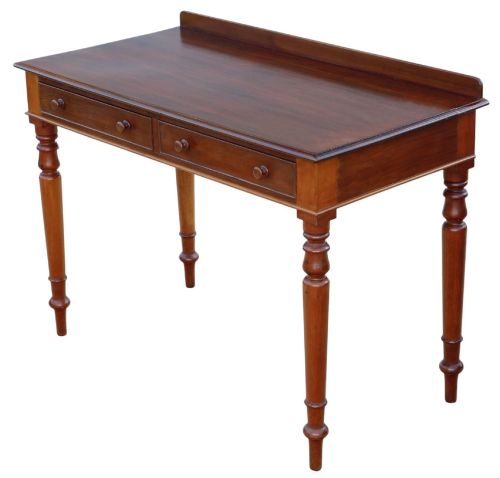
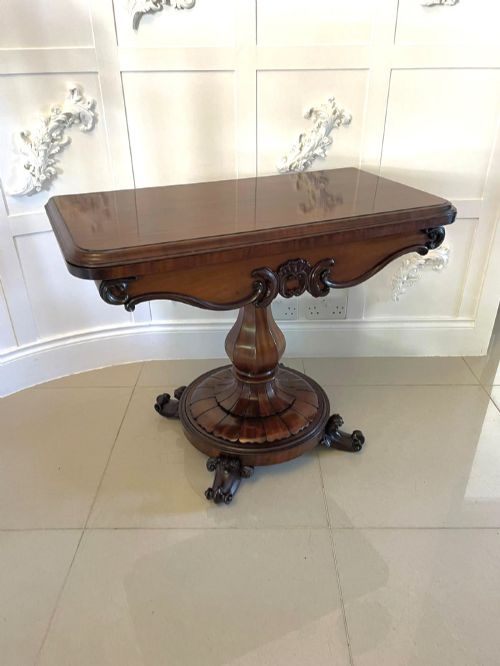
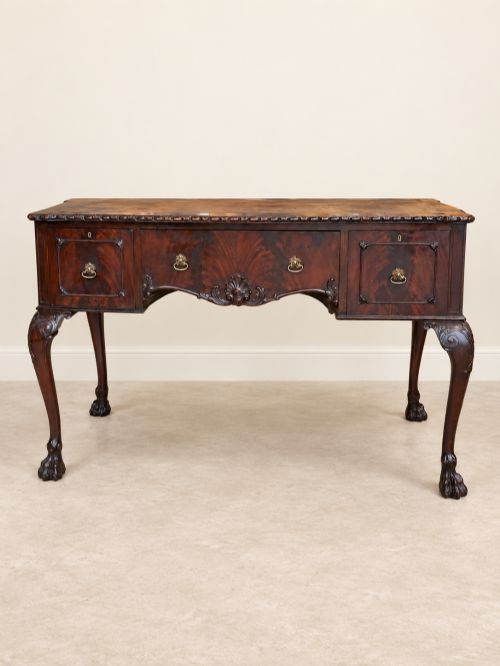
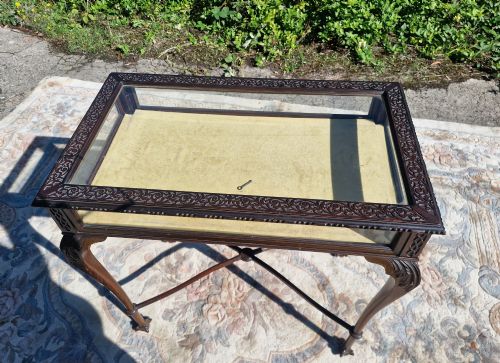
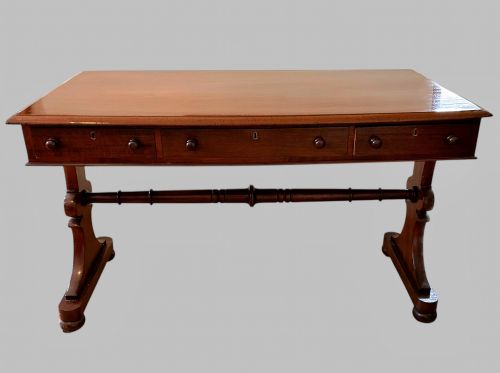
An edwardian mahogany console table spans the formal hall pieces, demi-lune shapes, and card tables found in the evidence. These items bridge domestic practicality and decorative display, often positioned against a wall or in a hallway.
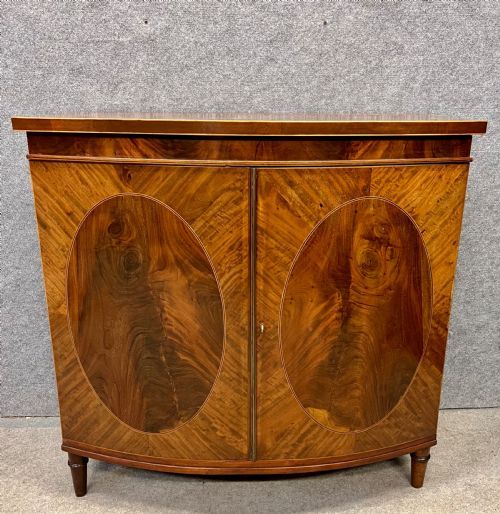
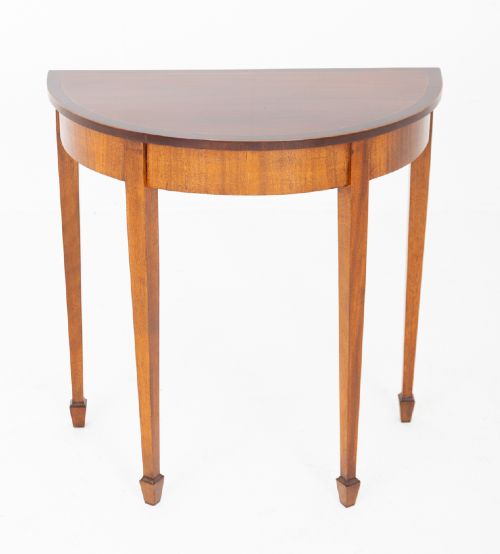
The version most commonly met on this page is the demi-lune or half-round console table, frequently detailed with wood inlay or satinwood banding. Surviving examples reflect both Edwardian production and related revivals like Hepplewhite and Regency styles.
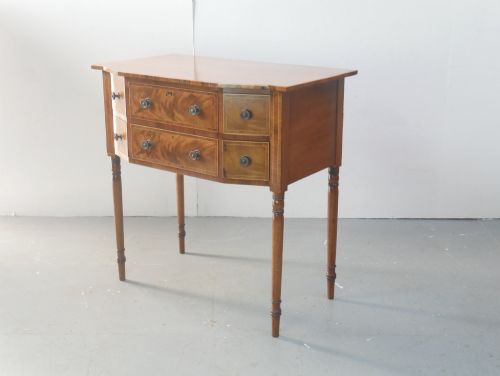
Makers occasionally stamped their work, and larger serving or serpentine formats also appear in the archive records alongside compact side tables.
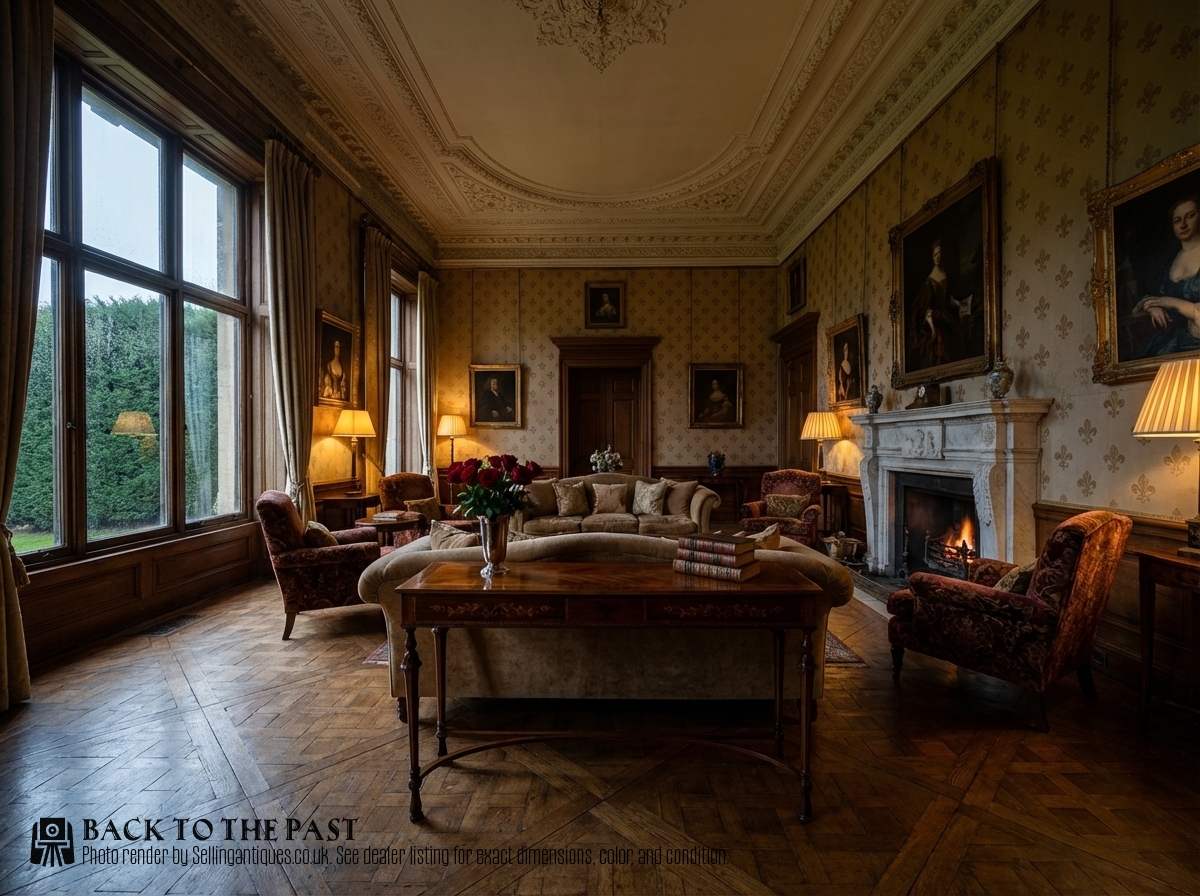
Materials and construction
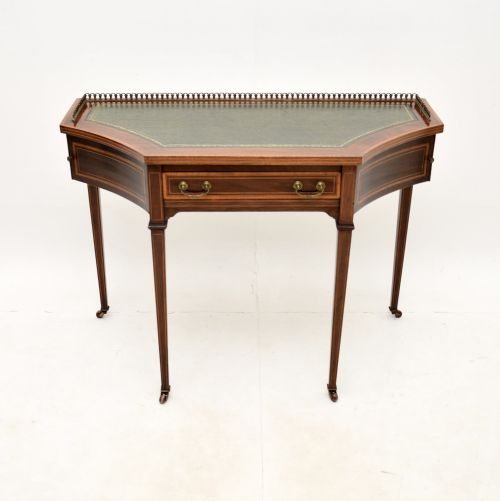
The structural carcass relies upon mahogany, chosen for stability and deep reddish-brown grain, sometimes supplemented by solid sections or figured veneers. Brass hardware appears on campaign and drawer-fitted variations.
Surface decoration frequently incorporates boxwood and satinwood stringing or marquetry inlay, following neoclassical or Adam-style influences popular during the period.
Retail Price Guide 2026
Typical UK retail prices for edwardian mahogany console table, calculated from the Sellingantiques database of over a million retail prices indexed since 2003. This retail price guide relies exclusively on Sellingantiques data; no external sources or auction records are used, so the figures do not describe the wider market.
Distinguishing quality across the range
Quality rests upon the selection of figured mahogany veneers and the precision of the contrasting wood inlay rather than sheer scale. Finer pieces demonstrate meticulous hand-cut stringing and balanced proportion across curved demi-lune or serpentine tops.
Maker attribution elevates certain tables, particularly pieces bearing the stamp or label of established workshops recorded in the archive. The integration of solid secondary timbers and clean drawer construction further separates standard production from superior examples.
Maple & Co·Lamb of Manchester·Waring & Gillows
The Edwardian Mahogany Console Table Glossary
- Demi-lune
- A half-moon shape popular for console and side tables designed to sit flush against a wall. This format maximises floor space while offering a decorative surface.
- Inlay
- A technique where contrasting woods such as satinwood or boxwood are inserted into recesses in the mahogany base to create patterns. It defines much of the Edwardian decorative vocabulary.
- Serpentine
- A curved shape featuring a convex centre flanked by concave ends, creating a flowing line along the front edge of the table. This profile demands advanced woodworking skill.
- Stringing
- Thin, narrow lines of contrasting wood used as a border inlay around the edges of tabletops and drawer fronts. It adds subtle linear definition to the piece.
Frequently Asked Questions
Where should I place a console table?
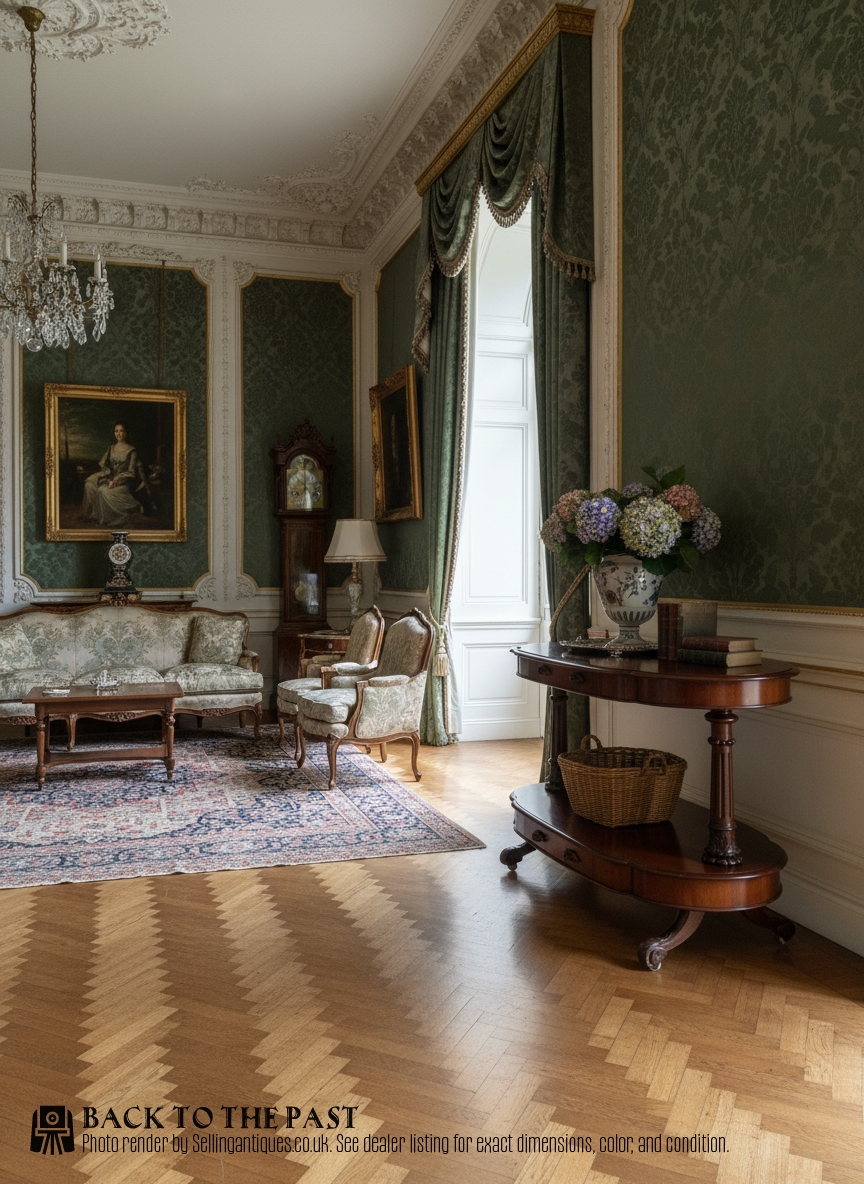
These tables fit naturally in entrance halls, corridors, or living rooms where surface space is needed without blocking circulation. Their shallow depth allows them to sit neatly against walls.
Demi-lune shapes work particularly well in corners or beneath mirrors, functioning as display points for lamps or decorative objects.
How do I care for mahogany furniture?
Keep the wood away from direct heat sources and strong sunlight to prevent the mahogany and its delicate inlay from drying out or fading. Regular dusting with a dry, soft cloth preserves the polish.
Apply a traditional beeswax polish sparingly when the timber appears dry, buffing gently to maintain the natural sheen of the grain.
What is the difference between a console and a side table?
Console tables traditionally stood against a wall, sometimes supported by legs at the front and brackets at the back. Side tables generally feature four independent legs and stand freely.
Over time, the terms have merged in antique terminology, and many surviving Edwardian pieces serve both functions interchangeably.
How do I spot an Edwardian piece?
Edwardian furniture often combines neoclassical revival styles with lighter proportions than Victorian equivalents. Look for satinwood inlay, mahogany veneers, and subtle stringing.
Construction methods, such as machine-sawn timber combined with hand-finishing, help date these items to the early twentieth century alongside documented maker marks.