

Edwardian Gaming Table
An Edwardian gaming table brings tactile parlour leisure into a room, offering fold-over tops and clever compartments designed for card play.
Edwardian Gaming Table
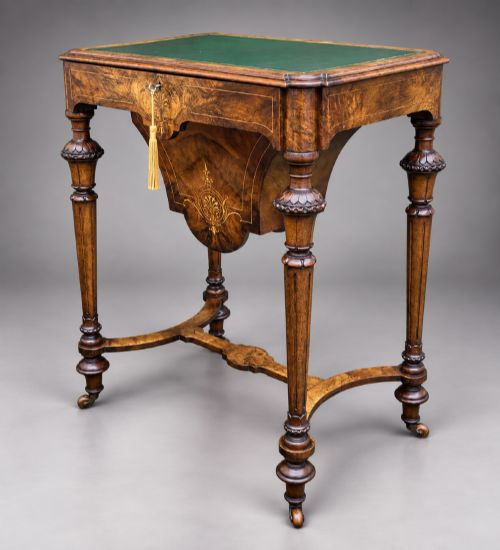
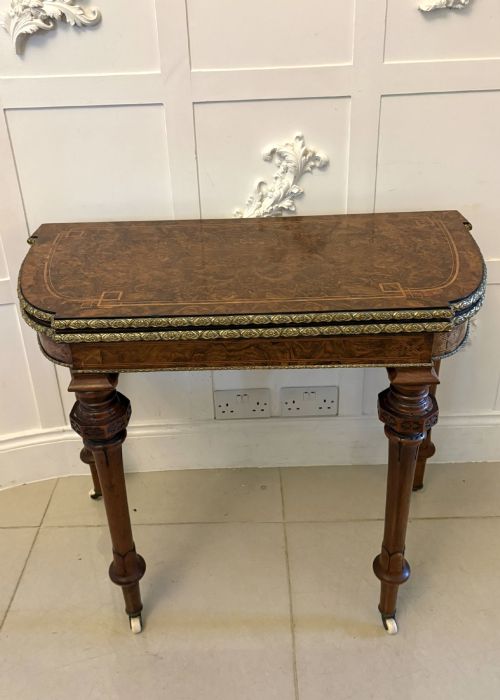
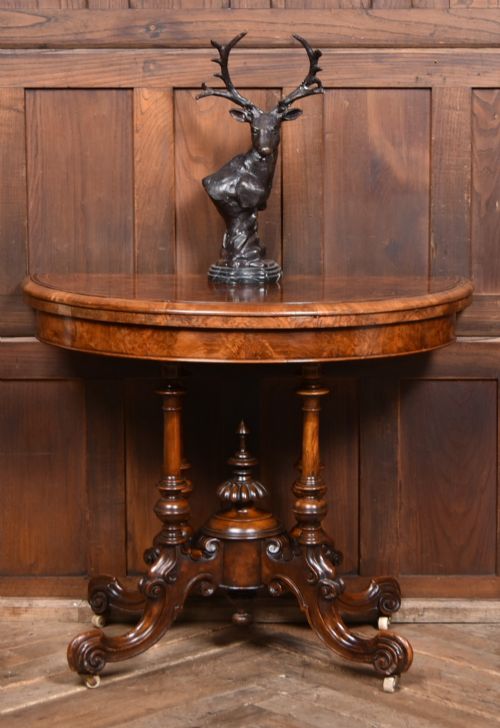
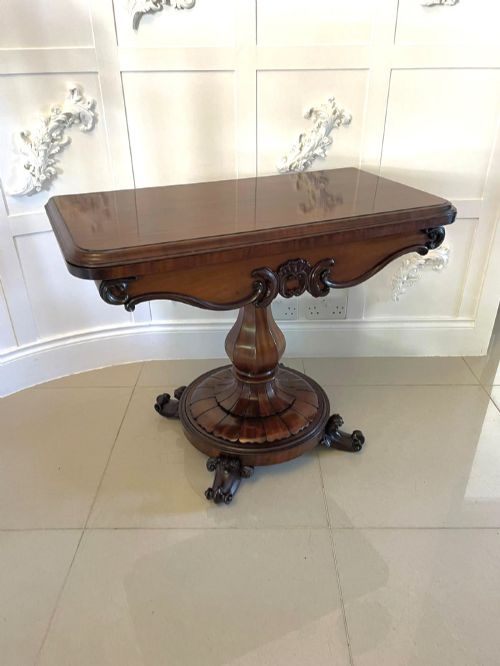
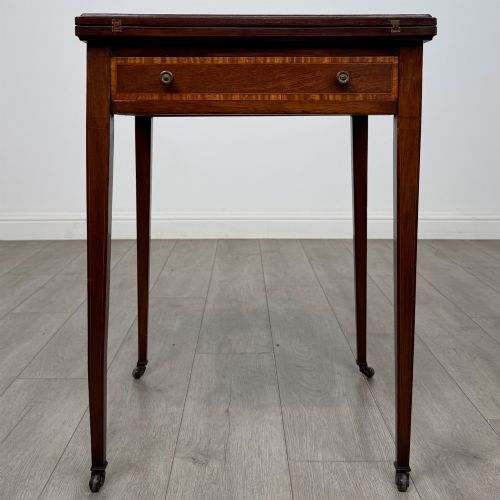
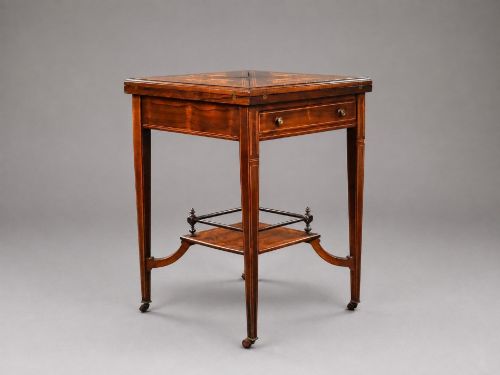
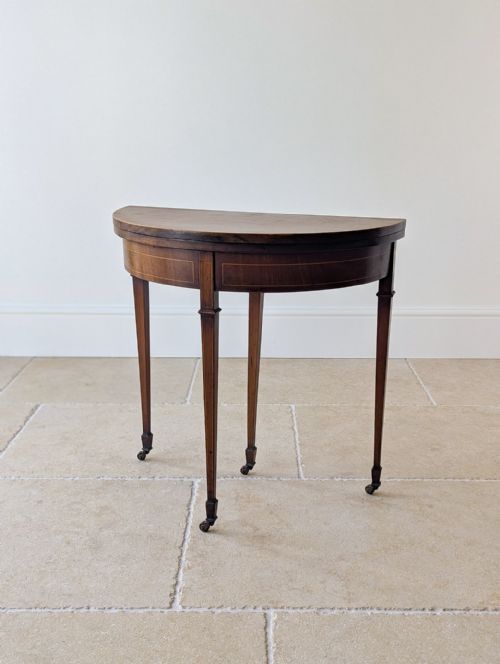
When searching for an edwardian gaming table, a buyer encounters pieces designed for domestic amusement around the turn of the twentieth century. The selection ranges from envelope tables with rotating leaves that unfold to reveal baize-lined playing surfaces to demi-lune fold-over designs in polished timbers. These domestic furnishings reflect a period when parlour games formed a central part of evening social life.
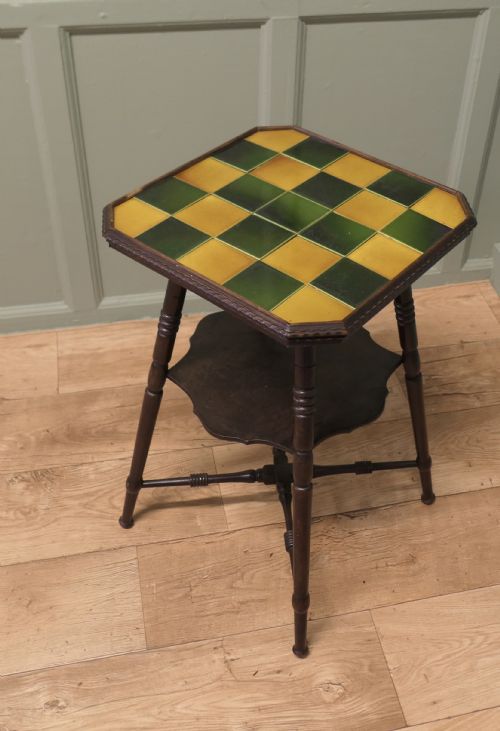
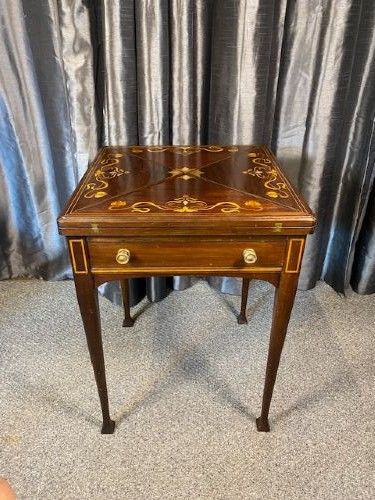
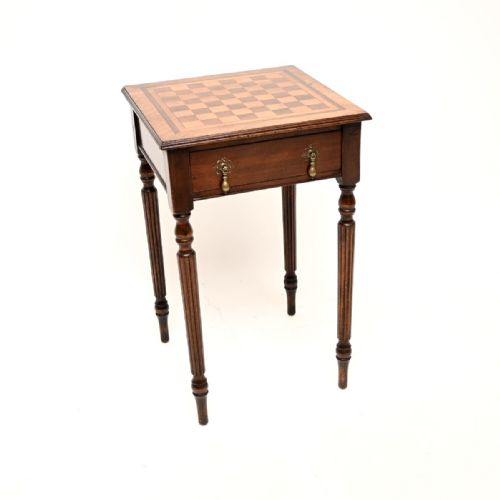
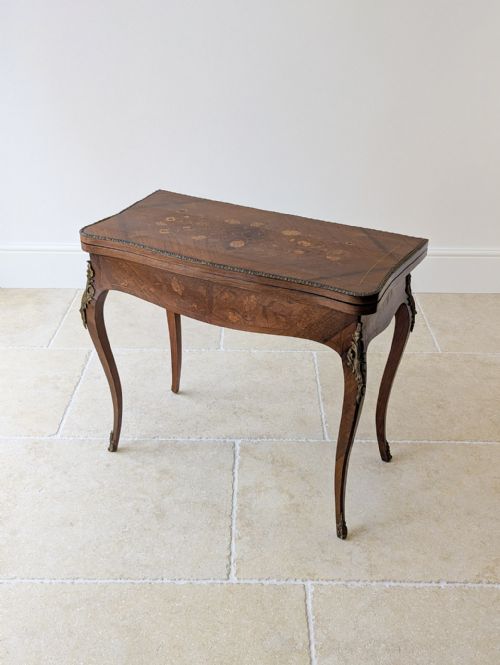
The most common form on this page is the envelope card table, constructed in mahogany or rosewood with delicate inlay and interior wells for counters and cards. Alongside these specifically Edwardian specimens, the listings encompass Victorian burr walnut models, earlier nineteenth-century card tables, and occasional chess boards. Makers working in satinwood and walnut produced versatile items that served as ordinary side tables when folded shut.
How they were made
Cabinet makers utilised dense hardwoods such as mahogany, rosewood, and walnut as the primary structural materials for these tables. Satinwood and burr walnut provided contrasting veneers for geometric bandings and floral marquetry on table tops and friezes. Internal mechanisms relied on swivel hinges, pivoting legs, and folding leaves to transform a compact console into a stable playing surface.
Surfaces destined for card play received linings of baize, a coarse woollen fabric that prevented counters and cards from sliding during a hand. Brass fittings, ormolu mounts, and sterling silver details appeared on select pieces to accent corners and hinges. Joinery techniques combined traditional tenon joints with pivoting wooden gate legs to support the expanded leaves.
A few tables hide secret wells beneath their leaves, ready to swallow up stray counters and forgotten trump cards.
What varies in quality
The distinction between standard commercial production and finer cabinet work rests in the precision of the timber matching and the execution of the inlay. Elaborate satinwood cross-banding, hand-cut marquetry, and choice cuts of burr walnut indicate a higher tier of manufacture. Plain secondary timbers and simpler stamped brass fittings usually denote utility pieces made for broader domestic consumption.
Mechanical ingenuity also marks the upper range of these tables, particularly in envelope mechanisms where four triangular flaps open in unison through a single pivot. The integration of fitted interiors, such as dedicated compartments for counters, score pads, and counters, demonstrates greater workshop care. Timber stability and the condition of original baize linings further separate everyday examples from superior specimens.
Shapland & Petter·Jaques & Hamleys·Maple & Co.
The Edwardian Gaming Table Glossary
- Envelope table
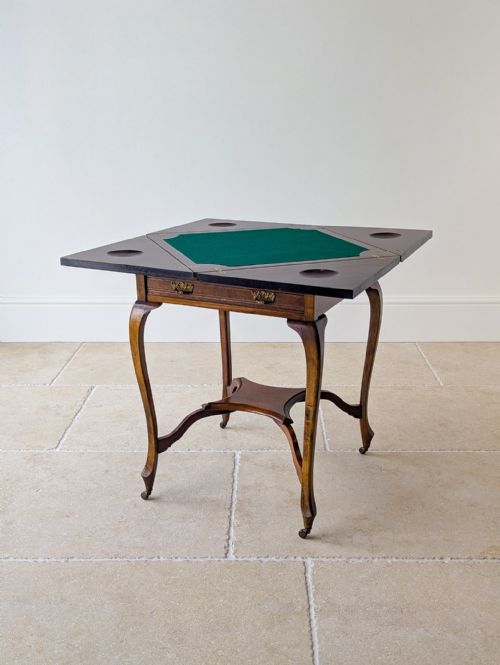
- A square card table featuring four triangular flaps that rotate and fold open simultaneously to reveal a baize-lined playing surface. The design became particularly popular during the Edwardian period for bridge and whist.
- Baize
- A coarse woollen felt material traditionally used to cover the tops of card and gaming tables. It provides a soft, non-slip surface for dealing cards and placing counters.
- Demilune
- A half-moon shape used to describe tables with a semicircular top and flat rear edge designed to stand against a wall. When folded over, these tables reveal a full circular or square playing surface.
- Marquetry
- Decorative veneer work formed by fitting together thin pieces of wood, shell, or ivory to create pictorial or geometric patterns on table tops. Artisans used contrasting timbers like satinwood and rosewood to achieve tonal depth.
Edwardian Gaming Table: Frequently Asked Questions
How do envelope tables work?
An envelope table operates through a clever pivoting mechanism where the four triangular wooden leaves rotate towards the centre corners. Lifting one flap causes the remaining three to unfold automatically into a square playing surface.
Beneath these rotating leaves, many examples conceal small triangular wells originally intended for holding playing cards, counters, and small accessories during a game.
What games were played on these tables?
These furnishings accommodated popular turn-of-the-century parlour pastimes including whist, bridge, cribbage, and chess. The baize-lined surfaces provided friction to keep cards and bone counters from sliding around during play.
Some specialised variants included inlaid chess and draughts boards on the exterior surface, while others concealed backgammon boards or compartments for specific card games beneath the folding top.
How do I care for the baize top?
Baize requires gentle maintenance, relying primarily on careful vacuuming with a soft brush attachment to lift dust and loose particles. Avoid using liquid cleaners or excessive moisture, which can warp the wooden substrate beneath the fabric.
Keeping the table out of direct sunlight prevents the woollen material and polished timber veneers from fading over time.
Can I use an antique gaming table daily?
These pieces were built for regular domestic use and function well as side tables, desks, or occasional surfaces in a modern room. Opening and closing the folding leaves should be done with care to protect the internal pivot mechanisms and wooden hinges.
Placing coasters on the polished wood protects the French polish or varnish from heat rings and moisture marks left by cups.