




Vintage Gaming Furniture
Vintage gaming furniture brings together mahogany card tables and inlaid chess boards from the Victorian, Edwardian, and nineteenth-century periods for domestic play.
Vintage Gaming Furniture
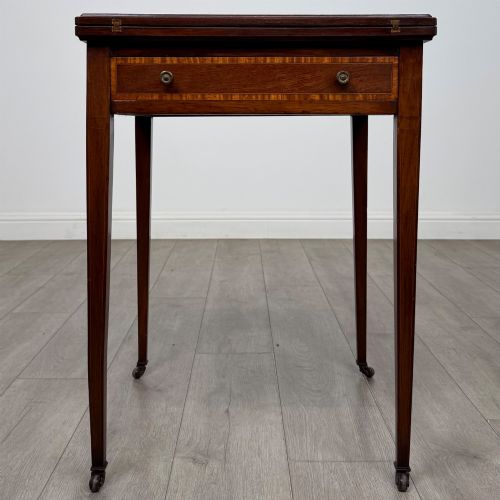
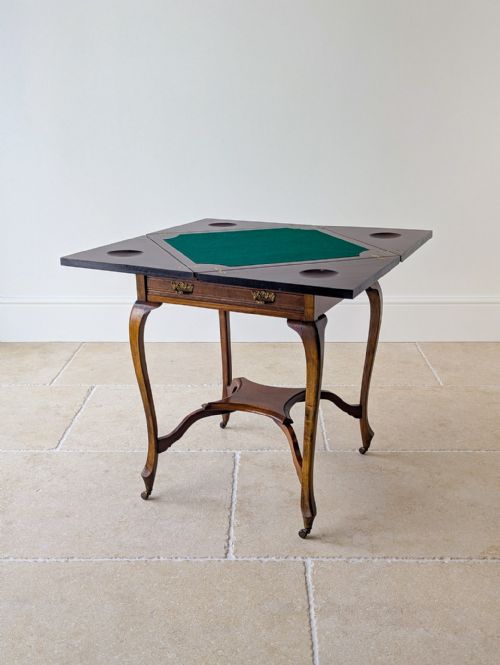
Vintage gaming furniture encompasses specialised tables and scoreboards designed for card games, chess, and billiards across the nineteenth and twentieth centuries. When exploring vintage gaming furniture, the most frequent discoveries include Edwardian and Victorian mahogany envelope card tables alongside rosewood chess tops.
The selection spans versatile folding tables, nests of tables with integrated chess boards, and larger score cabinets built for dedicated rooms. Pieces range from French beech game blocks to Anglo-Indian rosewood designs and Arts and Crafts walnut tables.
Materials and construction
Craftsmen built these pieces primarily using dense hardwoods such as mahogany, walnut, rosewood, and oak, often accented with satinwood, boxwood, and brass hardware. Surfaces frequently incorporate baize playing cloths for card games and intricate marquetry inlay for chess and board games.
Structural forms rely on folding mechanisms, swivel tops, and envelope folds that conceal specialised storage for playing pieces. Joinery traditions from the Victorian, Edwardian, and earlier periods ensure stability across multi-functional tables and score cabinets.
Vintage Gaming Furniture Retail Price Guide 2026
Typical asking prices for vintage gaming furniture among the pieces listed under this phrase on Sellingantiques today, from the lower quarter to the upper quarter. They describe what is for sale here now, not the wider market.
Distinctions in quality
Quality rests upon the precision of the mechanical folding mechanisms and the integrity of the timber framing. Superior examples feature seamless operation in envelope and revertable tables, alongside crisp marquetry and well-preserved original baize.
Refinement in carving, hand-painted details, and the depth of wood grain figure prominently in the hierarchy of these pieces. Maker attribution and the retention of original hardware further elevate the standing of individual tables and scoreboards.
Epstein and Co·Orme and Sons Manchester·Thurston·Thonet·Howard and Son's
The Vintage Gaming Furniture Glossary
- Envelope card table
- A table with a pivoting top composed of four triangular flaps that fold open like an envelope to reveal a baize-lined playing surface. This clever mechanism typifies Edwardian design.
- Baize
- A coarse woolen fabric, traditionally green, used to line the playing surfaces of card and gaming tables. It provides a smooth texture that protects both cards and the underlying wood.
- Revertable table
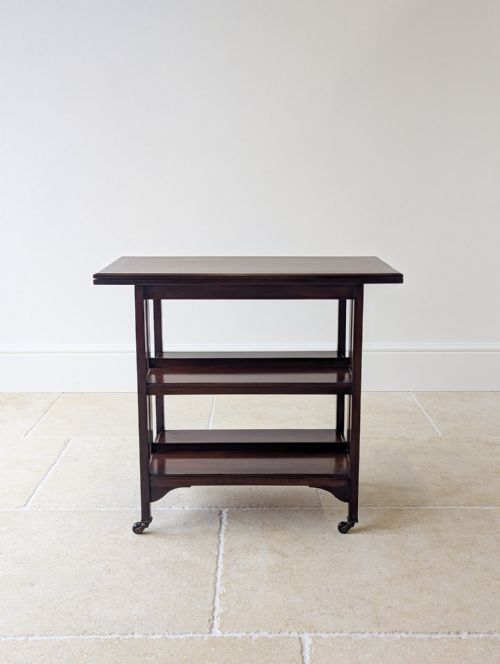
- A dual-purpose piece of furniture featuring a top that reverses or flips to transform from a standard coffee or side table into a gaming surface. These designs maximise utility in smaller spaces.
- Quartetto nest
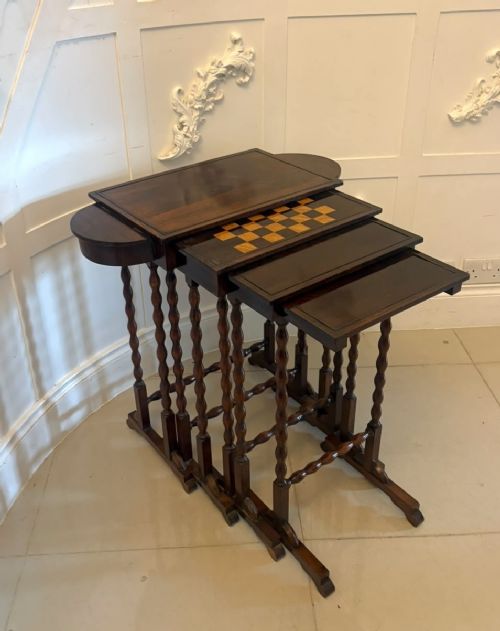
- A set of four graduating tables that fit neatly beneath one another. Evidence shows examples integrated with chess boards on the top surface.
- Marquetry
- The art of applying decorative veneer pieces in wood, brass, and other materials to form geometric or pictorial designs. It frequently decorates the tops of chess and gaming tables.
Vintage Gaming Furniture: Frequently Asked Questions
What are revertable gaming tables?
Revertable gaming tables are multi-functional pieces designed to switch between daily domestic use and evening entertainment. The top surface typically flips or rotates to expose a specialised gaming layout on the reverse.
This engineering allowed households to maintain a standard side or coffee table that could instantly convert for card games or chess.
Were chess boards always separate?
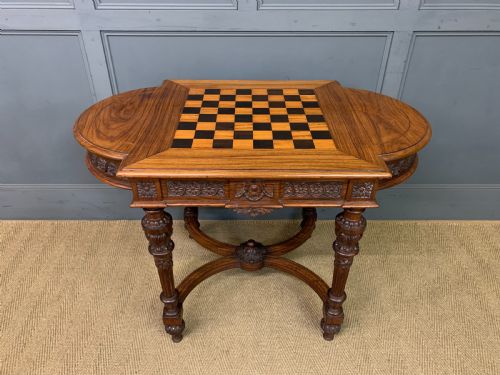
Many vintage gaming tables integrated the board directly into the top through marquetry inlays using contrasting timbers like boxwood and walnut. Other examples utilised removable or sliding panels that revealed a felt-lined well beneath.
Nests of tables and specialised side tables also incorporated fixed chess surfaces to save space in Victorian and Edwardian drawing rooms.
What is a scoreboard cabinet used for?
Scoreboard cabinets were mounted on the walls of billiard and snooker rooms to track scores during matches. They house sliding markers, chalk holders, and occasionally storage space for accessories.
Built by specialist makers in oak and walnut, these pieces reflect the popularity of cue sports in late Victorian and Edwardian homes.