

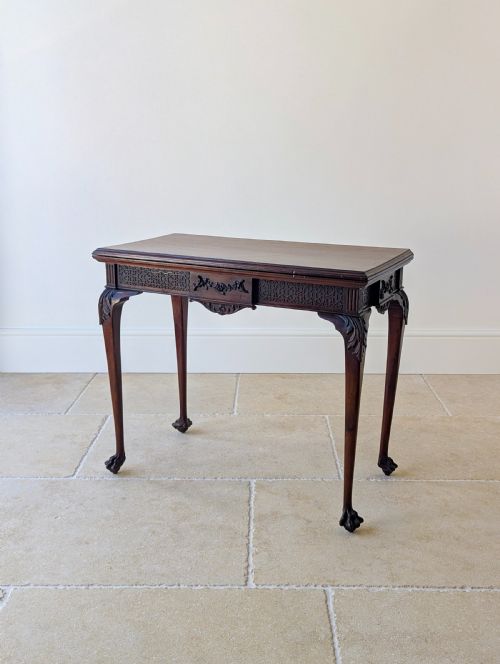
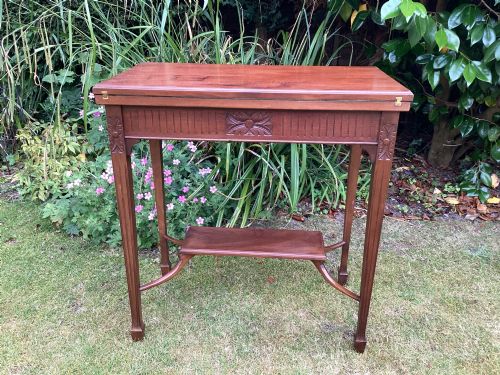


Edwardian Carved Games Table
An edwardian carved games table brings formal assembly and evening play together in mahogany or walnut.
Edwardian Carved Games Table
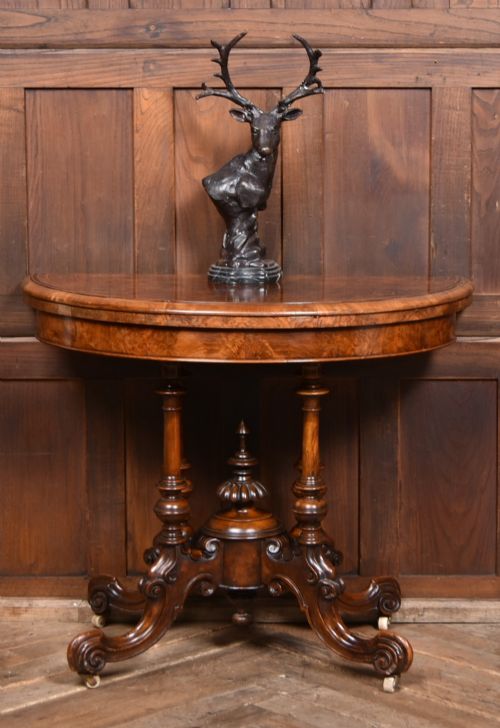
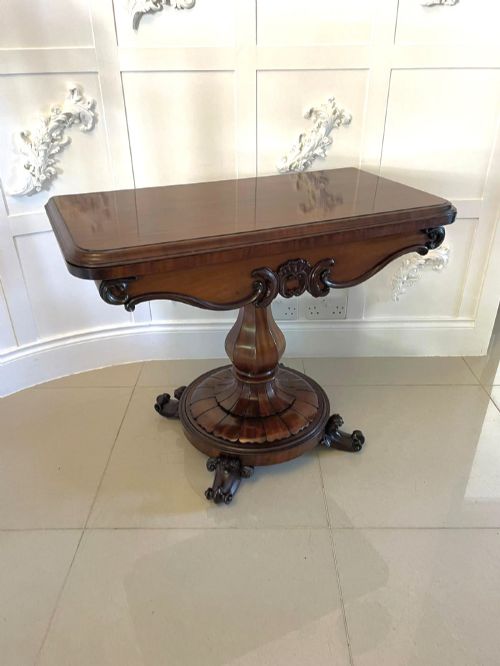
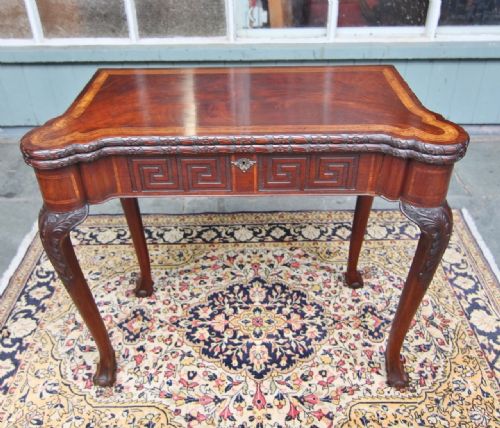
An edwardian carved games table serves as a versatile piece of furniture designed for card playing and social gatherings within the home. Buyers searching for an edwardian carved games table generally encounter mahogany or walnut surfaces featuring fold-over mechanisms that conceal baize-lined playing areas.
The selections span periods such as the Edwardian era, Victorian era, and the 1920s, alongside object types including card tables, tea tables, and occasional tables. Many incorporate styles like Queen Anne Revival and Georgian influences, executed in woods such as burr walnut, rosewood, and satinwood inlay.
While the phrase specifies the Edwardian period, the selection reflects related pieces in mahogany and walnut spanning the nineteenth and early twentieth centuries. These tables often double as side tables or console tables when folded shut against a wall.
Markers of Distinction
Quality rests upon the selection of figured timbers like burr walnut and the crispness of the carved details along the legs and frieze. Superior examples display precise joinery in the fold-over mechanism and seamless alignment when the top is closed.
The integration of marquetry inlay, ebony stringing, or specialised hardware distinguishes finer workshop productions from simpler utilitarian tables. Additionally, the condition of the internal timber and the stability of the folding leaves dictate the overall standing of the piece.
Edwardian Carved Games Table Retail Price Guide 2026
Typical asking prices for edwardian carved games table among the pieces listed under this phrase on Sellingantiques today, from the lower quarter to the upper quarter. They describe what is for sale here now, not the wider market.
Oversized backgammon and games counters occasionally accompany the tables for serious evening tournaments.
Edwards & Roberts·Howard & Sons Ltd·Maple & Co
The Edwardian Carved Games Table Glossary
- Fold-Over Top
- A hinged table surface that opens to double its closed area, revealing a baize-lined interior for card games. This mechanism allows a compact console to transform into a full table.
- Burr Walnut
- Timber taken from a tree growth featuring swirling, knotty grain patterns that create highly decorative surfaces. Cabinet makers used veneers of this wood on prominent table tops.
- Demi-Lune
- A half-moon shape used to describe tables with a curved front and a straight back edge. These fit neatly against walls when closed.
- Marquetry
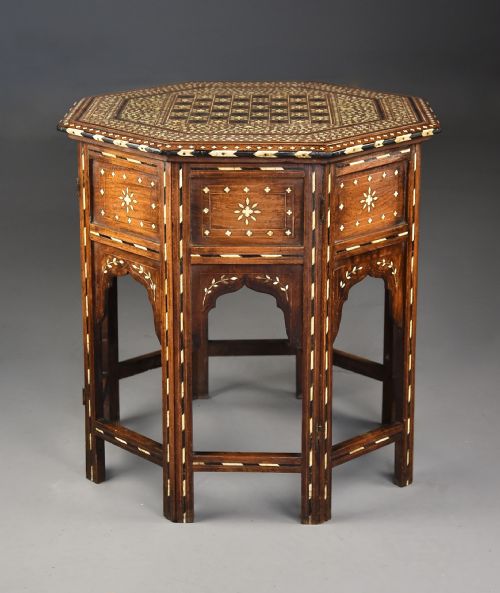
- Decorative patterns formed by fitting together thin slices of various woods, metals, or bone onto a structural surface. It appears frequently on table borders and panels.
- Frieze
- The horizontal band of woodwork situated directly beneath the table top. This area often contains inlay or carved moulding.
Edwardian Carved Games Table: Frequently Asked Questions
How do these tables function?
The top surfaces are hinged to fold open, revealing a playing surface lined with baize or felt for cards and board games.
When closed, the pieces function as standard console, side, or occasional tables against a living room wall.
What woods are most common?
Mahogany and walnut dominate the selection, often enriched with burr walnut veneers, rosewood, or satinwood inlay.
Some examples also incorporate ebony, oak, or goncalo alves within their construction.
Are all these tables from the Edwardian period?
The selections span multiple eras, including the Victorian period, Regency period, and the 1920s alongside Edwardian examples.
Revival styles such as Queen Anne and Hepplewhite also appear across the listings.
Can these be used daily?
Their sturdy hardwood frames and functional folding mechanisms make them suitable for regular placement in sitting rooms.
Care should be taken to protect the polished wood surfaces and interior baize from moisture and heavy wear.