
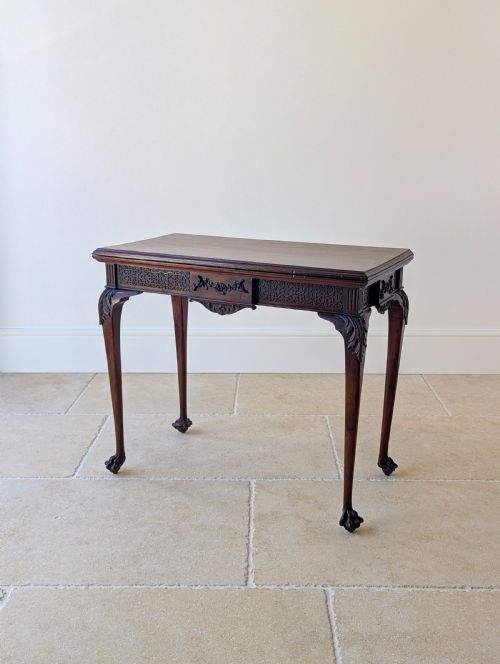


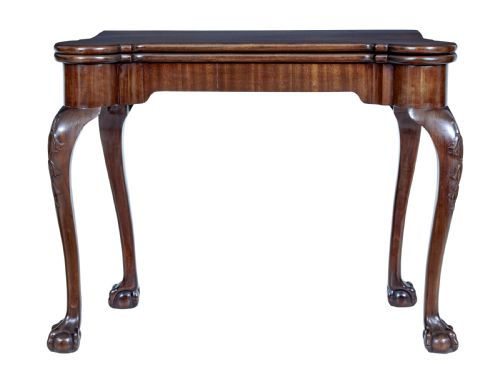


Chippendale Style Card Table
These chippendale style card table pieces are classic folding game surfaces built for card play and social rooms.
Chippendale Style Card Table
A chippendale style card table is a folding furniture form designed for eighteenth-century pastimes and later revival interiors. These tables serve primarily as dual-purpose items, opening from a compact console into a baize-lined surface for cards.
The selections available here range from eighteenth-century Georgian originals in solid walnut and mahogany to Edwardian and later nineteenth-century revival pieces. Buyers frequently encounter Edwardian mahogany examples alongside earlier George II and George III forms.
Makers and workshops adapted the distinctive carved details of the mid-eighteenth century for later drawing rooms. Surviving pieces encompass plain timber tops as well as serpentine shapes and folding tea table configurations.
How they were made
Cabinetmakers constructed these tables predominantly in mahogany and walnut, utilising both solid timbers and burr walnut veneers. Timber selection dictated the structural integrity of the folding leaf and the smoothness of the open surface.
Internal mechanisms frequently incorporate brass hinges and swing-leg supports to bear the weight of the open top. Surfaces designed for play are lined with baize to cushion cards and quieten the movement of counters during games.
Chippendale Style Card Table Retail Price Guide 2026
Typical asking prices for chippendale style card table among the pieces listed under this phrase on Sellingantiques today, from the lower quarter to the upper quarter. They describe what is for sale here now, not the wider market.
Materials recorded across these tables include mahogany, burr walnut, solid walnut, and brass.
What varies in quality
The standard of a chippendale style card table rests upon the crispness of its timber carving and the fidelity of its revival detailing. Earlier eighteenth-century originals display hand-carved elements integral to the structural frame, whereas later pieces rely on applied ornamentation.
Joinery execution in the folding mechanism and the stability of the timber hinges dictate daily usability. Superior examples maintain alignment when closed and present an even colour across both leaves of the top.

Edwards & Roberts
The Chippendale Style Card Table Glossary
- Baize
- A coarse woolen fabric used to line the playing surface of card and games tables. It provides a durable, tactile mat for handling cards.
- Fold-over
- A table top construction featuring a hinged leaf that doubles the surface area when opened. This design conceals the gaming well when closed against a wall.
- Serpentine
- A curved shape characterised by a convex centre flanked by concave ends. It adds visual movement to the front edge of a mahogany table.
- Chippendale Revival
- A late nineteenth and early twentieth-century design movement recreating mid-eighteenth-century aesthetics. Makers during this period reinterpreted classic proportions using contemporary workshop methods.
Chippendale Style Card Table: Frequently Asked Questions
What is a chippendale style card table?
A chippendale style card table is a folding timber furniture piece created for card games and social gatherings. These tables feature a hinged top that opens to reveal a baize-lined playing area.
Originating in eighteenth-century forms, the style reappeared in later revival periods. They function as console tables when closed and playing surfaces when open.
How were card tables used originally?
Georgian households utilised these tables for evening card games such as whist, quadrille, and ombre. The folding top allowed the furniture to sit flush against a drawing room wall when not in use.
Wealthy patrons commissioned specific woods to match their interior panelling and seating. They served as both functional gaming items and decorative side tables.
How do I tell an eighteenth-century table from a revival piece?
Eighteenth-century tables display period construction methods, timber ageing, and hand-tooled joinery characteristic of early workshops. Makers built these using solid mahogany or walnut with structural variations unique to the period.
Revival pieces from the Edwardian era or the late nineteenth century exhibit later manufacturing techniques and standard machine-cut components. Examining the interior pivot mechanisms and the timber underside clarifies the manufacturing date.
Where should I place a card table in a modern room?
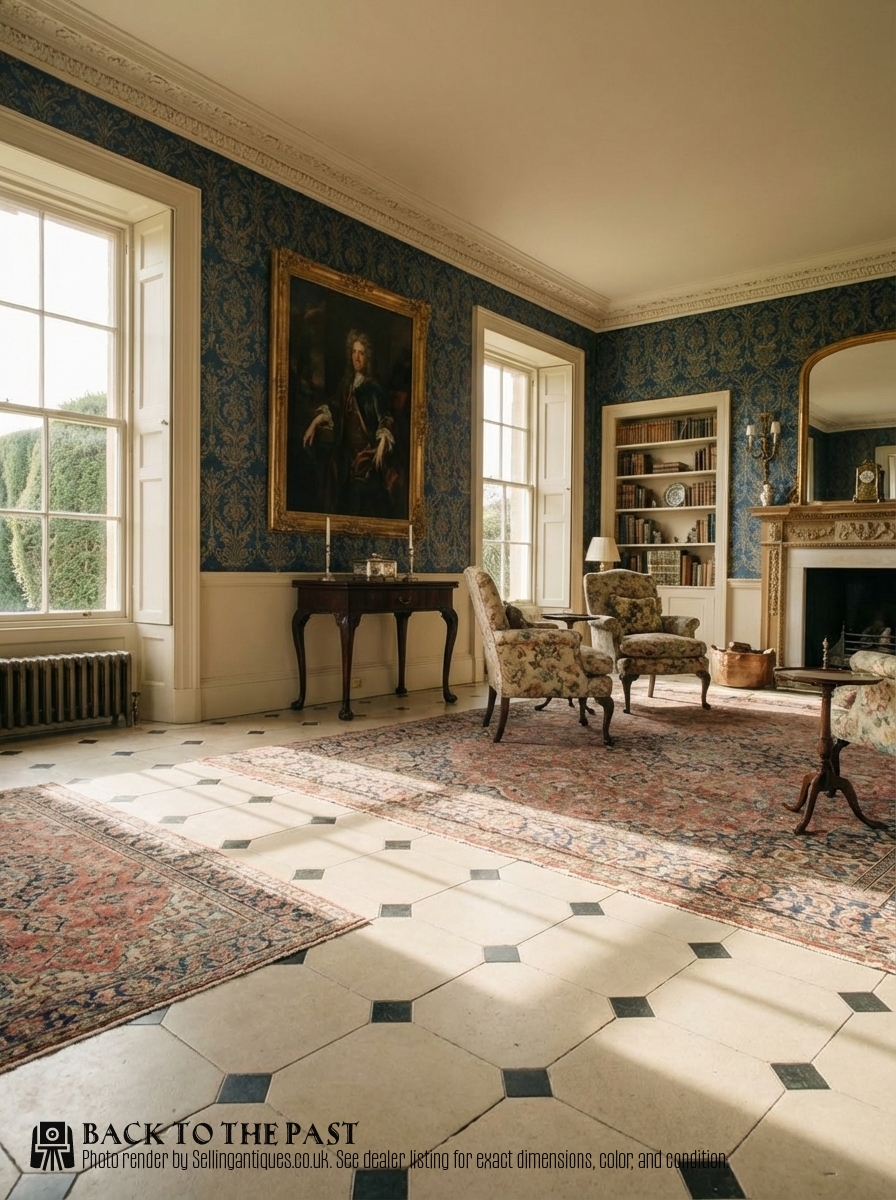
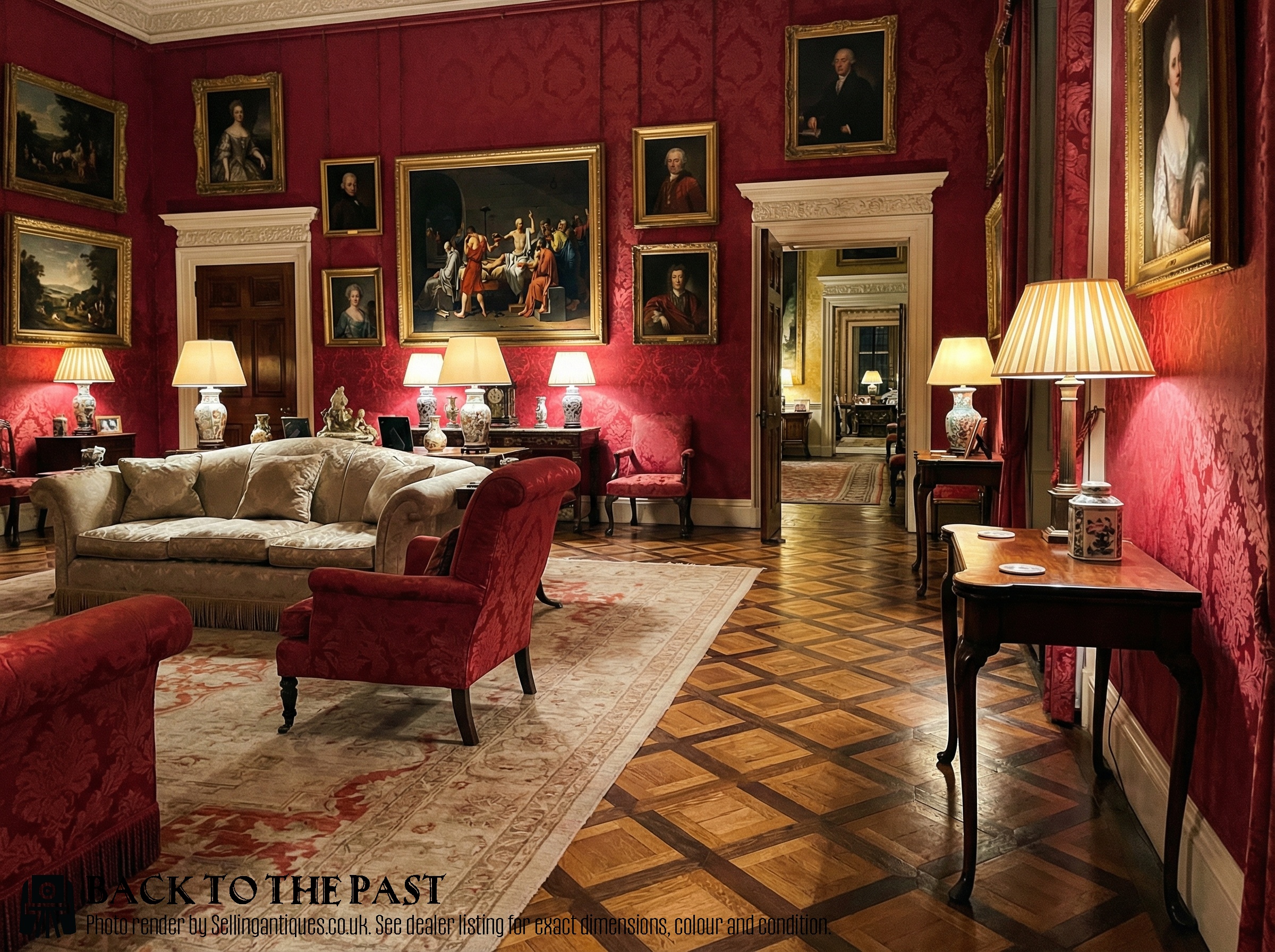
These tables fit neatly against living room or hallway walls in their closed position as side tables. The narrow profile makes them suitable for smaller spaces without dominating the room.
Opening the top requires clearance around the folding leaf and swing leg. They work effectively behind sofas or beneath windows where their timber grain is visible.