
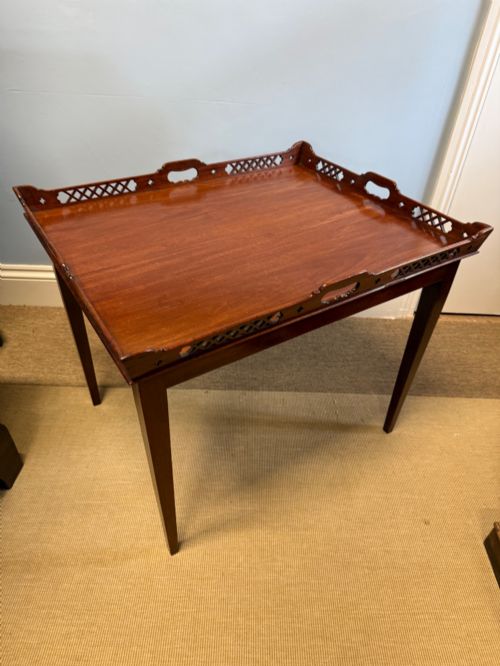


Fretwork Tea Table
These fretwork tea table examples span the eighteenth to the twentieth centuries, offering intricate pierced wooden decoration for serving tea or displaying objects.
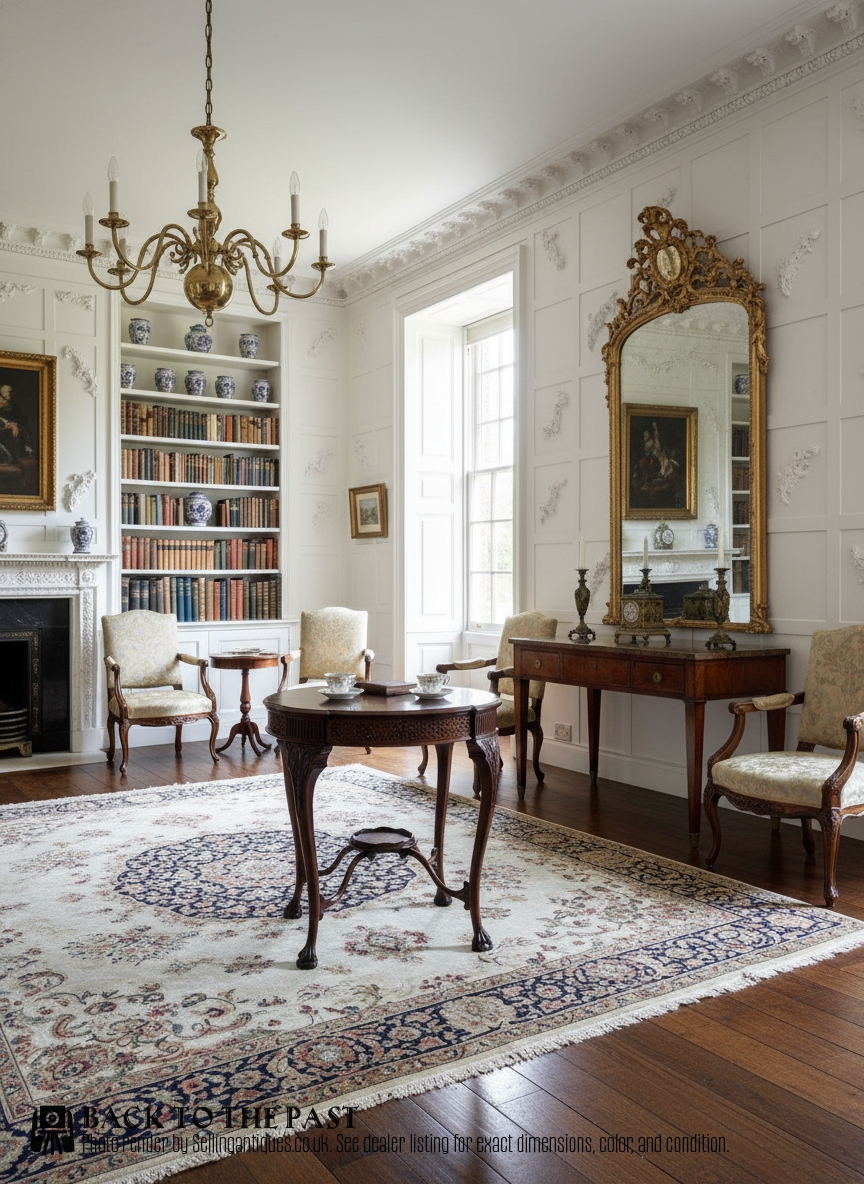
Fretwork Tea Table
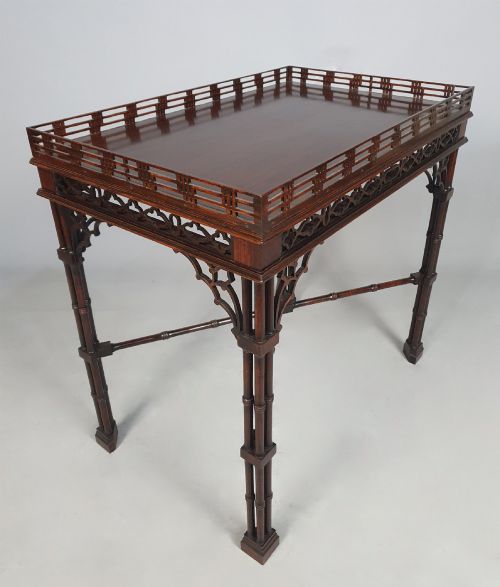
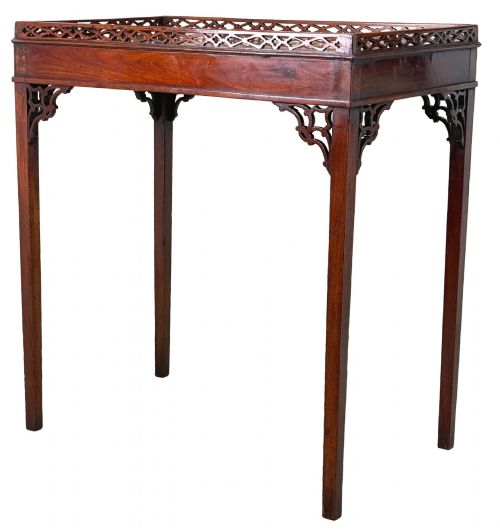
A fretwork tea table brings pierced ornamental woodwork into domestic spaces for the service of tea or general display. These forms emerge in eighteenth-century Georgian workshops and return during later revival periods.
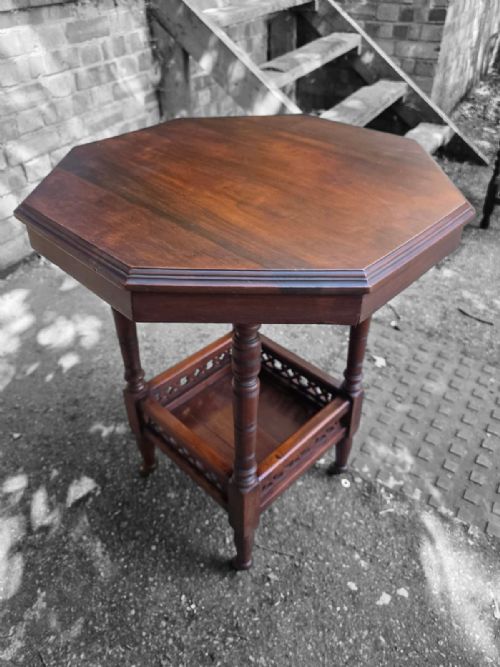
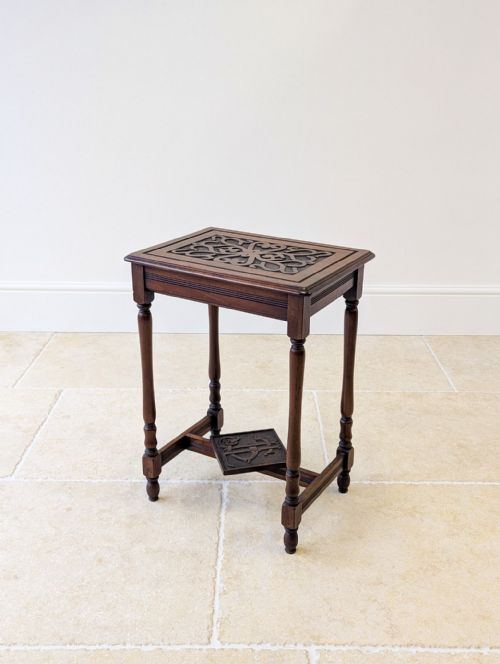
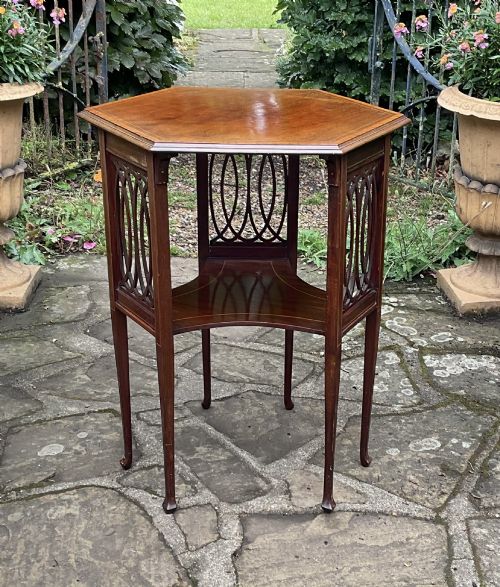
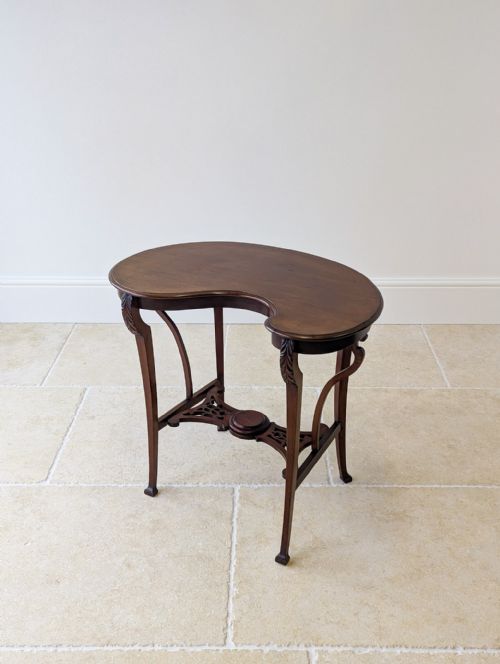
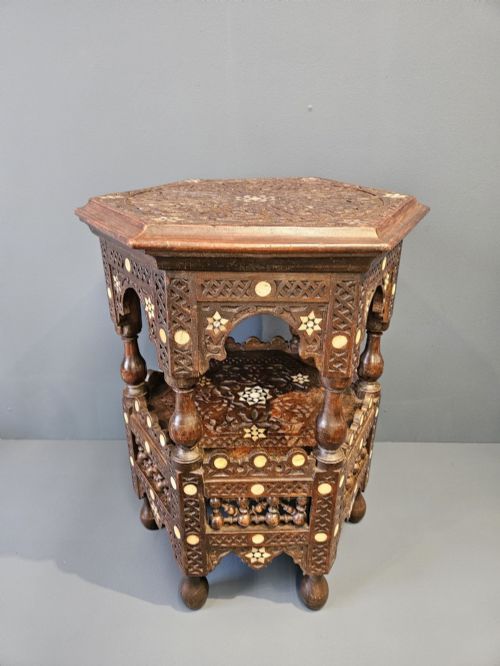
The pieces appearing on this page include eighteenth-century originals alongside nineteenth-century Victorian and Edwardian interpretations. Makers draw upon Chippendale designs, Gothic motifs, and Anglo-Indian carving traditions.
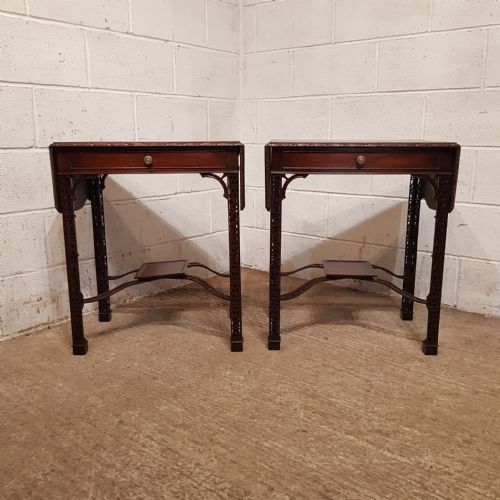
Forms extend beyond standard tea tables to encompass silver tables, Pembroke tables, card tables, and occasional stands. Mahogany provides the primary timber, complemented by teak, walnut, satinwood, padauk, and brass inlay.
Materials and construction
Cabinetmakers select dense hardwoods, predominantly mahogany, alongside teak, walnut, padauk, and satinwood. These timbers provide the structural strength required for delicate pierced galleries and pierced stretchers.
Pierced fretwork relies on precise hand-sawing to create intricate geometric, interlaced, or organic patterns along aprons and galleries. Joinery methods include concertina actions for card tables, drop leaves, and fitted drawers.
Fretwork Tea Table Retail Price Guide 2026
Typical asking prices for fretwork tea table among the pieces listed under this phrase on Sellingantiques today, from the lower quarter to the upper quarter. They describe what is for sale here now, not the wider market.
Design influences span Chippendale, Gothic Revival, Arts and Crafts, Anglo-Indian, and Art Nouveau styles.
Assessing quality
Quality rests upon the crispness and depth of the pierced fretwork and carving. Sharp interior angles in the pierced patterns and well-defined mouldings distinguish finer workshop output from simpler production.
The selection of timber grain and the integrity of original joints dictate the enduring standing of each piece. Superior examples maintain structural stability despite the inherent fragility of pierced decorative elements.
Edwards and Roberts
The Fretwork Tea Table Glossary
- Fretwork
- Ornamental perforated or pierced wood pattern created by sawing through thin timber. This technique defines the visual character of the gallery or apron.
- Silver table
- A high-table form designed for displaying silver tea services, often featuring a raised pierced gallery edge. Examples appear from the eighteenth century through later revival periods.
- Pembroke table
- A drop-leaf table with hinged flaps on either side, frequently fitted with a drawer. Eighteenth-century and nineteenth-century makers utilised this versatile form.
- Concertina action
- An expanding frame mechanism used on folding card tables to support the opened top. This mechanical feature allows the rear legs to extend symmetrically.
- Padauk
- A dense tropical hardwood displaying rich reddish-brown colouration. Makers utilise this durable material for carved and fret-cut furniture.
Fretwork Tea Table: Frequently Asked Questions
What is a fretwork tea table used for?
These tables serve primarily for displaying objects, holding tea equipment, or functioning as occasional side furniture in a room.
The raised pierced galleries prevent items from sliding off the surface while adding decorative refinement to the silhouette.
How do I date a fretwork tea table?
Dating relies on timber selection, structural joinery methods, and the specific design vocabulary employed by the maker. Eighteenth-century pieces exhibit period joinery and hand-cut patination, whereas Victorian and Edwardian revivals reflect later manufacturing techniques.
Comparing the style against documented Chippendale, Gothic Revival, or Arts and Crafts periods helps narrow the decade of manufacture.
Are these tables sturdy enough for daily use?
Solid hardwood construction provides adequate strength for normal placement of decorative items and occasional service. However, the delicate pierced fretwork requires careful handling to prevent accidental impact damage.
Positioning the table away from direct heat sources and heavy traffic areas preserves the integrity of the joints and timber.
What is the difference between an original and a revival piece?
Original eighteenth-century pieces date from the Georgian period of production and reflect contemporary domestic requirements of that era. Revival pieces date from the nineteenth or twentieth century, reinterpreting earlier Chippendale or Gothic aesthetics.
Both categories utilise quality hardwoods and detailed hand-carved or pierced elements, but differ in their chronological origin.