
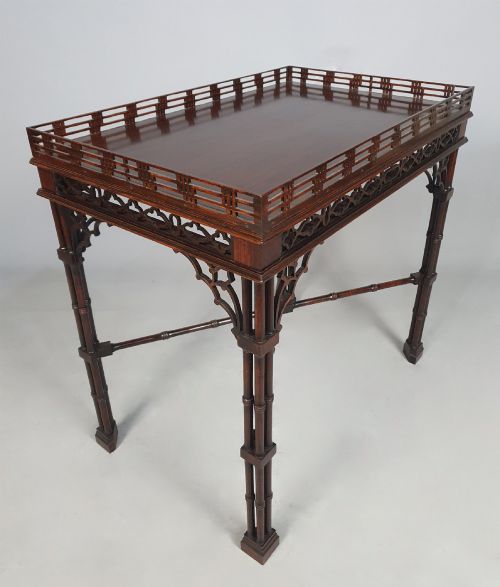
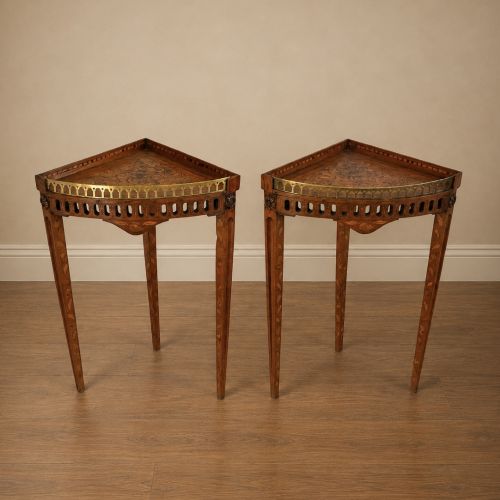

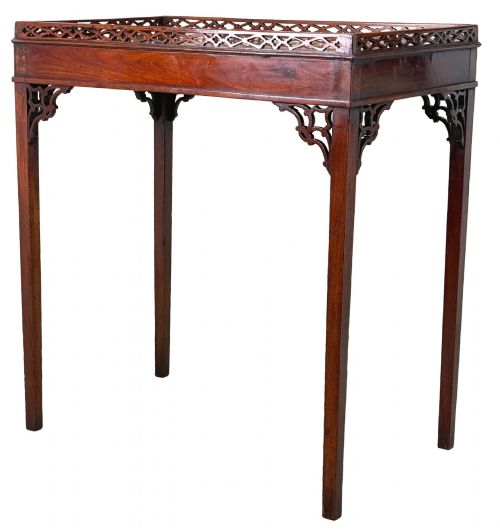
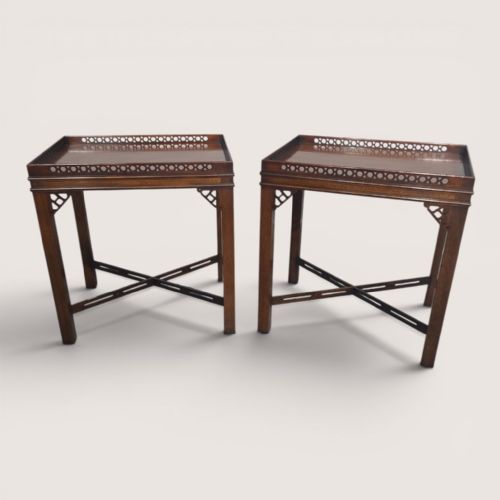
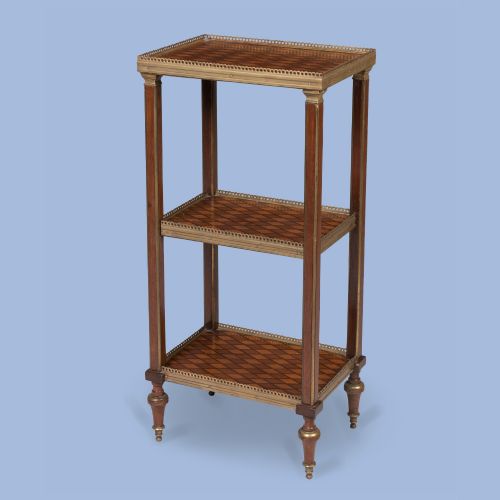
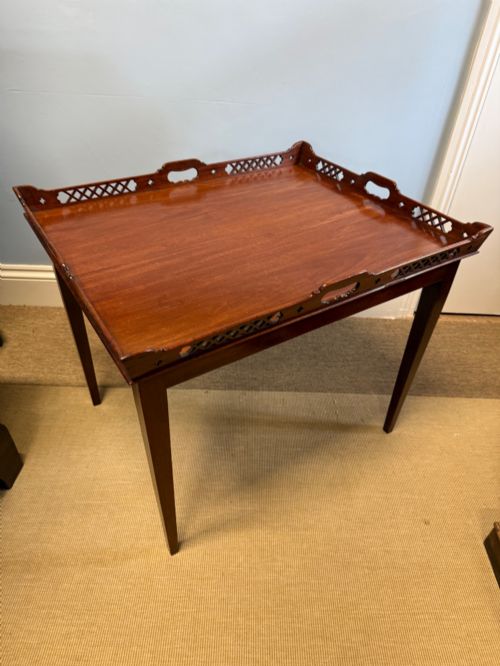


Pierced Gallery Side Table
A pierced gallery side table offers raised edges and practical surfaces, combining fine timber and careful joinery to anchor a traditional room.
Understanding the Pierced Gallery Side Table
A pierced gallery side table combines useful surface area with raised perimeter railings designed to secure small objects. The selection here spans the eighteenth and nineteenth centuries alongside Edwardian and later periods.
The forms range from compact bedside night tables and wine tables to two-tier etageres and occasional centre tables. Mahogany, rosewood, kingwood, oak and ebonised hardwood provide the structural foundations.
Stylistic influences reflect Georgian, Chippendale, Louis XVI, Aesthetic Movement and Arts & Crafts traditions. Each piece demonstrates the specific proportions and decorative motifs favoured in its era.
Materials and Construction
Joiners and cabinetmakers utilised dense hardwoods such as mahogany and figured oak, often incorporating brass or gilt bronze ormolu mounts. Ebonised finishes provided a stark, dark contrast on specific nineteenth-century examples.
Perimeter galleries were pierced or fretted from solid timber or metal, requiring precise hand-sawing and filing. Secondary woods and traditional joinery methods secured the frames and tiered structures.
Retail Price Guide 2026
Typical UK retail prices for pierced gallery side table, calculated from the Sellingantiques database of over a million retail prices indexed since 2003. This retail price guide relies exclusively on Sellingantiques data; no external sources or auction records are used, so the figures do not describe the wider market.
Listings feature items from the eighteenth, nineteenth and early twentieth centuries, constructed in mahogany, oak, rosewood and ebonised hardwood.
Distinctions in Quality
The standard of a pierced gallery side table depends on the crispness of the pierced fretwork and the selection of timber grain. Figured veneers and well-chosen solid mahogany distinguish finer workshops from standard production.
Proportion and structural integrity separate simpler utility pieces from elaborate revival items. Subtle details in the turning of legs and the integration of brass or ormolu mounts elevate the overall execution.
The Pierced Gallery Side Table Glossary
- Gallery
- A raised rim or railing around the edge of a tabletop, frequently pierced or fretted to prevent items from sliding off.
- Etagere
- A piece of furniture consisting of a set of open shelves for displaying small objects or serving.
- Guéridon
- A small French table, often round, supported by one or more columns or figures.
- Ormolu
- Gilt bronze applied as a decorative mount to furniture, common in French neoclassical and revival pieces.
- Ebonised
- Wood treated with a stain or finish to imitate ebony, popular during the nineteenth century.
Frequently Asked Questions
What is a pierced gallery side table?
A pierced gallery side table is a small support surface featuring a raised, openwork railing around its edge. This decorative yet functional boundary kept glassware, silver or small items secure.
The form developed across the eighteenth and nineteenth centuries, appearing in various woods and revival styles to serve multiple domestic functions.
Where were these tables used?
These tables sat beside seating furniture to hold tea wares, books or lighting in reception rooms. Bedside variants served bedrooms for holding night-time necessities.
Two-tier versions and etageres provided additional display space for ceramics and decorative objects without occupying a large floor area.
How do I date a side table?
Dating relies on examining the timber species, construction joints, turning profiles and decorative vocabulary. Georgian pieces tend to feature solid mahogany and restrained carving.
Later Edwardian revival items often incorporate machine-sawn elements alongside traditional hand assembly, reflecting the manufacturing standards of the period.
How do I care for antique timber?
Maintain antique timber by keeping pieces away from direct heat sources and sudden humidity changes. Regular dusting with a soft, dry cloth preserves the polished surface.
Avoid modern silicone sprays, relying instead on traditional beeswax applied sparingly to nourish the dry wood over time.