

Edwardian Mahogany Games Table
An edwardian mahogany games table offers clever folding tops and rich timbers, bringing period social pastimes straight into a modern room.

Forms and Origins
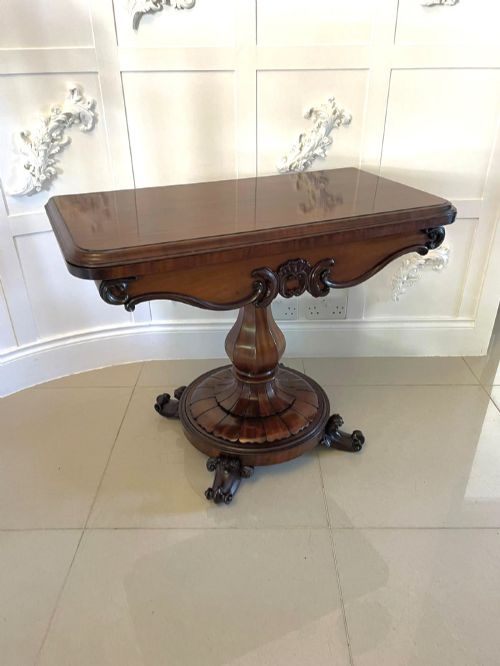
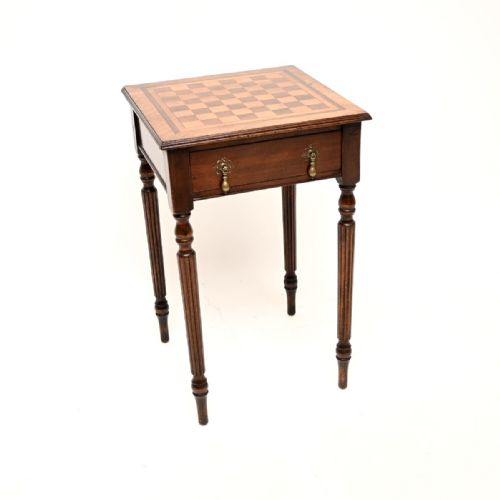
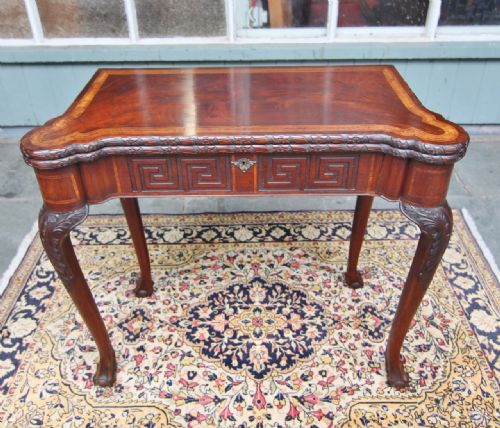
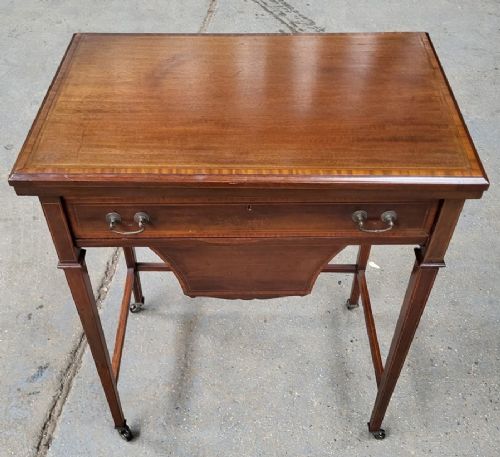
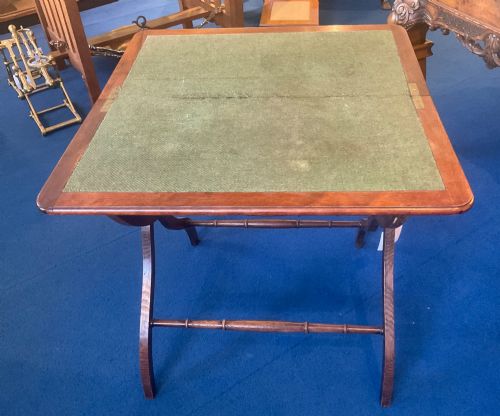
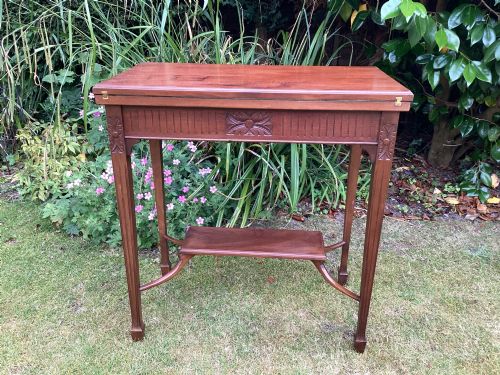
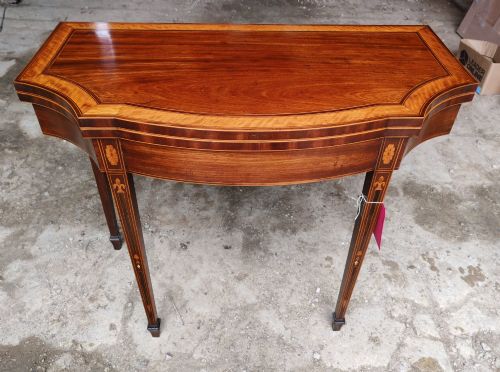
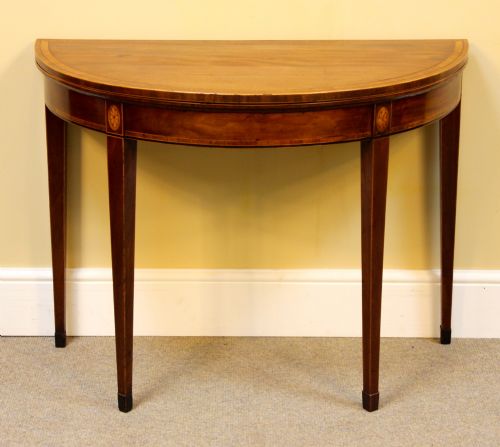
An edwardian mahogany games table brings together practical furniture and social pastimes from the turn of the twentieth century. These pieces span card tables, envelope tables, and demi-lune designs created for bridge, chess, and general gaming.
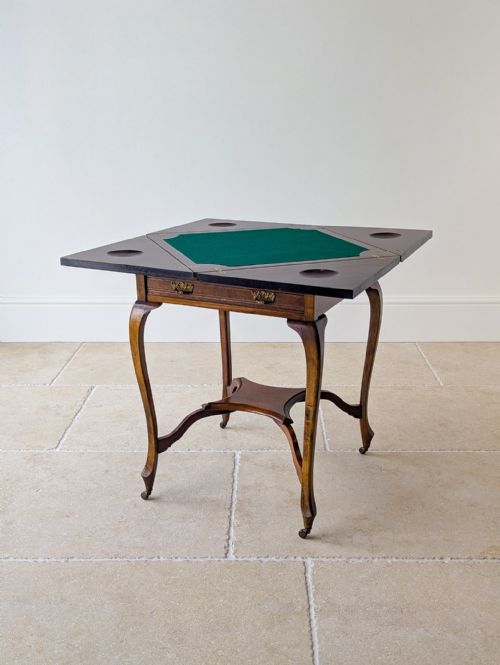
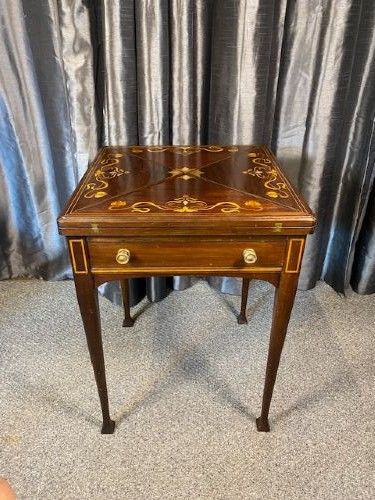
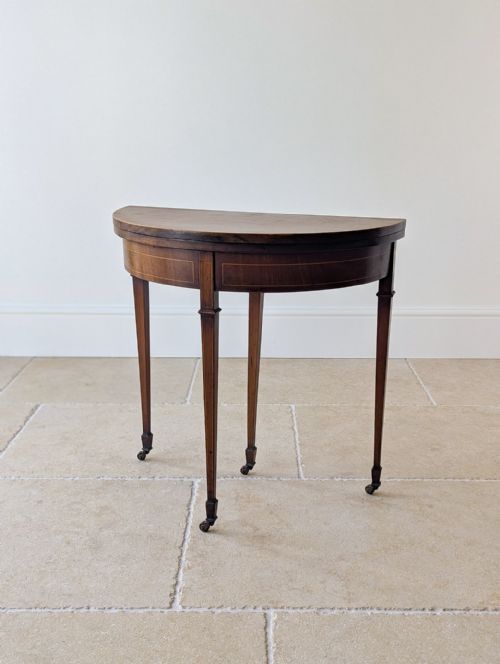
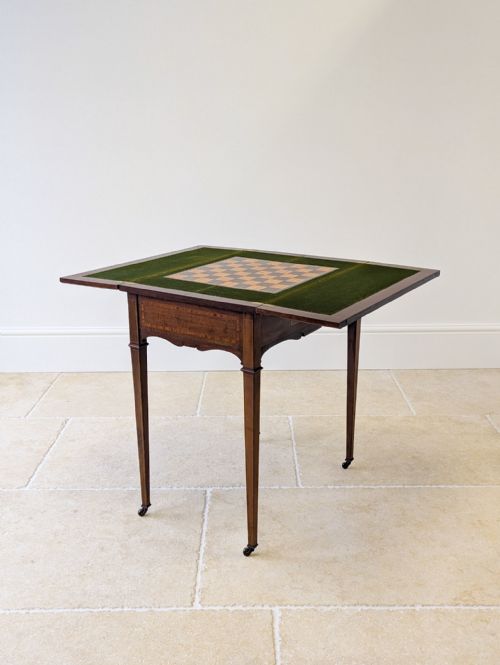
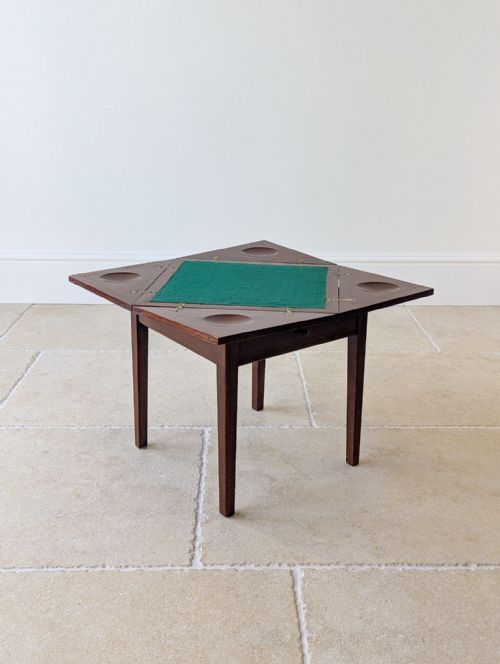
Envelope card tables dominate the selection, featuring four triangular flaps that fold outward to reveal a baize playing surface. Other common formats include fold-over tops, swivel tops, and butterfly tops supported by tapering legs.
Makers of the period also produced versatile items combining games surfaces with work tables or occasional hall tables. Styles range from plain mahogany to Edwardian Chippendale and Hepplewhite revivals decorated with wood inlay.
Materials and Construction
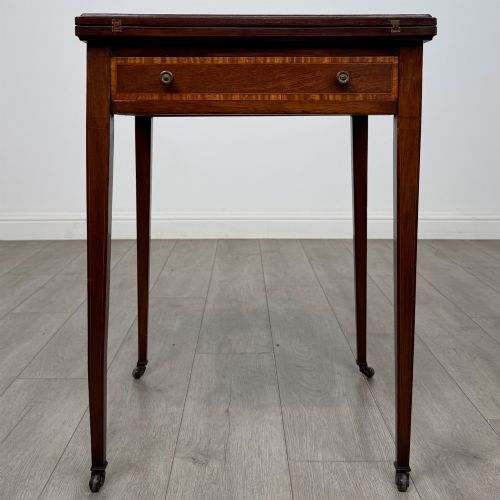
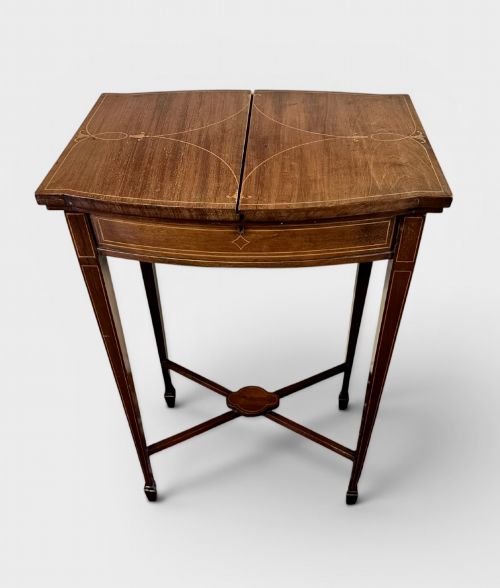
Carpenters built these tables using solid mahogany and figured mahogany veneers, often enhanced with contrasting satinwood inlay. Brass hardware appears on castors and hinges, while interiors commonly use baize for the playing surface.
Folding and swivelling mechanisms required precise joinery to allow tops to rotate, unfold, or reveal hidden compartments and frieze drawers. Inlaid details are carefully set into the timber surfaces to create decorative borders and motifs.
Retail Price Guide 2026
Typical UK retail prices for edwardian mahogany games table, calculated from the Sellingantiques database of over a million retail prices indexed since 2003. This retail price guide relies exclusively on Sellingantiques data; no external sources or auction records are used, so the figures do not describe the wider market.
Listings feature mahogany, satinwood, and brass alongside baize playing surfaces in Edwardian and Edwardian Chippendale Revival styles.
Assessing Quality
Quality rests on the choice of figured mahogany and the crispness of the wood inlay rather than basic decoration alone. Better examples display superior timber selection across the entire folding top and internal surfaces.
The smoothness of the folding or swivelling mechanism indicates the care taken during construction. Well-made pieces also incorporate sturdy tapering legs, sometimes fitted with original brass castors for movement.
Maples·Maple and Co·W Thornhill
The Edwardian Mahogany Games Table Glossary
- Envelope table
- A square card table with four triangular flaps that swivel and fold over diagonally to close the top. When opened, the flaps resemble an open envelope to reveal the baize surface.
- Baize
- A coarse woollen fabric resembling felt, traditionally green, used to line gaming and card tables. It provides a soft, non-slip surface for dealing cards and playing board games.
- Demi-lune
- A half-moon shape used for console and card tables that sit flat against a wall. The straight edge opens outward on hinges to reveal a full circular or square playing area.
- Satinwood
- A durable, yellowish timber native to India and Ceylon, utilised for contrasting decorative inlay. It creates bright geometric lines and floral motifs against dark mahogany.
- Castor
- A small wheel fitted to the base of table legs to permit easy movement across a room. Many period tables include brass castors on tapering legs.
Frequently Asked Questions
What games were played on these tables?
These tables accommodated card games such as bridge and whist, alongside board games like chess and roulette. The various folding and reversible tops were designed to switch between dining, writing, and gaming.
Interior compartments held cards, counters, and small playing pieces. Many tables featured lined surfaces specifically to cushion dice and prevent cards from sliding during play.
How do envelope tables open?
An envelope table operates by lifting and rotating the top section, which triggers the four triangular flaps to unfold in sequence. Each flap drops outward to create a square playing surface supported by the table frame.
Closing the table reverses the action, folding the flaps back into a closed square format that functions as a small occasional table. The clever mechanics allowed users to clear away a card game quickly.
Where should I place a games table?
These tables work well as console or hall tables against a wall when folded shut, taking up minimal floor space in a living room or study. Placing them in a central spot allows the folding top to open fully for display or occasional use.
Because many examples feature finished timber on all sides, they do not need to rest directly against a wall. Their compact proportions suit smaller rooms as well as larger entertaining spaces.
How do I identify an Edwardian piece?
Edwardian tables typically date between eighteen ninety and nineteen ten, combining mahogany construction with delicate satinwood inlay and Edwardian Chippendale revival styles. The presence of tapered legs, brass castors, and specific mechanical folding actions points directly to this era.
Cabinet makers such as Maple and Co stamped certain pieces, while construction methods like glued veneer over secondary timbers help confirm the period. Comparing the proportions and decorative motifs against dated examples aids identification.