
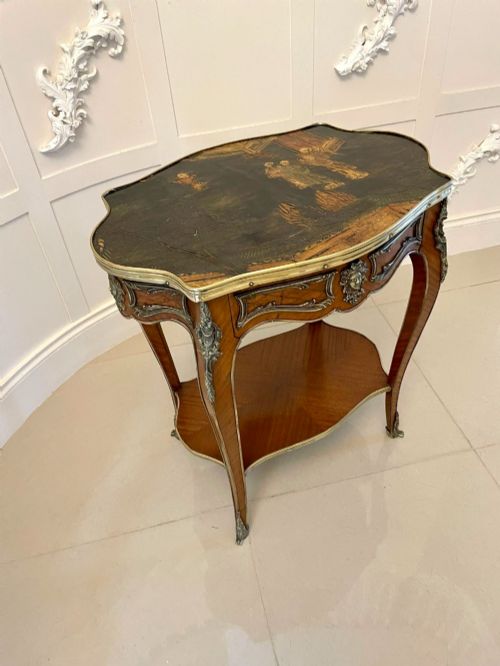
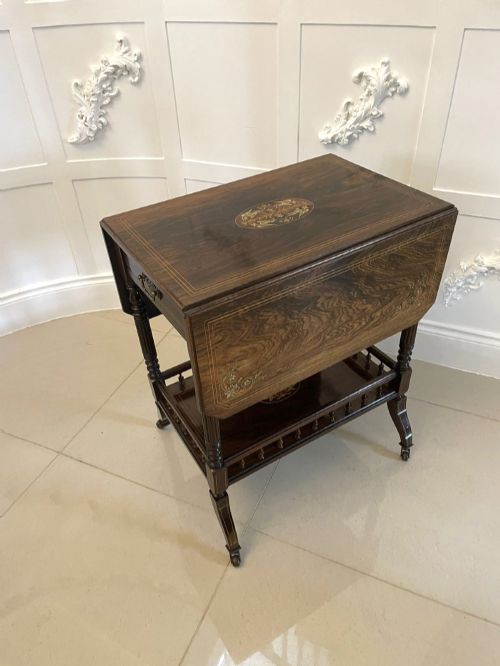
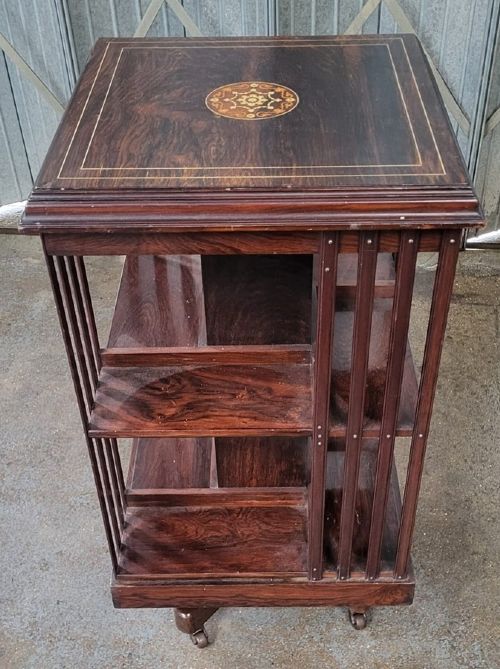
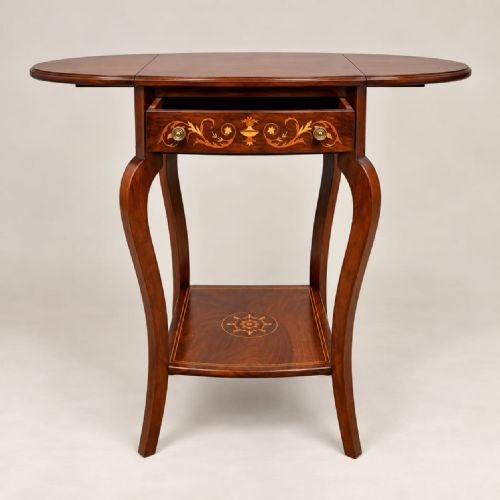
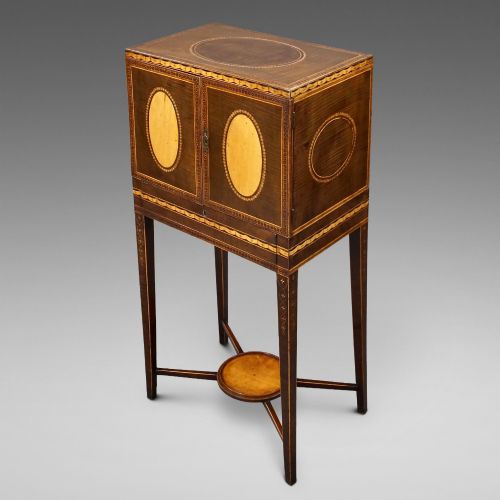
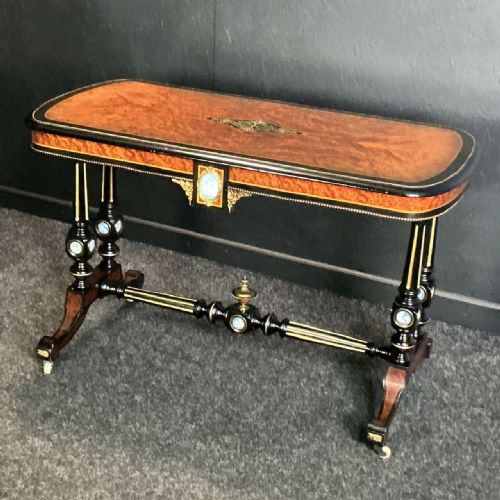
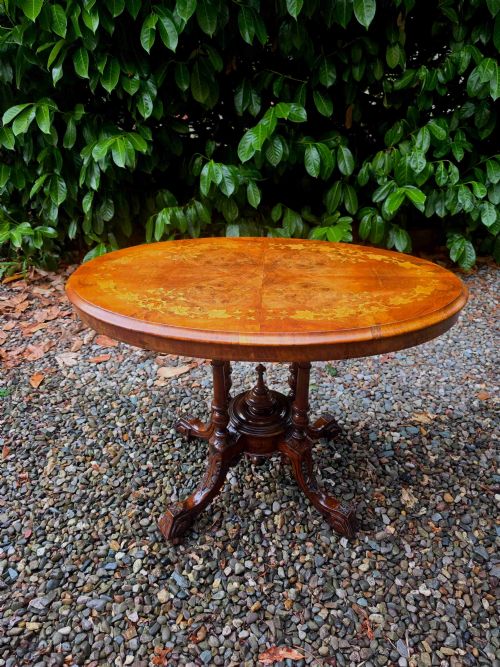
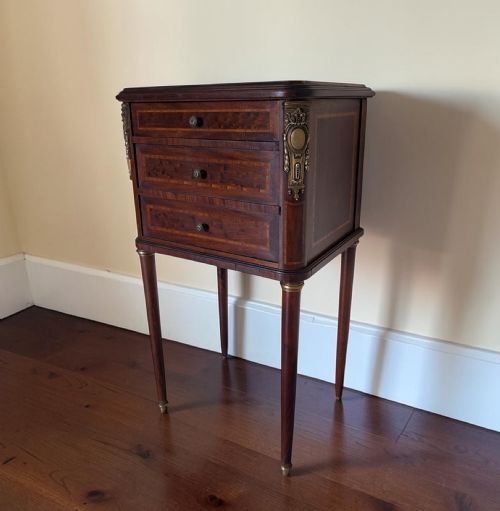
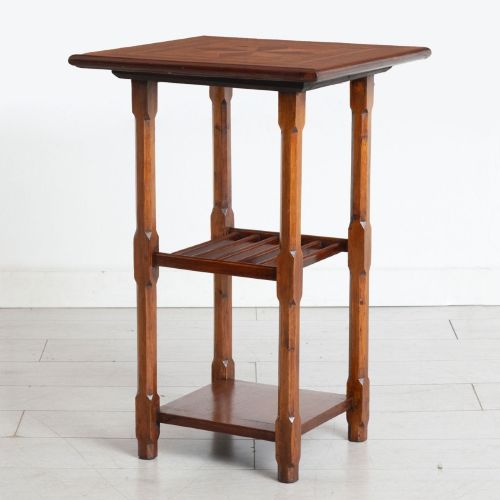
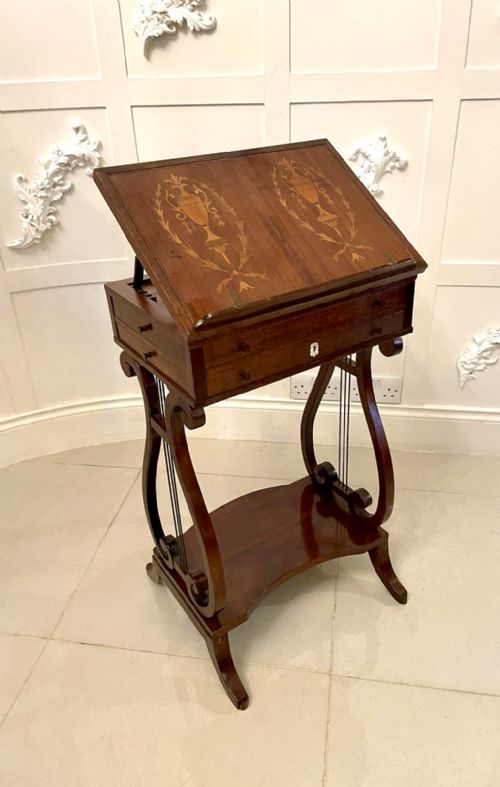
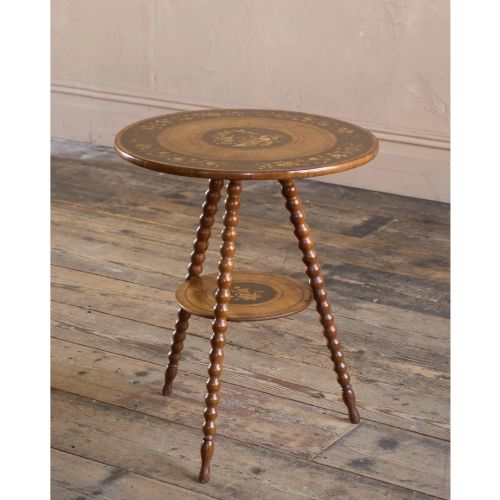
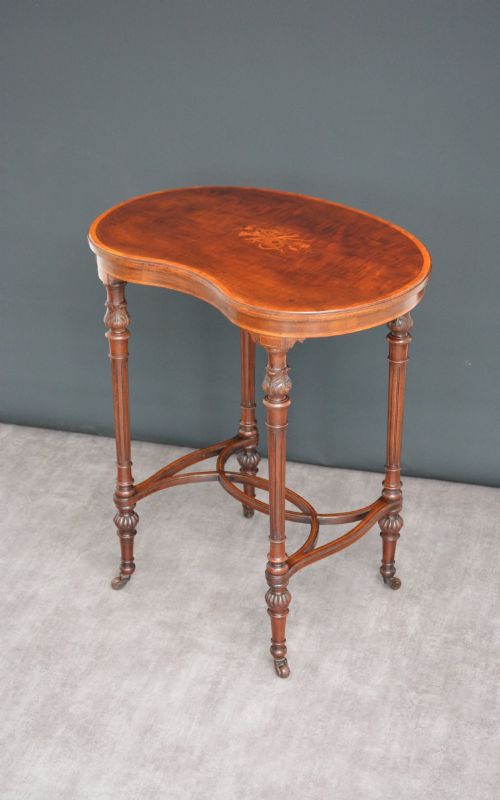

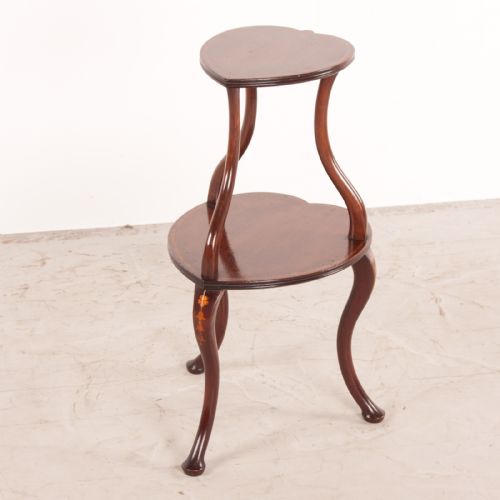
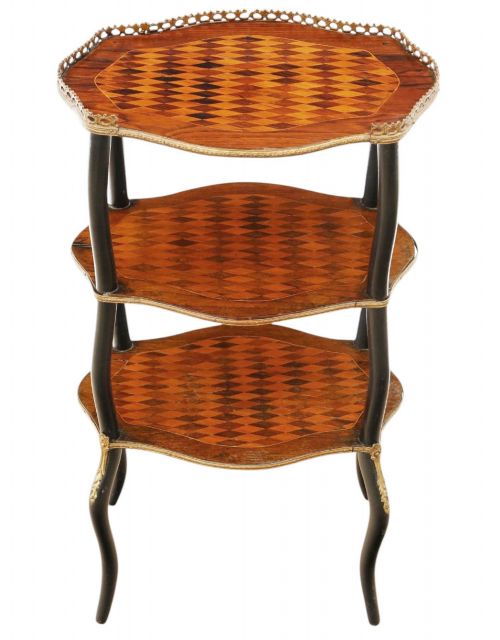
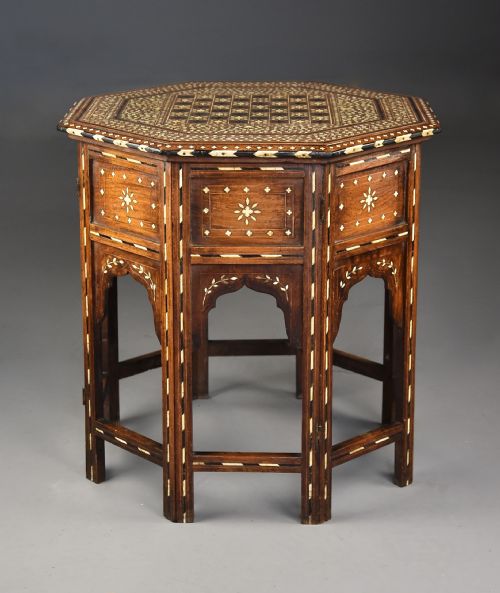
Edwardian Marquetry Side Table
An edwardian marquetry side table brings intricate wood inlay and refined proportions into a room, offering both surface utility and period character.
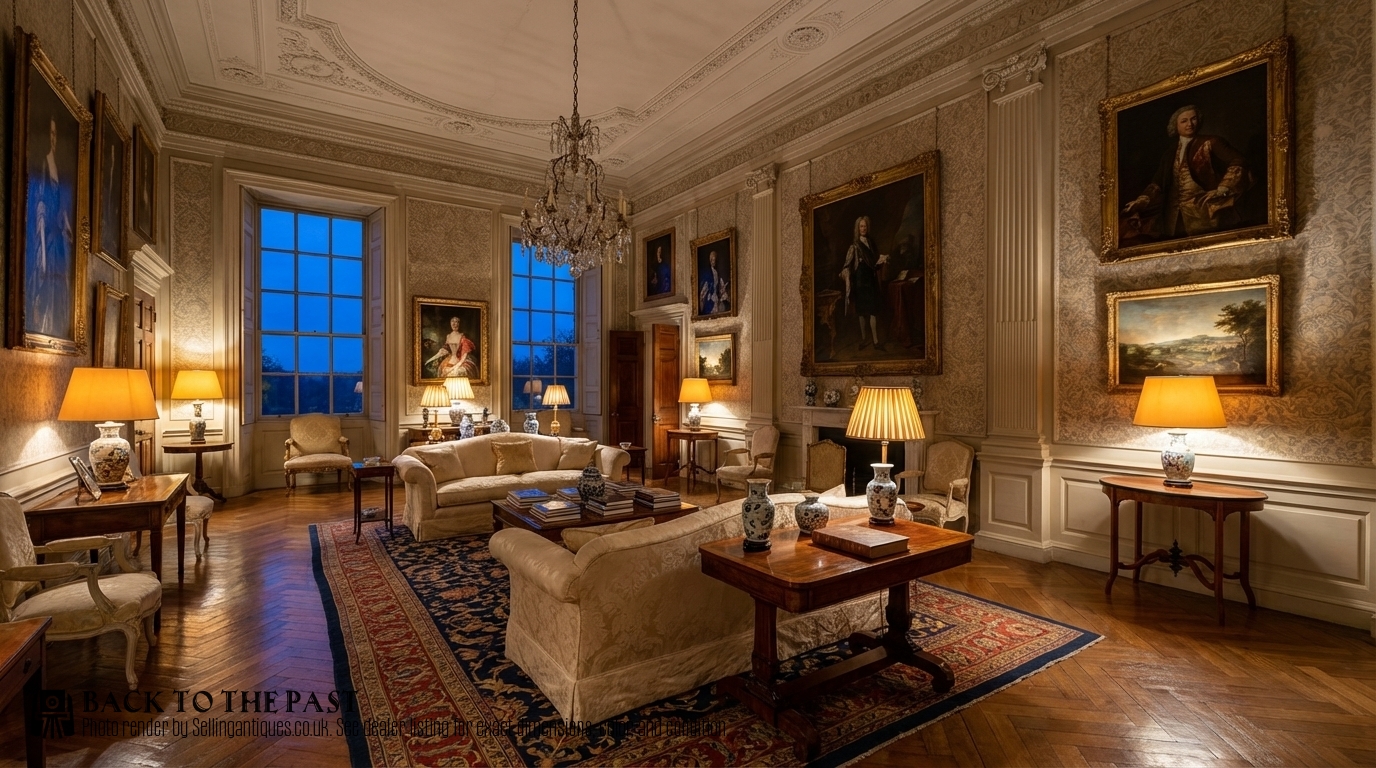
Understanding Edwardian Marquetry Side Tables
An edwardian marquetry side table spans various forms including occasional tables, card tables, and serving pieces produced around the turn of the twentieth century. These pieces reflect revival aesthetics and classical design influences from earlier periods.
The materials and structural types appearing in these pieces range from mahogany and satinwood to rosewood and walnut. Formats include kidney shapes, demi-lune consoles, and multi-tiered occasional tables.
Pieces frequently incorporate detailed wood veneers and decorative stringing. These tables serve domestic functions as lamp tables, games tables, or small centre tables in living spaces.

Materials and Construction Techniques
Craftsmen built these tables using solid timber carcases faced with figured veneers such as mahogany, satinwood, and rosewood. Surface decoration relies on marquetry cut from contrasting woods like fruitwood and boxwood.
Inlay work involves assembling thin pieces of wood into pictorial or geometric patterns before pressing them into the primary timber. Additional detailing often includes boxwood inlay, ebony stringing, and occasional ormolu mounts.
Retail Price Guide 2026
Typical UK retail prices for edwardian marquetry side table, calculated from the Sellingantiques database of over a million retail prices indexed since 2003. This retail price guide relies exclusively on Sellingantiques data; no external sources or auction records are used, so the figures do not describe the wider market.
Listings feature woods such as mahogany, satinwood, rosewood, walnut, boxwood, and ebony combined in decorative marquetry schemes.
Distinctions in Quality
Quality rests in the precision of the marquetry cutting and the choice of timbers used for the veneer and inlay. Finer examples display tight joins, crisp botanical or classical motifs, and well-figured mahogany or satinwood foundations.
Structural integrity and the retention of original surfaces also divide ordinary items from superior ones. Tables retaining their original polished finish and unwarped timber tops demonstrate better care and initial manufacture.
Edwards and Roberts·Maples and Co
The Edwardian Marquetry Side Table Glossary
- Marquetry
- Decorative veneer work assembled in patterns or pictures using thin slices of various coloured woods. This technique requires skilled hand-cutting and fitting to create complex motifs.
- Satinwood
- A durable hardwood with a natural golden sheen, frequently utilised for light-coloured veneers and tabletops. It forms a contrasting background for darker marquetry details.
- Demi-lune
- A half-moon shape characteristic of console and card tables designed to sit flush against a wall. These tables often feature hinged tops or folding leaves.
- Occasional table
- A small, movable table designed for specific, intermittent domestic uses such as holding a lamp or books. These pieces appeared in various geometric forms during the period.
Frequently Asked Questions
What distinguishes an edwardian marquetry side table from a victorian one?
Edwardian versions typically exhibit lighter proportions, brighter satinwood or mahogany veneers, and restrained neoclassical or Sheraton revival motifs compared to earlier nineteenth-century furniture.
The transition towards the 1900s brought a preference for airier forms and delicate boxwood stringing over heavier, darker Victorian carcases.
How were folding card tables used in period homes?
Envelope and demi-lune card tables provided a versatile surface that could expand for evening games or dining before folding back into a compact console.
These pieces sat against drawing room walls until needed for social gatherings and entertainment.
How should I clean and maintain antique wood inlay?
Dust surfaces regularly with a soft, dry cloth and apply a quality beeswax periodically to nourish the wood and protect the delicate veneer.
Keep these tables away from direct sunlight and extreme temperature fluctuations to prevent the marquetry from lifting.
What woods appear most frequently in these tables?
Mahogany and satinwood serve as the primary woods for the main carcase and veneered surfaces, providing strong structural foundations.
Fruitwood, boxwood, and ebony provide the contrasting tones necessary for intricate floral and ribbon marquetry designs.