

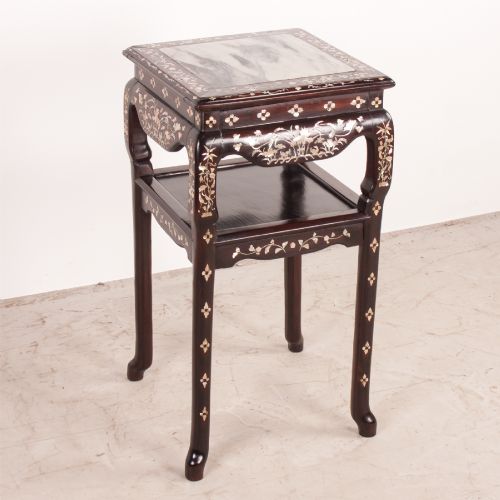
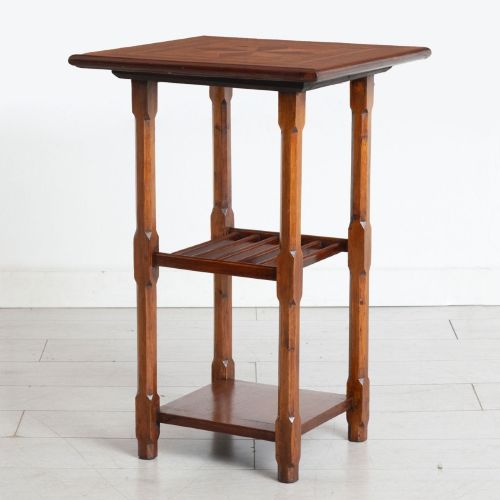
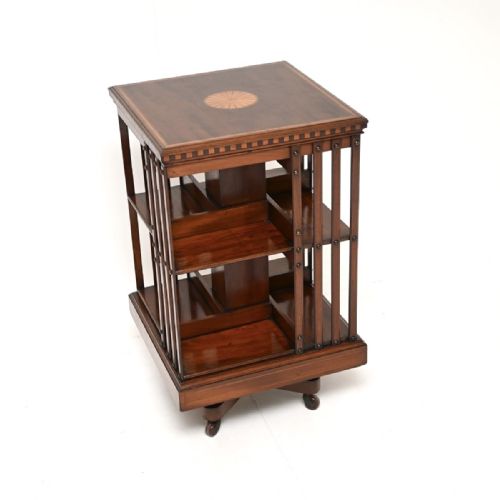
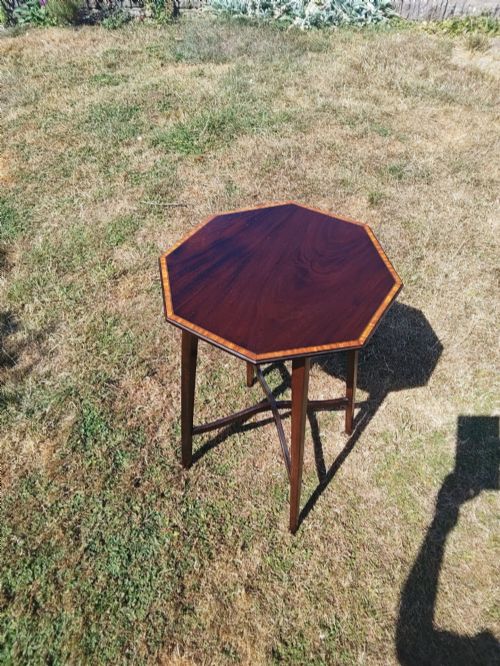
Inlaid Display Table
An inlaid display table holds small treasures under glass, bringing refined joinery and decorative marquetry into domestic rooms.
Identifying an inlaid display table
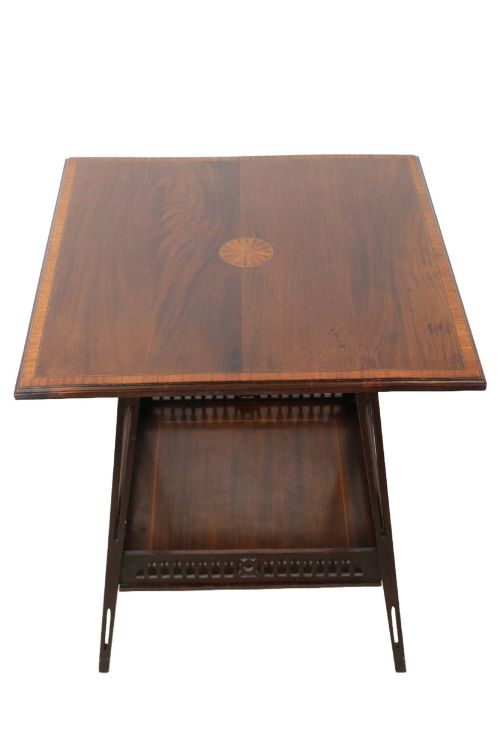
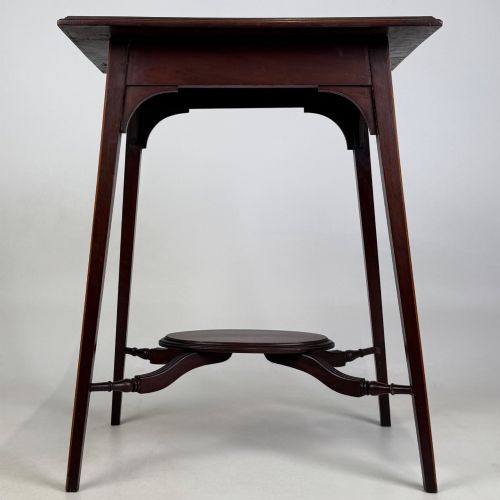
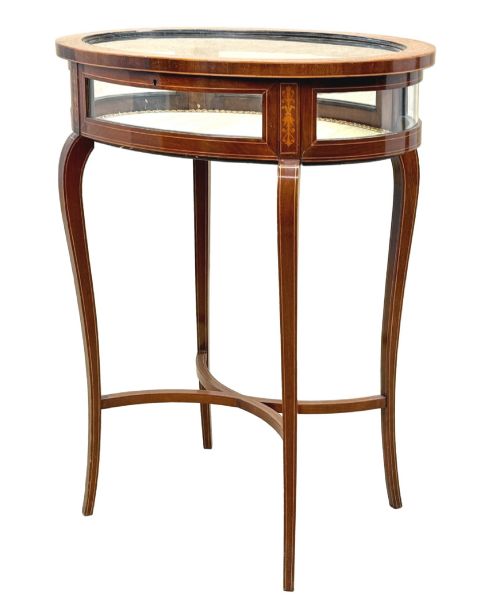
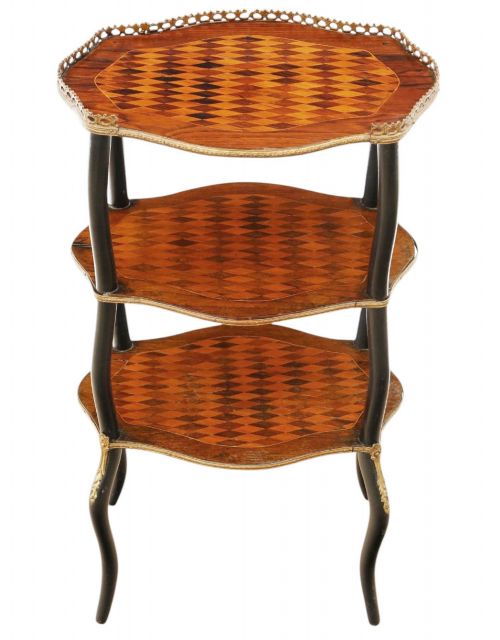
An inlaid display table serves as a specialised surface designed to showcase small artefacts, trinkets, and curiosities beneath a glazed top. These pieces emerge predominantly from Victorian and Edwardian workshops, alongside occasional French influences from the Belle Epoque and Louis XV Revival periods.
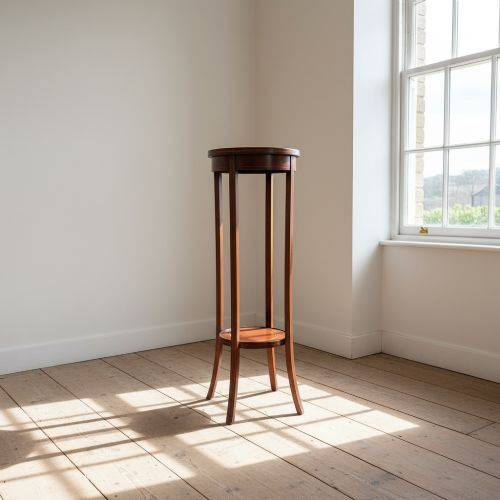
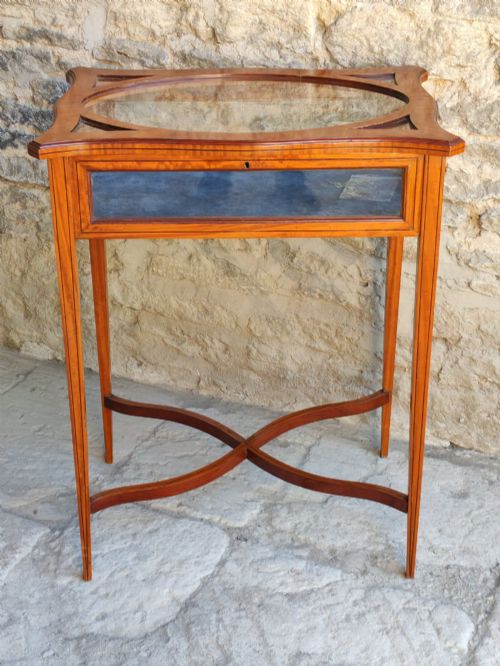
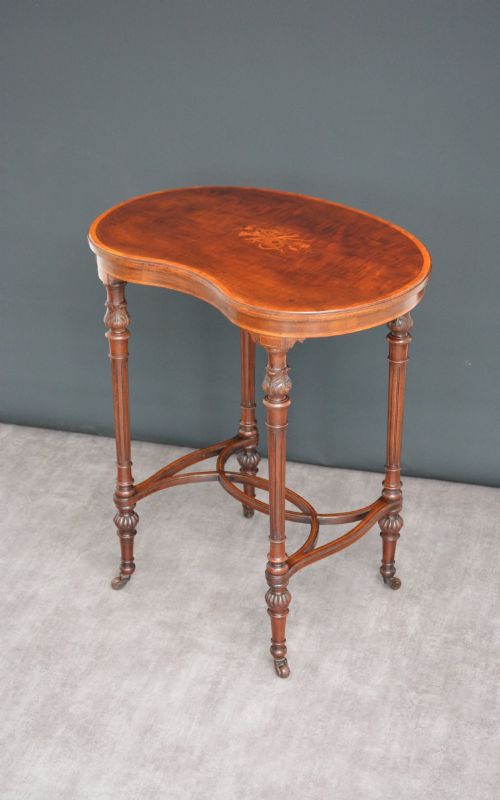
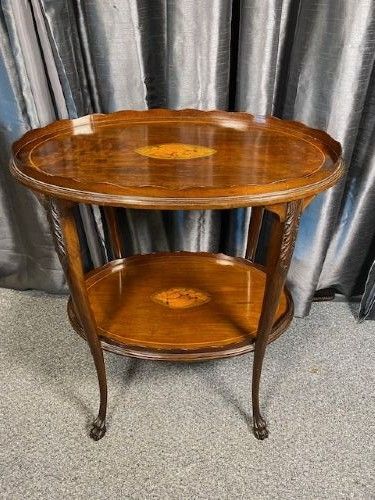
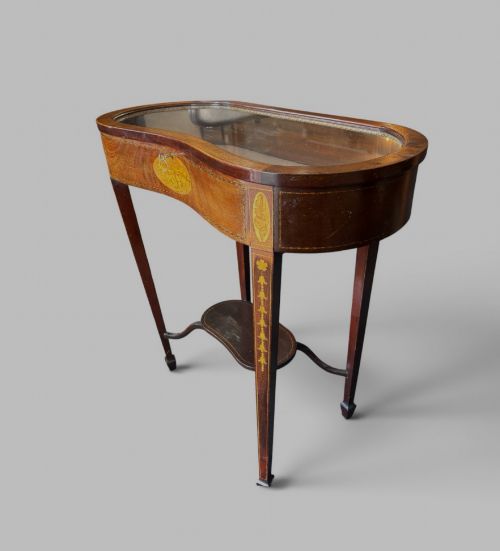
The form encompasses various silhouettes, including kidney-shaped occasional tables, octagonal bijouterie cabinets, multi-tiered etageres, and traditional side tables. Among these, the Edwardian mahogany bijouterie display table appears most frequently, often featuring glazed lift-top lids or fitted interior compartments.
Makers utilised rich primary timbers such as mahogany, satinwood, walnut, and rosewood to construct these elevated vitrines. The integration of display space with intricate surface decoration distinguishes these items from standard occasional furniture.
Materials and construction methods
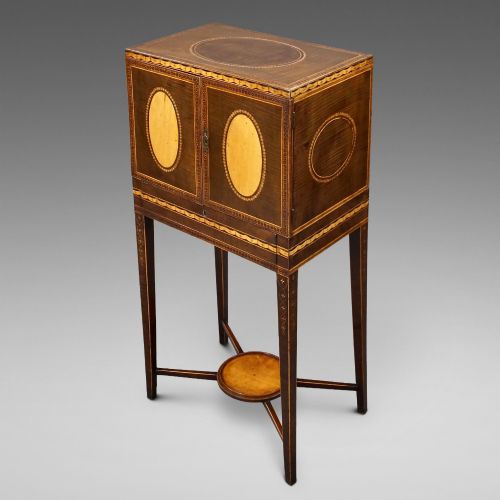
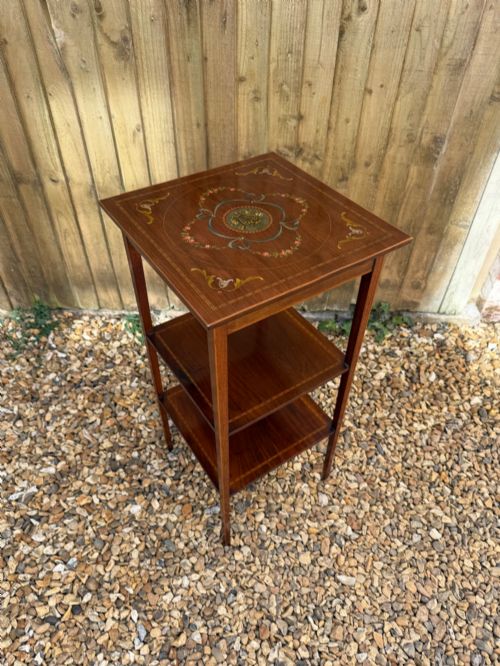
Cabinetmakers built the structural frames using solid hardwoods like mahogany and walnut, frequently applying fine wood veneers to curved surfaces and table tops. Marquetry inlay, utilising contrasting natural timbers, creates elaborate floral, geometric, or scrolling ornamentation across the wood panels.
Glazing forms the central component of the display compartment, allowing viewers to inspect contents from above while protecting them from dust. Additional elements such as brass mounts, velvet linings, and hinged or lifting glass lids complete the functional assembly.
Retail Price Guide 2026
Typical UK retail prices for inlaid display table, calculated from the Sellingantiques database of over a million retail prices indexed since 2003. This retail price guide relies exclusively on Sellingantiques data; no external sources or auction records are used, so the figures do not describe the wider market.
Many Edwardian tables secretly double as miniature museums for tiny silver spoons and forgotten pocket watches.
Distinctions in craftsmanship and materials
Quality diverges notably in the precision of the marquetry inlay and the selection of cabinet woods. Superior examples display tightly fitted contrasting veneers with minimal filler, whereas simpler pieces rely on painted decoration or basic banding.
The sophistication of the internal lining, the weight of the cast brass mounts, and the smoothness of the hinged glass mechanisms dictate the overall grade. Substantial hardwood frames and uncompromised glass integrity set the finest creations apart from routine production.
Edwards & Roberts
The Inlaid Display Table Glossary
- Bijouterie table
- A specialised glazed table designed specifically for displaying small valuable items and personal trinkets. The top typically lifts or opens to allow access to the velvet-lined interior.
- Marquetry inlay
- A decorative technique where small pieces of contrasting wood veneer are fitted together to form pictorial or geometric patterns. Artisans embed these intricate designs directly into the surface of the furniture.
- Etagere
- A piece of furniture consisting of a set of open shelves for displaying small objects. These tiered structures provide multiple levels of vertical display space.
- Satinwood
- A durable, lustrous timber native to India and Ceylon, prized for its golden-yellow colour and natural sheen. Cabinetmakers utilised it extensively for fine inlay work on late Victorian and Edwardian tables.
- Vitrine
- A glass-fronted or glass-topped cabinet or table used for exhibiting curiosities. The term emphasises the transparent enclosure designed to protect delicate artefacts.
Frequently Asked Questions
What is an inlaid display table used for?
These tables function as surface furniture and enclosed display cases simultaneously. Owners utilise the glazed compartment to exhibit small collectables, medals, and decorative items safely.
The upper surface remains accessible for viewing while keeping dust away from delicate pieces. They serve primarily in drawing rooms and parlours as both decorative accents and practical storage for curiosities.
How do I distinguish Edwardian from Victorian tables?
Edwardian pieces often feature lighter satinwood finishes and delicate marquetry, reflecting a brighter aesthetic. Victorian versions tend to employ heavier mahogany or walnut structures with deeper tones and denser ornamentation.
Examining the interior linings and structural joinery provides further clues to the manufacturing era. Cabinetmakers of the Edwardian period frequently adopted lighter proportions and refined Edwardian or Sheraton revival styles.
Are the interiors usually lined?
Most display compartments feature original or replacement fabric linings, commonly velvet. This soft base prevents delicate items from scratching against the wooden floor of the cabinet.
Collectors look for well-preserved linings that match the period of the table. The interior depth varies depending on whether the piece functions as a shallow vitrine or a deeper bijouterie cabinet.
How should I care for the wood and glass?
Maintenance requires gentle cleaning with a soft, dry cloth to protect both the polished timber and the delicate marquetry inlay. Avoid harsh chemical polishes that can damage antique veneer and finish.
Glass panels benefit from standard non-ammonia cleaner applied sparingly to a cloth rather than sprayed directly onto the surface. Keeping the table away from direct sunlight preserves the rich tones of the satinwood and mahogany.