




Edwardian Vitrine Table
An edwardian vitrine table lets you display small treasures under glass while bringing refined cabinetry into a room.
What these pieces are
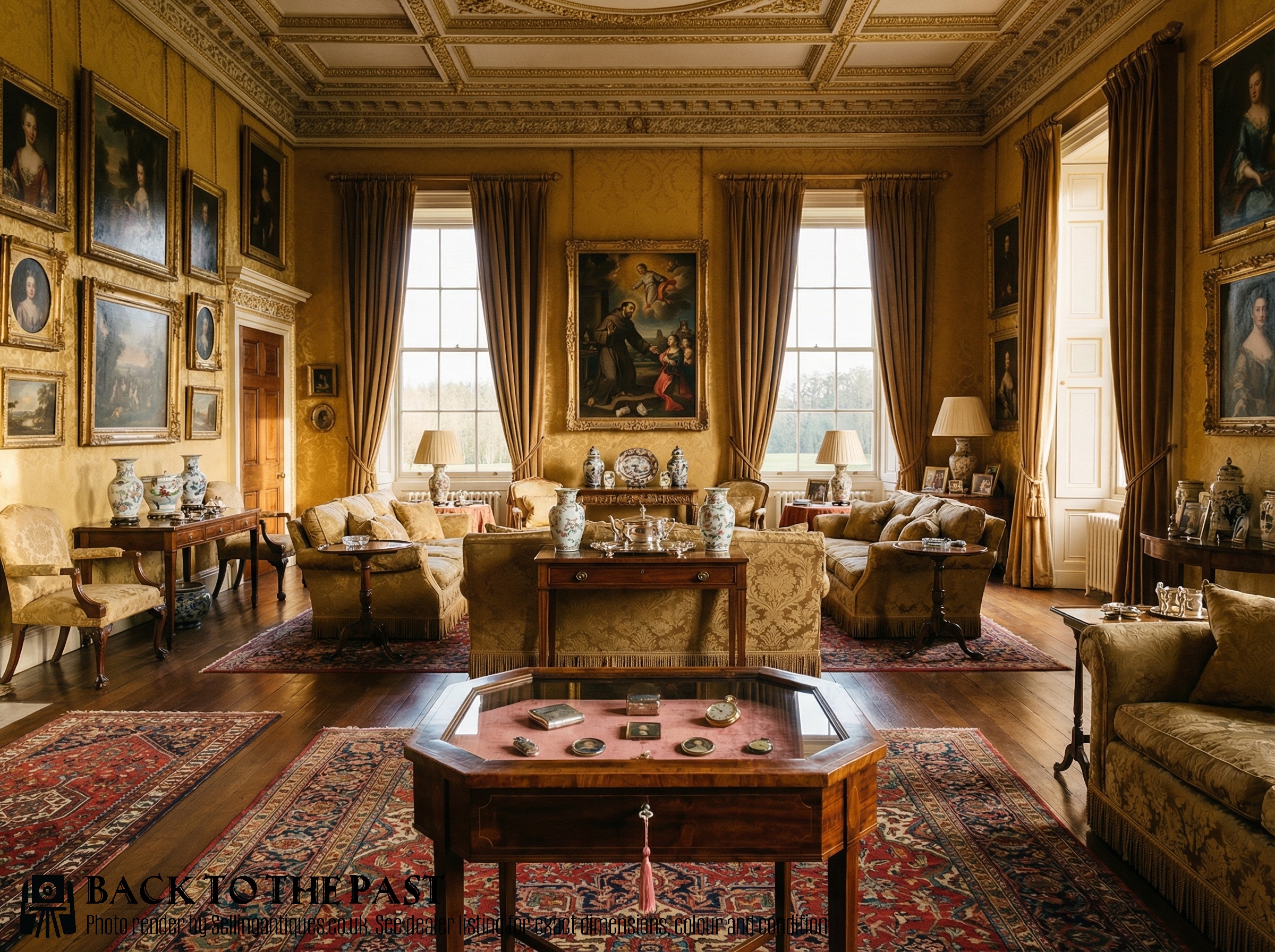
An edwardian vitrine table combines a glazed display compartment with a table or cabinet form, designed specifically for holding small valuables and curiosities. These pieces serve as functional display furniture for collectors and domestic interiors alike.
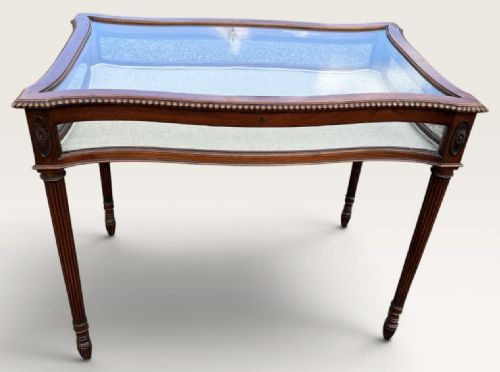
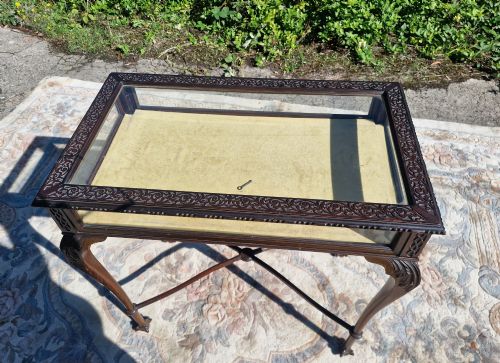
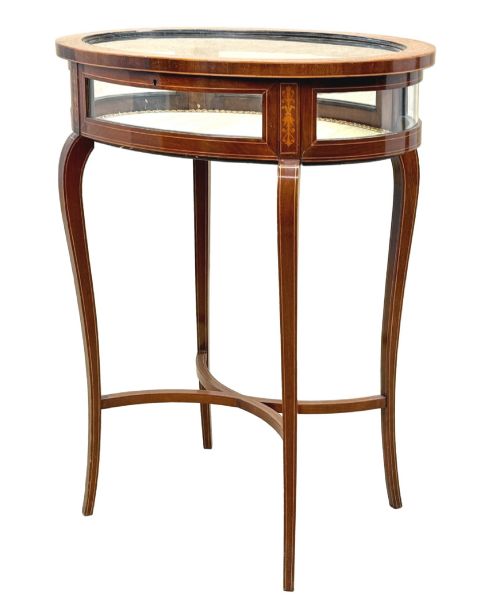
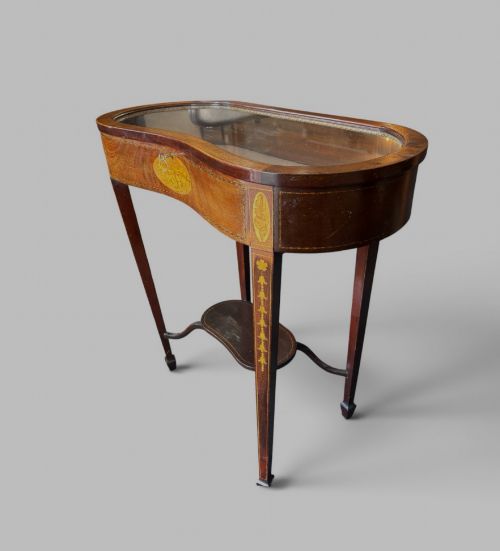
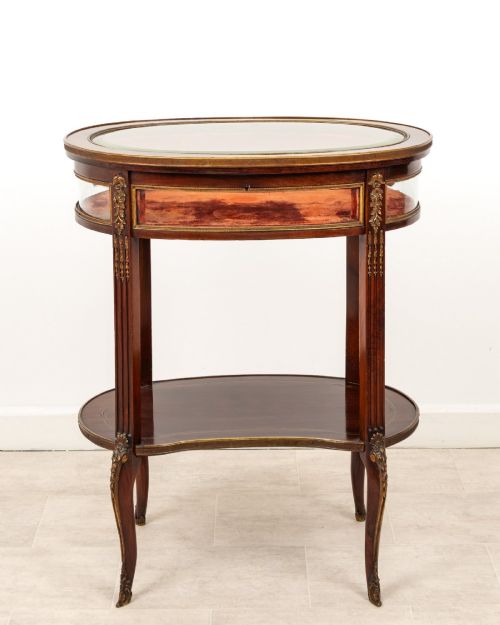
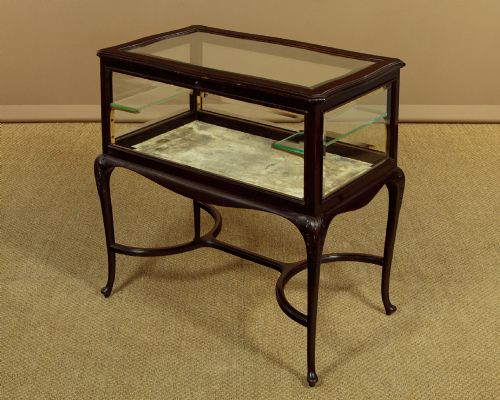
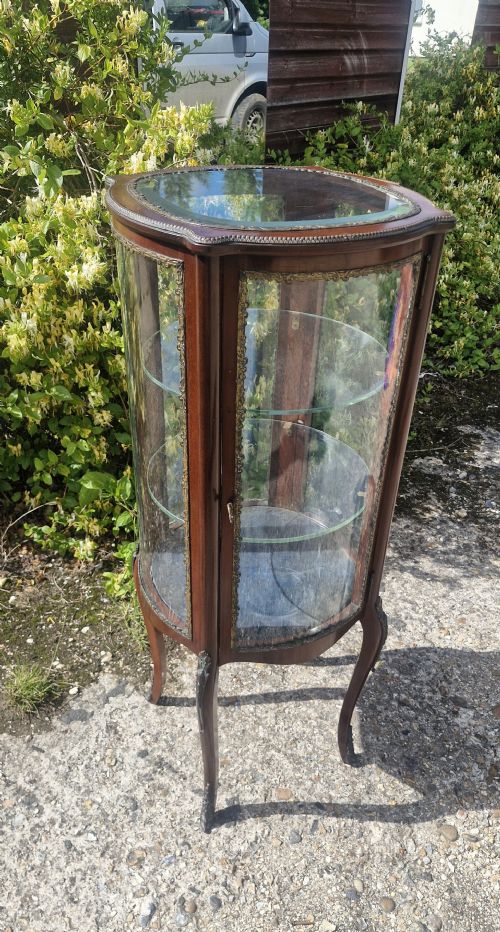
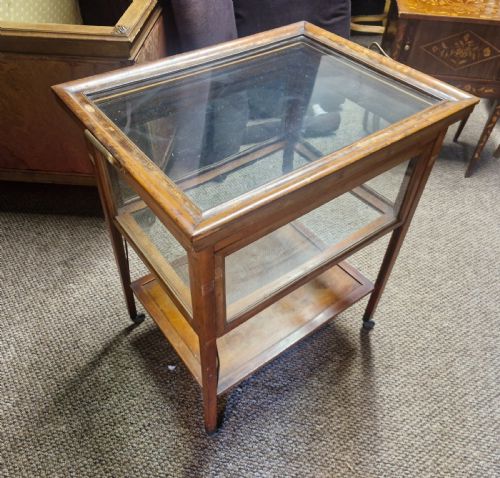
You are most likely to encounter Edwardian examples on this page, alongside a Victorian piece, taking the form of bijouterie tables, display tables, and bijouterie cabinets. They appear in both standard forms and specific shapes such as kidney and serpentine designs.
The objects stem predominantly from the Edwardian period, with occasional Victorian pieces also represented. Their primary function remains the presentation and protection of items beneath glass tops or panels.
How they were made
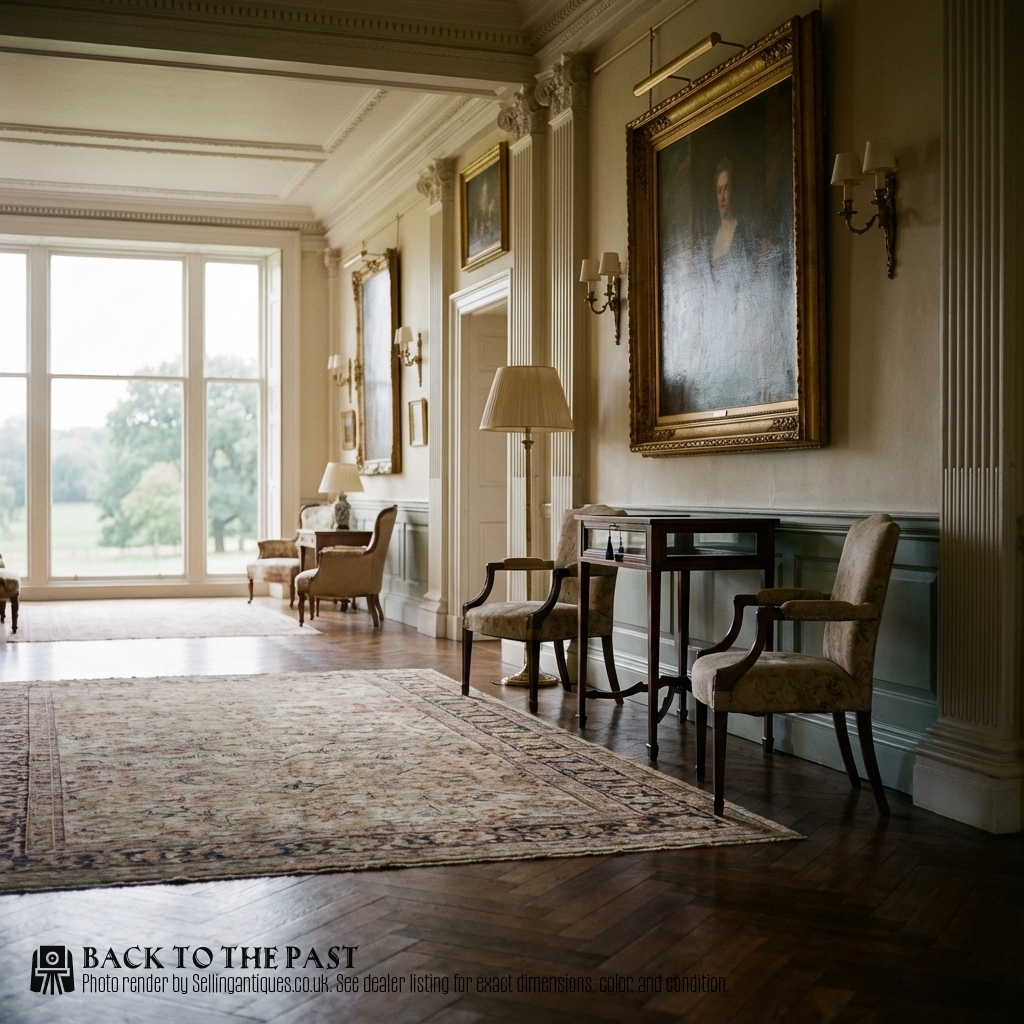
Cabinetmakers utilised mahogany and satinwood as the principal timber foundations for these display pieces. These woods provide both structural integrity and a refined surface for decorative inlay work.
Makers incorporated glass panels to create the vitrine compartments, allowing light to reach the interior display space. Metal elements such as brass appear alongside fabric and velvet linings to cushion the displayed objects.
Retail Price Guide 2026
Typical UK retail prices for edwardian vitrine table, calculated from the Sellingantiques database of over a million retail prices indexed since 2003. This retail price guide relies exclusively on Sellingantiques data; no external sources or auction records are used, so the figures do not describe the wider market.
Even the smallest display table often hides a velvet-lined interior designed to keep delicate trinkets from sliding about when the lid opens.
What varies in quality
The standard of execution in inlay and marquetry work dictates much of the distinction between simpler examples and finer pieces. Complex floral painted decoration and shaped outlines like serpentine or kidney forms require greater craftsmanship than straight-sided carcasses.
Named makers such as Edwards and Roberts introduce a higher tier of cabinet-making pedigree through superior timber selection and detailed joinery. The integration of quality brass fittings and fitted velvet or fabric interiors also elevates the overall standing of an individual table.
Edwards and Roberts
The Edwardian Vitrine Table Glossary
- Vitrine
- A glass-fronted cabinet or table designed for displaying objects. This term highlights the glazed panels that protect the contents from dust.
- Bijouterie table
- A specialised display table with a glazed compartment for small trinkets and jewellery. These tables often feature hinged lids for easy access to the interior.
- Marquetry
- Decorative woodwork where pieces of veneer are fitted into a design on a solid ground. This technique often employs contrasting timbers like satinwood and mahogany.
- Serpentine
- A furniture contour that curves inward centrally and outward at the ends. It requires precise woodworking skill to execute across the frame of a display table.
- Satinwood
- A lustrous yellowish timber used for fine cabinet-making and inlay. Its grain catches the light effectively on Edwardian surfaces.
Frequently Asked Questions
What is an edwardian vitrine table used for?
These tables provide a secure, dust-free surface under glass to showcase small collections, jewellery, and curiosities. They allow owners to exhibit decorative items while serving as functional furniture in a drawing room or parlour.
Their enclosed design keeps delicate pieces safe from handling while remaining fully visible. The glazed compartments turn everyday surfaces into personal exhibition spaces.
How do I date an edwardian vitrine table?
Dating relies on stylistic markers typical of the Edwardian era, combined with timber choices like mahogany and satinwood. Specific construction details and comparison with marked pieces from makers such as Edwards and Roberts help narrow the period.
Archival examples from around nineteen hundred demonstrate the transition of styles from the late Victorian period into the Edwardian mainstream. Examining the interior linings, brass hardware, and inlay techniques further clarifies the age.
What is the difference between a bijouterie table and a vitrine?
A bijouterie table specifically focuses on a shallow glass compartment for jewellery and small trinkets, often with a table-height stand. A vitrine can refer more broadly to any glass-fronted display cabinet, though the terms often overlap in these listings.
Both forms utilise glass panels to let light in, but bijouterie pieces usually present items from above through a hinged lid. Vitrines frequently incorporate vertical shelving or larger cabinet enclosures alongside table variants.
How should I care for a satinwood display table?
Keep the timber away from direct sunlight to prevent the satinwood and marquetry inlay from fading or drying out. Regular dusting with a soft, dry cloth protects the polished surface without damaging the finish.
Protect the interior velvet or fabric lining from moisture and sharp objects that might snag the material. Gentle handling of the glass top and brass hinges ensures the moving parts remain in good working order.