

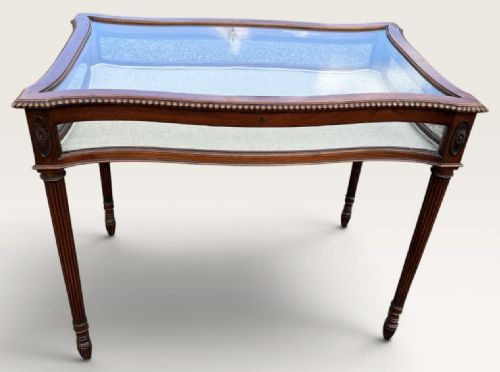
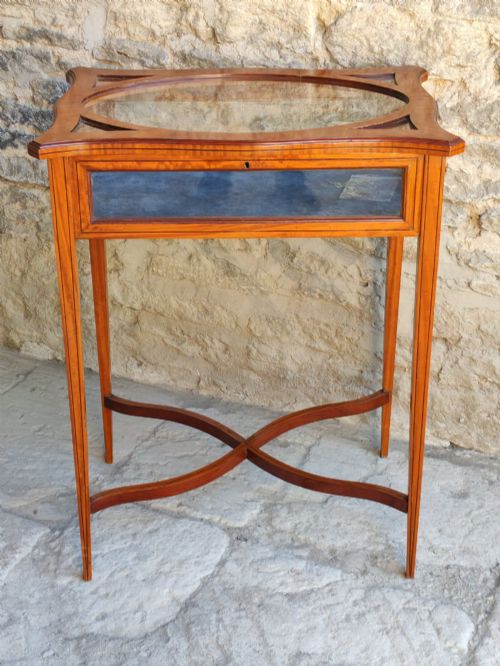


Glazed Occasional Table
A glazed occasional table provides a neat surface while keeping collections visible underneath glass.
Glazed Occasional Table
A glazed occasional table serves as a compact surface for everyday use while incorporating a glass-topped compartment for display. These pieces range from Victorian and Edwardian bijouterie tables to specific forms like side tables, display cabinets, and sewing stands.
The versions most commonly met on this page span the late nineteenth century through to the early twentieth century, taking shapes such as serpentine, octagonal, kidney, and rectangular forms.
Origin influences appearance greatly, with French interpretations featuring decorative mounts alongside English designs in satinwood and mahogany. Buyers encounter everything from compact sewing tables with needlepoint tapestry panels to larger display pieces and whatnots.
Materials and construction
Carpenters built these tables using primary timbers such as mahogany, satinwood, walnut, and oak, often incorporating intricate inlay work to decorate the surfaces. Glass formed the protective tops or panels for viewing contents kept within the body.
Metal accents including ormolu and brass provided structural mounts and decorative detailing, particularly on French-influenced pieces from the nineteenth century. Interior surfaces sometimes utilised fabric, velvet, or needlepoint tapestry to cushion displayed items.
Glazed Occasional Table Retail Price Guide 2026
Typical asking prices for glazed occasional table among the pieces listed under this phrase on Sellingantiques today, from the lower quarter to the upper quarter. They describe what is for sale here now, not the wider market.
The listings show periods spanning from William IV through Victorian and Edwardian eras up to the 1920s, constructed in mahogany, satinwood, and oak.
Evaluating quality and execution
Superior examples demonstrate precision in timber selection, particularly where figured mahogany or finely grained satinwood veneers meet at complex angles like serpentine or kidney curves. The execution of inlaid elements and the crispness of brass or ormolu mounts signal higher workshop standards.
Structural integrity of the glazed framing and the refinement of leg forms separate standard production from more ambitious cabinetmaking. The integration of textiles within display compartments reflects the original grade of the commission.
LIBERTY of LONDON
The Glazed Occasional Table Glossary
- Bijouterie table
- A glass-topped table designed specifically for displaying small valuable items, medals, or curiosities. These pieces often feature hinged lids or glazed side panels.
- Ormolu
- Gilded bronze mounts applied to furniture for decorative effect. This technique was frequently utilised on nineteenth-century French tables.
- Whatnot
- An open set of shelves used for displaying ornaments or books. Examples on this page combine display surfaces with enclosed or glazed sections.
- Satinwood
- A hard, durable timber with a characteristic golden-yellow sheen. It was widely used for fine nineteenth-century cabinetmaking and inlay.
Glazed Occasional Table: Frequently Asked Questions
What is a bijouterie table?
A bijouterie table is a specialised piece of furniture featuring a glass panel in the top and sometimes the sides. It was created to display collections of small trinkets, jewellery, and curiosities while protecting them from dust.
These tables became particularly popular during the Victorian and Edwardian eras for drawing rooms and boudoirs.
How do I date a mahogany display table?
Dating relies on examining the timber grain, construction joints, and decorative styles present on the piece. Nineteenth-century examples often display hand-cut joinery and specific period motifs like brass or ormolu mounts.
Cabinetmakers of the Victorian and Edwardian periods utilised distinct proportions and inlay patterns that help narrow down the decade of manufacture.
Where should I place an occasional table?
These tables suit sitting rooms, hallways, or reception spaces where they provide a compact surface alongside seating. The glazed compartments allow for the display of small personal collections without cluttering the room.
Placing them away from direct sunlight protects any interior fabric lining and preserves the timber finish.
What is the difference between a side table and a whatnot?
A side table typically offers a single surface for placement, whereas a whatnot incorporates multiple tiers or shelving for storage and display. Some hybrid forms combine glazed display compartments with open shelving.
Both types served domestic functions in nineteenth-century homes, varying according to the specific room they occupied.